
Garment Printing Methods in Bangladesh: Screen Print, DTG, Heat Transfer, Puff, Discharge and Sublimation Matched to Your Artwork and Fabric
1. Which Printing Techniques Are Best for Your Clothing Design?
Start with the artwork, not the machine. A bold logo, a photograph and a player's name each point to a different method.
- Bold flat colour points to screen printing
- Photographs point to direct to garment printing
- Names and numbers point to heat transfer
- All-over polyester points to sublimation printing
- Raised effects point to puff ink
- Soft dark prints point to discharge ink
- Send the artwork, get a recommendation
- The reason is stated plainly, in writing
- Fabric and quantity settle the final choice
- Garment weight changes what a print can do
- Colour count changes the cost picture
- Print size is checked on the real garment
- No method is sold before it fits
- Mixed ranges can mix methods safely
- One order can carry two methods
- Screen designs stay ready for reorders
- Artwork age does not matter here
- See how to place an inquiry for the first step
- Printing techniques with a manufacturer agreed before sampling starts
- Our BGBA membership is listed on the BGBA website
2. How Does Screen Printing Work on T-Shirts and Hoodies?
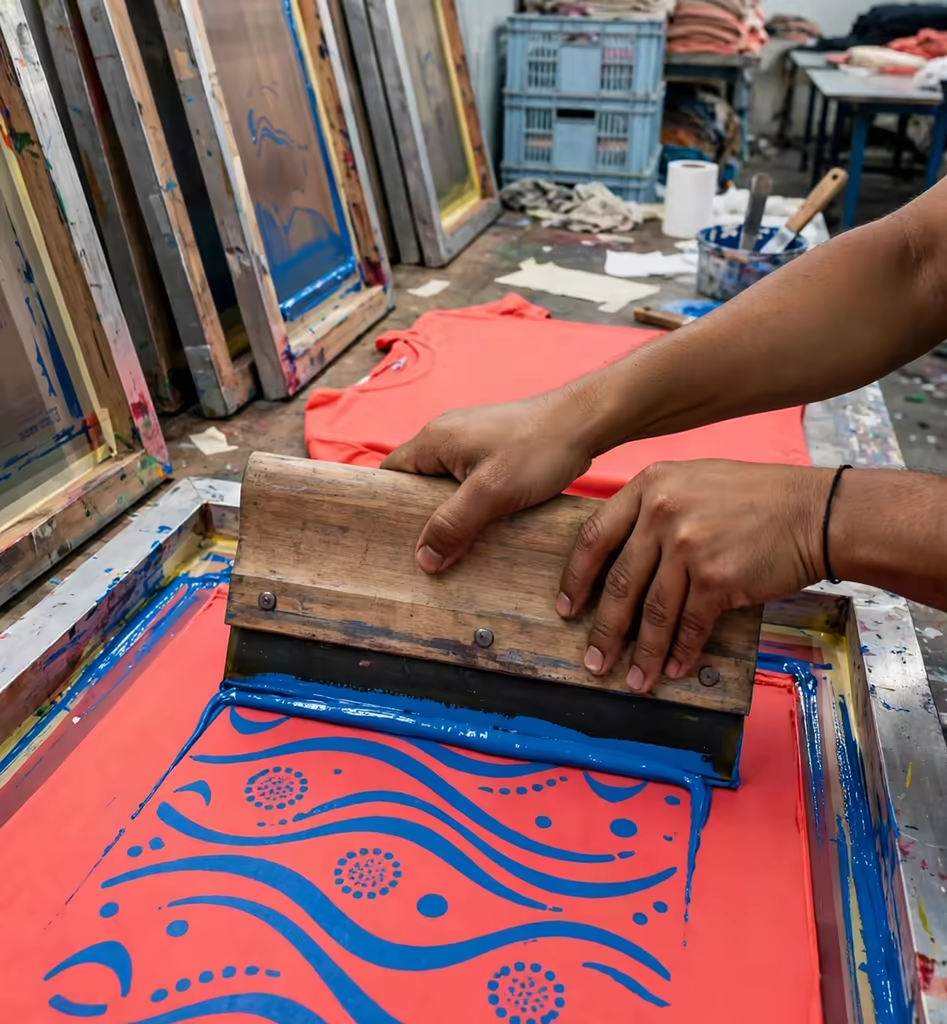
Screen printing pushes ink through a prepared mesh screen. One screen is made for each colour in your design.
- Ink passes through mesh, one colour at a time
- Bold, opaque colour on almost any fabric
- Water-based inks keep a soft hand-feel
- Plastisol inks cover dark fabrics fully
- A base layer keeps colours bright on black
- Screens are made from your separated artwork
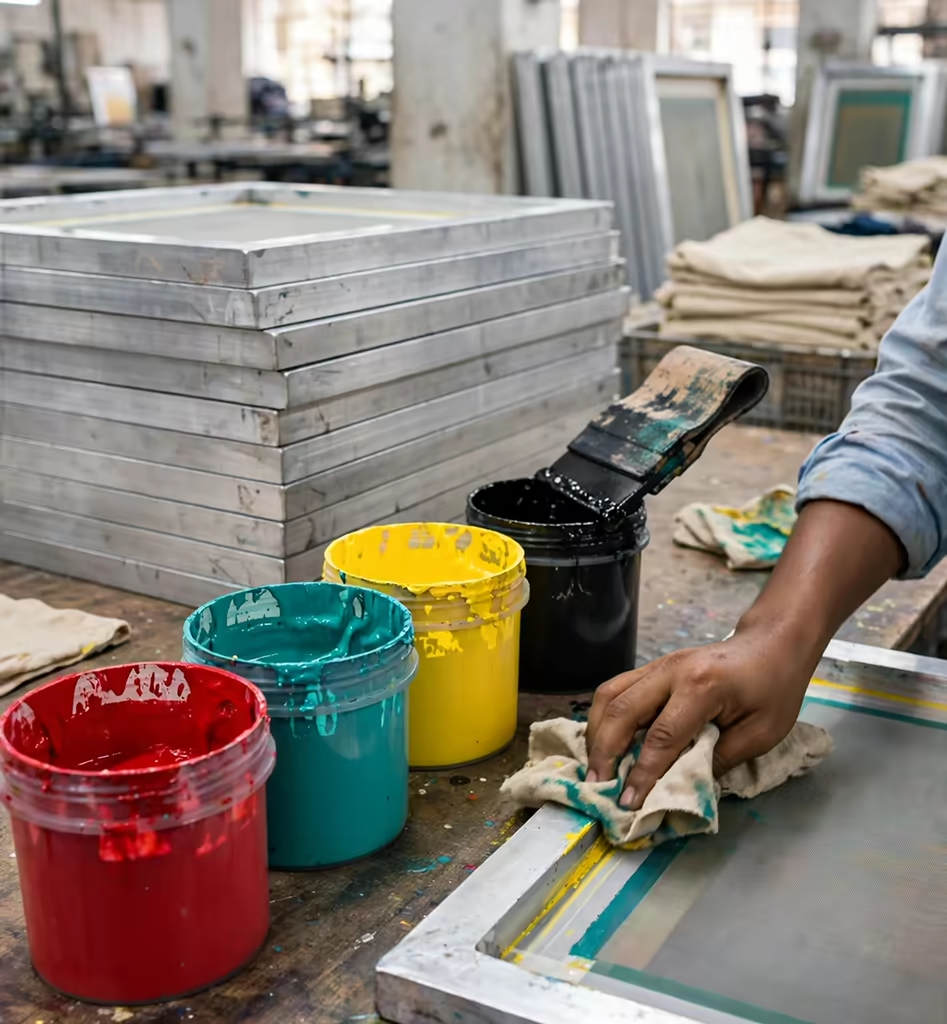
- Ink is mixed to a recorded recipe
- Every run is cured fully before checking
- Cured prints survive repeated washing well
- Screen cost spreads across longer runs
- Repeat logos suit screens best of all
- Team designs and event graphics run here
- Staple graphics reorder from the same screens
- Colour recipes are recorded for reorders
- Position templates hold every print in place
- Our screen printing services page goes deeper
- Printing techniques from a supplier keep bold colour opaque
3. When Should You Choose DTG Printing for Photographic Artwork?
Direct to garment printing works like an inkjet on cloth. The design lands straight onto the fabric in one pass.
- Photographic detail prints with shading intact
- Gradients stay smooth, no screens needed
- Many colours cost no extra setup
- Short runs stay sensible with DTG
- Setup takes minutes, not hours
- Garments are pre-treated before printing
- Ink bonds evenly across the print area
- Cotton takes DTG best of all
- High-cotton blends also print well
- Fabric is confirmed before this route
- Colours checked against your digital file
- Fine line work stays sharp on cloth
- Photo prints suit fashion graphics well
- Test quantities suit new design trials
- One-off samples print without screen cost
4. How Do Heat Transfers Print Names and Numbers on Teamwear?
A transfer prints your design onto a carrier first. Heat and pressure then bond it onto the garment.
- Every shirt can carry a different name
- Numbers stay exact, player after player
- The shared design stays identical throughout
- Fine detail survives on the carrier
- Placement is set before pressing starts
- One press cycle bonds the design
- Small runs stay economical with transfers
- Personalised orders suit this route best
- Clubs and event teams order this way
- Staff clothing personalises the same way
- Hoodies and team tops take transfers too
- Mixed kits combine transfer and screen
- Names arrive from your own list
- Squad lists print without extra setup
- Spelling is checked against your file
5. What Do Puff, Discharge and Specialty Inks Add to a Garment?
Specialty inks make the print itself the feature. The effect is chosen on purpose, never as a default.
- Puff ink rises under heat when cured
- A puff logo feels raised and tactile
- Discharge removes dye, replaces the colour
- Discharge prints carry no surface feel
- Dark cotton suits discharge printing best
- Metallic inks add shine to graphics
- Glow inks serve novelty and event designs
- Fashion graphics use effects deliberately
- Every specialty ink is wash-tested first
- Testing happens on your real fabric
- Effects are sampled before bulk, always
- The sample shows the true finish
- Effects are priced before you commit
- One effect per design usually works best
- Ask which effect fits your artwork
6. How Does Sublimation Print All-Over Designs on Polyester?
Sublimation turns ink into gas under heat. The colour bonds inside the polyester fibre itself.
- The print cannot crack or peel
- Colour sits inside the cloth, not on it
- Seams and panels print as easily
- Full-coverage team kits suit this route
- The design prints onto paper first
- Paper is made at full garment size
- Heat presses the image into panels
- Panels are sewn after printing
- Coverage reaches every edge cleanly
- Polyester fabric is needed to bond
- High-polyester blends can also work
- Fabric is planned around the print
- Sportswear brands order all-over this way
- Vivid colour survives repeated washing
- Your artwork covers front and back
- Printing techniques with an exporter cover seams and panels fully
7. Can You Combine Embroidery With Print on One Range?
Embroidery is stitching, not print, but buyers choose both together. One specification then covers every decorated garment in the order.
- Stitched logos suit polos and caps
- Workwear marks outlast ink when stitched
- Your logo is digitised into a stitch file
- The file is made at the exact size
- Thread colours match your reference first
- A stitched sample is approved by you
- It sits beside the printed sample
- Print the tee, stitch the polo
- Same mark, two decorations, one range
- Backing suits the garment weight
- Stitch density is set per fabric
- Chest marks stay small and clean
- Caps take stitched marks cleanly too
- One order file covers both routes
- Ask when you plan a mixed range
8. How Is Your Printed Sample Made and Approved Before Bulk?
Every printed order follows the same written sequence. Nothing goes to bulk until you approve a sample on cloth.
- Step one: send artwork, garment, quantity
- Step two: the method is recommended, with reasons
- Step three: artwork prepared at print size
- Step four: colours separated for screens
- Step five: sample printed on the real garment
- Step six: you approve colour and position
- Step seven: hand-feel judged on cloth
- The sample travels to your office
- Wash-test results join the approval pack
- Close photographs join it too
- No visit to Dhaka is needed
- Approval is recorded on the order file
- Bulk follows the approved sample exactly
- Bulk never starts from an email image
- Questions go through our contact page
- Printing techniques for garment exporters begin with an approved sample
9. How Is the Printing Method Matched to Your Garment Fabric?
The fabric decides half of every print choice. We test on your real cloth before recommending anything.
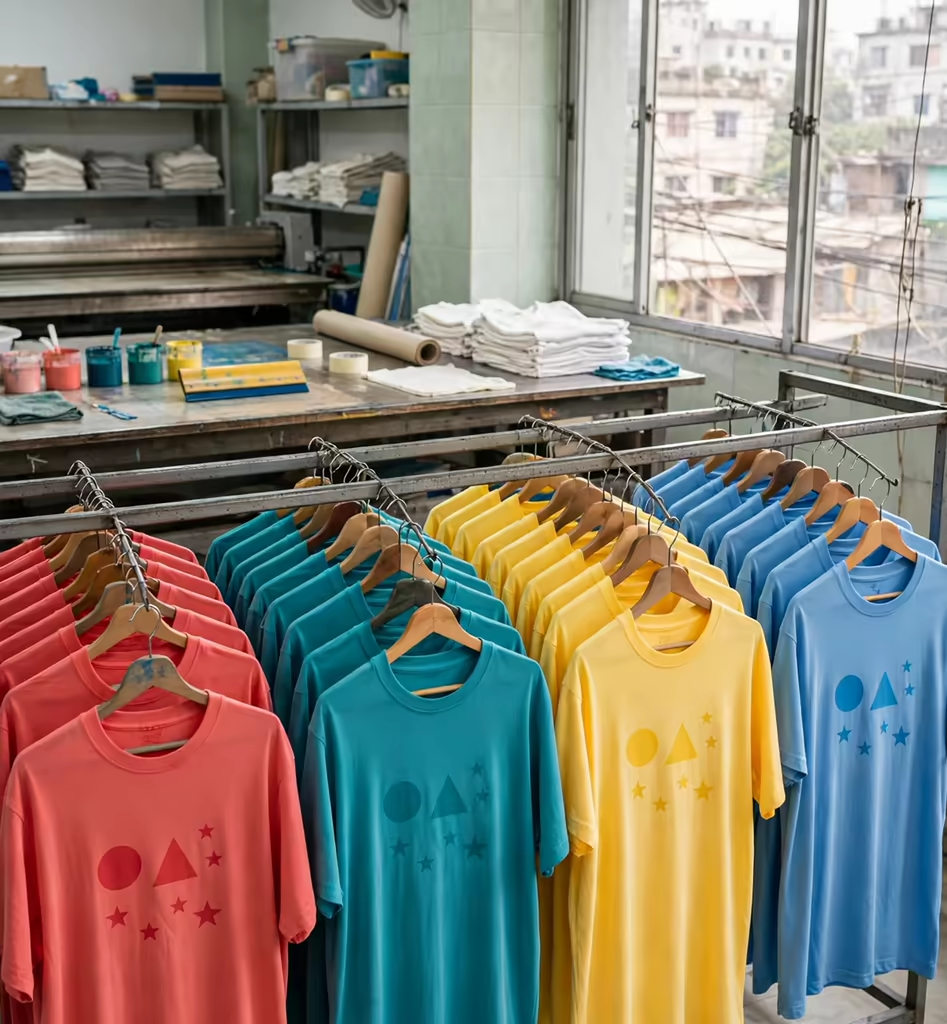
- Cotton jersey takes every method well
- Most print trials start on cotton
- Polyester points towards sublimation printing
- Standard inks can migrate into synthetics
- Migration blurs prints on polyester blends
- Special inks resist dye migration
- Dark fabrics need an opaque base
- Discharge works with the dye present
- Lightweight fabrics stay soft with water-based
- Delicate fabrics favour digital methods
- No stiffness is added to fine cloth
- Test prints run on the real fabric
- The fabric can be adjusted too
- Fabric changes are suggested honestly
- Method and fabric are planned together
10. What Print Quality Checks Run Before Your Order Is Packed?
A print is approved only when it survives the checks. The last garment must match the first one exactly.
- The sample is wash-tested before bulk
- Bulk starts after durability is proven
- Position is measured against the template
- Every print sits in the same place
- Curing is checked piece by piece
- Under-cured ink cracks early in wear
- Colours compared under the same light
- The approved sample is the standard
- Hand-feel is checked after curing
- Prints must stay soft, not stiff
- Faulty pieces are removed before folding
- Nothing faulty reaches the packing table
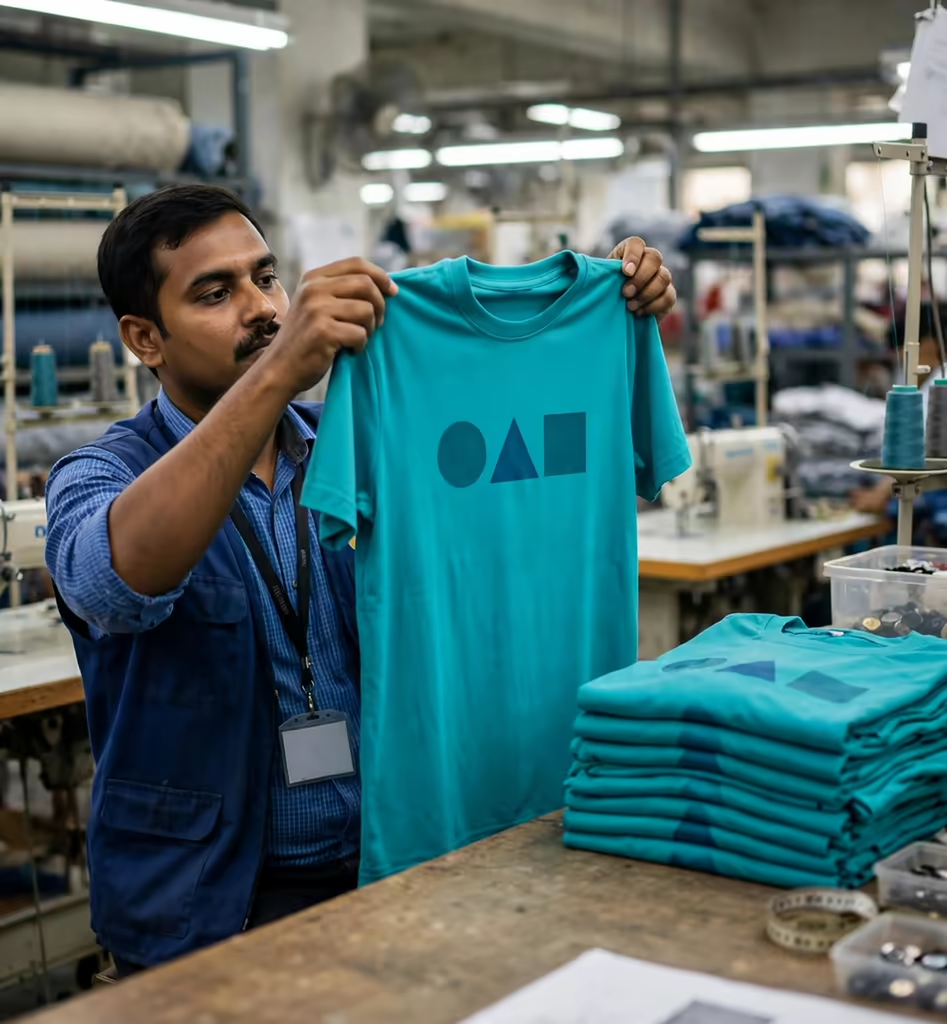
- Finished garments are inspected whole
- Checks run on every production run
- Our clothing quality control page shows the discipline
- Printing techniques with a factory are checked piece by piece
11. How Much Printed Clothing Do You Need to Order?
There is no single honest figure for every design. The method, the colour count and the garment all change it.
- Screen printing rewards longer runs per design
- Screens are made per printed colour
- Setup cost spreads across every piece
- DTG carries no screen cost at all
- Short DTG runs stay viable
- Transfers suit personalised pieces at low quantity
- Sublimation needs polyester planned in
- Mixed programmes combine routes together
- One discussion covers the whole range
- Sample quantities run under the same rules
- A single figure would mislead you
- Tell us the design and garment
- We give the real figure for it
- Common questions sit on our FAQ page
12. Which Countries Order Printed Clothing From Bangladesh?
Printed garments leave for the same markets our sewing serves. Each market prints a little differently, and the plan reflects that.
- United States buyers print merch and events
- Screen staples mix with DTG detail there
- United Kingdom buyers use the full spread
- Transfers personalise teamwear for UK clubs
- German buyers specify dimensions very precisely
- Print settings recorded per design for Germany
- French buyers favour soft-hand results
- Water-based inks suit French programmes best
- Canadian teams print mixed programmes together
- Names, numbers and staples share one schedule
- Australian buyers plan against the selling season
- Screen setup is booked early for Australia
- UAE buyers print against firm event dates
- A method that misses the date is refused
- Dutch buyers ask about ink composition
- Wash durability is answered in writing
- Spanish buyers print bright summer graphics
- Screens carry most Spanish volume well
- Every market approves on a real sample
- Print settings recorded for exact reorders
- Our why us page shows why buyers stay with us
13. How Do You Send Artwork Files for Garment Printing?
Good files make good prints, but a rough file still starts the conversation. We check every file at print size before advising anything.
- Vector files print sharpest of all
- Photographs of artwork also accepted
- Files are checked at print size
- Low-resolution areas are flagged honestly
- Colour references come from your file
- A colour swatch can guide matching
- Print position is marked on the file
- Size is confirmed against the garment
- Changes are shown before sampling
- Nothing is altered without your word
- Your artwork stays your own property
- Files are kept on your order file
- Reorders reuse the same artwork file
- Artwork questions answered before sampling