
Woven Shirt Manufacturing
Top Woven Shirt Factories in Bangladesh
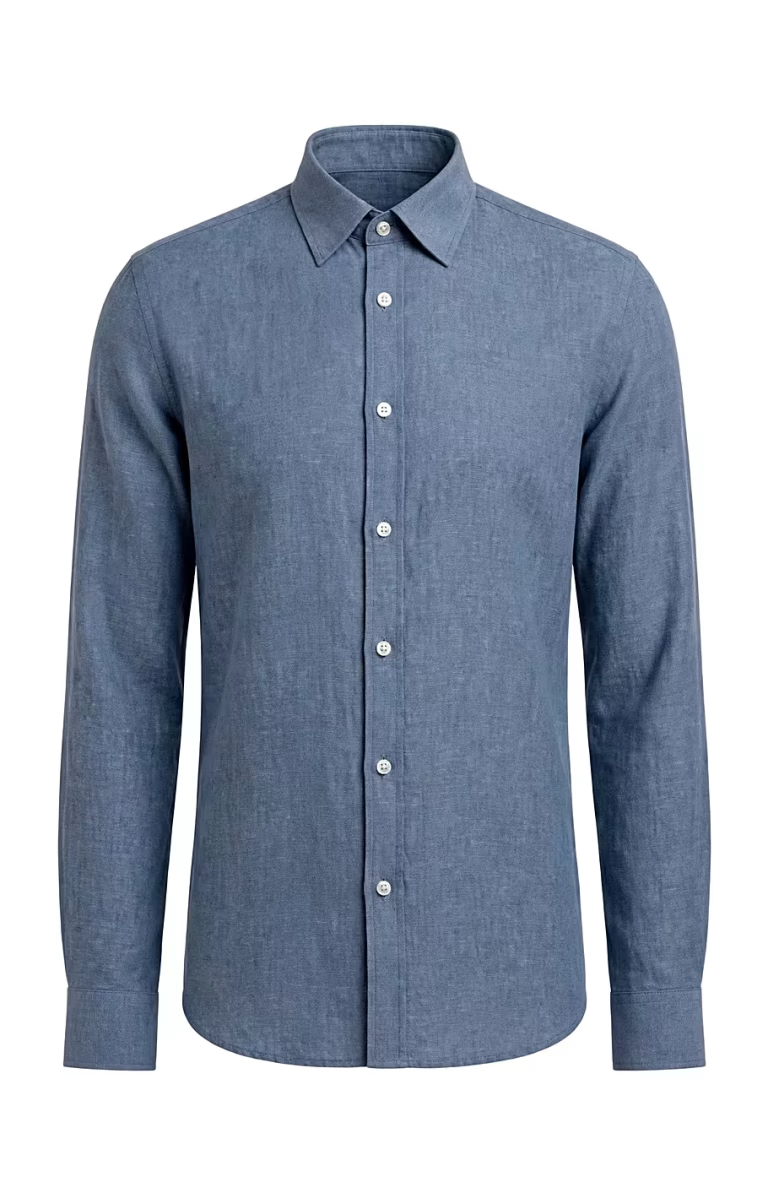
Looking for a Top Woven Shirt Factories in Bangladesh? This programme supplies brands, retailers and uniform buyers with oxford, poplin and twill shirts made to one agreed standard. Production runs through our partner facilities in Bangladesh, where collars are fused to match the fabric and every button is sewn with a shank. Therefore, the shirt you approve at sampling is the shirt that ships in bulk. Moreover, every fabric is pre-checked for shrinkage, colour fastness and skew before cutting starts. Buyers in the USA, UK, Germany, Canada and Australia order through the same sample-first process. Send your tech pack today, and we will reply with fabric options and a clear sampling plan.
- Oxford, poplin and twill woven shirting
- Collars that hold their shape after washing
- Buttons matched, sewn and checked by hand
- Clean plackets with even topstitching
- Fabric pre-checked for shrinkage and twist
- Sampling before bulk, so fit is agreed in advance
- Packing and labelling to your retail spec
Simply The Best
PORTFOLIOS












Product Details
Top Woven Shirt Factories in Bangladesh
Woven Shirt Manufacturer in Bangladesh: The Criteria Behind the Top Factories
Woven shirting forgives nothing. The fabric does not stretch over a cutting error, and the collar must stand on its own. So buyers judge a woven shirt manufacturer on construction details, not on promises. When you compare Top Woven Shirt Factories in Bangladesh, the same short list decides the ranking. First, the collar must hold its roll after repeated washing. Second, every button must stay attached in daily wear. Finally, the placket must close flat, without gaping or twist. A good shirt factory proves itself on exactly those three tests. Moreover, every fabric is checked before cutting, because a shirt that twists after washing cannot be rescued later.
- Collar fusing matched to the weight of each fabric.
- Collar points sewn evenly, with the stand set true.
- Buttons sewn with a shank and checked by hand.
- Buttonholes sized exactly, then inspected for fraying.
- Topstitching kept even and at one set distance.
- Shrinkage, colour fastness and skew tested before cutting.
- Fit approved on a size set before bulk begins.
Collar, Cuff and Placket Construction From a Woven Shirt Factory in Bangladesh
The collar is the first thing a buyer inspects, so we treat it as the signature of the shirt. Fusing is matched to the fabric weight, so the collar neither collapses nor turns stiff. Collar points are sewn evenly, and the stand is set so the collar sits upright when buttoned. Meanwhile, it lies flat when the shirt is worn open. A shirt factory earns trust at the collar stand, because that one seam decides how the garment frames the face. In addition, buttonholes are cut and stitched on dedicated machines. Each one is then checked for fraying and size. A buttonhole a fraction too small will pop its button in wear, so this check is never skipped.
- Fusing matched to fabric weight for a natural collar roll.
- Single-button and double-button cuff options on one pattern.
- Plackets that close without gaping at the chest.
- Buttons in mother-of-pearl look, matte resin or classic white.
- Spare buttons included where your programme requires them.
- Topstitching even across plackets, pockets and yokes.
Oxford, Poplin and Twill From a Woven Shirt Supplier in Bangladesh
We work in the classic woven fabrics buyers ask for first. Oxford gives a textured, casual shirt with a soft hand. Poplin gives a smooth, crisp dress shirt. Twill gives a diagonal texture that drapes well in formal and casual programmes alike. However, fabric choice is only half the decision. A shirt supplier should confirm mill supply before promising any cloth. Each fabric is therefore pre-checked for shrinkage, colour fastness and skew before cutting. Where your programme needs certified fabric, we source shirting tested to OEKO-TEX standards through approved mills. As your shirt supplier for all three core shirtings, we keep the fabric story on your label honest.
- Oxford for textured, casual shirts with a soft hand.
- Poplin for smooth, crisp formal and dress shirts.
- Twill for a diagonal texture with a clean drape.
- Yarn-dyed checks and stripes matched across the placket.
- Mill lead times confirmed in writing at sampling.
- Alternative fabrics offered early if a mill risk appears.
Fits, Washes and Programmes From a Custom Woven Shirt Manufacturer in Bangladesh
Woven shirts serve many programmes, and we cut for each one separately. A slim formal shirt, a regular business shirt and a relaxed casual shirt are three different patterns. They are not one pattern scaled up and down. Your shirt manufacturer should grade each fit separately, and ours does. Instead of scaling, we grade across your size range and make size-set samples before bulk. Washing is agreed at the same stage. A garment-washed oxford has a softer hand and a slightly broken-in look. Meanwhile, a crisp poplin ships unwashed with a clean finish. Either way, the wash recipe is recorded, so reorders match the first order exactly.
- Slim formal, regular business and relaxed casual fits.
- Separate patterns for each fit, never one scaled block.
- Size sets sampled and approved before bulk cutting.
- Uniform programmes held by your shirt supplier across years.
- Wrinkle-resistant finishes offered, with hand-feel trade-offs explained.
- Easy-care finishes tested before they are offered.
- Wash recipes recorded, so every reorder matches.
Your Shirt Order in 7 Steps
Every programme follows the same written route, from first sketch to final carton. First, your shirt manufacturer receives the tech pack and flags any construction risk. Then sampling proves the fit and the fabric before bulk begins. Bulk starts only on your written sign-off. Inline checks then run at cutting, fusing, sewing and finishing. Finally, a final audit checks finished cartons before anything ships. The route stays the same whether you buy through a shirt exporter or directly. Moreover, fabric and trims are booked before bulk cutting, so the schedule rests on secured materials, not on hope.
- Step 1: Send your tech pack, reference shirt or measurements.
- Step 2: We confirm fabric, trims and mill lead times.
- Step 3: A proto sample is made in your chosen fabric.
- Step 4: A size set follows for fit approval.
- Step 5: Bulk cutting and fusing begin after written sign-off.
- Step 6: Sewing and finishing run with inline quality checks.
- Step 7: Finished cartons are audited, packed and shipped.
Woven Shirt Manufacturing in Bangladesh for Canadian Brands
Canadian brands plan around longer shipping windows, so clarity matters from the first email. Our Woven Shirt Manufacturing in Bangladesh for Canadian Brands programme confirms fabric, wash and packing early. The timeline is then kept in writing at every stage. Also, a shirt manufacturer who flags mill risks early protects your whole season. Our office flags those risks before they reach your delivery date. Therefore, a Canadian reorder rarely becomes an emergency. Instead, it becomes a calm repeat of a sample that already passed. Canadian buyers also meet their shirt supplier first through sampling, so the first sample carries the full standard.
- Fabric and wash confirmed before the shipping window tightens.
- Timelines held in writing from sampling to shipment.
- Seasonal programmes planned around Canadian retail calendars.
- Reorders repeat the approved sample, size for size.
- Packing set to your warehouse standard in advance.
- One office contact from first sample to final carton.
Woven Shirt Exporter in Bangladesh for Spanish Retailers
Spanish retailers look for flexible colour ranges and quick sampling. They also apply the same quality bar to small and large lots alike. Spanish buyers judge a shirt exporter on sampling speed first. Our programme answers that habit directly. Colourways are sampled fast, in the fabrics your range already uses. Then the approved standard is held across every repeat lot. Their shirt supplier holds the base pattern while colours rotate by season. Moreover, a Spanish chain can test a new colour without rebuilding the whole programme. The base pattern, wash and packing stay fixed. Only the colour changes, so shelves stay consistent while the range stays fresh.
- Flexible colour ranges sampled quickly from stock fabrics.
- The same quality bar on small and large lots.
- Base patterns held while colourways rotate by season.
- Retail-ready packing matched to your store standard.
- Repeat lots checked against the approved first sample.
- New colours added without changing fit or wash.
Markets We Supply
Our woven shirt programmes ship to buyers on four continents. The notes below describe what each market usually asks for. Therefore, you can see quickly where your own order fits. Our export paperwork follows the documentation practice set out by BGMEA, the national garment manufacturers association. Also, every market buys through the same sample-first process. Only the packing, labelling and timing change.
- Nine core markets supplied on repeat programmes.
- Labelling and packing set per market before bulk.
- Delivery windows planned around each market calendar.
- Repeat programmes held to the first approved sample.
- Season-flipped calendars planned for southern markets.
United States
USA buyers order in deep, consistent colour lots. Before bulk starts, the shirt manufacturer confirms labelling and packing to their retail spec. Therefore, cartons arrive ready for the distribution centre, not for rework.
United Kingdom
UK buyers want reliable fits and steady reorders across seasons. Fabric and wash are held constant from the first bulk lot to the last. So a returning customer finds the same shirt every season.
Germany
German buyers check construction first. Seams, stitch density, wash fastness and trims are all confirmed on the approved sample. German buyers also ask the shirt factory for stitch density notes before production begins.
France
French buyers pair clean design with honest fabric stories. They reorder when the fit and hand feel match the sample exactly. Therefore, sampling discipline matters more than sampling speed.
Canada
Canadian buyers plan around longer shipping windows. We confirm fabric, wash and packing early, and we keep the timeline in writing. Then the programme absorbs delays without drama.
Australia
Australian buyers order season-flipped programmes. They value clear communication on fabric weight, fit and delivery dates. Moreover, their shirt exporter confirms size sets against the flipped calendar, not ours.
United Arab Emirates
UAE buyers want sharp pricing on core styles with retail-ready packing. They move fast once the sample is approved. So our sampling desk answers quickly and in full.
Netherlands
Dutch buyers run lean, repeat programmes. They judge a shirt supplier on whether the tenth order matches the first, stitch for stitch. Consistency is therefore the whole offer.
Spain
Spanish buyers look for flexible colour ranges and quick sampling. The same quality bar applies to small and large lots alike. Also, colourways rotate without disturbing the base pattern.
Shrinkage Control and Wash Testing on Every Woven Programme
Woven shirts live or die by their measurements after washing. A collar that fits at the factory can feel tight after one hot wash. So every shirting is wash-tested before cutting begins. Your shirt factory measures the test panel before and after washing, then cuts the pattern to the proven shrinkage. Therefore, the size on the label is the size after washing, not before it. In addition, colour fastness is checked at the same temperature. A shirt manufacturer who skips this test simply ships the risk to your customers.
- Shrinkage measured on washed test panels before cutting.
- Patterns adjusted to proven shrinkage, not to guesses.
- Colour fastness checked at the stated care temperature.
- Skew and twist checked on every new fabric lot.
- Results recorded in the programme file for reorders.
Care, Longevity and the Details Buyers Notice
A woven shirt earns its reputation in its second year, not its first week. The collar still stands, the buttons are all attached, and the placket still closes flat. Those details decide whether a customer buys the same shirt again. A shirt manufacturer thinking about the whole garment life designs for that second year. So our construction choices are made for longevity, not for the first fitting. Care labelling is part of the same story, and we write it honestly. A shirt that needs gentle washing says so on its label. We test every fabric at the care temperature the label states. Therefore, the instructions and the garment always agree.
- Collars fused to neither collapse nor turn stiff.
- Shank-sewn buttons that flex instead of snapping.
- Seams finished to survive repeated laundering without fraying.
- Buttons tested for colourfastness and breakage before bulk.
- Interlinings matched to fabric weight for the right feel.
- Thread chosen for strength and colour match, not price.
- Checks your shirt factory runs before every bulk lot.
- Collar stays and spare buttons included on formal shirts.
Questions Buyers Ask
Buyers usually ask the same practical questions before a first order. The answers below are the ones we give at sampling. If your question is missing, our merchandisers answer it directly and in writing.
- Answers confirmed on your sample, not just in email.
- Any answer that changes cost is flagged before bulk.
Which woven fabrics do you offer?
Oxford, poplin and twill are our core shirtings. Other woven fabrics are available on request, once mill supply is confirmed. Therefore, no fabric is promised before the mill confirms it.
Do you make both formal and casual shirts?
Yes. Formal, business and casual fits are separate patterns. Each one is sampled and approved before bulk. So the fit you sign off is the fit that ships.
How do you keep buttons secure?
Buttons are sewn with a shank and checked by hand. A careful shirt factory sizes every buttonhole, so buttons stay put in wear. Spare buttons are added where your programme requires them.
Can you hold a uniform programme across years?
Yes. Patterns, fabric standards and wash recipes are recorded for every uniform programme. Your shirt manufacturer keeps that file, so a new hire shirt matches a veteran shirt exactly. Reorders simply repeat the file.
What checks do German buyers usually request?
German buyers usually ask for stitch density, seam strength and wash fastness results first. We confirm all three on the approved sample. The test notes then travel with the bulk file.
How do UK buyers handle reorders across seasons?
UK buyers hold fabric, fit and wash constant across seasons. We keep the approved sample and the full spec on file. Therefore, each reorder starts from proof, not from memory.
How do you control shrinkage on woven shirts?
Every fabric is wash-tested before cutting, and the pattern is adjusted to the proven shrinkage. Your shirt supplier keeps those results on file for reorders. So the tenth order fits like the first one.
Looking for a Top Woven Shirt Factories in Bangladesh?
Tell us your styles, colours and target delivery window. We will reply with a sampling plan and a clear timeline. Buyers often pair these styles with our Woven Shirts programme, made to the same standard. For common questions, see our FAQ. Or reach us through our contact page, and a merchandiser will pick up your enquiry. Moreover, every first reply comes from a shirt manufacturer team that has read your tech pack.
- Sampling plans with honest mill lead times.
- Written timelines before any bulk commitment.
- One standard held from proto sample to final carton.
- Reorders that match your first order, season after season.