
Knit garments are Bangladesh's home ground
No country knits at Bangladesh's combination of scale and skill. The industry runs both knit families side by side: circular knitting for jersey, fleece and interlock, and flat-bed knitting for sweaters and fully-fashioned knitwear - supported by dyeing, linking, embroidery and finishing in the same districts. Buyers in Canada, the USA, the UK, Germany, France and Australia source knit programmes here because a style can move from yarn to carton without leaving the cluster.
Start with the shortlist itself: the top 7 best knit garment factories in Bangladesh are best judged by a washed sample, so this page sets out the seven knit lines our own manufacturer network runs. As a knit garment supplier and exporter, we serve brands, retailers and importers in the USA, the UK, Germany, France, Canada and Australia, with private label ranges developed panel by panel before bulk.
This page does not rank other factories. The seven entries below are the seven knit garment lines we manufacture and export ourselves at SiATEX Sourcing - flat knit and circular knit together, which is how a real knit range is actually bought.
Notice what the seven lines share: yarn. The same approved yarn lots and colour standards run across our sweaters, jersey and fleece, which is why a buyer can build a coordinated knit story - a jumper, a cardigan, a tee and a fleece in one colour family - without four separate developments in four separate factories. Knitwear buyers who consolidate this way also get simpler quality control: one measurement language, one wash standard, one inspection team that knows their handwriting.
- Flat knit and circular knit supplier lines in one programme
- Yarn, gauge and colour approved before bulk production
- Wholesale knit ranges with washed measurement reports
- One factory standard for sweaters, jersey and fleece
1. Flat-knit sweaters and jumpers
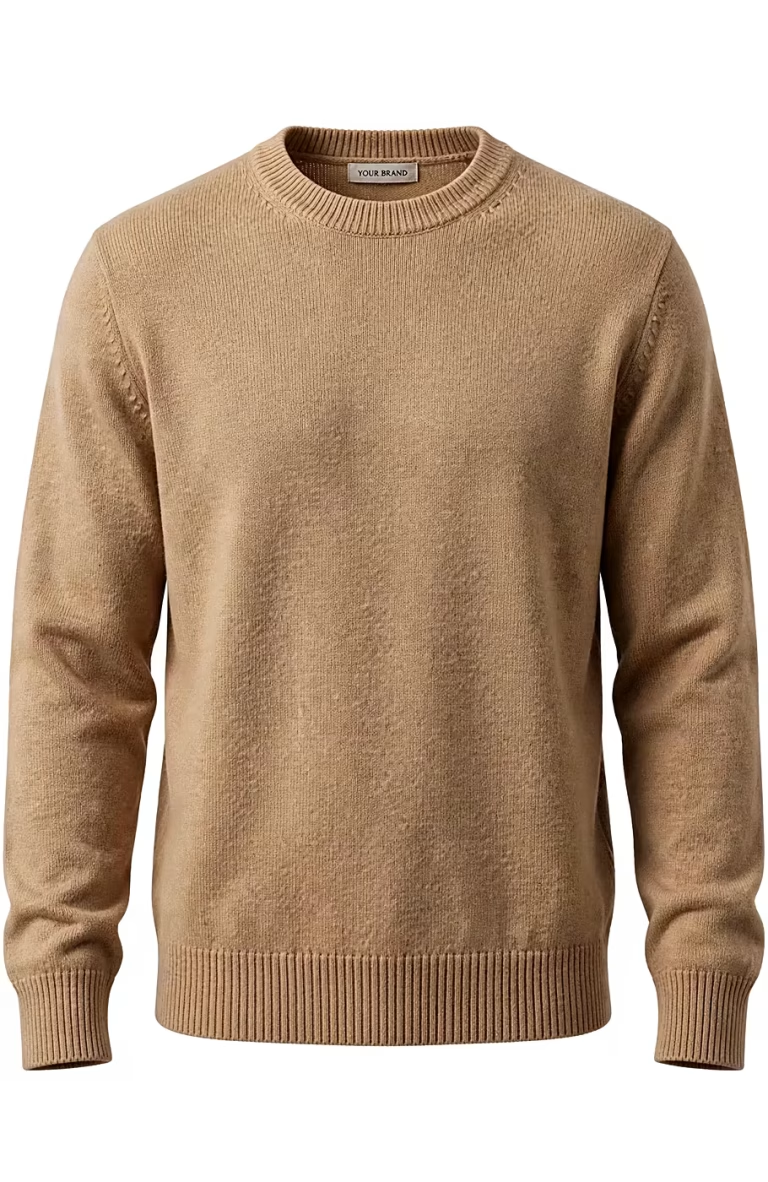
Our lead knitwear line: crew, V-neck, roll-neck and fashion jumpers knitted on flat-bed machines in gauges from chunky 3gg to fine 14gg, in cotton, acrylic, wool blends and recycled yarns. Panels are linked by hand-guided machines for a clean shoulder and neck finish, and every style is wash-tested at sampling so the fit your customer tries on is the fit they keep. Yarn lots are reserved for a programme, protecting hand feel and colour across the season's repeats. Private label knitwear buyers build winter ranges on this manufacturer line first.
2. Cardigans and knitted layers
Button, zip and open-front cardigans, knitted jackets and layering pieces in the same yarn library as our jumpers, so a label can build a coordinated knitwear story - same yarn, same colours, several silhouettes - from one development. Button and trim specs are set at sampling and checked through bulk. Jacquard and cable designs from your other lines can be colour-matched into cardigan stories. Our supplier team colour-matches cardigans into a label's wider knitwear story.
3. Circular-knit t-shirts and jersey basics
The volume knit line: single jersey tees, polos in pique, interlock basics and long-sleeve styles, combed and compacted for size stability. This is where colour discipline matters most, so every colour is lab-dipped and approved by you before dyeing, and bulk is checked against the approved dip. Compacting and finishing are set per fabric, so jersey weights from 140 to 260 GSM all hold their size chart. This wholesale jersey line is the volume exporter staple for basics programmes.
4. Fleece and sweatshirt knits
Brushed fleece hoodies, crew sweatshirts and jogger sets at 280-340 GSM, plus French terry for lighter layers. The fleece face is raised and sheared evenly so print and embroidery sit cleanly, and shared colour cards with our jersey lines let a buyer build one identity across tees, fleece and knitwear. Rib and collar components are knitted to recover, keeping necklines where they were designed to sit. Retail chains order this fleece range as a bulk supplier line for winter sets.
5. Knitted dresses and fashion knits
Jersey and flat-knit dresses, knitted skirts and two-piece sets, including jacquard and pointelle work knitted in, not printed on. Fashion knits turn on pattern accuracy, so jacquards are struck off as knitted panels for approval before a garment is made - what you approve is literally what the machine knits. Pattern panels are weighed before linking, a quiet check that catches yarn drift early. Fashion buyers develop these dresses with our factory as a custom knit range.
6. Kids knitwear
Children's jumpers, cardigans, jersey sets and school knitwear in soft-hand, azo-free yarns, graded on children's blocks and checked against the safety rules of the destination market. School programmes hold yarn and colour standards across repeat orders, so a September reorder matches last year's jumper. Drawcord and trim safety for children's knits is verified per style before bulk cutting. School programmes repeat through our OEM supplier service, holding colour across years.
7. Jacquard, intarsia and statement knits
Pattern-led knitwear: jacquard designs, intarsia motifs, cable and texture stitches, and colour-blocked styles. These are the pieces that carry a knitwear range's identity, developed panel by panel with the buyer - stitch, yarn and colour all approved as knitted fabric before production. Cable, moss and texture stitches are developed as swatch panels for your range planning.
Markets our knit garment manufacturers and exporters supply
Knit programmes made in Bangladesh ship from Chattogram to USA basics buyers, UK knitwear retailers and Hamburg for Germany, where size systems, fibre labelling and wash care rules differ by market. France and Canada build layered winter ranges, while Australia orders lighter gauges for its opposite season. Our exporter team checks labels, size conversions and packing marks for each destination before cartons close.
- Hungary: Budapest importers take mid-gauge knitwear from our supplier range for winter retail
- Spain: Barcelona fashion buyers order wholesale lightweight knits and cardigans for spring ranges
- Belgium: Antwerp distributors stock private label sweaters with EU labelling and carton marks
- Gauge planning: chunky knits for northern winters, fine gauges for milder markets
Questions buyers ask knit garment manufacturers and suppliers
- Send a tech pack, yarn target and size set
- Approve a knitted panel and washed sample first
- Confirm wholesale colours against an approved lab dip
- Agree lead time with the supplier before bulk
What gauge should my sweater be, and how do manufacturers decide?
It depends on look and season: 3-5gg gives chunky, hand-knit character, 7gg is the versatile mid-weight most programmes build on, and 12-14gg gives fine knitwear that layers like a garment. A good manufacturer samples in your gauge and shows the difference in the hand.
Why does linking matter to a knitwear supplier?
Linking joins knitted panels loop by loop instead of overlocking them, keeping shoulders and necks flat, elastic and clean inside. On fine-gauge garments it is the difference between real knitwear and a sewn imitation - check the inside of any supplier sample at the shoulder.
How do factories control shrinkage in knit garments?
Yarn is specified for the end use, garments are compacted or wash-finished as the style requires, and measurements are verified after washing at sampling and again at final inspection. The size chart you publish is the size your customers receive.
How are quantities handled by a wholesale knit garment supplier?
Quantities are agreed style by style with our team, and a trial style is a normal way to start. Talk to us about the range you are planning rather than guessing at a minimum - gauge, yarn and colours all shape the sensible starting point.
Can circular knit and flat knit live in one exporter order?
They usually should. A range pairing sweaters with jersey basics and fleece shares yarn standards, colours and inspection, and ships together through one exporter programme - one development conversation instead of three, and a rail that looks like one brand.
How to judge a knit garment factory with one sample
Knitwear forgives less than woven clothing, because the fabric is the structure. Start with the sample's measurements - then wash it and measure again. A well-made knit garment returns to its approved dimensions; a careless one grows, twists or tightens, and no inspection certificate repairs that. Run your hand inside the shoulder and neck: linked seams feel flat and elastic, overlocked joins feel like a ridge, and your customers will feel the difference every time they wear it.
Look at the yarn honestly. Ask what it is - fibre, count, spinning method - and whether it is the yarn the bulk will use, because substituting a cheaper yarn after sampling is the oldest trick in knitwear and the easiest to prevent: keep a sealed sample and a yarn reference from the approved lot, and check production against both. Check the colour the same way, against an approved dip under daylight, since knit surfaces scatter light differently from woven ones and screen approvals lie generously.
Finally, ask about the boring machinery of consistency: how gauges are assigned to styles, how panels are weighed and checked before linking, how measurements are verified after washing at final inspection. Factories that answer these questions with a process rather than a promise are the ones whose second order matches their first - which is, in the end, the only ranking in knit garments that matters.
- Measure the sample, wash it, then measure it again
- Check linked seams inside the shoulder and neck
- Confirm the bulk yarn matches the approved lot
- Ask the factory for a washed measurement report
How we work, from first sample to final carton
Every knit line follows the same path: yarn and gauge selection, a knitted panel or counter-sample for your approval, bulk with in-line and final inspection against the approved sample, and packing to your retail instruction. Our knitwear range is set out in full on the sweaters and knitwear page, the questions buyers ask us most are answered on the FAQ page, and you can talk to our team about the knit programme you are planning. Send a photograph, a tech pack or a garment to match - the knitted sample that comes back is the honest answer to any factory list. Statement knits give a private label range its identity, developed panel by panel.
- Inquiry, tech pack and yarn selection with our team
- Knitted panel or counter-sample approved before bulk
- Bulk production checked in line and at final inspection
- Packing and exporter documents prepared per market
Whichever line you start with, the top 7 best knit garment factories in Bangladesh question is answered by the sample that survives washing - and our factory team will knit that sample to your specification, as your manufacturer and exporter, before you commit.