
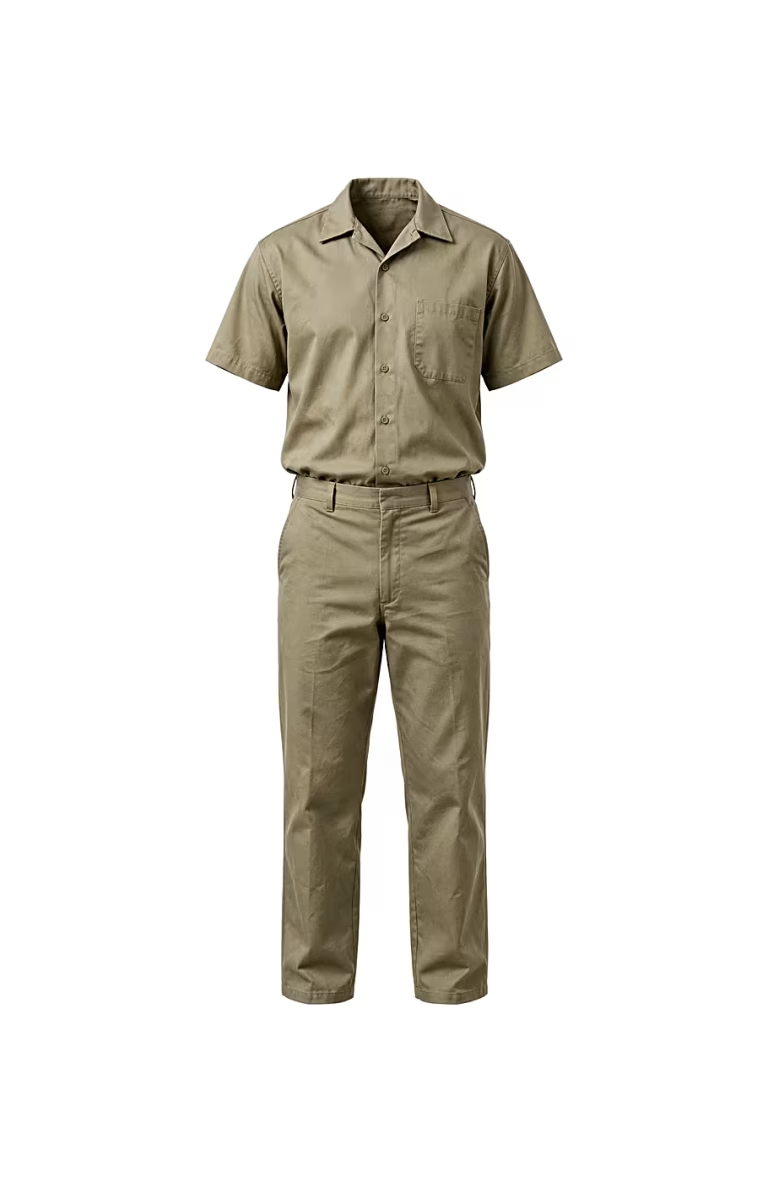

How to judge a uniform factory in Bangladesh
Buyers working through the Top 10 Uniform Factories in Bangladesh usually start with reorder discipline, because a uniform programme lives or dies on whether year three matches year one. Search for uniform factories in Bangladesh and you will find hundreds of names. The hard part is not finding a factory; it is knowing which ones can hold a uniform programme together for five years of reorders. Buyers in Canada, the USA, the UK, Germany, France and Australia who source uniforms here long-term judge factories on production discipline, not on websites.
We are SiATEX Sourcing, and rather than list ten other companies, we will show you the ten production strengths the uniform operation of our manufacturing network is built on. Through our facilities in Bangladesh, that network also works as a uniform manufacturer and exporter for the USA, Canada, the UK, Germany, France and Australia, serving uniform buyers as a wholesale supplier and OEM partner for private label programmes. Read them as a checklist: any factory you are considering should be able to show you the same things before you place a programme with them.
The factory standard in brief - what to check on any line:
- Dedicated uniform sewing lines run as one manufacturer programme
- In-house embroidery, digitised and struck off before bulk production
- Fabric and lab-dip control held by our supplier team
- Full size curve graded, with fit sets in the extreme sizes
- Wholesale and OEM packing planned against your size ratio
1. Dedicated uniform sewing lines
Uniforms are not fashion production. Styles run for years, sizes run wide, and consistency matters more than novelty. When a reorder arrives two years later, the same construction notes, attachments and settings are pulled from the programme file, so the garment your team receives matches the original issue seam for seam. Wholesale buyers and uniform importers judge this line first, because a dedicated factory setup is what keeps a five-year programme consistent from the first carton to the fiftieth.
2. In-house embroidery and logo application
A uniform factory that sends embroidery out loses control of the one detail your brand is judged on. Stitch density and backing are chosen for the garment - light on a polo, firm on a workwear chest - and placement templates keep a five-thousand-piece run in the same position to the millimetre. Names, flags and department marks are handled in the same controlled process.
3. Fabric sourcing and lab-dip control
Most uniform failures are fabric failures: a colour that drifts, a cloth that pills, a weight that changes between orders. One approved standard stays in our lab and one with you, and reorders are matched against it under the same light conditions. Garment suppliers who buy fabric against a written standard rarely suffer colour drift, and OEM buyers can lock their own shade and hand-feel at the lab-dip stage.
4. Pattern, grading and fit sets
Uniform programmes cover more body shapes than any fashion range, so grading cannot be an afterthought. Patterns are graded across the full size curve - including the tall, short and extended sizes most factories quietly avoid - and a fit set in every size is produced for your approval before bulk. Measurements come with a tolerance table, and bulk production is checked against it.
5. Cutting accuracy and size-ratio packing for wholesale orders
A uniform order is a list of sizes before it is a pile of garments. Our cutting is planned against your size ratio, bundles are ticketed by size and style, and packing follows the same ratio so cartons arrive ready for your stores or your uniform supplier's shelf. Mixed-size cartons are labelled outside with the exact breakdown. This discipline sounds basic until you have opened a shipment where the mediums are in three cartons and the extra-larges are missing - with us, the ratio you ordered is the ratio that was cut, sewn and packed.
6. Inline and final inspection
Quality in a factory is a sequence, not a department at the end. Defects are logged by type, so a recurring fault is fixed at its cause rather than inspected out one garment at a time. The inspection standard is agreed with you before bulk, in writing, with acceptable tolerances stated. Private label programmes depend on this inspection sequence, because a manufacturer's own label carries the fault if a carton reaches the wearer unchecked.
7. Wash-tested colourfastness
Uniforms are washed harder and more often than almost any other clothing, many of them industrially. Fabrics and finished garments from our programmes are wash-tested for colourfastness, shrinkage and appearance before bulk, and the results sit on the sample report your team approves. Dark colours over white trims, embroidery threads against base cloth, and high-temperature healthcare washes are all tested as combinations, not assumptions.
8. Barcoding, labelling and retail-ready packing from one factory partner
Many of our buyers are uniform suppliers whose customers expect shelf-ready product. We apply your barcodes, size stickers, woven labels and hangtags in line, fold and pack to your specification, and mark cartons for direct distribution to branches or end customers. Private labelling is complete: our name appears nowhere on the garment or its packaging. For programmes distributed by property, school or contract, packing can be split and labelled by destination at no change to the production process.
9. Compliance and audit readiness for exporters
Serious buyers audit, and a professional factory treats that as normal business. Test paperwork for fabric safety is held with each order, and buyer or third-party inspections are welcomed at the stages agreed in your programme. If a factory resists showing you this side of its operation, that tells you more than any brochure. Exporters and serious wholesale buyers read audit files before they read prices, so our supplier team keeps the compliance record open at sampling, not after problems.
10. Export packing and documentation
The last strength is the one that decides whether goods arrive as expected: export discipline. Cartons are packed to weight and dimension limits that suit your freight, marked to your specification, and shipped with the commercial documents your market requires, prepared by our own export team. Production and shipping dates are confirmed against your programme calendar - school terms, hotel openings, contract start dates - and you are told early if anything in the chain moves, never after the fact.
Questions buyers ask when choosing a uniform factory
The smartest first question is about reorders: ask any factory how it guarantees that year three matches year one, and listen for specifics - retained patterns, colour masters, construction files - rather than assurances. The second is about sizes: ask for the full graded size list and a fit set in the extreme sizes, not just the medium. The third is about problems: every factory has them, and the ones worth using will describe their inspection points and tell you what happens when a check fails. Buyers comparing factories should also ask what a manufacturer does with the knowledge a trial creates: our factory partners carry the approved patterns, dips and inspection standards straight into the main programme, so a wholesale rollout never restarts from zero, and private label settings stay locked to your file.
Factory discipline has to travel, because each market our exporter team serves reads a uniform differently. The USA and Canada label under North American care and fibre rules with inch sizing, the United Kingdom mixes inch tickets with EU wash-care standards, and Germany and France expect centimetre grading and strict colour tolerance. Australia plans school and workwear programmes around its reversed seasons. Production also serves Belgium, where Antwerp uniform suppliers stock core lines for Benelux contracts, Denmark, where Copenhagen buyers audit factories against Nordic labour standards, and Spain, where Valencia workwear importers order heat-friendly sets.
Lead times depend on fabric and programme size, and we would rather give you a date we can hold than a date that wins the enquiry. Sampling is where that honesty starts: a realistic calendar, in writing, before you commit to bulk.
Whatever factory you choose, our supplier team suggests checking these production points at sampling:
- Dedicated uniform sewing lines set up for long-running programmes
- In-house embroidery with logos digitised and approved before bulk
- Fabric sourced to a written specification with lab-dip control
- Full size curve graded, with fit sets in the extreme sizes
- Inline, mid-line and final inspection against the approved sample
- Export cartons packed to your size ratio, weight and marking rules
Finally, ask what a trial looks like. A sensible factory will suggest starting with one department, one school or one contract, proving the sampling, production and packing standard on a manageable programme before you roll it across your whole organisation. If the trial garments come back exactly as approved, in the sizes ordered, packed as specified - you have found a factory.
How we work, from first sample to final carton
Every order on this list follows the same path. You send a tech pack, a sample or even clear photographs with notes; we counter-sample in the correct fabric and return it for approval; bulk only starts when you have signed the sample off. Production is checked in line, mid-line and at final inspection against that approved sample, and packing - folding, tagging, polybagging or plastic-free packing, carton marks - follows your instructions, not our habits.
The six steps every programme follows:
- Inquiry - send a specification or a current uniform to our supplier team
- Counter-sample - sewn in the correct fabric with a full fit set
- Approval - patterns, lab dips and inspection standard signed off
- Bulk production - dedicated factory lines run the approved programme
- Quality checks - inline, mid-line and final inspection at the factory
- Shipment - our exporter office prepares wholesale cartons and documents
Our uniforms ship to the United States, the United Kingdom, Germany, France, Canada, Australia, the United Arab Emirates, the Netherlands and Spain, and our export team prepares the paperwork each of those markets needs. Quantities are agreed style by style, so talk to our team about what you are planning. The full specification of our lead line is on the uniforms page, and the questions buyers ask us most are answered on the FAQ page. As a uniform exporter, we consolidate wholesale cartons by size ratio and destination where a programme ships to several sites.
A top 10 list is only useful if the production behind it is real. Ours runs every week through our manufacturing network, which is why this Top 10 Uniform Factories in Bangladesh shortlist is written as a checklist you can test. Send our supplier team one department, one school or one contract as a trial, compare the fit set and wash results with any other manufacturer or wholesale supplier on your list, and judge the factory on the garments, exactly as a private label buyer should.