
Cut and Sew Manufacturing Services in Bangladesh: Patterns, Prototypes, Cutting, Sewing and Finishing in One Production Run
1. What Is Cut and Sew Manufacturing and How Does It Work in Bangladesh?
Cut and sew means your garment is built from raw fabric, not decorated after the fact. We run every stage ourselves, so nothing gets lost between hands.
- Your design becomes a pattern first
- The pattern is graded across sizes
- A prototype proves the design early
- Samples refine fit before bulk production
- Fabric and trims are checked first
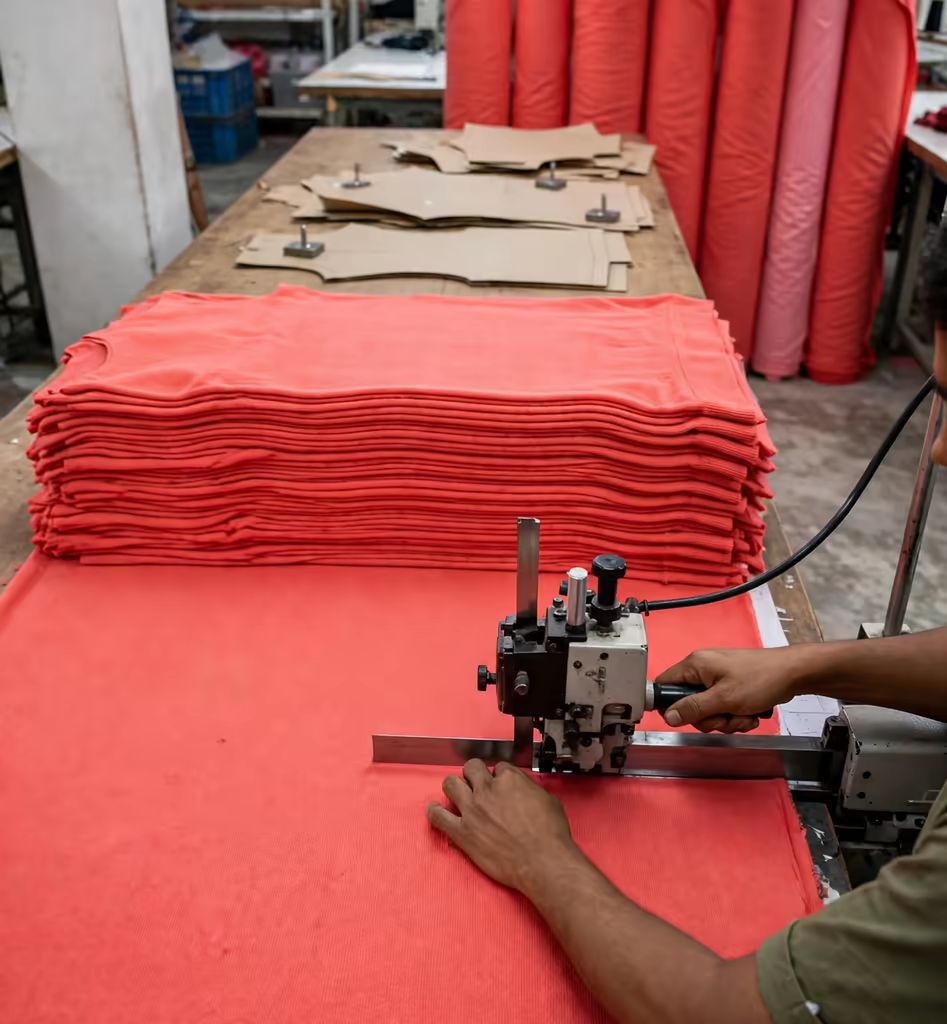
- Cutting follows the approved graded marker
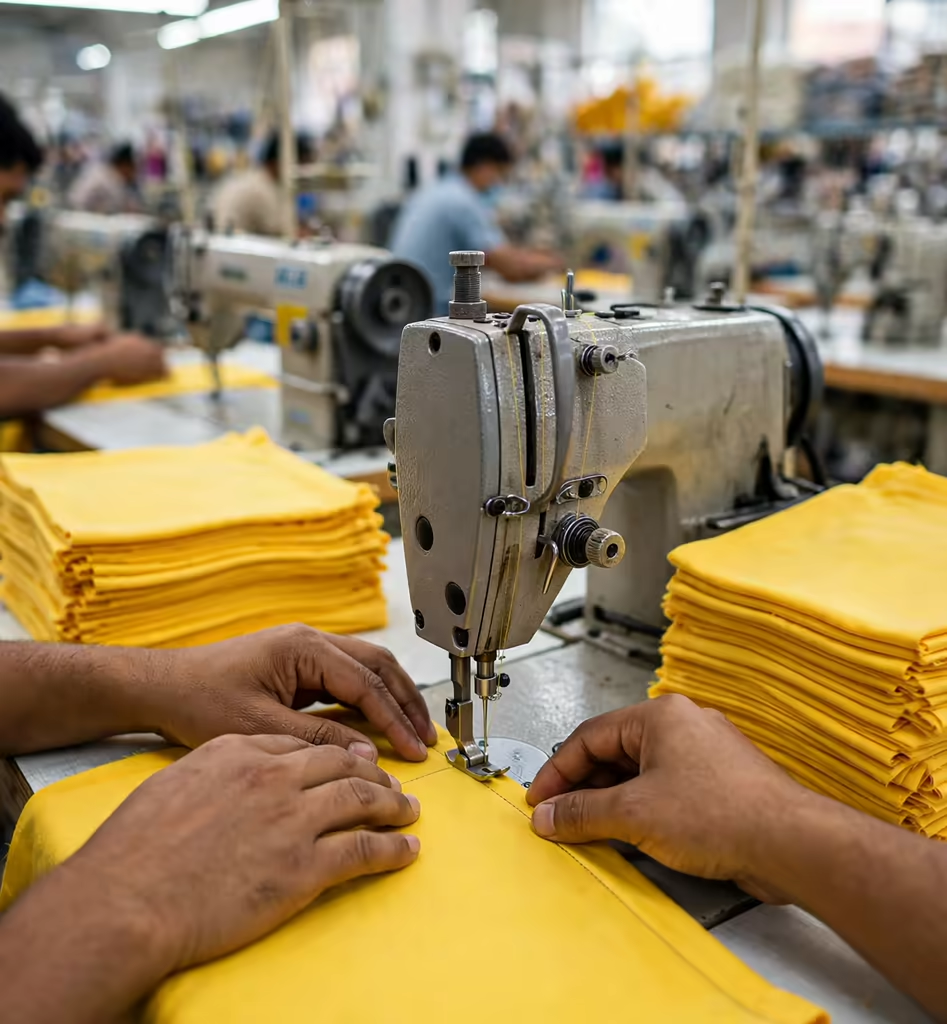
- Sewing runs against the approved sample
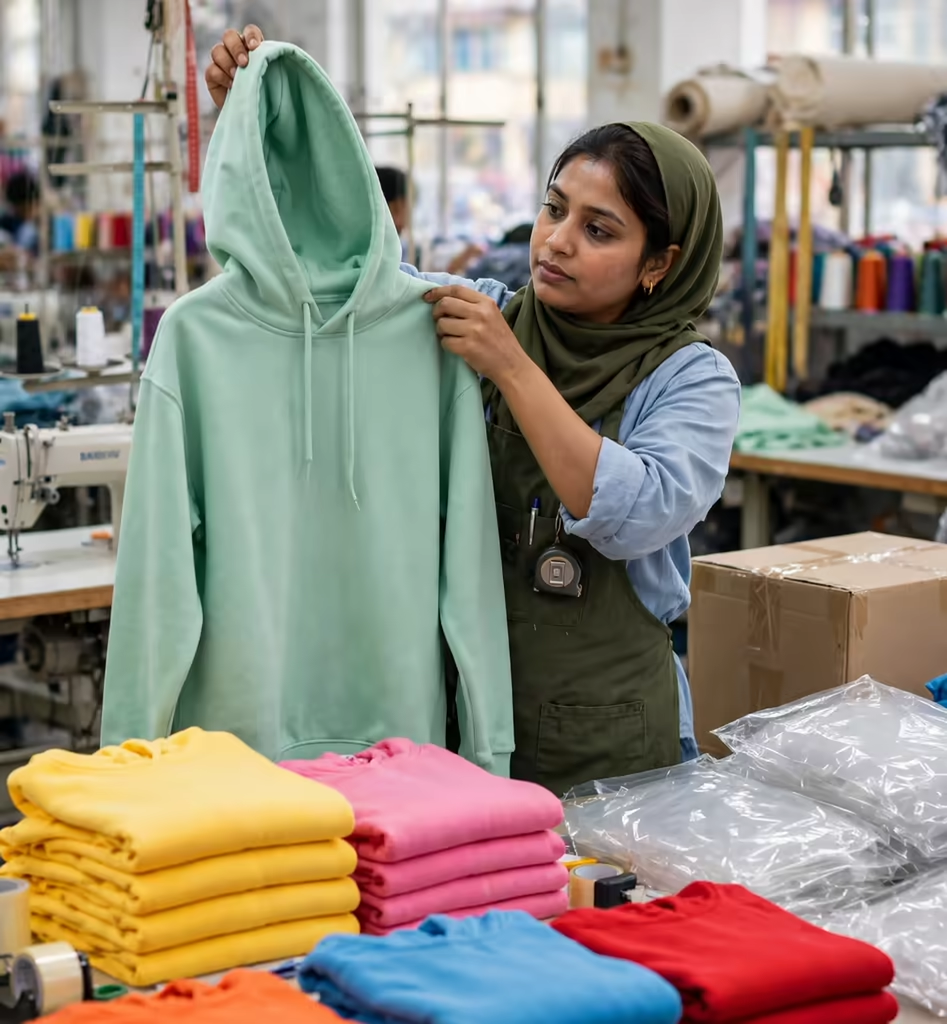
- Finishing, pressing and packing close the run
- One team from first sketch to carton
- Every stage checked against your standard
- Approvals recorded in writing, never memory
- The approved garment is the delivered garment
- Woven and knit garments both covered
- Shirting, jersey and denim all included
- Patterns, samples and bulk under one contract
- No hand-offs between stages
- Your specification leads every decision
- We answer for the whole run
- Start with how to place an inquiry with us
- Cut and sew manufacturer in Bangladesh handling every stage ourselves
- Our BGBA membership is listed on the BGBA website
2. How Does the Seven-Step Cut and Sew Process Run From Pattern to Packing?
Every order follows the same seven steps, first sample run or full programme. The order of stages never changes, so you always know where your garments stand.
- Step one: pattern made from your specification
- Step two: pattern graded across your sizes
- Step three: prototype sewn in real fabric
- Step four: sample rounds until approval
- Step five: fabric and trims gathered
- Step six: cutting, sewing and finishing
- Step seven: inspection, pressing and packing
- Each step ends with a written check
- Checks compare against the approved sample
- No stage skipped, however small the order
- You hear which step your order reached
- Problems surface early, while changes stay cheap
- Decisions get cheaper as stages advance
- One file carries the whole journey
- Sampling scheduled around your selling calendar
- Stage checks signed off in writing
3. How Are Patterns Made and Graded for Your Full Size Range?
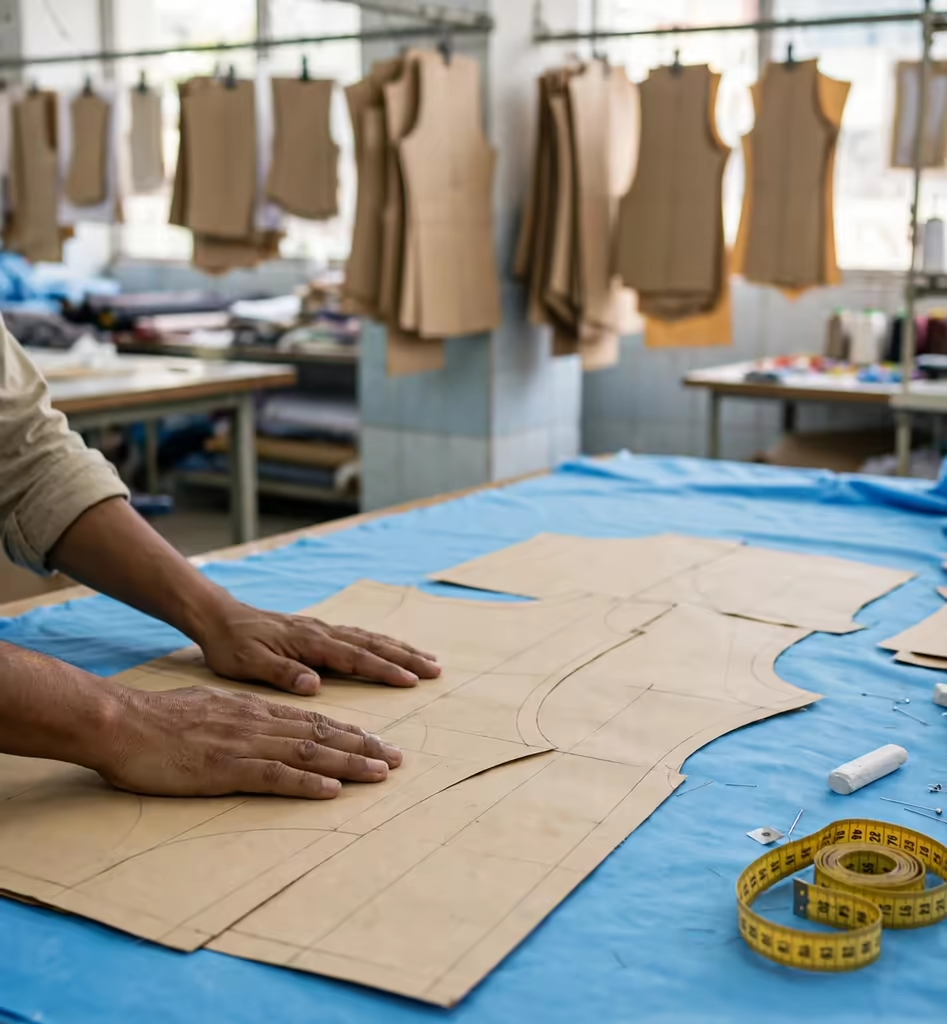
The pattern is the garment's blueprint, and small errors multiply across every size. Our makers build yours from a tech pack, a reference garment or a measurement chart.
- Tech packs become accurate working patterns
- Reference garments measured and rebuilt faithfully
- Measurement charts converted into pattern blocks
- Grading follows your own size chart
- Extended and plus ranges graded honestly
- Smallest and largest sizes both proven
- Every curve and notch kept precise
- Pattern software keeps every curve precise
- Base size built before grading starts
- Notches and drill marks placed clearly
- Senior makers check each block first
- Changes recorded against the pattern file
- Your blocks stay private, always
- Blocks used for your orders only
- Never shared with another buyer
- Marker planning protects your fabric consumption
- Patterns stored ready for every reorder
- Fit stays constant across repeat seasons
- See graded work on our woven shirts page
4. How Do Prototypes and Samples Prove Your Garment Before Bulk?
A prototype shows the design in real fabric: drape, proportion and construction at once. It is the cheapest place to find a pocket sitting wrong.
- Prototypes sewn in the real fabric
- Closest honest substitute where fabric waits
- Drape and proportion judged on cloth
- Construction faults found before bulk cutting
- Fit comments return with measurements attached
- Comments are honest, never silent copies
- Each round recorded against the pattern
- Approved version becomes the produced version
- Pre-production sample confirms the final standard
- Courier rounds keep overseas approvals moving
- Approval is a decision you can hold
- Sampling comments stay in one file
- Changes confirmed in writing before sewing
- Bulk never starts on an unapproved sample
- Sample garments measured before dispatch
- Your comments answered point by point
- Cut and sew wholesale sampling proves fit before bulk cutting starts
5. How Are Fabric and Trims Checked Before Cutting Starts?
Materials decide how a garment feels, washes and lasts. Fabric and trims are gathered against the pattern's needs and checked before a single panel is cut.
- Fabric checked for shade on arrival
- Weight and hand feel checked too
- Shrinkage tested before cutting begins
- Interlining matched to collars and cuffs
- Buttons specified to the pattern exactly
- Zips and thread never substituted silently
- Weak material choices flagged early
- Alternatives proposed before problems cost money
- Recycled fabric options available on request
- Cloth and trims quoted in one costing
- Shade held against your approved standard
- Nothing cut until materials pass checking
- Trim shortages raised before production stalls
- Every material recorded on the order file
- Thread colour matched to fabric shade
- Fabric faults marked before marker planning
- Cut and sew supplier checks keep materials honest before cutting
6. How Do Cutting, Sewing and In-Line Checks Hold Your Standard?
Once the sample is approved, lines are set for the garment type. A shirt line and a trouser line carry different machines and different skills.
- Cutting follows the graded marker exactly
- Sizes stay true across the run
- Lines set up per garment type
- In-line inspectors check seams during sewing
- Measurements compared against the approved chart
- Stitching checked while correction stays easy
- Deviations reported to you honestly, first
- Tolerances agreed before sampling are held
- Finishing includes pressing and thread trimming
- Final visual inspection before any packing
- Your labels and tags applied here
- Records kept order by order throughout
- Audit-ready files follow every batch
- Bundles tracked from cutting to finishing
- Work moves station to station in order
- Quality discipline mirrors our clothing quality control
7. Which Garments Does a Cut and Sew Manufacturer Make Best?
If a style needs a pattern before it needs a sewing line, it belongs here. Construction-heavy garments gain most from pattern discipline and graded blocks.
- Shirts and blouses with fused collars
- Clean plackets and matched checks
- Trousers where millimetres decide the fit
- Shorts built on the same discipline
- Dresses needing interlining and careful assembly
- Tees graded honestly across size ranges
- Polos and hoodies from proven blocks
- Uniform sets graded for whole workforces
- Uniform programmes reorder without fit drift
- Women's styles with complex construction
- Sportswear and activewear from your specification
- Denim styles sewn with heavy-duty stitching
- Lightweight summer wovens handled carefully
- Structured styles get patient assembly time
- Every category quoted by our own team
- Trouser programmes run through our men's trousers line
8. Can You Start From a Sketch or a Rough Idea?
Not every buyer arrives with a finished design. A concept, a sketch or a garment you want improved can all become a producible, costed specification.
- Sketches developed into sewable specifications
- Concepts costed before sampling begins
- Fabric direction matched to your price
- Construction choices explained in plain words
- Cost consequences stated for each decision
- A beautiful design must sew profitably
- First conversation costs you nothing
- Consultation usually saves a sampling round
- Measurements can come from existing garments
- Market gaps turned into real styles
- Your idea stays your property
- Advice given before any order exists
- Reference garments can anchor the development
- Old bestsellers improved into new specifications
9. How Much Do You Need to Order for Cut and Sew Production?
The honest answer depends on the garment, its sizes and its colours. One printed figure would mislead more than it helps, so we cost your real specification.
- Minimums quoted per style and specification
- Size range affects the real figure
- Colour count affects it too
- Simple tees start lower than shirts
- Constructed ranges need more pieces
- Sample orders stay small by design
- Approval stays cheap before bulk commitment
- Figures confirmed in writing, never guessed
- Repeat orders on file patterns move faster
- First orders often begin with sampling
- A trial run can attach to samples
- Programmes grow once fit is proven
- Smaller trial runs prove the relationship
- Costing shows where the figure comes from
10. How Are Finished Garments Packed and Shipped for Export?
Finished garments are inspected, pressed and packed with your labels and tags. Cartons leave marked to your routing guide, with the export papers prepared beside the goods.
- Final inspection before any garment folds
- Pressing gives garments a retail finish
- Your labels applied before cartoning
- Hang tags attached to your instruction
- Polybags and cartons to your specification
- Cartons marked to your routing guide
- Contents matched against the packing list
- Export documents prepared alongside the goods
- Papers checked before cartons are sealed
- Freight timing agreed before production starts
- Arrival planned around your selling season
- Shipment details confirmed in writing
- Carton weights recorded for freight booking
- Delivery runs like our final delivery process
- One desk handles goods and papers
- Cut and sew exporter packing matches cartons to your routing guide
11. Why Do Buyers in the United States, Germany, Canada and Beyond Choose This Service?
Buyers in different markets ask different things of the same service. The pattern file we hold for you is what makes repeat orders simple everywhere.
- United States labels build own-label ranges
- US reorders repeat the approved fit
- United Kingdom designs become producible patterns
- UK change records written every round
- German tolerances agreed and held throughout
- German measurement audits shared on request
- French drape judged on real fabric
- French finish confirmed on approved samples
- Canadian programmes span several categories yearly
- Canadian fit stays consistent across categories
- Australian development fits southern selling seasons
- Australian shipment dates fixed before cutting
- UAE uniform grading covers whole teams
- UAE team orders sampled before cutting
- Dutch documentation travels with every order
- Spanish summer shirting moves quickly here
- Freight timing agreed before production starts
- Every market served from one pattern file
- Reorder simplicity is the real product
- Read why buyers stay with us season after season
12. How Do You Start a Cut and Sew Order With Us?
Send whatever exists today: a tech pack is ideal, a reference garment works. A clear sketch with measurements can begin the pattern process just as well.
- Tech packs are the ideal start
- Reference garments work well too
- Sketches with measurements can begin
- First sampling round follows within days
- A costed sampling plan comes back
- Your blocks stay on file afterwards
- Specifications kept for every reorder
- One conversation starts the whole process
- No obligation at the first talk
- Honest answers before any commitment
- Your next range can start today
- Judge us on the first sample
- Samples couriered to your office directly