



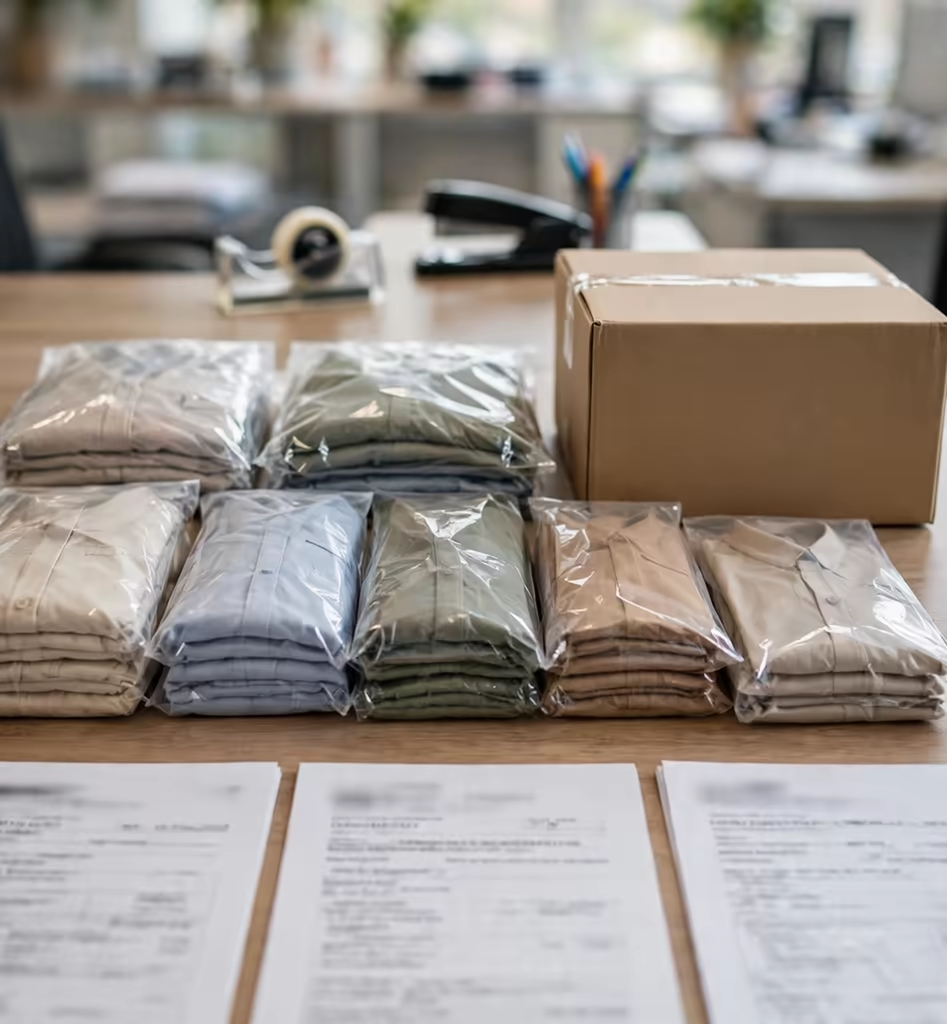
How to Pay for Clothing Orders from Bangladesh: Payment Methods, Schedules and Documents Every Buyer Should Understand
1. Letter of Credit vs Wire Transfer: Which Payment Method Is Safer for a Garment Order?
Two routes carry nearly every garment order out of Bangladesh. Which one fits depends on the order size and how long we have worked together.
- Wire transfer is the standard payment method worldwide
- Money moves bank to bank, easy to trace
- Both sides keep the same payment records
- Funds land directly on your named order file
- Irrevocable letter of credit for larger orders
- Letter of credit agreed by both sides first
- Your bank commits, ours manufactures against it
- Payment releases against the documents called for
- Export payments follow Bangladesh central bank rules
- Our terms sit inside those banking rules
- Method chosen with you at order confirmation
- Choice made alongside specification, costing and delivery
- See how to place an inquiry for payment timing
- Questions answered before fabric is ever cut
- Payment terms with a manufacturer agreed before production starts
- Our BGBA membership is listed on the BGBA website
- We confirm the proforma invoice before any advance moves
- Letter of credit opened through your own bank
- Wire transfer suits smaller and repeat orders best
- Both methods leave a full bank trail
- Currency agreed in writing at order confirmation
2. How Do You Send a Wire Transfer to a Clothing Factory in Bangladesh Safely?
All money comes through the bank. No cash, no side channels, no exceptions, whatever the order size.
- Every transfer matched to one named order
- Every transfer matched to its own invoice
- Account details confirmed in writing, order file only
- Bank details never change from message to message
- New bank details by email? Treat as fraud
- Stop and check before any money moves
- Genuine changes confirmed by a known voice
- Verify changes through our contact page directly
- We confirm receipt the day money lands
- Your merchandiser confirms against the order file
- Same merchandiser handles garments and payments
- Any queried figure traced to its order
- No searching through old emails for answers
- We never send bank details through social media
- Send us the swift copy after transferring
- Receipt checked against the invoice amount first
- Short payments flagged the same working day
- Overpayments credited to your next order file
3. How Is the Payment Schedule Set for a Made-to-Order Clothing Programme?
Payment dates follow the real shape of your order. We cost the job first, then confirm every date with you in writing.
- Quantity and category set the schedule first
- Fabric buying and dyeing need early money
- Style development work shapes the first stage
- Production lead time sets the rest
- Schedule matched to real garment cost points
- No one-size terms applied to every buyer
- Each stage states its date and trigger
- Written plainly for your finance team
- Schedule planned backwards from your delivery date
- Same file as specification and costing
- First stage: fabric and trims committed
- Next stage: production running, sample approved
- Last stage: goods documented and shipped
- Every stage tied to something visible
- Ask anytime which stage your order reached
- Order changes? Schedule re-agreed in writing
- Old terms never carried forward silently
- Delivery planning works like our final delivery page
- Payment terms from a supplier should match real cost stages
- Sample stage settled before bulk fabric booking
- Fabric stage follows your written order confirmation
- Production stage follows the approved sample sign-off
- Balance stage follows final inspection and packing
- Shipment documents follow the last stage closely
4. What Payment Terms Should a New Buyer Expect on a First Clothing Order?
A first order is where trust gets built. Terms run tighter while both sides are still learning each other, and that is fair.
- Clearer milestones on every first programme
- Tighter documentation while the relationship is new
- One contact from inquiry to shipping documents
- First orders welcomed from the United States
- New buyers start from Germany too
- New buyers start from the United Arab Emirates
- First-time importers from the United Kingdom
- First-time importers from France and Canada
- Samples run under the same payment discipline
- Trial quantities follow the same written rules
- Sample cost agreed in writing first
- Approved sample becomes the bulk payment standard
- Judge us on documents, dates, answers
- Common questions answered on our FAQ page
- Every money point understood before you start
- Ask now, not after a misunderstanding
- First orders start with a confirmed sample
- Bank charges agreed before the first transfer
- Who pays which charge written down early
- Smaller first orders carry the same care
- Trust builds when every date is kept
5. How Do Payment Terms Improve for Long-Term Clothing Buyers and Repeat Programmes?
Repeat buyers earn easier terms, season by season. Orders land on time, papers stay clean, and the arrangement grows with the programme.
- First-order terms are not forever terms
- Terms reviewed as your programme grows
- Structure simplifies as the history builds
- Both sides work from evidence, not caution
- Season programmes run under one agreed schedule
- Styles costed, sampled, sewn in sequence
- Each season stage confirmed as it closes
- Last season's file starts the next season
- No fresh negotiation from a blank page
- One programme can serve several markets
- United States this season, Germany the next
- Australia too, on the same file
- Destination changes, your terms do not
- One file your whole finance team reads
- Why buyers stay is on why Siatex Sourcing
- Steady buyers agree one schedule per season
- Fewer checks once the record stays clean
- Dates move only by written agreement
- Long programmes priced with payment stages inside
6. What Documents Prove That Your Payment and Your Shipment Match?
Every payment leaves a paper trail. Invoices, packing lists and bank advices are checked like garments, before anything is released.
- Invoices match the order file exactly
- Packing lists checked against the cartons
- Bank advice behind every money movement
- Shipping documents prepared to banking standards
- Small errors delay payments at banks
- Mistyped figures get caught before release
- Names spelled one way, every document
- Documents checked like our clothing quality control checks
- Financial papers kept beside production papers
- Payment questions answered from the same file
- Discrepancy? Investigated at once, records shown
- No explanations without the underlying records
- Old invoices kept for your auditors
- Past document sets available on request
- One file, complete, whenever you ask
- Payment terms for garment exporters rest on matching documents
- Commercial invoice carries the agreed payment terms
- Bank advice matched against the invoice total
- Bill of lading copies shared after shipment
- Document copies sent before originals are couriered