
Clothing Packaging for Garment Orders from Bangladesh: Folding, Polybags, Tags and Cartons Handled the Way Your Brand Asks
1. How Are Garments Folded and Finished Before Packing Starts?
Packing starts only after the last check. A garment that fails inspection never reaches the folding table, and nothing gets bagged straight off the machine.
- Final inspection finished before folding begins
- Loose threads trimmed at the finishing table
- Garments pressed flat before any folding
- Folding done to your measurement or template
- Fold size matched to your polybag size
- Tissue paper placed where your sheet asks
- Folded garments stacked by size and colour
- Stacks counted before bagging starts
- Creased or marked pieces sent back
- Buttons, zips and cords checked again
- Spare buttons added where you request them
- Folded shape kept square for shelf display
- Same fold used across the whole order
- Sample garment folded first for your approval
- Approved fold becomes the packing standard
- Finishing team works from your instruction sheet
- Packaging with a manufacturer agreed before folding starts
- Buttoning and pairing done before stacking
- Lint removed during final garment handling
- Fold boards used where your fold needs them
- Pairs and sets matched before folding
- Checking discipline matches our clothing quality control page
- Our BGBA membership is listed on the BGBA website
2. What Polybag Packing Options Can You Choose for Your Clothing Order?
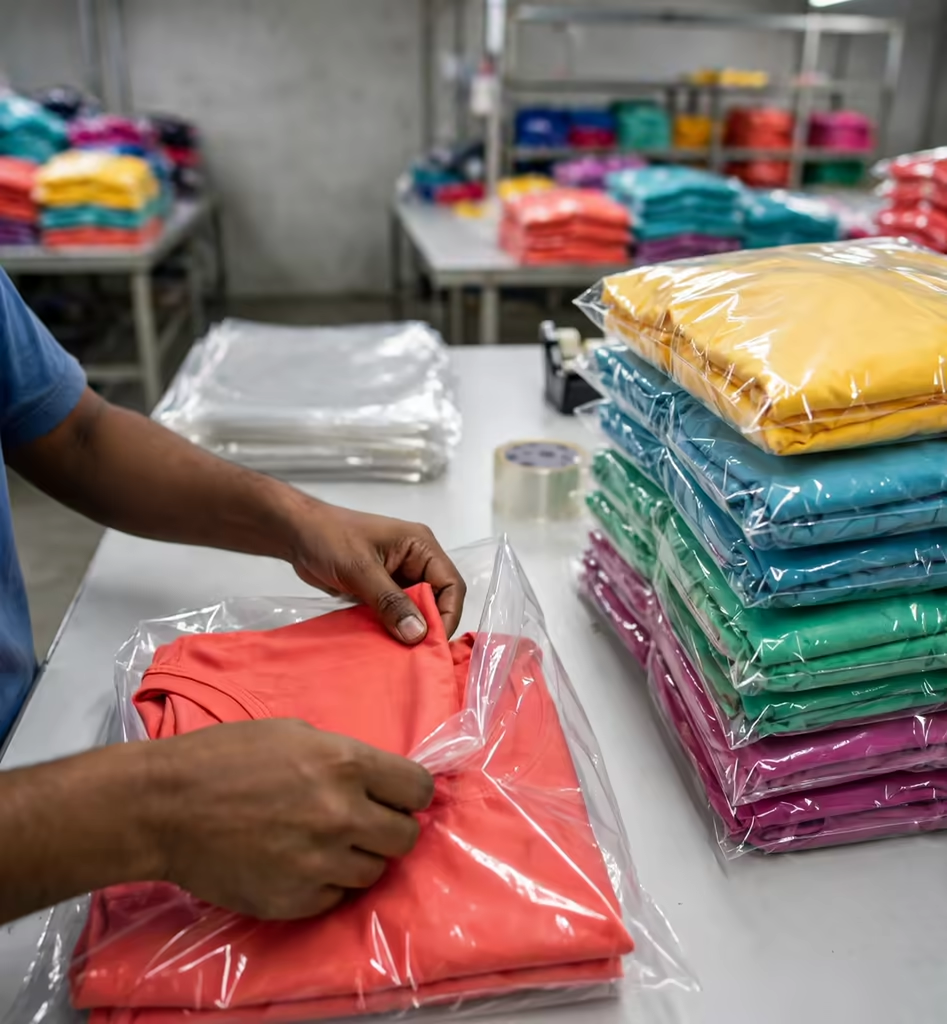
Most garments travel in clear polybags. How many pieces go in a bag is your call, and it is written on the order file before packing starts.
- Single garments bagged one piece per bag
- Matching sets bagged together as one unit
- Dozen packing available when you ask
- Bag thickness chosen with your order
- Clear bags keep colours visible for checking
- Bags sealed flat, air pressed out
- Size sticker placed on the bag face
- Bag printing arranged from your artwork file
- Warning wording printed where your market requires
- Bag size matched to the folded garment
- Packaging from a supplier keeps bags matched to folds
- No loose pieces left outside bags
- Bagged stacks kept in size order
- Damaged bags replaced before carton packing
- Retail bags faced the same way up
- Ziplock style bags where your range needs them
- Frosted bags arranged for premium ranges
- Your sheet decides, we follow it
- Bag opening kept at the same end
- Small vent holes where your bag style uses them
- Bags kept dust-free before garments go in
- Common packing questions sit on our FAQ page
3. How Are Hang Tags, Labels and Barcode Stickers Added to Your Garments?
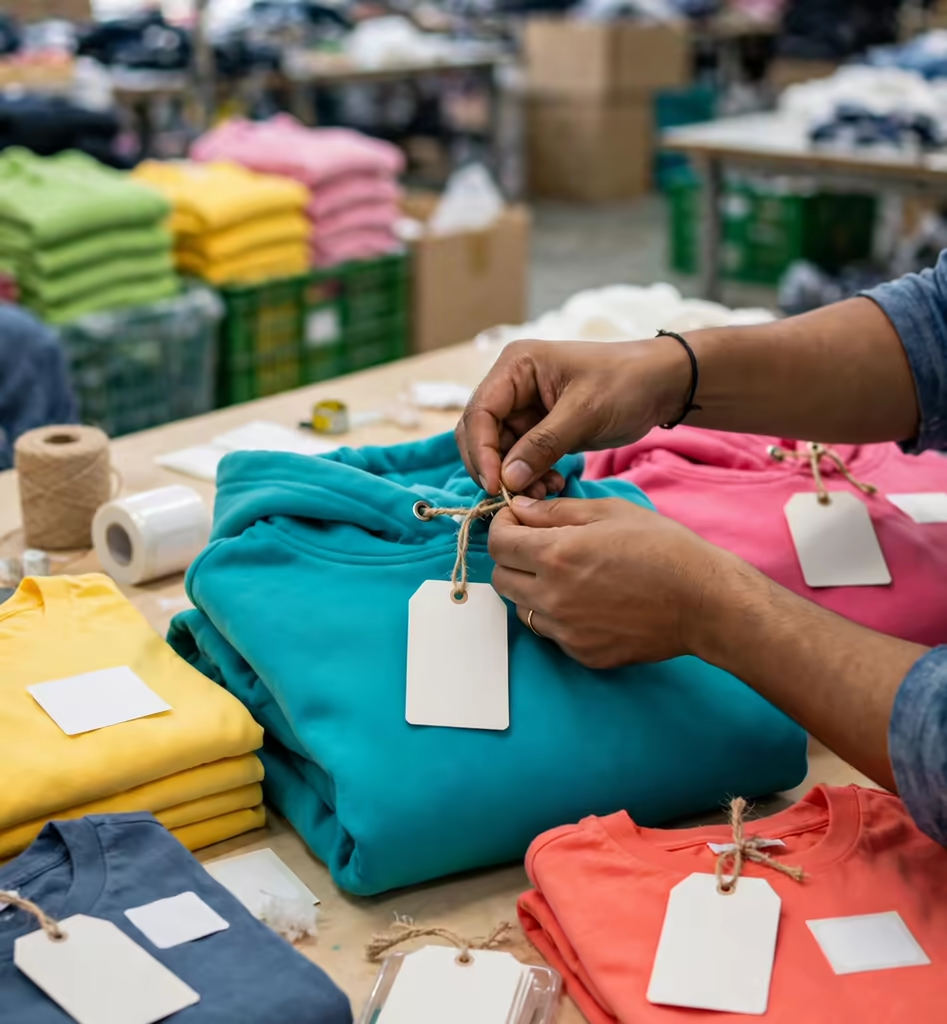
Tags carry your brand, not ours. Everything attached at packing is made from artwork you approve or stock you supply yourself.
- Hang tags tied at the point you name
- Tag string, pin or loop as instructed
- Barcode stickers matched to each size
- Sticker data checked against your file
- Size stickers placed where buyers expect them
- Price tickets added when your programme needs them
- Care labels carry your washing instructions
- Brand labels sewn in during production
- Spare tags included when your sheet asks
- Send tag artwork through our contact page route
- Nothing printed without your approved artwork
- Wrong barcode? The carton stays open
- Tags counted against the order quantity
- Mixed sizes never share one barcode
- Your brand only, never our name
- Tag position kept the same order-wide
- Loose tags swept from the table daily
- Sticker rolls checked before each style starts
- Barcode files kept with the order record
- Tag samples approved before bulk tying
4. How Are Garments Packed Into Cartons by Size and Colour Ratio?
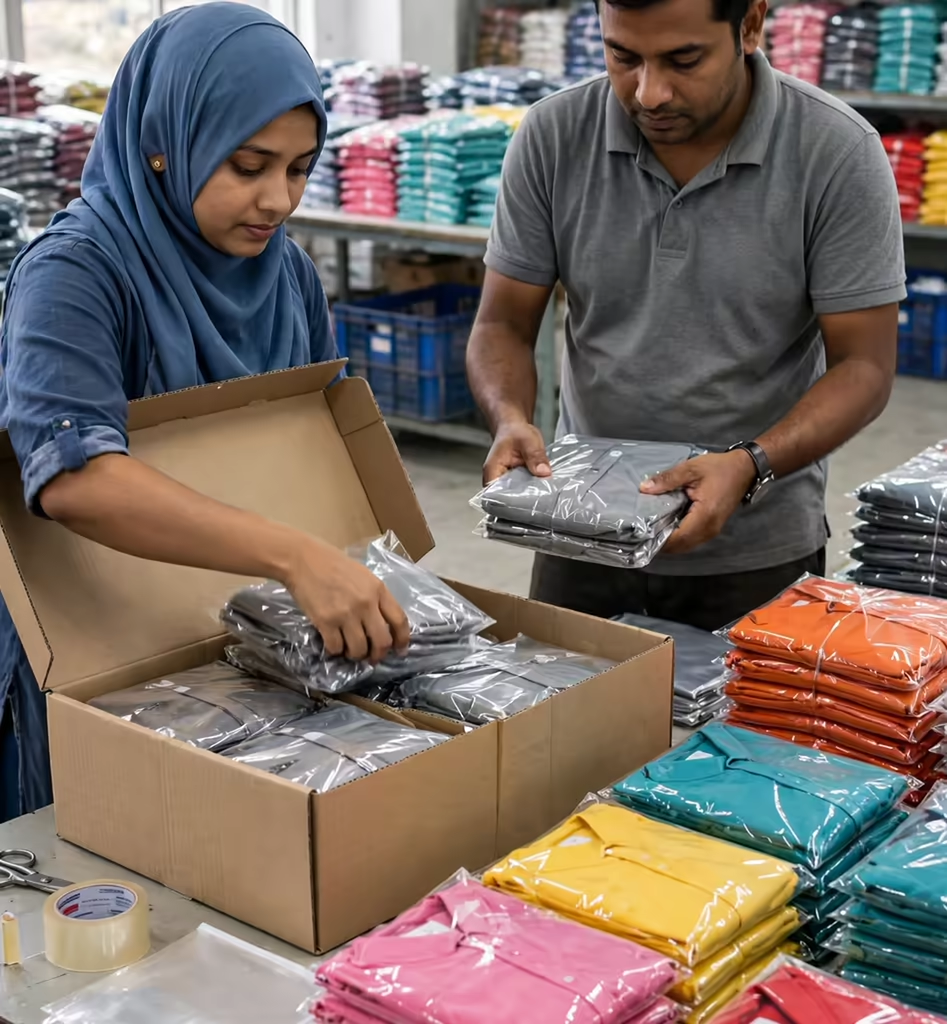
Cartons follow your ratio sheet. A buyer opening any carton should find exactly the sizes and colours that the sheet promises.
- Ratio sheet fixed before carton packing starts
- Packaging for a factory follows your ratio sheet exactly
- Sizes packed in the proportions you set
- Colours kept apart or mixed as instructed
- Solid size cartons where your warehouse prefers
- Assorted cartons marked clearly on the outside
- Each carton counted piece by piece
- Carton contents matched to the packing list
- Part-filled cartons flagged to you early
- Short sizes reported before cartons close
- Heavy garments packed at the carton bottom
- Cartons filled firm, no crushed corners
- Inner bags keep sets together inside
- One style per carton unless you say otherwise
- Carton numbers run in order for checking
- Counts feed our final delivery paperwork directly
- Empty space padded so stacks stay put
- Ratio changes confirmed in writing first
- Colour dividers placed between stacked shades
- Top layer protected with a clean sheet
- Every carton traceable back to its style
5. How Are Export Cartons Sealed, Marked and Checked Before Dispatch?
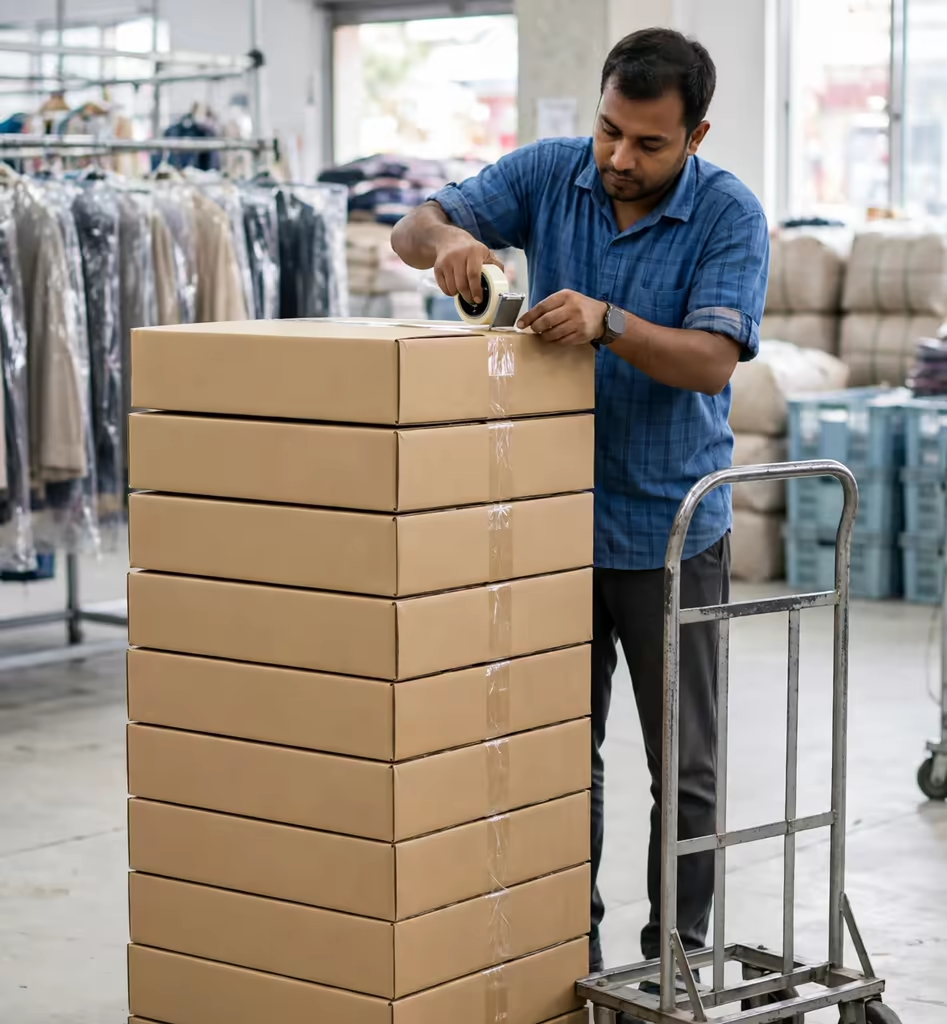
A sealed carton is a promise. Before the tape goes on, the contents are counted once more against the list, piece by piece.
- Contents recounted before any carton seals
- Strong export cartons used for sea shipments
- Cartons taped along every open seam
- Strapping added on heavier cartons
- Carton marks show order, style and sizes
- Shipping marks follow your forwarder's wording
- Gross weight noted for the shipping papers
- Carton dimensions recorded for freight booking
- Damaged carton walls replaced before dispatch
- Sealed cartons stacked by order number
- Mixed orders kept apart in the store
- Carton list handed to your forwarder
- Photos of sealed cartons shared on request
- Nothing leaves with an open question
- Dispatch handled the same day documents clear
- Printed tape arranged from your artwork
- Loading supervised against the carton list
- Sealed weight sampled again before loading
- Why buyers stay is on why buyers stay with us
6. What Custom Packaging Can You Add to Make Garments Retail Ready?
Some buyers want shelf-ready goods, others want plain bulk packing. Both are fine here. The extras below are arranged when your order calls for them.
- Printed polybags carrying your logo artwork
- Branded boxes for gift and retail ranges
- Tissue wrapping inside the polybag
- Fabric pouches for premium clothing lines
- Tote bags packed with retail orders
- Sticker seals closing each bag neatly
- Insert cards placed where your sheet asks
- Ribbon or twine ties on gift ranges
- Boxed sets built for online orders
- Mailer-ready packing for direct shipping
- Retail hangers added where stores require them
- Packaging sample approved before bulk packing
- Packaging with an exporter makes cartons retail ready
- Extras costed openly at the order stage
- No extras added without your written word
- Premium packing kept separate from bulk lines
- Your unboxing order followed step by step
- Box sizes matched to the garment fold
- Outer wrap finished before cartons close
7. How Is Packing Checked Against Your Packing List Before Sealing?
The packing list is written from the cartons, not from the plan. What the list says is what the cartons hold, and we check it twice.
- Packing list built carton by carton
- Quantities counted, never copied from targets
- Size breakdown listed for every carton
- Colour totals matched to the order file
- Weight and measurement added per carton
- List checked by a second pair of eyes
- Errors corrected before documents are raised
- Final list shared with you before dispatch
- Your forwarder receives the same list
- Mismatches stopped at the packing table
- Recounts done on the spot, not later
- Sealed cartons reopened when numbers disagree
- List matches the invoice quantity exactly
- Old lists kept with your order file
- Carton count agreed before the truck loads
- Spot cartons pulled and rechecked each day
- Checker signs the list before sealing ends
- One list for buyer, forwarder and us
8. How Are Packed Garments Stored and Kept Dry Before Dispatch?
Packed cartons sometimes wait a few days for a vessel or a document. They wait in a clean, dry store, off the floor and under cover.
- Cartons stored off the floor on pallets
- Packing store kept clean and dry
- Moisture absorbers added on long sea routes
- Cartons kept away from open doors
- Rainy-season dispatch gets extra outer wrapping
- Stored cartons checked before loading day
- Orders stored apart, never mixed together
- Long waits reported to you honestly
- Dust covers used on open storage racks
- No cartons stored near chemicals or dye
- Loading order planned from the store layout
- First-in cartons loaded out first
- Store floor swept before every loading
- Weakened cartons replaced before they travel
- Cartons turned so marks face outward
- Store checked again on loading morning
9. How Does Packing Differ for Retail, Online and Wholesale Buyers?
A store shelf, a web order and a wholesale rack all ask for different packing. The garment is the same. The last ten minutes of work are not.
- Retail ranges packed shelf-ready, tags facing out
- United States retail buyers often want hangers
- Online orders packed for single-piece picking
- United Kingdom web sellers need barcode clarity
- Wholesale bundles packed in dozen units
- Packaging for wholesale orders is packed in dozen units
- German wholesale buyers ask solid sizes
- Gift ranges boxed before they are bagged
- French boutiques ask tissue and neat folds
- Promotional orders packed plain and fast
- Canadian importers often mix sizes per carton
- Private label ranges carry only buyer branding
- Australian orders packed for long sea routes
- Your market habit written on the sheet
- One order can split across packing styles
- Seasonal orders packed to your calendar
10. How Are Delicate Garments Packed So Prints and Beading Survive the Trip?
Some garments need gentler hands. Beaded, sequinned and printed pieces are packed flat and separated, so one garment never rubs against the next.
- Printed faces kept away from other prints
- Tissue placed between printed layers
- Beaded pieces packed flat, never crushed
- Sequins separated so they cannot snag
- Lace garments folded with soft padding
- Dark colours kept off light colours
- Garments with stones packed singly
- No heavy stacks on delicate pieces
- Delicate styles flagged on the carton
- Hanging packing used where you ask
- Extra board support inside the bag
- Sample packed first for your approval
- Handling notes written on the style sheet
- Crease-prone fabrics rolled where you prefer
- No rings or watches at delicate tables
- Delicate cartons marked for careful stacking
11. How Are Multi-Style Orders Packed Without Mixing Anything Up?
One order can carry six styles and forty sizes. The packing table keeps every style in its own lane, from first fold to last carton.
- Each style packed at its own table
- Style name cards stand at every stack
- Colour order kept the same throughout
- Sizes never share an unmarked stack
- Finished styles moved out before next starts
- Carton labels name the style inside
- Mixed-style cartons only when you ask
- Packing list splits totals by style
- Photos taken where styles look alike
- Leftover pieces counted before tables clear
- One supervisor signs off each style
- Your sheet followed style by style
- Similar styles packed on different days
- Size runs checked before styles switch
12. How Do You Send Your Packing Instructions With a New Order?
Send your packing sheet with the order, not after it. One clear page from you saves a week of questions at our end later.
- Packing sheet sent with your first inquiry
- Fold, bag and tag choices in writing
- Ratio sheet attached for every style
- Artwork files sent in print-ready form
- A packed sample approved before bulk
- Changes confirmed in writing before packing
- Verbal changes never acted on alone
- Your sheet stored with the order file
- Repeat orders reuse your saved sheet
- New seasons update the same sheet
- Questions asked before, never after sealing
- One merchandiser owns your packing answers
- Start the sheet with how to place an inquiry
- Late sheets delay packing, never guesswork
- One sheet reused across repeat styles
- Packing photos shared when you ask