
Custom Embroidery Services in Bangladesh: Your Artwork Digitised, Threads Matched and a Stitched Sample Approved Before Bulk Production
1. Why Does Embroidery Outlast Print on Uniforms, Workwear and Polo Shirts?
Print sits on top of a garment. Embroidery is stitched into it, and that difference decides how your branding looks after years of washing.
- Stitched logos survive washing that cracks print
- Thread keeps its colour and edge for years
- No peeling, flaking or fading like ink
- Chest marks read premium on any fabric
- Names and badges stay sharp wash after wash
- Branding outlasts the season, not just delivery
- Hard-wearing choice for uniforms washed daily
- Workwear keeps its logo through heavy use
- Polo shirts carry stitched marks with pride
- A stitched logo feels owned, never temporary
- One approved sample sets the whole standard
- No print screens or films in your costing
- Thread sits in the fabric, not on it
- Embroidery services from a manufacturer keep branding sharp wash after wash
- Colours stay true under light and laundry
- Premium ranges use stitching as part of design
- Embroidered marks survive tumble drying well
- Thread colour holds under sunlight too
- Stitching adds value buyers can feel
2. Which Embroidery Techniques Can You Order: Flat, 3D Puff, Applique or Chenille?
Four main techniques cover almost every design buyers send us. The right one depends on your artwork and your fabric, and we will say so plainly.
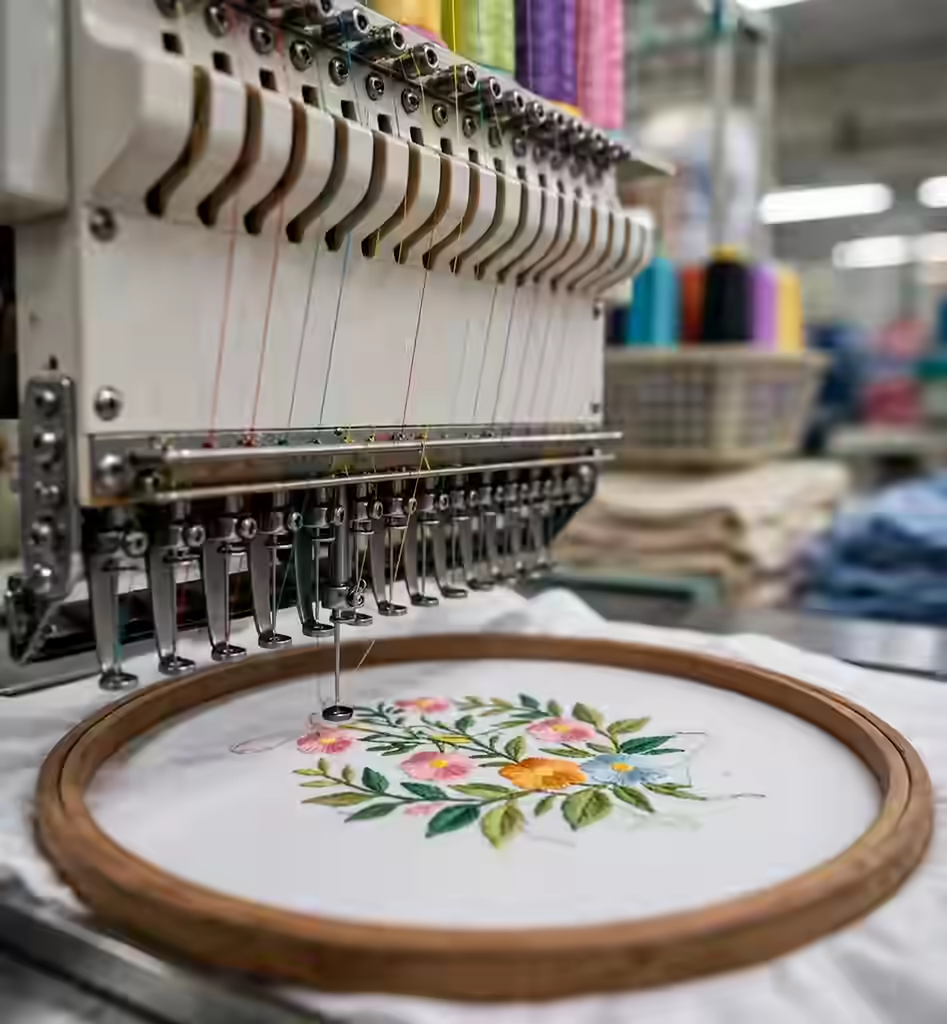
- Flat embroidery suits logos, names and badges
- Flat stitching gives a clean corporate finish
- 3D puff raises designs on caps
- Puff stands proud on streetwear logos too
- Applique sews fabric patches with stitched edges
- Applique keeps large designs light on garments
- Chenille gives soft, raised varsity style lettering
- Metallic threads add shine where designs need it
- Sequins available for designs that call for them
- Sewn badges work where direct stitching feels heavy
- Embroidered patches suit light jersey fabrics well
- Technique chosen for artwork, never our convenience
- Fine detail limits explained before sampling starts
- Closest stitchable version shown when detail fails
- Thread choice made from our colour library
- Every technique costed openly on your order
- Badge designs stitched separately, sewn on after
- Two techniques combine on one design
3. How Does an Embroidery Order Run, From Your Artwork to the Packed Carton?
Every order follows the same seven steps. Each stage is checked before the next one starts, so nothing depends on memory.
- Step one: send artwork, finished size, placement
- Vector file ideal; a clear image works too
- Step two: digitisers rebuild design as stitch file
- Thread colours matched to your palette then
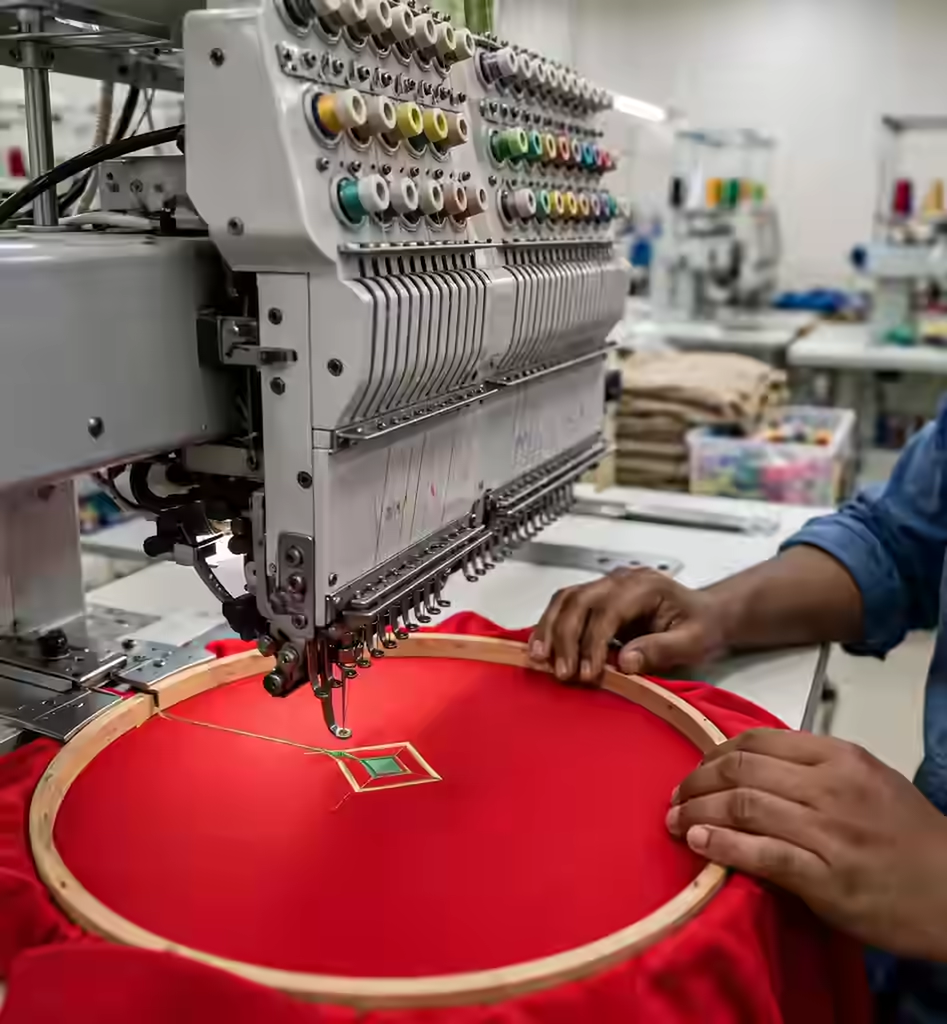
- Step three: design stitched on your fabric
- You approve photos or the physical sample
- Step four: garments cut and sewn here
- Embroidery scheduled into the same production plan
- Step five: bulk stitching runs after approval
- Operators check quality piece by piece
- Step six: finished pieces inspected closely
- Loose threads and placement drift caught here
- Step seven: pieces folded, bagged, cartoned
- Your labels fitted before cartons close
- Export documents prepared with the goods
- Dates confirmed in writing before bulk
- One file holds artwork, threads, costing
- Start through how to place an inquiry today
4. How Is Your Artwork Digitised and Your Thread Colours Matched?
Digitising decides whether a design sews cleanly or puckers the fabric. Good digitising is invisible in the finished garment, and we treat it as the foundation of the order.
- Stitch types chosen for your fabric weight
- Satin stitch suits lettering and narrow shapes
- Fill stitch covers solid design areas
- Density set so light jersey never distorts
- Underlay stitches hold designs flat on stretch
- Pique fabrics get their own stitch settings
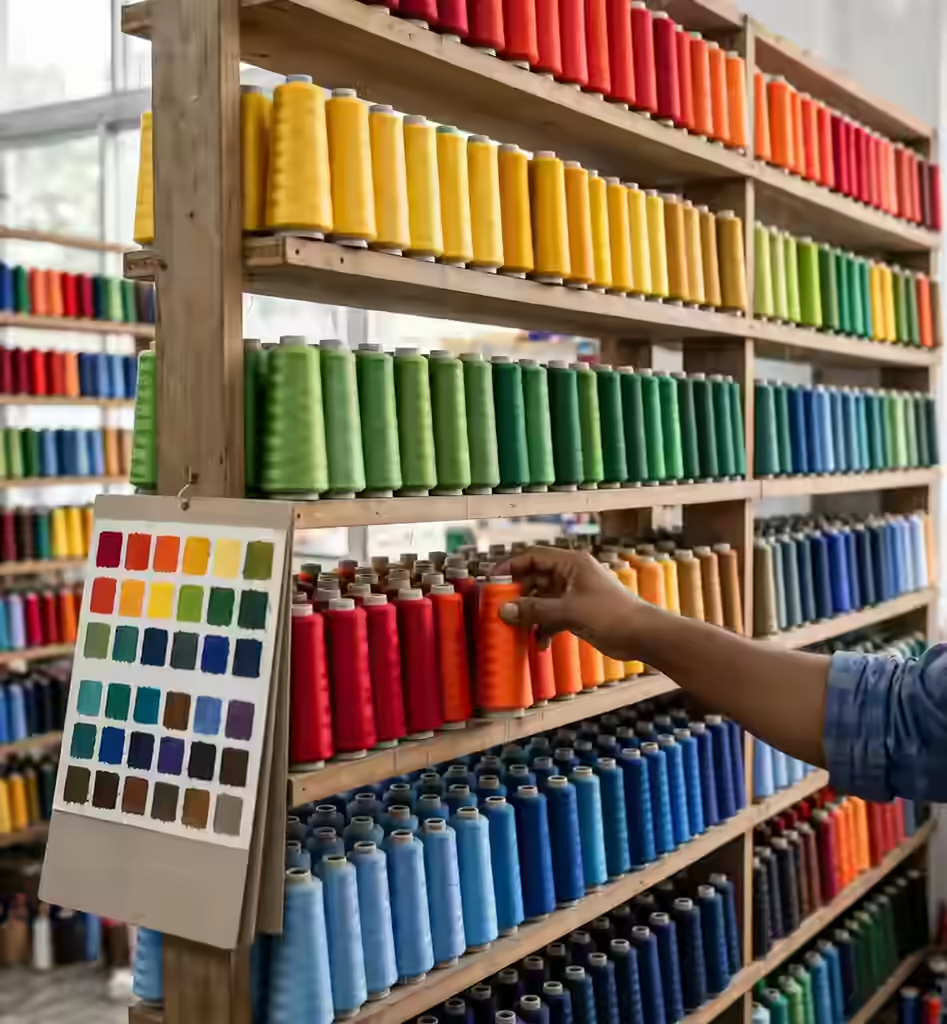
- Thread matched from our library to palette
- Embroidery services from a supplier include digitising and thread matching
- Between two shades? Both stitched on sample
- You approve real thread, not screen colours
- Small lettering redrawn at stitchable sizes
- Every file test-stitched before sampling begins
- Your stitch file kept for every reorder
- Thread record stored beside the stitch file
- Reorders sew out identically, season after season
- Colour drift checked against the recorded match
- A digitiser reviews artwork before sampling starts
- Lettering checked for stitchable height first
5. Which Fabrics Embroider Best, and Which Need Extra Care?
Stable fabrics stitch cleanly almost every time. Light or stretchy cloth needs a compensated file and the right backing, and the sample proves the combination first.
- Pique stitches cleanly for polo shirt logos
- Twill holds dense designs without puckering
- Fleece takes chest and back designs well
- Stable jersey sews flat with underlay support
- Canvas holds heavy, detailed stitching well
- Denim carries dense designs without distortion
- Light fabrics need compensated stitch files
- Stretch cloth needs backing chosen carefully
- Topping stops stitches sinking into fleece
- Towel surfaces need topping for clean edges
- Heavy fabrics suit raised 3D puff designs
- Fine, delicate cloth needs gentler density settings
- The sample proves fabric and file together
- Wrong combinations flagged before bulk, honestly
- Fabric weight shared at inquiry stage helps
- Knit fabrics need stabilising before stitching
- Heavy canvas suits bold, simple shapes
6. How Are Placement and Backing Chosen for Each Garment?
Two decisions decide whether embroidery looks expensive or cheap: where the design sits, and what holds it from behind. Both come from your garment, not a guess.
- Left-chest placement measured from the pattern
- Placement never judged by eye alone
- Backing weight chosen for each fabric
- Light tear-away backing suits stable cloth
- Firm cut-away backing supports stretch fabrics
- Wrong backing distorts even good digitising
- Stitch files compensated for stretch before sampling
- Design sews out at your approved size
- Large back designs balanced for drape
- Sleeve placements measured against the pattern too
- Cap placements centred on the front panel
- Hoop marks steamed out before inspection
- No ring mark reaches your customer
- Every placement decision backed by a test
- Backing trimmed clean after stitching finishes
- Placement sheet recorded with your sample
7. Which Garments Take Embroidery: Polos, Tees, Caps, Hoodies and Jackets?
Embroidered garments anchor uniform and merchandise programmes. If we sew the garment, we can plan its embroidery into the same order.
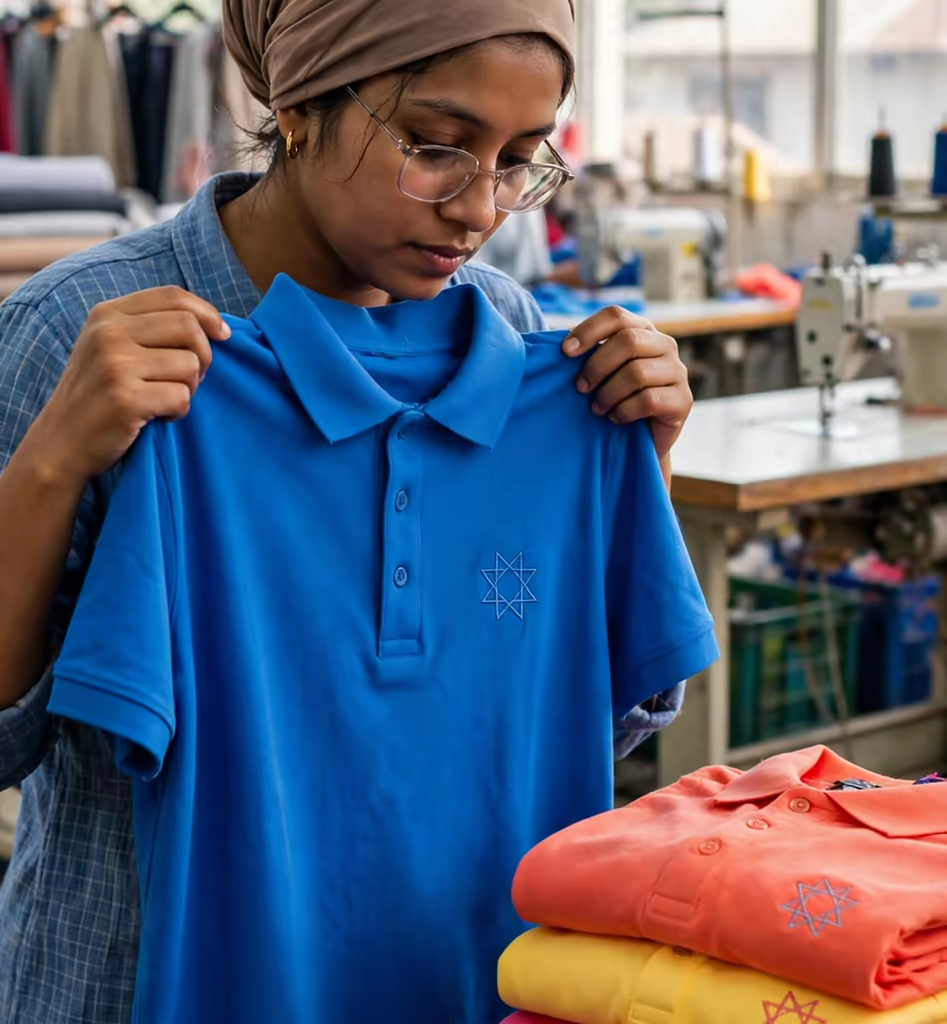
- Polo shirts take flat chest and sleeve marks
- Embroidery services for garment exporters cover polos, caps and hoodies
- T-shirts carry chest logos and names
- Woven shirts suit small, neat chest marks
- Caps take puff, flat and side placements
- Hoodies take chest and large back designs
- Jackets carry bigger chest and back artwork
- Fleece takes raised designs without sinking
- Sweatshirts suit tonal and bold logos alike
- Bags embroidered for hospitality and gift programmes
- Towels take names and hotel branding well
- School uniforms combine logos with pupil names
- Team kits pair shared logos with names
- Workwear sets keep one standard across garments
- Colours stay consistent across garment types
- Aprons and workwear tops embroider cleanly
- Kids wear uses soft backing against skin
8. Should You Choose Embroidery or Print for Your Design?
We run both decorations in the same setup, so this advice carries no sales pitch. Many programmes use embroidery and print together on one garment.
- Choose embroidery for logos, names, badges
- Choose embroidery for hard-washed garments too
- Choose print for large, photographic artwork
- Choose print for gradients and fine shading
- An embroidered chest mark stays permanent for years
- Printed designs can rotate each season
- Both routes costed openly before you decide
- Cost drivers explained in plain words
- Combined designs planned on one garment file
- See our screen printing services for print options
- Honest advice when print beats embroidery
- Honest advice when stitching wins instead
- Your fabric helps decide the route
- The sample stage proves the chosen decoration
- Design size often settles the choice
- Wash frequency matters in the decision
9. How Is Stitch Quality Checked Against Your Approved Sample?
Quality here is a written standard, not a hope. Thread type, density and placement are recorded at sampling, and bulk is checked against that record piece by piece.
- Density measured against the approved sample
- Embroidery services from a factory follow your approved stitch standard
- Placement measured against the approved sample
- Colours compared under light with recorded match
- Loose threads trimmed and checked by hand
- Backing edges trimmed and inspected too
- Faulty pieces pulled before packing starts
- Inspection follows our clothing quality control routine
- Results shared before shipping when you ask
- Records travel with your order file
- Reorders checked against the same record
- One standard covers every destination market
- The sample stays reference until you change it
- Every market gets exactly the same checks
- Faults recorded, never hidden from buyers
- Checked pieces only pass to packing
10. Which Markets Order Embroidered Garments From Bangladesh Season After Season?
Buyers in nine markets reorder embroidered garments from us season after season. Each market uses the decoration differently, but the standard underneath never changes.
- United States: embroidered polos for uniforms, events
- United States buyers approve by photo, courier
- United Kingdom: workwear, school and club clothing
- United Kingdom orders pair logos with names
- Germany: stitch quality specified very closely
- Germany receives documented density and placement records
- France: refined, small tonal logo work
- France treats stitching as part of design
- Canada: logos combined with individual names
- Canada orders fleece and caps regularly
- Australia: sampling booked around opposite seasons
- Australia gets compensated files for light fabrics
- United Arab Emirates: uniforms and hospitality wear
- United Arab Emirates designs survive hot washing
- Netherlands: clean, minimal chest marks preferred
- Netherlands reorders reuse the approved stitch file
- Spain: tonal logos and applique fashion pieces
- Spain orders packed store-ready as standard
- Why buyers stay is on why Siatex Sourcing
11. How Much Do You Need to Order to Start an Embroidery Services Programme?
There is no single figure that fits every design. A chest logo on polos differs from a full custom programme, so quantity is worked out from your styles.
- First orders can start small, honestly
- Embroidery services for wholesale buyers start from one design
- One design, one garment style can start
- Mixed colours sit inside one order
- Mixed sizes sit inside one order
- Names add no separate order minimum
- Personalisation runs beside a shared logo
- Test one design, then scale the reorder
- Scaling reuses your approved stitch file
- Thread record and costing stay together
- Quantities worked out style by style
- We quote no figure before your specification
- Trial orders welcomed from new buyers
- Sample orders follow the same discipline
- Bigger programmes planned season by season
- Send artwork through our contact page
12. What Should You Ask Before Placing a Bulk Embroidery Order?
Buyers usually ask about files, sampling and timing first. Send any other question with your artwork and you will get a specific written answer, not a brochure.
- Can you work from a simple image? Yes
- Vector files are ideal, images work well
- Who digitises my design? Our own digitisers
- When is the sample stitched? After digitising
- Thread matching happens before the sample
- Can I see inspection results? Yes, on request
- Results shared before cartons leave Dhaka
- Can I reorder next season? Yes
- Your file and thread record stay stored
- Which fabrics embroider best? Ask at inquiry
- Common questions sit on our FAQ page
- BGBA membership confirmed in writing on request
- Our BGBA membership is listed on the BGBA website
- Dates and costs confirmed before bulk commitment
- We answer for everything, sample to shipment
- Ask about backing for your fabric
- Ask which technique suits your artwork