
Industry Uniform Manufacturing
Custom Printed Industry Uniforms Manufacturers in Bangladesh
Looking for a Custom Printed Industry Uniforms Manufacturers in Bangladesh? Our manufacturing facilities sew work shirts, trousers and coveralls to your artwork, your colours and your size chart. Buyers in the USA, the UK, Germany, Canada and Australia order from us because every uniform is made to order, printed piece by piece and packed ready for the workforce.
- Work shirts, trousers, coveralls and aprons in one order.
- Screen print, heat transfer and embroidery under one roof.
- Your logo placed on chest, back or sleeve.
- Name tabs, badges and reflective tape on request.
- Cotton twill, poly cotton and ripstop fabric options.
- Sizes graded from your own workforce chart.
- Samples approved before any bulk production starts.
Simply The Best
PORTFOLIOS












Product Details
Custom Printed Industry Uniforms Manufacturers in Bangladesh
Industry Uniform Manufacturing in Bangladesh for Working Brands
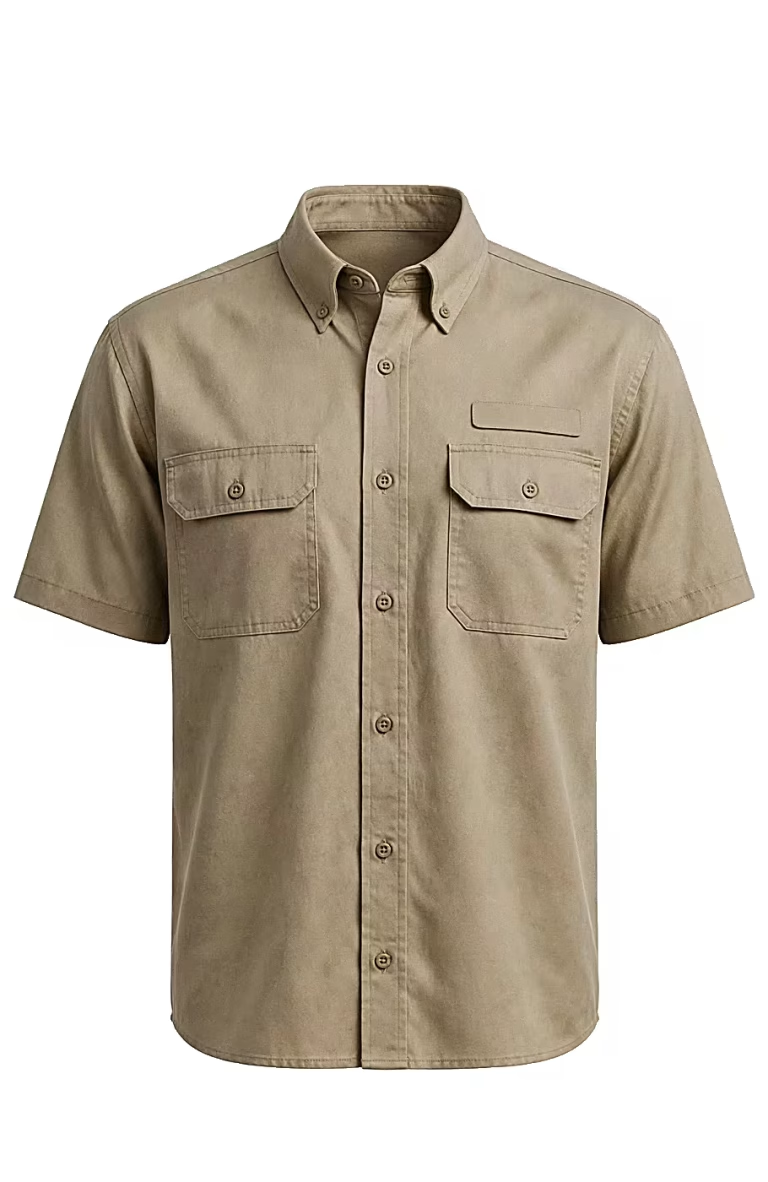
Our facilities sew printed work uniforms for factories, logistics fleets, workshops and service teams. Moreover, every order starts from the buyer's own artwork, colours and size chart. The khaki twill shirt in the gallery shows the standard build, with a button front, twin flap pockets and a name tab. Therefore, the same pattern room can run shirts, trousers, coveralls and aprons inside one programme. Buyers who need Custom Printed Industry Uniforms Manufacturers in Bangladesh choose the fabric weight, the print method and the packing, and our lines sew to that specification only. Nothing comes from stock, because each uniform is made to order.
- Work shirts, trousers, coveralls, aprons and bib sets in one order.
- Cotton twill, poly cotton and ripstop fabrics in your colours.
- Chest, back and sleeve prints placed to your artwork.
- Name tabs, badges and reflective tape added on request.
- Your labels, tags and workforce-ready packing.
- Sizes from XS to 5XL graded from your chart.
Print Methods a Uniform Factory Controls In House
Print quality decides whether a uniform still looks sharp after fifty washes. First, our print tables run screen printing for bold chest and back logos. Next, heat transfer suits small badges and individual names. Also, embroidery covers premium lines where a stitched mark lasts longer. Because each uniform factory team checks registration on the first piece, misprints stop before the bulk starts. Consequently, colours stay matched across shirts, trousers and caps inside the same order, and repeat orders print from the stored screens.
- Screen printing for large, bold workplace logos.
- Heat transfer for names, numbers and small badges.
- Embroidery for premium and management uniforms.
- Colour matching against your Pantone reference or artwork file.
- Wash tests on printed panels before bulk sewing.
- First-piece approval shared with photos before the run.
Fabrics Chosen for Hard Shifts and Hot Wash Cycles
Industry uniforms work harder than fashion clothing, so fabric choice matters first. Cotton twill gives a firm hand and holds print well. Meanwhile, poly cotton dries faster and resists creasing on long shifts. Ripstop weaves stop small tears from spreading during warehouse work. Additionally, heavier drills suit engineering and construction crews. Our fabric team sources each cloth to the buyer's specification, then checks shade and shrinkage before cutting. Certified cloth tested to OEKO-TEX Standard 100 is available when a tender asks for it.
- Cotton twill for structured shirts and trousers.
- Poly cotton blends for easy care and fast drying.
- Ripstop for warehouse and outdoor crews.
- Heavy drill for engineering and construction teams.
- Shade and shrinkage checked before cutting.
- Certified fabric options for tender requirements.
Custom Uniform Supplier in Bangladesh for Canadian Companies
Canadian companies often dress mixed indoor and outdoor teams from one source. Therefore, our uniform supplier programme pairs light shirts with heavier overshirts inside a single shipment. Sizes follow the buyer's own chart, so reorders match the first delivery exactly. Also, English and French care labels can be sewn in where a buyer's market needs both. In addition, cartons can be marked by branch or depot, which speeds up internal distribution on arrival. Winter-weight overshirts and summer shirts can share one order, so the whole workforce is covered at once.
- Mixed shirt and overshirt sets in one shipment.
- English and French label options for Canada.
- Size charts held on file for exact reorders.
- Cartons marked by branch, depot or team.
- Sea and air freight options to Canadian ports.
Printed Uniforms Exporter in Bangladesh for German Importers
German importers usually ask for strict shade control and documented checks. Our uniform exporters desk therefore prepares inspection notes for every batch before dispatch. First, printed panels are compared against the approved sample under standard light. Next, measurements are recorded size by size, so the importer can verify the grading. Because German buyers often supply workwear to industrial clients, consistency between repeat orders matters more than novelty. Stored patterns, screens and shade cards make that consistency routine rather than lucky.
- Inspection notes prepared for every batch.
- Shade checked against the approved sample.
- Measurements recorded size by size.
- Patterns and screens stored for repeat orders.
- Carton weights and counts listed before dispatch.
Seven Steps From Artwork to Packed Uniforms
Every order follows the same seven steps, so buyers always know where their uniforms stand. First, we review the artwork and specification with the buyer. Then the steps run in order:
- Step 1: Artwork, garment styles and print positions are confirmed.
- Step 2: Fabric is sourced and lab dips are approved.
- Step 3: A sample uniform is sewn and printed.
- Step 4: The buyer approves the sample and the size grading.
- Step 5: Bulk cutting and printing begin from the approved sample.
- Step 6: Sewing, finishing and piece-by-piece inspection follow.
- Step 7: Uniforms are packed, counted and booked for shipment.
Sizes, Fits and Grading for Mixed Workforces
A workforce rarely shares one build, so grading deserves real attention. Our pattern team grades from the buyer's chart rather than a house standard. Therefore, tall, regular and short fits can run inside one style. Also, women's and men's blocks are graded separately where the buyer supplies both. Because names and roles can be printed piece by piece, each garment can reach the right wearer without sorting errors. Size ratios follow the buyer's workforce list, so no size is overproduced.
- Grading from your chart, not a house standard.
- Tall, regular and short fits in one style.
- Separate men's and women's blocks on request.
- Individual names printed piece by piece.
- Size ratios matched to your workforce list.
Where Our Printed Uniforms Are Worn
Buyers on four continents order printed workwear from our lines. The markets below order most often, and each one asks for something slightly different.
United States
American buyers order workwear in bulk for distribution centres and service chains. Large back prints and name embroidery are common requests. Moreover, size runs are wide, so grading accuracy matters on every reorder.
United Kingdom
British buyers focus on hi-vis trims and durable poly cotton. Repeat orders run from stored patterns, so branch staff always match. Also, smaller and more frequent deliveries suit many British buyers.
Germany
German buyers ask for documented checks and exact shade control. Industrial clients dominate, and consistency between batches is the priority. Therefore, inspection notes travel with every shipment as standard.
France
French buyers often dress hospitality and retail teams. Softer fabrics and neat, small chest prints suit customer-facing roles. In addition, colourfastness through commercial laundry cycles is checked carefully.
Canada
Canadian buyers mix light and heavy layers in one order. Bilingual labels and depot-marked cartons are regular requests. Meanwhile, long freight routes make accurate carton counts especially important.
Australia
Australian buyers order breathable shirts for hot worksites. Sun-safe long sleeves and light colours lead most specifications. Also, hi-vis panels are added for road and rail crews.
United Arab Emirates
Emirates buyers need uniforms that stay cool in extreme heat. Lightweight twill and moisture-friendly blends are the usual choice. Consequently, pale shades and vented backs appear in many specifications.
Netherlands
Dutch buyers order uniforms for logistics and cycling courier teams. Reflective details and weather-resistant shells appear often. In short, practical layering drives most Dutch specifications.
Spain
Spanish buyers dress hotel, catering and cleaning teams. Bright colour blocking helps guests spot staff quickly. Additionally, short sleeves and light fabrics suit the long warm season.
Quality Checks Before a Uniform Leaves the Line
Checks run during production, not only at the end. First, printed panels are inspected before sewing, so a faulty print never becomes a finished garment. Next, inline inspectors check seams, buttons and pocket placement on the line. Finally, every finished uniform is pressed, measured and counted before packing. When a uniform manufacturer works this way, claims stay rare and reorders stay simple. Buyers receive photos of the packed cartons before dispatch as well.
- Printed panels inspected before sewing.
- Inline checks on seams, buttons and pockets.
- Final measurement against the size chart.
- Counts verified carton by carton.
- Photos of packed cartons shared before dispatch.
Coveralls, Aprons and Specialist Workwear
Not every team wears a shirt and trousers, so the range runs wider. Coveralls protect clothing in engineering, painting and chemical handling work. Meanwhile, aprons serve kitchens, workshops and cleaning teams. Also, bib and brace sets suit agriculture and food processing. Each style is cut from the same approved fabrics, so colours match across a mixed order. Buyers can add knee pad pockets, tool loops or extra bar tacks where the work demands them. In short, the garment follows the job, not the other way round.
- Coveralls with elasticated cuffs and storm flaps.
- Aprons in waist and bib styles with split pockets.
- Knee pad pockets and tool loops on request.
- Bar-tacked stress points for heavy duty wear.
- Matching colours across every style in the order.
- Spare buttons and repair patches packed on request.
Printing That Survives Industrial Washing
Workplace clothing is washed hot and washed often, so print durability is tested early. First, printed panels go through repeated wash cycles before bulk sewing starts. Next, the results are checked for cracking, fading and edge lift. If a print fails, the ink system or cure time changes before the run. Water-based, plastisol and silicone inks each suit different fabrics and logos. Therefore, the ink is chosen for the cloth and the wash routine together, never by habit. Buyers receive the test panel with their sample, so the evidence travels with the approval.
- Wash-cycle tests on printed panels before sewing.
- Cracking, fading and edge lift checked after testing.
- Ink matched to fabric and wash routine.
- Test panel sent with the approval sample.
- Heat press settings recorded for repeat orders.
Packing, Carton Marking and Delivery
Good packing saves the buyer hours at the other end. Each garment is folded and bagged individually, unless the buyer asks for bulk packing. Cartons are marked with style, size range and team or branch names. Therefore, a warehouse team can distribute a delivery without opening every box. Sizes are packed in the buyer's ratio, so no branch receives the wrong mix. Sea freight suits large seasonal orders, while air freight covers urgent top-ups. Overall, the paperwork lists every carton, which makes customs and receiving straightforward.
- Individual bagging or bulk packing, as specified.
- Cartons marked by style, size and branch.
- Size ratios packed to your workforce list.
- Carton list supplied before dispatch.
- Sea freight for volume, air freight for top-ups.
Care, Repair and Long Service Life
A uniform earns its cost over years, not weeks, so service life is planned at the sample stage. Reinforced stitching at pockets, plackets and cuffs slows down wear at the stress points. Meanwhile, spare buttons are sewn inside the garment or packed with each piece. Also, bar tacks and double seams hold where tools and belts rub hardest. Buyers can request repair patches in matching fabric, which keeps older garments in service longer. Colourfast dyes protect the printed look through repeated hot washes. In addition, replacement pieces can be produced later from the stored pattern, so a team never mixes mismatched shades. Overall, small construction choices decide whether a garment lasts one season or four.
- Reinforced stitching at pockets, plackets and cuffs.
- Spare buttons sewn in or packed with each piece.
- Double seams at belt and tool contact points.
- Matching repair patches available on request.
- Colourfast dyes tested for hot wash routines.
- Later replacements cut from the stored pattern.
Questions Buyers Ask Before Ordering
Can a uniform manufacturer in Bangladesh print our logo on the back?
Yes. Back prints are our most common request, and screen printing keeps large logos sharp. We approve a printed sample first, so the position and size are fixed before bulk.
How do UK importers check print durability before bulk?
Importers receive printed fabric panels for wash testing first. Once the panel passes their wash cycles, the same screens and inks run the bulk order unchanged.
What fabrics suit hot warehouse work in the UAE?
Lightweight poly cotton and breathable twill suit hot warehouses best. Both dry quickly, hold print well and stay comfortable through long shifts.
Can one order mix shirts, trousers and coveralls?
Yes. Mixed garment orders are routine for our lines, because one workforce usually needs several styles. Each style is sampled, checked and packed separately inside the same shipment.
How are sizes packed for a multi-branch delivery?
Sizes are packed by branch or depot, following the buyer's own distribution list. Each carton is marked clearly, so the receiving team can send boxes onward without re-sorting the contents.
Can we reorder the same garments next season?
Yes. Patterns, screens, shade cards and size charts stay on file after the first order. Therefore, a reorder follows the approved sample exactly, and only quantities and dates change.
How Buyers Brief Us for an Accurate Quote
A clear brief makes costing fast and accurate. First, send the garment list with quantities per style and colour. Next, add the artwork files and the print positions for each logo. Also, include the size chart or a measured sample garment. If fabric is not yet chosen, describe the work the wearer does each day. Then our team can suggest cloth weights that suit the job. Finally, tell us the delivery port and the date the clothing is needed. With those details in hand, the quote covers fabric, print, sewing and packing without guesswork.
- Garment list with quantities per style and colour.
- Artwork files with print positions marked.
- Size chart or one measured sample garment.
- A short note on the wearer's daily work.
- Delivery port and required arrival date.
Looking for a Custom Printed Industry Uniforms Manufacturers in Bangladesh?
Send us your artwork, garment list and size chart, and we will cost the programme before sampling starts. As Custom Printed Industry Uniforms Manufacturers in Bangladesh, our facilities handle fabric, printing, sewing and packing under one roof, so nothing is left to chance. Buyers can reach us through our contact page or compare our custom made uniform supplier in Bangladesh page for more detail. Overall, the route from first sample to packed cartons stays short, documented and easy to repeat.
- Artwork reviewed before any costing.
- Samples made to your exact specification.
- One contact for fabric, print and sewing.
- Repeat orders from stored patterns and screens.