
Clothing Manufacturing
Why Is Bangladesh So Attractive as a Source for Clothing Manufacturing
Why is Bangladesh so attractive as a source for clothing manufacturing? Because one country can dress a whole range: knit basics, woven shirts, denim, sweaters and workwear, all sewn to order. This guide walks through the reasons buyers in the USA, UK, Germany, Canada and Australia give for sourcing here. Moreover, it separates the durable facts from the sales talk. Every reason is one we work with daily at our facilities in Bangladesh.
- One country covers knitwear, wovens, denim, sweaters and workwear.
- Clothing manufacturing factory floors here run at world scale.
- Skilled operators sew complex garments, not only basic t-shirts.
- Local spinning, knitting and dyeing shorten the cloth supply line.
- Duty access keeps landed costs competitive for many markets.
- Compliance systems are checked by international buyers every season.
- Programmes are sewn to order, with nothing held as ready stock.
Simply The Best
PORTFOLIOS












Product Details
Why Is Bangladesh So Attractive as a Source for Clothing Manufacturing?
Why Is Bangladesh So Attractive as a Source for Clothing Manufacturing? The Short Answer
Why Is Bangladesh So Attractive as a Source for Clothing Manufacturing comes down to a rare combination. Few countries offer breadth, scale, skill and value in one place. A clothing manufacturing factory base here covers knitwear, wovens, denim, sweaters and workwear. Behind it sits a full supply chain, from spinning to sewing. Around it sits a trading system built for export over four decades. Buyers stay because the combination keeps working, season after season.
- Breadth: one country dresses a whole clothing range.
- Scale: capacity for whole seasons, not just trial orders.
- Skill: operators who sew complex garments daily.
- Value: fair costs that leave room for good cloth.
- Proof: garments and records that any buyer can check first-hand.
The 8 Points Buyers Actually Weigh
Point 1: One Country Covers the Whole Range
A buyer can place knit basics, woven shirts, denim, sweaters and workwear with a small number of trusted producers. That simplifies everything from sampling to shipping. Mixed programmes leave in consolidated cartons. Consequently, the buyer's team manages one time zone, one paperwork style and one quality language.
Point 2: Scale That Few Countries Match
Clothing manufacturing factories here employ millions of workers across thousands of production units. A large retail programme does not strain the system; it is the system's normal work. When one line finishes a style, another line starts the next colour. Scale also means spare capacity exists somewhere when a deadline tightens.
Point 3: Skills Built Over Forty Years
The workforce learned export sewing the slow way: by doing it for decades. Operators handle difficult operations, from plackets to bonded seams, at production speed. Supervisors rose from the lines themselves. Moreover, that depth of experience shows in the garments, especially in the plain styles where nothing hides.
Point 4: A Vertical Chain Inside One Border
Spinning, knitting, weaving, dyeing, printing and sewing all happen inside the country. A clothing manufacturing supplier can walk a problem back to its source the same day. Short internal distances cut weeks from the critical path. They also cut the freight and handling that imported cloth would carry.
Point 5: Costs and Duty Access
Labour costs remain lower than in most rival clothing manufacturing wholesale centres. On top of that, preferential access to the European Union, the United Kingdom and other markets reduces or removes duty on qualifying garments. The two savings stack. A buyer can therefore hold a shelf price that rivals cannot match at the same quality.
Point 6: A Compliance Culture Buyers Can Audit
After hard lessons a decade ago, building safety and worker standards were rebuilt under international programmes. Today, audits are routine and expected. Buyers check fire systems, wages records and working hours before they buy. A clothing manufacturing exporter here treats the audit as part of the order, not as an interruption to it.
Point 7: Communication That Rarely Breaks Down
Merchandising teams work in clear written English and answer daily. Tech packs are read carefully, and questions come back before cutting, not after. Samples travel by courier with tracking at every step. In addition, problems are reported early, while they are still cheap to fix. That reliability is a quiet but powerful attraction.
Point 8: Ports and Routes That Serve Every Market
Chattogram port connects the industry to shipping routes worldwide. Cartons move from factory districts to vessel on established schedules. Air freight from Dhaka covers urgent top-ups. Overall, the logistics are ordinary in the best sense: proven, priced and predictable for regular programmes.
Clothing Manufacturing in Bangladesh: What the Range Really Covers
The range is wider than many buyers expect. Knitwear covers t-shirts, polos, hoodies, sweatshirts and underwear basics. Wovens cover shirts, blouses, trousers, dresses and uniforms. Denim runs from jeans to jackets. Sweaters are knitted in gauges from coarse winter to fine spring weights. Workwear adds coveralls, hi-vis and hospitality uniforms. A clothing manufacturing factory often specialises in one family, while the country as a whole covers them all.
- Knitwear: tees, polos, fleece, hoodies and basics.
- Wovens: shirts, trousers, dresses and uniforms.
- Denim: jeans, jackets, shirts and shorts.
- Sweaters and workwear: seasonal and contract ranges.
- Childrenswear sewn under strict product safety rules.
That breadth changes how buyers plan. A brand can grow from t-shirts into a full range without rebuilding its supply base. A retailer can test a new category with a producer it already trusts. Meanwhile, our own facilities in Bangladesh sew across the knit and woven families, always to order and always under the buyer's label.
Clothing Manufacturer in Bangladesh for France Brands
French brands bring a strong eye for cloth and finish. As a Clothing Manufacturer in Bangladesh for France Brands, we expect detailed tech packs and honest conversations about hand feel. French programmes often mix knit and woven styles in one season. In addition, labelling and fibre-content rules for the French market are checked carefully at packing. A clothing manufacturing factory that respects those details earns the second season, not just the first.
- Knit and woven styles planned as one seasonal range.
- Hand feel and drape judged on real cloth samples.
- French labelling requirements checked before packing.
- Shade stories coordinated across categories.
Clothing Supplier in Bangladesh for Sweden Retailers
Swedish retailers lead on sustainability expectations. As a Clothing Supplier in Bangladesh for Sweden Retailers, we work with certified yarns, careful chemical management and honest reporting. Swedish programmes often run longer, with the same styles repeated and refined. Therefore, record keeping matters as much as sewing. A clothing manufacturing supplier who keeps wash, dye and test records in order makes the retailer's own reporting simple.
- Certified yarn options with genuine, current paperwork.
- Chemical and water records kept lot by lot.
- Repeat styles refined season over season.
- Transparent reporting for your sustainability team.
The Honest Caveats: Where the Attraction Fades
No sourcing country wins at everything, and honesty helps buyers plan. Lead times here are measured in weeks, not days, because sea freight is slow. Very small orders struggle, because the system's strength is long runs. Port congestion and power interruptions can still bite in peak season, although both have improved. Finally, rising wages, while good for workers, narrow the cost gap a little each year. None of this removes the attraction. It simply tells a buyer where to plan carefully.
- Sea freight rewards buyers who plan a season ahead.
- Tiny orders fit nearshore producers better.
- Peak-season capacity should be booked early.
- Cost advantage is real but slowly narrowing.
How Buyers Test the Attraction Before Committing
Serious buyers test before they commit. They audit the factory, in person or through an inspection firm. They order samples and wash them hard. They place a trial order with a firm delivery date and watch what happens. Organisations such as amfori publish the social-compliance frameworks many buyers use for those audits. Our facilities welcome the same routine: audit first, sample second, trial third. Trust built that way tends to last.
- Audit the building, the records and the lines.
- Wash and measure samples against the spec sheet.
- Run a dated trial order before the main programme.
- Review communication speed during sampling.
One more test deserves mention: the unannounced question. Ask a clothing manufacturing factory for a document it should already hold, and watch how fast it arrives. Ask clothing manufacturing suppliers how they handled their last failed inspection, and listen for specifics. Producers with real systems answer quickly and precisely. Producers without them change the subject. That small test, done early, predicts the whole relationship surprisingly well.
Why the Attraction Survives Rising Costs
Sceptics ask whether rising wages will end the story. The honest answer is that the advantage is changing shape, not vanishing. A clothing manufacturing factory today invests in better machines, better layout and better training than a decade ago. Output per worker rises year by year. So the cost per garment stays competitive even as pay improves. Buyers who left for cheaper countries often return, because the total cost of mistakes elsewhere proved higher.
- Productivity rises as machines and layouts improve.
- Better training cuts rework and inspection failures.
- Stable quality lowers the buyer's hidden costs.
- Experience keeps delivery dates believable.
There is also a depth effect. When a clothing manufacturing supplier grows with its buyers, both sides learn each other's habits. Fittings get faster. Approvals get cleaner. Disputes get rarer. That working trust is worth money, and it cannot be bought quickly in a new country. It is one reason programmes stay here for ten seasons, not two.
A Walk Through One Typical Order
An order usually begins with a tech pack and a target price. Our merchandisers cost the garment and flag anything unclear. A sample is then sewn and couriered to the buyer. After approval, cloth is booked and dyed while trims are gathered. Cutting starts when every input is in the building. Sewing, inspection and packing follow in sequence, and cartons leave for the port on the agreed date.
- Costing that flags unclear details before sampling.
- Samples sewn on the real cloth, in the real colour.
- Inputs gathered before cutting, never during sewing.
- Weekly progress reports against the agreed plan.
Behind that calm sequence sits a clothing manufacturing factory system built for export. Nothing in it is exotic. It is ordinary work, organised well and repeated at scale. A clothing manufacturing exporter adds the final layer: documents, bookings and customs paperwork prepared without drama. Buyers feel the difference as an absence of surprises, which is exactly the point.
The Pictures on This Page: What They Show
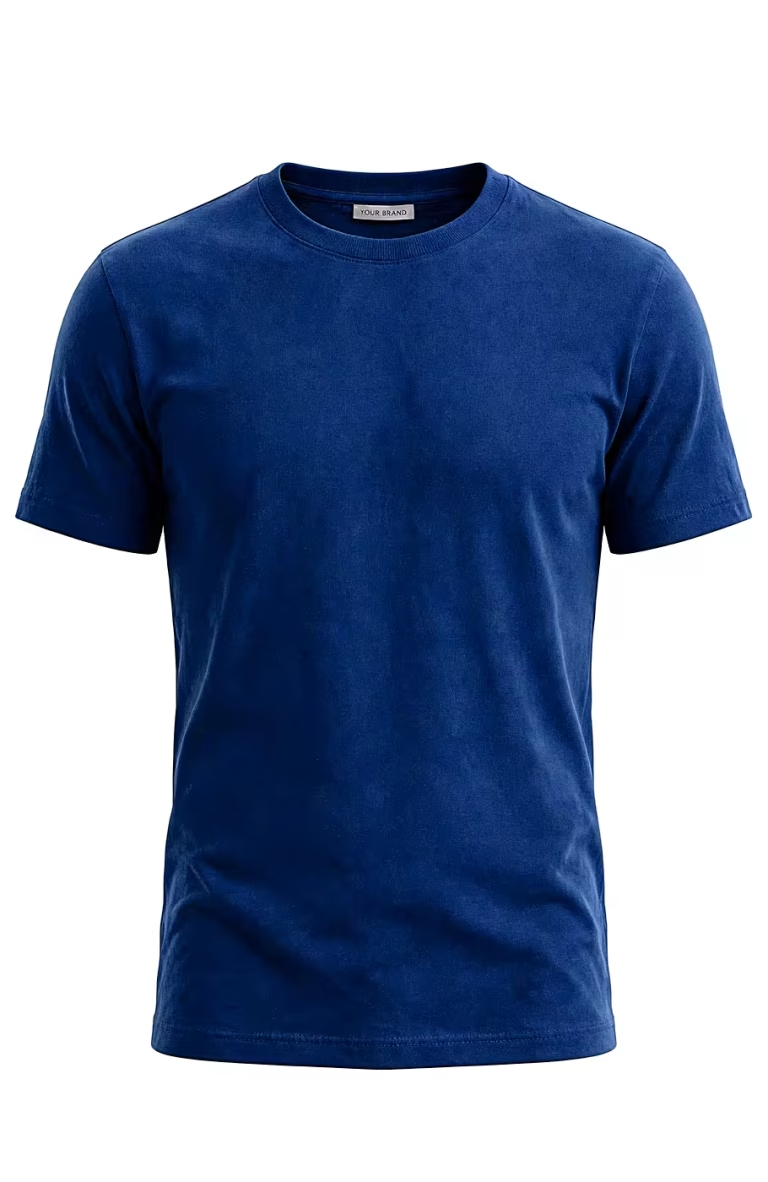
The pictures show garments as they leave our lines. The front view shows the finish a customer sees first: clean seams, even shade and a pressed surface. The back view shows the same care where nobody looks, which is where quality actually lives. The fabric view shows the cloth itself, because every garment argument starts with cloth. The label view shows the buyer's own name at the neck, and no other name anywhere.
- Front view: finish, shade and pressing as sold.
- Back view: the same standard where nobody looks.
- Fabric view: the cloth behind the garment.
- Label view: the buyer's brand, and only the buyer's brand.
We show plain views on purpose. A clothing manufacturing wholesale buyer does not need drama; they need evidence. Plain photographs of real output give that evidence honestly. When your sample arrives, you can hold it against these pictures and judge whether the standard matches. That simple test is available to every buyer, before any commitment is made.
The Workforce Behind the Numbers
Statistics hide the people who create the attraction. The industry employs millions, and a large share of them are women who entered formal work through these factory gates. A clothing manufacturing factory job here often supports a whole household. It pays school fees, builds savings and funds small family businesses. Buyers who visit the lines meet experienced operators who take open pride in difficult work done well.
- Million-strong workforce with deep category experience.
- Training ladders from helper to line supervisor.
- Skills passed between generations of operators.
- Formal wages and records across export units.
- Pride in the work shows clearly in the finished garment.
Skill depth shows most clearly on hard days. When a style changes mid-season, experienced lines absorb it. When a machine fails, mechanics who know it by sound respond in minutes. A clothing manufacturing supplier with that depth rarely misses a date for a small reason. Reliability, repeated over years, is the attraction buyers mention most when they renew.
Green Pressure: The Newest Test of Attraction
The newest buyer question is environmental. Dye houses use water and energy, and buyers now ask how both are managed. In response, a modern clothing manufacturing factory treats its water, recovers heat and tracks chemical use. Several of the world's highest-rated green garment buildings stand in this country, a fact that surprises many first-time visitors. Green investment has become part of the attraction, not a distraction from it.
- Water treatment checked as part of buyer audits.
- Heat recovery and efficient machines in newer units.
- Chemical inventories managed against restricted lists.
- Certified yarn options for lower-impact ranges.
Honesty matters here as well. Not every unit is a showcase, and buyers should audit rather than assume. But the direction is clear, and the leaders are genuinely strong. A clothing manufacturing wholesale buyer with green targets can find compliant capacity here at real scale. That combination of scale and improving standards is difficult to find anywhere else.
Questions Buyers Ask Before They Source Here
Can one producer cover a whole clothing range?
Rarely one unit, but often one group. A clothing manufacturing factory usually specialises in knitwear or wovens, while a group runs both. Buyers therefore place the range inside one relationship and one quality system.
Is quality consistent when volumes grow?
Yes, when the system is built for it. A clothing manufacturing factory holds quality through inline checks, not final hope. Volume helps, because the same operations repeat until they are automatic.
What does a first order usually look like?
It starts small and dated. A clothing manufacturing exporter will suggest one style, one delivery date and a full audit trail. When that order lands clean, the programme grows with confidence on both sides.
- Specialist units inside one accountable relationship.
- Quality held by systems, checked during sewing.
- First orders kept small, dated and fully documented.
- A clothing manufacturing wholesale programme grows step by step.
- Programmes grow on evidence gathered order by order, not on promises.
- Distance is managed by honest planning, never by hopeful guessing.
Why Is Bangladesh So Attractive as a Source for Clothing Manufacturing? Judge It Yourself
The strongest proof is a garment made to your own specification. If you are weighing this country for your next range, reach us through the contact page, and read common questions on the FAQ page. We will sew your sample at our facilities in Bangladesh and let the cloth, the stitching and the delivery date make the argument. That is how most buyers here become regulars.