
Sweatshirt Manufacturing
Wholesale Lightweight Stretch Fit Sweatshirt Bangladesh Made
Looking for a Wholesale Lightweight Stretch Fit Sweatshirt Bangladesh Made programme that moves with the wearer and keeps its shape? We knit, cut and sew lightweight sweatshirts to order at our facilities in Bangladesh, with elastane in the cloth for stretch and recovery. Buyers in the USA, UK, Germany, Canada and Australia approve a sample on the real cloth before bulk cutting begins. Moreover, every programme is planned backwards from your selling season. Your label sits inside every sweatshirt, and no other name appears on the garment.
- Made to order in your colours and size curves, with nothing held as ready stock.
- Lightweight stretch cloth with elastane recovery after washing.
- Crew neck with ribbed collar, cuffs and hem kept true to pattern.
- Your woven label inside every sweatshirt, with no other name shown.
- Samples approved on the actual cloth before bulk cutting begins.
- Production planned at our Bangladesh facilities around your season.
- Packed by colour, size and store split for fast warehouse intake.
Simply The Best
PORTFOLIOS












Product Details
Wholesale Lightweight Stretch Fit Sweatshirt Bangladesh Made
Lightweight Warmth That Moves with the Wearer
A lightweight sweatshirt must warm without weighing the wearer down. It must stretch across the shoulders, then recover its shape by morning. Ranges Wholesale Lightweight Stretch Fit Sweatshirt Bangladesh Made for wholesale buyers therefore start with recovery, then move to fit. First, we fix the elastane content and the rib quality. Then every later decision hangs on that shape standard.
- Stretch cloth that recovers fully after every single wash.
- Lightweight warmth for layering and travel.
- Ribbed collar, cuffs and hem with real grip.
- Reorders repeat the approved body exactly.
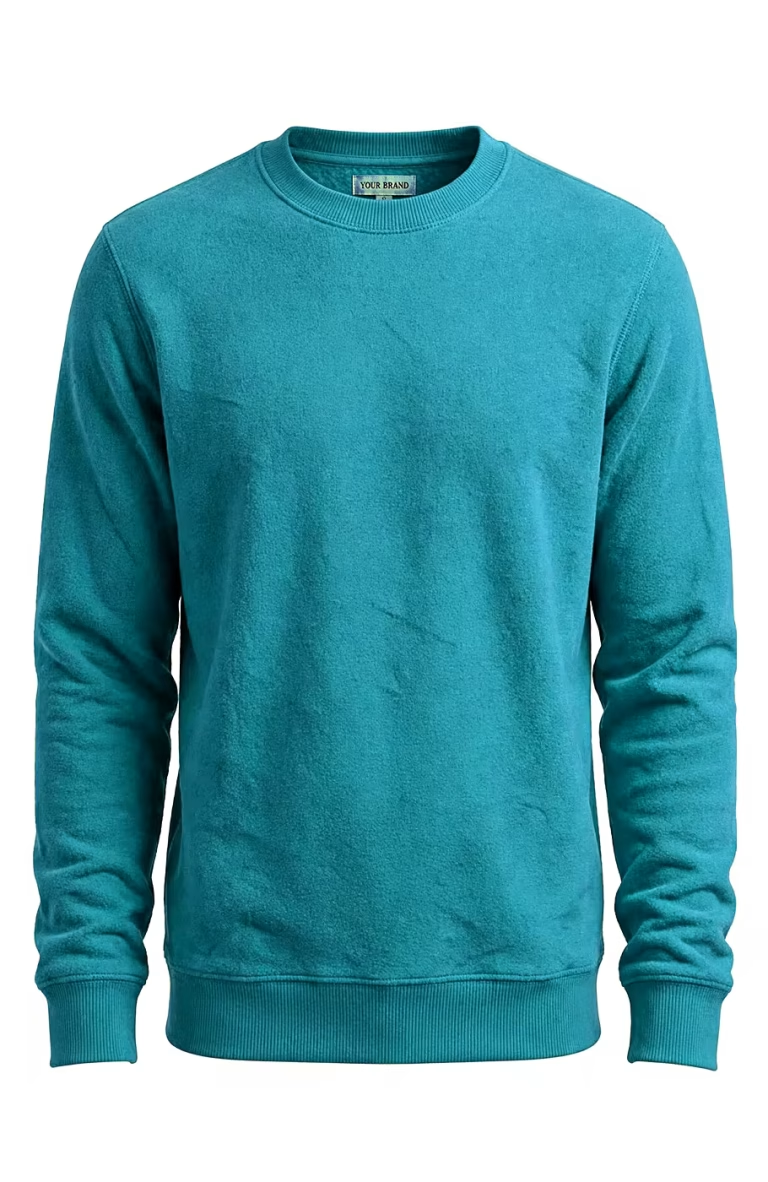
The teal sweatshirt in our pictures shows the core body behind these programmes. It carries a clean crew neck and plain long sleeves. Moreover, the same file that sews the first batch sews every batch after it. Most ranges made for exporters begin with one proven body like this.
Seven Steps from Yarn to Packed Sweatshirts
Step 1: The Brief Fixes Weights and Colours
First, the brief names every weight, colour and size ratio in the range. Leisurewear buyers usually plan one body across several colour stories. In addition, the brief fixes label artwork and packing formats early. Clear briefs prevent slow sampling rounds later.
Step 2: Stretch Cloth Is Knitted to Recovery
Second, the cloth is knitted with elastane for controlled stretch. Buyers set the stretch percentage and the recovery target at this stage. Furthermore, shade standards are approved under daylight before cutting. Cloth made for wholesale programmes must recover through repeated washing.
Step 3: The Fit Block Is Graded
Next, the pattern team grades the stretch fit block across the curve. Chest, shoulder and sleeve measurements move in balanced steps. Consequently, the smallest size never looks like a shrunken large. A block made for manufacturer programmes is checked on the fit form.
Step 4: The Sample Is Approved on Real Cloth
Then a full sample is sewn on the actual production cloth. Buyers check the neck rib, the cuff grip and the body length. In addition, the sample is washed and stretched before approval. Styles made in our factory carry those washed measurements as the standard.
Step 5: Bulk Cutting Follows the File
After approval, bulk cutting follows the file without shortcuts. Panels are cut in shade separated lays, so colours never mix. Moreover, stretch cloth rests before cutting, so panels keep their true size. Sweatshirts made for supplier ranges keep that discipline into sewing.
Step 6: Sewing Holds the Recovery Details
During sewing, operators follow the approved sample at every station. Ribs are attached with controlled tension, never stretched flat. Similarly, side seams are checked for clean recovery after pulling. Garments made for exporter programmes are compared with the sample hourly.
Step 7: Packing Follows the Store Split
Finally, finished sweatshirts are pressed, folded and packed by size ratio. Cartons follow the store split named in the brief. Overall, packing copies the approved sample pack exactly. Orders made for wholesale buyers leave with a packing list that matches the cartons.
The Teal Sweatshirt in Our Pictures
Our gallery shows the anchor style for this programme. The front view shows a clean crew neck and ribbed trims. The back view stays plain, with the same ribbed hem. In addition, a close view shows the stretch fleece surface itself.
- Front view with crew neck and ribbed cuffs.
- Plain back view with ribbed hem.
- Stretch fleece close view in teal.
- YOUR BRAND label sewn inside the neck.
The colour is a deep teal with a soft washed tone. It suits leisure ranges because it pairs with denim and neutrals easily. Similarly, the body stays neat without looking tight. Programmes made for OEM labels usually begin from one anchor colour like this.
Stretch Cloth, Loopback Comfort and Ribbed Trims
The cloth pairs a smooth outer face with a loopback inner face. The loops feel soft against a base layer or skin. The elastane then pulls the body back into shape. Furthermore, the ribs carry their own elastane for lasting grip.
- Smooth face for a clean, print ready surface.
- Loopback inside for softness and airflow.
- Ribbed trims with elastane recovery.
- Weights matched to season and market.
Buyers choose the cloth weight by selling season. Lighter cloth suits spring ranges and travel sets. Heavier cloth suits autumn programmes and northern markets. Because the file records the exact yarn and finish, repeats stay identical. Cloth made for factory checks is weighed and stretch tested to that record.
Sweatshirt Manufacturer in Bangladesh
As a sweatshirt manufacturer in Bangladesh, we run stretch fleece programmes end to end. Yarn buying, knitting, dyeing and sewing sit inside one file. Therefore, nothing depends on outside job work or guesswork. Buyers speak to one team from sampling to shipment.
- Knitting planned with the order volume.
- Dyeing matched to approved shade standards.
- Sewing lines set for stretch cloth.
- Finishing and packing under one roof.
This structure keeps the fit stable across seasons. When a buyer adds colours, the body never changes. When a buyer adds sizes, the grading rule never changes. Ranges made for manufacturer programmes grow by addition, not by reinvention.
Fit, Recovery and Honest Sizing
Stretch garments fail when recovery is promised but not tested. Our samples are stretched and measured after washing. Consequently, the size on the label matches the body in store. The waistband of the size curve stays honest across colours.
- Recovery measured after washing and stretching.
- Chest and length graded in balanced steps.
- Washed measurements used as the standard.
- Size ratios planned from real sales splits.
Buyers send their expected size split with the brief. We then plan cloth and ribs around that split. In addition, the file holds a top-up ratio for fast sellers. Stock made for supplier promotions follows the same split, so shelves stay balanced.
Sweatshirt Supplier in Bangladesh for France Boutiques
French boutiques often plan sweatshirts as refined leisure basics. As a sweatshirt supplier in Bangladesh for France boutiques, we plan clean colours and careful finishing. Small details like rib quality carry the premium feel. Therefore, finishing receives the same attention as sewing.
- Clean colours for boutique leisure ranges.
- Rib and neck finishing checked by hand.
- Boutique ready folding and tissue packing.
- Top-up runs held against the open file.
Boutique buyers also ask for quiet branding. A small woven label often replaces chest artwork entirely. Similarly, one body in several colours simplifies small store intake. Goods made for factory audits follow the same route as ordinary orders.
Sweatshirt Exporter in Bangladesh for Portugal Chains
Portuguese chains usually brief sweatshirts for wide store networks. As a sweatshirt exporter in Bangladesh for Portugal chains, we prepare store splits and paperwork with the goods. Every carton carries the documents its market requires. Moreover, labelling follows the buyer file line by line.
- Fibre content declared exactly as sewn.
- Test reports supplied with each shipment.
- Care labelling in the buyer language.
- Carton marks matched to the packing list.
Chains also value calm repeat production. The approved sweatshirt body stays on file between seasons. When the next order lands, sampling is already finished. Programmes made for exporter calendars therefore start sewing sooner.
How Sweatshirt Programmes Repeat Each Season
A good sweatshirt programme behaves like a standard, not a project. The block, cloth and ribs are frozen after approval. New seasons then change colours and graphics only. As a result, fit complaints stay near zero across repeats.
- The approved block never changes silently.
- New colours are lab dipped against standards.
- Graphics are sampled on the real cloth.
- Every repeat is measured against washed standards.
Buyers often open with two colours and one body. Later, they add colours once the fit proves itself. The file makes that rhythm easy to hold. Ranges made for wholesale buyers scale without new sampling rounds.
Layering Stories and Colour Planning
Lightweight sweatshirts sell as layers, not as single statements. One teal body can sit over shirts in spring. It can sit under jackets in autumn. Therefore, buyers plan colours that work across both stories. The gallery teal was chosen for exactly that range.
- Layer friendly colours across seasons.
- Shared bodies for spring and autumn.
- Lab dips approved against one standard.
- Seasonal shades added without new blocks.
Colour depth also protects the size curve. When one shade sells through, the top-up uses the same standard. Sweatshirts made for wholesale buyers therefore return to shelves quickly. Meanwhile, slower shades can be rebalanced between stores. Flexibility like this is planned, never improvised. Ranges made for supplier catalogues rely on that same discipline. Indeed, shared bodies make every colour decision cheaper to test.
Printing, Embroidery and Blank Programmes
The smooth outer face accepts several decoration routes. Screen print suits large chest graphics and team orders. Embroidery suits small logos and premium basics. In addition, many buyers keep the body blank for retail.
- Screen print for bold chest artwork.
- Embroidery for small, durable logos.
- Blank bodies for clean retail ranges.
- Placement guides fixed inside the file.
Decoration is sampled on the production cloth, never on substitute fabric. Print made for factory ranges follows the same sampling rule. Buyers approve size, position and colours before bulk work starts. Consequently, the first production piece matches the approved sample. Programmes made for supplier launches often mix one printed story with blank colours.
Testing, Compliance and Open Paperwork
Every programme carries test evidence that buyers can file. Colour fastness, shrinkage and recovery are tested on production cloth. Furthermore, our sweatshirt programmes follow Sedex aligned audit practices across our facilities. Reports travel with the shipment documents.
- Colour fastness tested to buyer standards.
- Shrinkage measured after washing.
- Stretch recovery checked on every cloth lot.
- Reports shared before shipment, not after.
Open paperwork builds more trust than any promise. Buyers see the same numbers that our own team sees. If a result falls short, the cloth is corrected before cutting. Standards made for OEM buyers are sampled like garments.
Freight, Lead Times and the Selling Season
Production calendars are planned backwards from the selling season. Sampling, approval, sewing and freight each receive clear time. Sea freight suits planned seasonal ranges. Air freight suits late top-ups only.
- Calendars confirmed in writing at order stage.
- Sea routes planned for seasonal volumes.
- Air options quoted honestly for top-ups.
- Delays reported early, never at the end.
Lightweight sweatshirts pack densely and travel well. Therefore, freight cost per unit stays low on sea routes. Our planners protect the fast colours first. Programmes made for supplier calendars quote both routes honestly.
What a Sweatshirt Programme File Contains
The programme file is the memory of the whole range. It holds the block, the grading and the washed measurements. It also holds cloth, ribs, labels and packing instructions. Anyone on the floor can sew from it without asking questions.
- Block, grading and washed measurements.
- Cloth weight, stretch and shade standard.
- Rib quality and label specifications.
- Packing ratios and carton marks.
When staff change, the file keeps the programme stable. When buyers change contacts, the standard stays the same. A range made for factory production should never depend on one person. That discipline is why repeats match the first order.
Buyers can audit the file at any stage of production. It shows the recovery standard, the measurements and the packing plan together. In addition, sample photographs sit beside the written standards. Nothing is left to memory or habit. Sweatshirts made for OEM programmes are checked against this file at final inspection.
Care, Washing and Shape Retention
A stretch sweatshirt is washed often and expected to recover. The body must not bag at the elbows. The ribs must not slacken at the cuff. Consequently, care performance is tested before approval, not after complaints.
- Elbow and body recovery checked after washing.
- Rib grip checked after repeated laundry.
- Colour clarity checked after washing.
- Care labels written for real home laundry.
Buyers receive the wash results with the sample report. If a cloth recovers badly, it never reaches bulk cutting. Garments made for exporter programmes pass the same wash gates as domestic ranges. Similarly, neck ribs are checked for flat lying after laundry. Small details decide whether a sweatshirt survives a second season. Standards made in our factory treat those details as production rules.
Questions Sweatshirt Buyers Ask Us
How much stretch does the cloth carry?
The stretch level is fixed with the buyer at sampling. Most lightweight programmes choose gentle elastane for comfort and recovery. The approved percentage is recorded in the file and tested per cloth lot.
Can the sweatshirt carry our own label?
Yes, every programme carries the buyer label inside the neck. The gallery label reads YOUR BRAND because it marks that position. Care and size tabs follow the same artwork file.
Is the body suitable for printing?
Yes, the smooth outer face accepts screen print and embroidery. Decoration is sampled on the production cloth before bulk work. Buyers approve size, position and colours first.
How do you keep sizing honest with stretch cloth?
Garments are measured after washing and stretching, not only after sewing. That order matters, because stretch cloth relaxes during its first wash. The file holds washed measurements as the binding standard.
What happens when a colour sells out early?
First, we check the held cloth position for that shade. Then a top-up run is scheduled against the open file. Because the standard is already approved, the repeat moves faster than a new programme.
Looking for a Wholesale Lightweight Stretch Fit Sweatshirt Bangladesh Made?
Send us your brief, your size curve and your colour plan. We will reply with cloth options, a sampling plan and an honest production calendar. Start through our contact page or read the answers on our FAQ page first. Your next sweatshirt range can begin with one clear conversation. Moreover, a single sample round usually settles the block, the cloth and the colours together.
- Briefs are answered with cloth options, not forms alone.
- Samples follow the approved stretch standard.
- Production dates are confirmed in writing.
- Top-up runs repeat the approved block and shade.
- Recovery results are shared with every sample report.