
Formal Shirt Manufacturing
Wholesale Formal Shirts Manufacturers in Bangladesh
Looking for a Wholesale Formal Shirts Manufacturers in Bangladesh programme? We cut and sew formal shirts to order at our facilities in Bangladesh, with collars, cuffs and plackets held to millimetre discipline. Buyers in the USA, UK, Germany, Canada and Australia approve a wear-tested sample before bulk cutting begins. Moreover, every programme is planned backwards from the date the shirts must reach your stores. Your label sits inside every shirt, and no other name appears on the garment.
- Made to order in your colours and sizes, with nothing held as ready stock.
- Collars and cuffs graded for even posture at every size.
- Your woven label inside every shirt, with no other name shown.
- Samples worn, washed and re-worn before bulk cutting begins.
- Oxford cloth wash-tested for shrinkage before cutting.
- Production planned at our Bangladesh facilities around your date.
- Packed by size and colour, with cartons marked for fast sorting.
Simply The Best
PORTFOLIOS











Product Details
Wholesale Formal Shirts Manufacturers in Bangladesh
Why Formal Shirts Expose a Maker's Precision
A formal shirt is a garment of small numbers. Collar points must match to the millimetre. Cuffs must close at the same tension on every size. The placket must sit straight after fifty washes, not just at the first fitting. Buyers therefore judge a shirt maker more harshly than any other supplier, and rightly so.
- Collar symmetry is visible across a room.
- Button spacing shows careless grading at once.
- Oxford cloth reveals every crooked seam.
- Corporate wearers notice faults daily.
- One pattern must hold across many sizes.
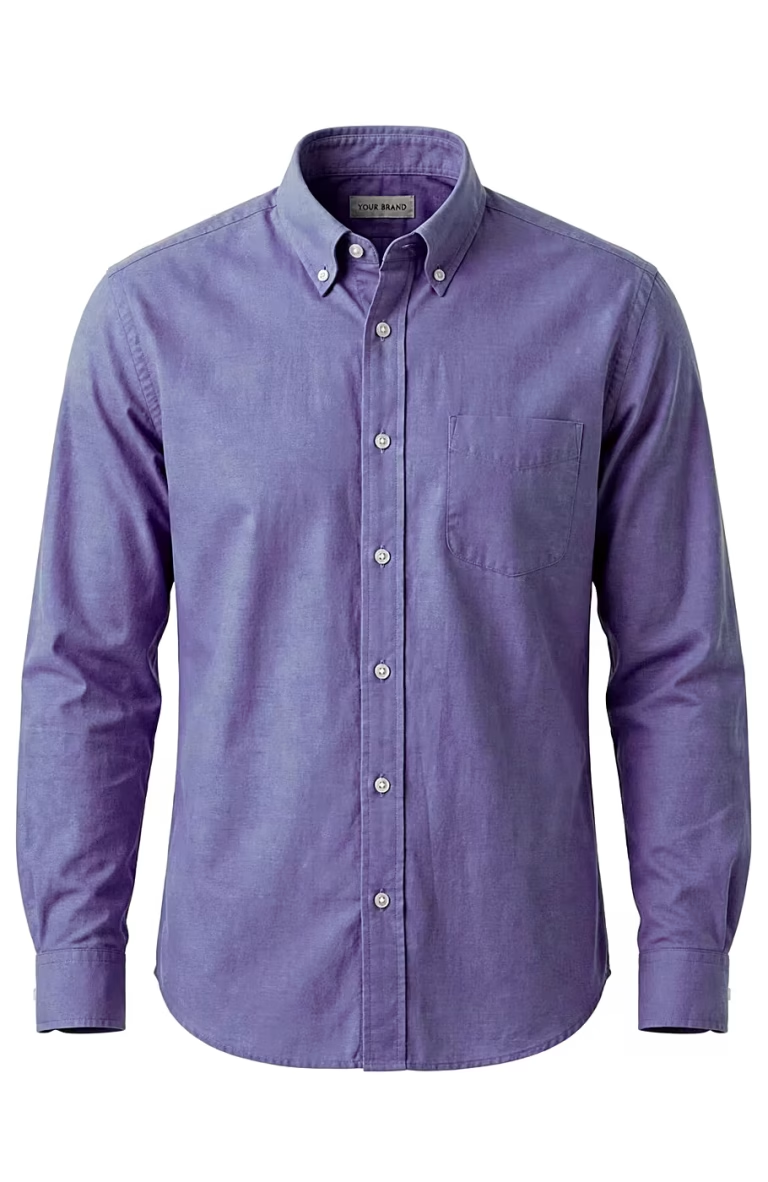
The lavender shirt in our pictures shows our standard. It was cut and sewn at our facilities in Bangladesh, exactly as bulk programmes are sewn. A shirt factory proves itself in these details, and this page explains how we protect each one.
Formal Shirt Manufacturer in Bangladesh: Collar, Cuff and Placket
The collar begins as fused interlining, cut to the pattern's exact curve. Too stiff, and it fights the neck. Too soft, and it collapses by lunch. We grade the interlining with the collar size, so a small collar and a large collar wear with the same posture. That balance is learned, then recorded.
- Interlining weight follows collar size.
- Collar points are checked in pairs.
- Cuffs are sewn for even closure.
- Plackets are stay-stitched before buttons.
- Buttonholes are sized to the button.
Moreover, every operation has a named check. The collar is checked before it meets the body. The cuff is checked before it meets the sleeve. Faults caught at these gates cost seconds. Faults caught by your customer cost accounts. A shirt manufacturer lives or dies by that arithmetic.
Eight Steps of a Formal Shirt Programme
Step 1: The Fit and Collar Brief
First, we agree the fit: classic, tailored or slim. Then we fix the collar shape, from spread to button-down. Neck sizes and sleeve lengths are set for your market. Everything enters the style file before cloth is discussed.
- Fit choice drives the whole pattern.
- Collar shapes are sampled in parallel.
Step 2: Oxford Cloth Selection
Next, the oxford cloth is chosen and wash-tested. Lavender leads our pictured programme, while white, sky and pink lead most corporate ranges. Shrinkage is measured early, because a shirt that shrinks leaves its size after three washes.
- Shrinkage is measured before cutting.
- Shades are approved in two lights.
Step 3: Pattern and Grading
Then the pattern is graded across neck sizes. Sleeve length, body length and cuff size move in proportion. A graded shirt keeps its posture at every size. This is where a shirt factory earns its fee quietly.
- Grading preserves the fit's character.
- Cuff and collar scale with neck size.
Step 4: Sampling and Wear Testing
After grading, samples are sewn and worn for a full day. The collar is judged at the end of the day, not the start. Wash, dry and wear again before approval. Only a shirt that survives this round reaches bulk cutting.
- Samples are worn, washed and re-worn.
- Collar posture is judged after wear.
Step 5: Cutting With Panel Discipline
Meanwhile, panels are cut and bundled by size. Fronts, backs, yokes, collars and cuffs travel together. A missing cuff panel stops a line, so bundles are counted twice. Small discipline here prevents large apologies later.
- Bundles are counted at cutting and sewing.
- Panels stay matched by size throughout.
Step 6: Sewing the Precision Points
Later, the lines sew the collar, cuffs and placket under close checks. Side seams are felled for a clean inside finish. Buttons are sewn with thread matched to the cloth. Each shirt passes a needle check before pressing.
- Felled seams keep the inside tidy.
- Buttons are matched and tension-checked.
Step 7: Labels and Branding
Next, your label is sewn inside the yoke. The YOUR BRAND label in our pictures shows the placement clearly. Size labels follow your market's convention. Nothing else appears on the garment, inside or out.
- Labels follow your artwork exactly.
- Size marking follows your market.
Step 8: Pressing, Folding and Packing
Finally, shirts are pressed, folded and packed to your presentation standard. Boarded folds suit retail rails. Soft folds suit web orders. Cartons are packed by size and colour with a matching list, ready for your warehouse.
- Folding styles suit rail or web sales.
- Cartons mirror the packing list.
Formal Shirt Exporter in Bangladesh for United Kingdom Retailers
British retailers sell formal shirts in deep size runs. Neck sizes climb in half-inch steps, and sleeve lengths multiply the range. Our grading file carries that whole matrix without confusion. Reorders repeat any cell of the matrix exactly, season after season.
- Half-inch neck grading is standard.
- Sleeve options stay in proportion.
- Reorders repeat single cells precisely.
- Core colours hold across the year.
Consequently, a British programme becomes a calendar routine. The retailer's team plans promotions while the shirt exporter side of the file handles cloth and cartons. Calm supply is the real luxury in basics retail.
Dress Shirt Manufacturer in Bangladesh for France Brands
French brands judge a shirt by its silhouette. They ask for a closer body, a neat collar and cloth with a dry hand. We sample that taste honestly, then hold it in the file. A brand's shirt should look like the brand, not like the factory's habit.
- Closer fits are graded, not squeezed.
- Collar shapes follow brand identity.
- Cloth hand is approved by touch.
- Seasonal colours join the proven block.
Brands also protect their labels fiercely, and so do we. Your artwork stays in your file, used for your garments only. A shirt manufacturer who guards a label earns the next season's range without a contest.
The Lavender Shirt in Our Pictures, Detail by Detail
The front view shows the buttoned placket, the shaped collar and the single chest pocket. The back view shows the yoke and the clean rear panel. A fabric close-up shows the lavender cotton oxford weave. The label view shows a YOUR BRAND woven label inside the shirt.
- Front: straight placket, shaped collar, pocket.
- Back: yoked panel with a clean finish.
- Cloth: breathable cotton oxford in lavender.
- Label: woven YOUR BRAND label at the yoke.
The pictured shirt is a production sample, sewn by the team that sews bulk. Buyers can judge the collar points and the cloth honestly. We show real work because formal shirts forgive nothing, and neither do the people who buy them.
Corporate Programmes and Uniform Shirts
Many formal shirts are bought as corporate dress, not retail fashion. Banks, airlines, hotels and security firms dress staff in the same shirt for years. Those programmes need shade discipline above all. Our dye-lot records keep year three identical to year one, across every branch.
- Corporate shades repeat by lot number.
- Sizes cover the whole staff curve.
- Replacement shirts match the first issue.
- Embroidery is placed per role.
- Programmes run from one style file.
Therefore, a corporate buyer should ask about the file before the price. A cheap shirt that changes shade costs a uniform's whole purpose. Programmes supplied by shirt manufacturers with records avoid that failure by design.
Corporate buyers also plan for the unexpected: a new branch, a merger, a sudden hiring round. A recorded programme absorbs all three without a fresh tender. The new site simply joins the file, and its first shirts match the head office exactly. That readiness is worth money, although it never appears as a line in any quotation. It appears instead as silence: no complaints, no mismatched photographs, no awkward first days.
Industry Standards and Open Paperwork
Bangladesh's shirt sector is one of the country's oldest export trades. We work within the BGMEA framework and share audit summaries with programme buyers on request. Standards support the making; they never substitute for it. Judge us by the sample, then let the paperwork confirm it.
- Audit summaries are shared on request.
- Quality stages are documented per order.
- Faults are logged against the file.
- Certificates state their scope plainly.
However, paperwork cannot rescue a crooked collar. The checks at the sewing gates do that. Our buyers receive both: garments inspected at every stage, and documents that prove the system behind them.
Sizes, Sleeves and Second Seasons
Neck sizes, sleeve lengths and body fits form the shirt matrix. We hold the matrix in your file, so a reorder can call any combination without a new sampling round. New colours join the proven pattern each season. Old colours retire without disturbing the fit.
- The full size matrix stays on file.
- Single cells reorder without resampling.
- New colours use the approved pattern.
- Ratios follow your sales history.
- Fit changes are sampled, never assumed.
A shirt wholesale programme proves itself in its second season. By then the collar is trusted and the cloth is known. The buyer's only work is choosing colours. That is exactly how basics should behave.
Easy-Care Behaviour and the Morning Test
A formal shirt faces its real examination at seven in the morning. The wearer pulls it from a wardrobe, checks the collar in a mirror and decides whether the day starts well. Therefore, we judge our samples by that moment. A collar that needs coaxing has already failed, however precise its measurements were.
- Collars should sit correctly without adjustment.
- Oxford cloth should release light creases.
- Plackets should lie flat after hanging.
- Buttons should close without strain.
- The shirt should look pressed when it is not.
Moreover, easy-care behaviour is built, not coated on as an afterthought. Yarn choice, weave density and finishing all play their part. For example, a denser oxford weave sheds creases faster than a loose one, while a balanced finish keeps the hand dry rather than papery. Consequently, our sampling includes an overnight hang test beside the wash test. If the shirt wakes up untidy, the cloth changes before bulk.
However, easy care must never excuse a soft collar. Some finishes relax the interlining along with the creases. We therefore test collar posture after the same cycles that test the body cloth. A shirt factory that separates those judgements sells a tidy shirt with a tired neck, and corporate wearers notice within a week.
Building a House Style for Corporate Dress
Large employers eventually stop buying shirts and start defining a house style. One collar, one cuff, one shade family, worn by everyone from the boardroom to the branch. That consistency turns clothing into identity. We build house styles as recorded systems, so the definition survives staff changes on both sides.
- The house collar is drawn and archived.
- Shade families are numbered per role.
- Cuff and pocket rules are written down.
- New garments join the style without redesign.
- The archive belongs to the buyer's file.
Meanwhile, a house style also disciplines cost. When every branch wears the same shirt, volumes gather into one programme and the unit price falls. Shirt manufacturers can then plan cloth across the whole estate instead of chasing branch orders. The saving repeats every season, because the style does not change with each buyer.
Finally, a house style makes audits simple. Any shirt, at any site, can be compared with the archived sample. If it matches, the system is healthy. If it drifts, the file shows where. That clarity is why serious employers move from buying shirts to owning a style.
Where We Ship Formal Shirts
United States
American corporate outfitters run deep size matrices. Our file carries every neck and sleeve combination without drift.
United Kingdom
British size discipline is covered earlier on this page. Half-inch grading and calm reorders lead the programme.
Germany
German buyers ask for shrinkage figures in writing. They travel with the sample set as standard.
France
French silhouette taste is covered earlier on this page. Closer fits are graded from the brand's own block.
Canada
Canadian corporate programmes plan around hiring cycles. Files open early so issue never waits.
Australia
Australian seasons run opposite to Europe. Southern shirt programmes are scheduled while northern lines rest.
United Arab Emirates
Emirates airlines, hotels and banks dress staff in formal shirts year-round. Shade records keep every property consistent.
Netherlands
Dutch importers combine shirts with other woven lines in one shipment. One packing file governs every style.
Spain
Spanish retail takes formal shirts in strong colour stories. Core corporate shades repeat beside them calmly.
Questions Buyers Ask Us
Can you match our existing shirt shade?
Yes, from a swatch or a worn shirt. The match is dyed, approved and numbered in your file. Every later reorder repeats it exactly, across every neck size and sleeve length in your matrix.
Do you hold formal shirts in stock?
No. Programmes are made to order at our facilities, so fit, shade and label are exactly yours. The file then makes reorders fast. See our FAQ page for more.
What collar shapes can we choose?
Spread, semi-spread, button-down and cutaway all sew from recorded patterns. The choice is sampled with your fit, and the interlining is graded to hold its posture. If your house style already exists, send one current shirt and we will draw the collar from it, archive the drawing and sew every future shirt to that record.
Looking for a Wholesale Formal Shirts Manufacturers in Bangladesh?
Start with one shirt in your lead colour. Wear it for a day, wash it, and judge the collar at the end. Then let the file carry the range. Buyers who choose Wholesale Formal Shirts Manufacturers in Bangladesh with records gain a shirt programme that stays precise for years.
Send your size matrix and colour list through our contact page. We will answer with a sampling plan and a clear timeline. A formal shirt is judged every morning by the person wearing it, and that judgement deserves careful making.
- Wear-test the sample for a full day.
- Record shrinkage before bulk cutting.
- Hold dye lots for exact reorders.
- Keep the size matrix in one file.
- Trust shirt manufacturers who show their checks.
- Keep one sealed sample from the first run.
- Judge the collar at the end of the day.