
Wholesale Clothing Supply
Wholesale Clothing Suppliers Bangladesh
Looking for a Wholesale Clothing Suppliers Bangladesh programme? We design the sampling, sewing and packing of whole clothing ranges at our facilities in Bangladesh, so one order can carry tees, fleece, wovens and kidswear together. Buyers in the USA, UK, Germany, Canada and Australia approve samples on the real cloth before bulk cutting begins. Moreover, every range is planned backwards from the date it must reach your stores. Your label sits inside every garment, and no other name appears on the cloth.
- Made to order in your styles and sizes, nothing held as stock.
- Tees, fleece, wovens and kidswear sewn under one programme.
- Your woven label inside every garment, no other name shown.
- Samples approved on the actual cloth before bulk cutting begins.
- One sampling team and one shipment plan for the whole range.
- Production planned at our Bangladesh facilities around your date.
- Packed by style, size and colour for fast store sorting.
Simply The Best
PORTFOLIOS












Product Details
Wholesale Clothing Suppliers Bangladesh
What a Wholesale Clothing Supplier Should Cover
A wholesale clothing supplier earns the name by range and by routine. Range means many garment lines under one standard. Routine means sampling, paperwork and packing that arrive right every time. Buyers brief us directly because one programme can carry tees, fleece, wovens and kidswear together, with one sampling team and one shipment plan.
- T-shirts lead most programmes, in single jersey and pique.
- Hoodies and sweatshirts cover the autumn and winter drops.
- Fleece and light jackets serve outdoor and workwear buyers.
- Woven shirts, denim and trousers complete the range.
- Kidswear sets run beside the adult lines in the same file.
Every line is made under your label at our facilities in Bangladesh. The range usually starts with one strong line, most often the t-shirt, and widens season by season. That growth pattern keeps quality steady: the buyer's team learns our routine once, then applies it to each new garment family.
Wholesale Clothing Suppliers Bangladesh: How a Range Is Built
A range is built line by line, but it is planned as one piece. Cloth buying is grouped where fibres overlap, so jersey for tees and fleece for hoodies can share a dye programme. Sampling runs in parallel across lines. Then production is sequenced so cartons consolidate into one shipment instead of five.
- Each line keeps its own pattern and cloth specification.
- Shared colours are dyed together for an exact match.
- Samples for all lines are approved in one round.
- Cartons consolidate by store across the whole range.
Clothing suppliers who trade finished stock cannot build a range this way. Their lines come from different factories, with different standards and different labels. A made-to-order range instead carries one handwriting: the same label, the same care standard, the same packing logic from the first tee to the last trouser.
From First Sketch to Store Rail in 8 Steps
Step 1: Range Planning
First, we map the range with you: which lines, which colours, which selling dates. Gaps are named honestly at this stage. If a line does not fit the season, it waits for the next one.
- Lines are chosen against your real customer, not a trend sheet.
- Selling dates set the whole calendar backwards.
Step 2: Cloth Sourcing and Dyeing
Next, cloth is knitted or bought and dyed to your swatches. Shared shades across lines are dyed in one programme. Lab dips are approved before bulk dyeing, and the approved set stays with the order.
- One dye programme keeps shared colours identical.
- Cloth is tested for shrinkage and colourfastness.
Step 3: Sampling Every Line
Each line is sampled on its real cloth. You receive tees, fleece and wovens together, so the range can be judged as a range. Fit, colour and hand feel are approved line by line.
- Samples arrive together for one approval round.
- Changes are written into each line's file.
Step 4: Cutting
Approved cloth is rested, spread and cut line by line. Markers keep grain straight and waste low. Bundles are ticketed by style and size from the table onward, so lines never mix.
- Resting prevents twist in finished garments.
- Tickets follow bundles through every stage.
Step 5: Sewing
Sewing lines run by garment family: knit lines for tees and fleece, woven lines for shirts and trousers. Operators stay within their family's craft, which keeps stitch quality high. Your woven label is sewn in during this stage.
- Family lines keep specialist skills together.
- Labels and tickets are applied in sequence.
Step 6: Finishing and Branding
Prints, embroidery and trims are completed after sewing. Buttons, zips and cords are checked by hand. Garments are pressed to each line's standard, because a tee and a shirt should not arrive looking like cousins from different houses.
- Branding positions follow the approved samples.
- Trims are checked piece by piece.
Step 7: Inspection
Every garment is inspected, and measurements are sampled per line and size. Shade is compared across lines under standard light, so the range reads as one family in the store. Faults return to the line with records attached.
- Cross-line shade checks protect the range look.
- Fault types are recorded for the next season.
Step 8: Packing and Consolidation
Finally, cartons are packed by style, size and colour, then consolidated by store. One shipment carries the range. Your warehouse rails garments the day they clear, because the sorting was done at our end.
- Store-level packing removes distribution work.
- Carton lists match your goods-in system.
Clothing Manufacturer in Bangladesh: The Knit Lines
Knitwear is the country's daily craft, and it leads our range. As a clothing manufacturer in Bangladesh, we knit jersey, pique and fleece close to the sewing lines. That closeness shortens sampling and keeps cloth honest: the sample and the bulk come from the same knitting source.
- Single jersey serves tees and lightweight tops.
- Pique serves polos and structured knit shirts.
- Brushed fleece serves hoodies and sweatshirts.
- Rib and collar knitting happens in the same programme.
Clothing manufacturers who buy cloth on the open market for each order cannot promise that continuity. Their bulk jersey may differ from the sample jersey. Our knitting programme removes that risk, because the cloth file and the garment file are the same file.
Clothing Manufacturer in Bangladesh for Germany Brands
German brands buy across the whole range and specify each line tightly. Working as a clothing manufacturer in Bangladesh for Germany brands, we hold their measurement charts per line and check against them at three stages. The discipline suits multi-line ranges, where one drifting line would spoil the set.
- Charts are held per line, not per order.
- Checks run at cutting, sewing and packing.
- Retail tickets follow each brand's own standard.
Clothing Exporter in Bangladesh for France Retailers
French retailers run closer to the fashion calendar, with colour stories that cross garment lines. As a clothing exporter in Bangladesh for France retailers, we dye the story once and sew it across tees, fleece and wovens. The rail then shows one colour handwriting in five garment families.
- Colour stories are dyed as a single programme.
- Drops are sequenced to the retail calendar.
- Reorders repeat the story from the same file.
Custom Clothing Manufacturing in Bangladesh: Wovens and Denim
The woven lines complete the range. Oxford and poplin shirts, denim jeans and twill trousers are cut and sewn on woven lines with their own crafts: collars, cuffs, waistbands and wash. Denim is washed as a finished garment, so shade is judged on the piece your customer will wear.
- Shirts are sampled for collar shape and cuff finish.
- Denim washes are approved on finished garments.
- Trousers are graded for consistent leg length.
- Woven labels and tickets match the knit lines.
Buyers often start with knits and add wovens in the second season. The file structure welcomes that growth. A new line joins the range without new paperwork habits, because the routine is already proven.
Clothing Factory in Bangladesh: One Standard Across Lines
Running many lines under one roof only works if the standard is singular. Our inspection standard does not change between a basic tee and a washed denim shirt. Measurements, shade and finishing are judged the same way. Buyers feel that sameness when a mixed shipment opens: nothing in the carton looks like it came from somewhere else.
- One inspection standard covers knit and woven lines.
- Shade is judged under the same light for all lines.
- Packing logic is identical across the range.
- Records are kept per line inside one programme file.
Organic and certified lines follow recognised standards such as GOTS, where buyers order them. The certification sits on top of the same routine, not beside it. That is how a clothing factory should work: one discipline, many garments.
Clothing Wholesaler in Bangladesh: How Reorders Grow a Range
The second season is where a supplier relationship proves itself. Winning lines reorder from their files, at the same quality, without new sampling. Weak lines are dropped honestly, and new lines are sampled into the space they leave. Over three seasons, a range quietly becomes exactly what your customers buy.
- Winners reorder from file in days, not months.
- Sell-through data guides which lines grow.
- New lines sample into the proven routine.
- Colours carry across seasons where stories allow.
Clothing wholesale buyers who change supplier every season restart this learning each time. The cost never appears on an invoice, yet it is the largest cost in the trade. Staying with one clothing factory turns seasons into compound interest.
The Royal Blue T-Shirt in Our Pictures
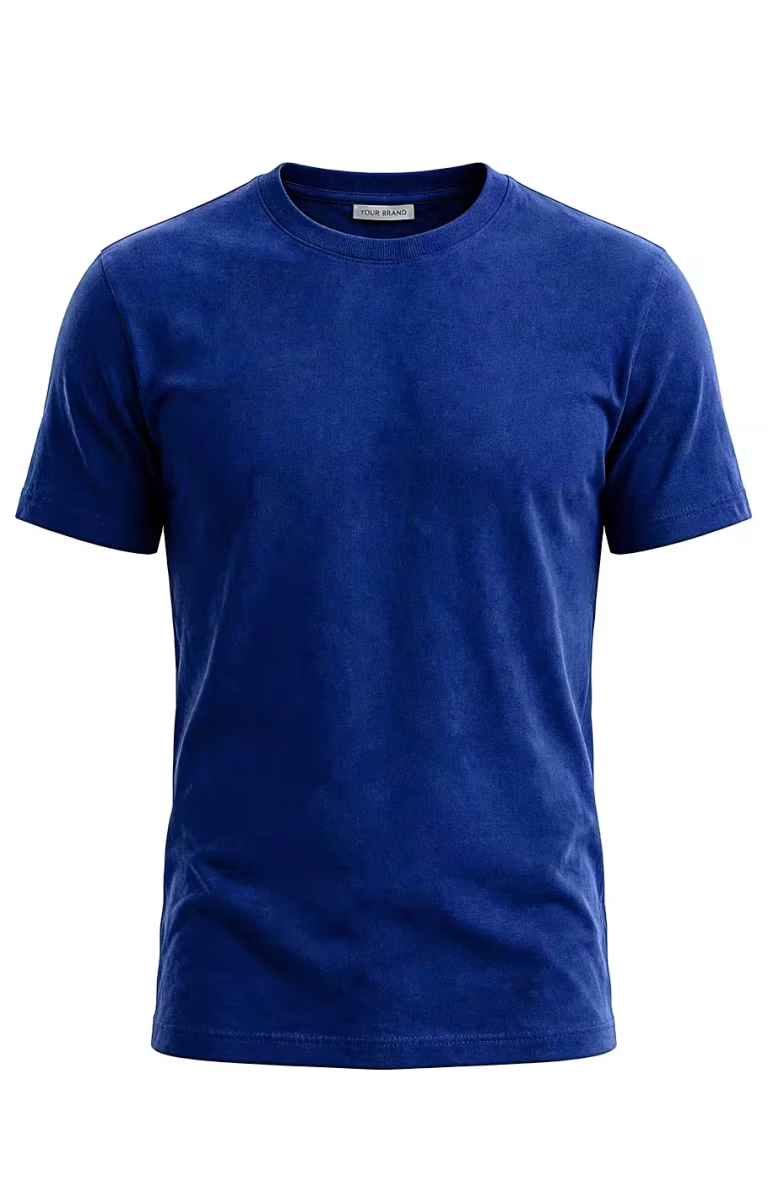
The pictures show the line most ranges start with: a crew-neck t-shirt in royal blue cotton jersey. The front view shows the ribbed collar and clean, plain body. The back view shows the same shirt from behind. The fabric picture shows the single jersey weave up close, and the label picture shows the woven neck label where your brand will sit.
- The front shows collar rib and hem finish.
- The back shows the plain panel, ready for print.
- The close-up shows the jersey your customers will feel.
- The label shows the YOUR BRAND position at the neck.
Planning a Range Around the Year
A range has a rhythm: spring knits, summer basics, autumn fleece, winter layers. We plan production backwards from your selling dates, line by line. Cloth for shared colours is dyed early, because dye houses fill fast in peak months. Cartons then consolidate so each drop arrives complete.
- Core lines run on a steady reorder rhythm.
- Seasonal lines are sampled a season ahead.
- Shared colours share one dye programme.
- Each drop is packed by store before it ships.
Questions about lines, cloth or lead times are answered on our frequently asked questions page. To start a range, send your line list and selling dates through our contact page. We reply with a sampling plan and open pricing lines.
Sampling: How a Buyer Judges the Routine
First, a buyer sends one style from the strongest line. Then we return a sample on the real cloth, with the label sewn in. Meanwhile, the buyer checks fit, shade and hand feel against the brief. If the sample misses, we say why and remake it. Consequently, trust is built on evidence, not on promises.
- Samples show the real cloth, never a substitute.
- Fit comments return in writing and enter the file.
- Shade is judged in daylight and under store light.
- Costs are quoted openly at the same stage.
Moreover, a good sample round tests more than the garment. It tests the paperwork, the packing list and the reply speed. For example, a buyer learns how we answer a hard question before any money moves. In short, sampling is a rehearsal for the whole relationship. Therefore, we treat it with the same care as a bulk order.
Honest Limits: What One Supplier Cannot Do
No single factory does everything well. However, a wide range still has edges, and we name ours early. Very heavy outerwear, for instance, needs different machinery from ours. Similarly, tiny test orders cannot carry the same unit price as a full programme. When a request falls outside our craft, we say so at once.
- We decline work outside our machinery and skill.
- We explain the reason instead of quietly struggling.
- We suggest the right kind of maker for the job.
- We keep the door open for the lines we do well.
Besides, honesty about limits protects the lines we do take. A factory that accepts everything finishes nothing properly. Instead, our range stays inside knitwear, fleece, wovens and kidswear, where our lines run weekly. Within that ground, however, we go deep: many styles, many colours, and size curves that fit real customers. Overall, that depth serves a buyer better than a shallow promise of everything.
Freight, Documents and the Last Mile
A range can be sewn perfectly and still fail at the port. Therefore, documents are prepared while garments are still on the line. Invoices, packing lists and origin papers follow the buyer's template exactly. Then cartons are weighed and measured, so freight quotes hold no surprises. Finally, the shipment leaves with a carton list your warehouse can work from.
- Documents follow the buyer's own formats.
- Carton weights are recorded before booking.
- Sea freight suits planned seasonal drops.
- Small urgent lots can travel by air.
Also, consolidation matters more as a range widens. Five lines shipped separately pay five minimum charges and arrive on five different days. One consolidated shipment arrives once, complete. As a result, your team rails the full story together, which is how a range is meant to launch. In addition, a single shipment means a single customs entry, and therefore a single point of control when questions arise.
Looking for a Wholesale Clothing Suppliers Bangladesh?
If your buying has grown past single-style orders, one supplier for the whole range will simplify your year. Start with the line you sell most, prove the routine, then widen. Clothing suppliers earn trust season by season, and we are content to earn it that way: one honest sample, one clean shipment, one reorder at a time.
Your first step is small on purpose. Send one style, judge one sample, and read one open quotation. If the sample earns its place, the range conversation can begin with evidence on the table. If it does not, you have lost a week, not a season. That is the safest way to change how a whole range is bought.
Buyers who make that first step usually return with a longer list. A tee becomes a tee and fleece programme. A fleece programme becomes a full seasonal range. Each step is earned by the one before it, and each step is recorded in the same file. Growth like that never needs to be rushed, because it never needs to be repaired.
- Start with your strongest line and one sample round.
- Bring last season's sell-through figures to the first talk.
- Agree the size curve before any cloth is dyed.
- Keep one sealed sample from every delivered line.
- Judge cloth, fit and paperwork together.
- Widen the range once the routine is proven.
- Keep every line under your own label.