
Dubai Uniform Suppliers Guide
Uniforms Supplier Companies in Dubai UAE
Looking for a maker among the Uniforms Supplier Companies in Dubai UAE? We cut, sew and pack complete uniform programmes to order at our facilities in Bangladesh, sized across a whole workforce and ready to issue. Buyers across the Emirates approve a sample set on the real cloth before bulk cutting begins. Moreover, every programme is planned backwards from the date your teams must be dressed. Your branding sits on every garment, and no other name appears on the cloth.
- Makers, not traders: every set is sewn to order for you.
- Made to order across your full size curve, nothing held as stock.
- Matched shades cut from single fabric lots for even colour.
- Sample sets approved on the actual cloth before bulk sewing.
- Corporate, industrial, school and hotel lines in one programme.
- Production planned at our Bangladesh facilities around issue dates.
- Packed by wearer, site and size for fast warehouse issue.
Simply The Best
PORTFOLIOS












Product Details
Uniforms Supplier Companies in Dubai UAE
Two Kinds of Companies Behind Dubai Uniforms
Every buyer in the Emirates meets the same two kinds of supplier. The first kind trades ready garments from a warehouse shelf. The second kind makes garments to order against a written file. Both appear among the Uniforms Supplier Companies in Dubai UAE, yet they behave very differently in the second year of a programme.
- Traders sell what the shelf holds today.
- Also, makers sew what your file specifies.
- Then, traders cannot repeat a shade exactly.
- Next, makers reorder from records.
Our position is plain. We are makers, working from our facilities in Bangladesh and supplying programmes across the Emirates. This page gives you seven checks to judge any company, including us. A UAE supplier relationship should begin with evidence, not with a brochure.
Seven Checks Before You Choose a Company
Check 1: Ask Who Actually Sews the Garments
First, ask where the sewing happens and accept only a straight answer. A maker names its facilities and its process. A trader changes the subject to delivery dates. The answer tells you who controls quality when something goes wrong mid programme.
- The sewing source should be named plainly.
- Also, vague answers predict vague accountability.
- Thus, makers show facilities and files.
Check 2: Ask for a Sample on Your Cloth
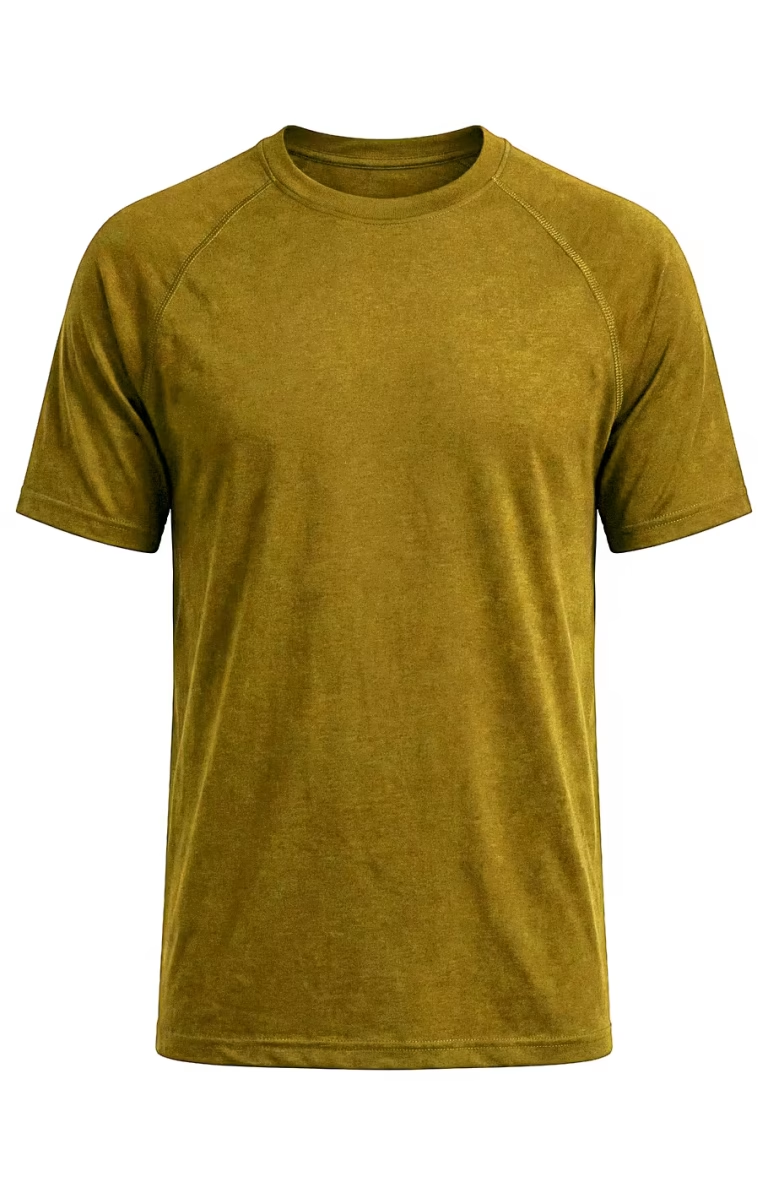
Next, require a sample sewn from the cloth your bulk will use. Catalogue samples prove nothing about your programme. The mustard raglan tee in our pictures was sampled this way. Your garment should arrive the same way, in your colour and your sizes.
- Samples must use production cloth.
- Then, fit is judged on real wearers.
- Next, changes enter the written file.
Check 3: Ask How Reorders Match
Then ask what happens in month thirteen. New starters arrive, sizes change and garments wear out. A maker answers with dye lots and patterns kept on file. A UAE manufacturer without records answers with a fresh search and a slightly different shade.
- Dye lots should be numbered and kept.
- Also, patterns should stay on file for years.
- Thus, reorders match the first delivery.
Check 4: Ask How Sizes Are Packed
After that, ask how cartons arrive at your warehouse. Programmes packed by wearer, site and size issue within minutes. Programmes packed in bulk cost your storekeeper a day of sorting. The packing page of the file matters as much as the sewing page.
- Packing by wearer speeds up issue.
- Then, carton marks should name site and size.
- Next, spares should travel marked apart.
Check 5: Ask What the Price Includes
Moreover, open the quotation line by line. Cloth, trims, sewing, branding and freight should stand as separate figures. A wrapped figure hides the choices you are paying for. UAE wholesale buyers who compare open lines rarely overpay twice.
- Open lines make comparisons honest.
- Also, replacement prices belong in the quote.
- Thus, hidden margins have nowhere to sit.
Check 6: Ask About Branding Control
Later, ask where logos and name badges are applied. Branding applied during production sits straight and lasts through washing. Branding added afterwards peels, fades and wanders. Your teams wear your name in public, so this check protects your reputation directly.
- Embroidery belongs inside production.
- Then, placements should be recorded per role.
- Next, wash tests should include branding.
Check 7: Ask for the Fault Process
Finally, ask what happens when a garment fails. A written fault process names who inspects, who decides and who pays. A UAE factory programme with a fault process survives its first problem. A programme without one turns every fault into an argument.
- Fault steps should be written down.
- Also, replacement timing should be stated.
- Thus, both sides know the route.
The Mustard Raglan Tee in Our Pictures
The garment photographed for this page is a mustard crew neck t-shirt. It carries raglan sleeves, a ribbed collar and a heathered jersey body. The back view stays plain, with the raglan seams running to the neck. The close-up shows the fine jersey grain behind the colour.
- Mustard heathered jersey body.
- Also, raglan sleeves for movement.
- Then, ribbed crew collar.
- Next, YOUR BRAND label inside.
However, mustard is only the pictured shade. Programmes run in the buyer's own colours, from hotel whites to facility greys. In addition, chest embroidery and name badges are applied during production, where placements are recorded per role.
Uniform Manufacturer in Bangladesh Behind the Guide
As a uniform manufacturer in Bangladesh, we pass our own seven checks on every programme. Knitting, dyeing, cutting and sewing sit inside one accountable file. That control is what a UAE supplier comparison should reward. Nothing about our route is hidden from the buyer.
- One file from yarn to carton.
- Also, dye lots recorded per programme.
- Thus, one team answers for quality.
- Next, capacity planned per calendar.
Indeed, our facilities plan production around Emirates delivery schedules. Freight timings enter the order plan during the first week. Buyers can therefore promise issue dates to their own managers with confidence.
Hotels, Clinics, Schools and Companies
Dubai programmes serve very different floors. Hotels need garments that look fresh at a guest's door. Clinics need calm colours that stay clean through shifts. Schools and companies need sizes across a whole workforce, packed for fast issue.
- Hotel lines finished for guests.
- Also, clinic shades chosen for calm.
- Then, school sizes packed by class.
- Next, one programme serves all four.
For instance, one UAE manufacturer programme may dress a hotel's engineers and its housekeeping teams together. The garments differ, but the file, the shades and the packing system stay shared. Buyers manage one relationship instead of four.
Uniform Tee Supplier in Bangladesh for France Brands
French buyers apply the same seven checks through a uniform tee supplier in Bangladesh for France brands. Their programmes serve cleaning firms, care homes and retail chains. The demands match Dubai's closely: named sewing sources, honest samples and reorders that arrive identical. Only the freight route changes.
- Programmes mirror the Dubai checks.
- Also, shade records serve both markets.
- Thus, documentation suits EU imports.
- Next, cartons marked for warehouses.
Sizing a Whole Workforce Honestly
A workforce is not a size run on a spreadsheet. Drivers, cleaners and managers wear the same programme at very different builds. We therefore grade sizes from real wearer data supplied by the buyer. Sample sets are tried across the curve before bulk cutting starts.
- Curves built from wearer data.
- Also, fit checked at curve ends.
- Then, plus sizes graded properly.
- Next, changes recorded for reorders.
Moreover, spares are planned per size, not per programme. The common sizes run out first in every warehouse. A UAE supplier who plans spares by size prevents the Monday morning shortage that buyers remember longest.
Uniform T-Shirt Manufacturer in Bangladesh for Belgium Companies
Belgian buyers use a uniform t-shirt manufacturer in Bangladesh for Belgium companies route for staff dressing. Their teams need fewer garments but exact shades, because staff stand beside the products they sell. The same seven checks apply at smaller scale. Every Belgian reorder matches the first delivery.
- Small programmes keep full records.
- Also, exact shades matter at retail.
- Thus, reorders match first deliveries.
- Next, branding applied in production.
Compliance, Ethics and Open Books
Serious buyers audit the companies behind their uniforms. Our facilities work to recognised social compliance standards, and buyers may review our approach through platforms such as Sedex. Audit reports are shared with programme buyers on request. Nothing about the production route is hidden.
- Audits welcomed at our facilities.
- Also, reports shared with buyers.
- Thus, cloth sources stay recorded.
- Next, quotations split into lines.
Overall, open books protect both sides. Cloth, trims, sewing, branding and freight stand as separate figures. A UAE OEM buyer can compare our programme against any rival line by line. Replacement prices are quoted before the first order, never after it.
What a Programme File Contains
Every programme travels with a written file. The file holds the pattern, the dye lot numbers and the signed sample comments. It also holds the packing plan and the size curve. When a UAE factory keeps such a file, no order depends on one person's memory.
- Patterns stored with revision notes.
- Also, dye lots numbered and swatched.
- Thus, sample comments signed and dated.
- Next, packing plans drawn per site.
Additionally, the file records wash test results from sampling. A UAE manufacturer answering an audit opens the file, not a drawer of guesses. Buyers may request a copy of their own programme file at any time. It belongs to their programme, after all.
Freight, Lead Times and Hard Calendars
Emirates programmes run against hard calendars. Hotel openings, school terms and contract starts do not move. We plan backwards from those dates, with cutting finished before the freight window opens. Buyers receive a dated plan alongside the quotation.
- Plans built backwards from dates.
- Also, sea and air priced openly.
- Thus, holiday weeks planned around.
- Next, progress reported per stage.
Then, when a date moves, the plan moves visibly. Buyers see exactly which stage absorbs the change. That honesty is why UAE supplier programmes with our facilities renew instead of restarting. The file, and the relationship, both continue.
New Starters and Seasonal Staff
Gulf hospitality hires in waves. A hotel may add forty staff in a single month before the high season. Those starters need uniforms on their first morning, in the right sizes. A UAE wholesale programme with spares packed by size answers from the file, not from a fresh run.
- Starter packs held by size.
- Also, hiring waves planned ahead.
- Thus, names added at packing.
- Next, urgent sizes sent by air.
Moreover, seasonal staff often return the following year. Their sizes already sit inside the programme file. A UAE exporter team cuts their replacements without one new measurement. The buyer's office simply sends the returning names.
Questions Buyers Ask Before Signing
First, buyers ask who answers the phone when a fault appears. The answer should be a person who knows the programme file. A UAE supplier who routes faults to a sales desk loses days before the file is even opened. Named contacts belong inside the agreement itself.
- Fault contacts named in the agreement.
- Also, answers come from the file.
- Thus, small faults stay small.
- Next, replacements timed in writing.
Moreover, buyers ask whether the first order or the third costs more. Honest makers quote replacement prices inside the first agreement. A UAE factory programme priced this way never surprises its buyer's budget. The second year should feel cheaper, not riskier.
The Real Cost of Choosing Wrong
Next, consider what a wrong choice costs. Teams dressed in mismatched shades look careless in front of your customers. Reordering a whole programme to fix shades costs far more than sampling properly once. The saving made on a shelf price disappears inside one season.
- Mismatched shades damage first impressions.
- Also, full reorders cost multiples.
- Thus, sampling properly is the saving.
- Next, records protect the second year.
Overall, buyers comparing any UAE manufacturer should price the programme across two years, not two months. Records, spares and replacement terms decide that total. The cheapest opening figure often hides the dearest programme. Open lines reveal it before money moves.
Branding That Survives the Laundry
Later, branding fails quietly where sewing succeeds. Chest logos crack, name tapes fade and embroidery puckers after hot washing. We therefore apply branding during production, under the same checks as the sewing itself. A UAE exporter of uniforms must treat the logo as part of the garment, not as decoration added later.
- Embroidery stitched before pressing.
- Also, badge positions recorded per role.
- Thus, thread colours match brand guides.
- Next, wash tests include branding.
For example, a company crest sits at a measured height on every shirt. The measurement enters the file, so reorders place it identically. Guests never see two versions of the same uniform in one lobby. That consistency marks a disciplined UAE wholesale programme.
Care and Laundry for Working Garments
First, working uniforms face industrial laundry, not gentle home washing. Cloth must hold its shade through hot cycles and strong detergents, week after week. Our wash panel therefore tests the buyer's actual cycle before bulk cutting begins. A UAE supplier who skips wash testing sells garments that fade unevenly across a team.
- Wash panels use the real cycle.
- Also, shade drift measured per load.
- Thus, care labels match tested cycles.
- Next, results recorded in the file.
Moreover, care labels carry the exact cycle the cloth was tested under. A UAE factory programme that prints honest care guidance protects the buyer's laundry contract as well. When garment, label and laundry agree, uniforms keep their colour and their shape far longer. Buyers notice the difference every season their teams stay matched.
Additionally, shrinkage is measured on the whole garment, not on a small swatch. A UAE manufacturer who measures garments knows exactly how the pattern should be graded for wash behaviour. That knowledge enters the file and shapes every reorder that follows.
Looking for a Uniforms Supplier Companies in Dubai UAE?
Send us your wearer list, colours and issue date, and judge us by the same seven checks. We will answer with a sample plan, open quotation lines and a dated production schedule. Start through our contact page or read the common questions on our FAQ page first. Your programme file opens with that first message.
- Samples sewn on production cloth.
- Also, open lines throughout.
- Thus, records kept for reorders.
- Next, one accountable maker.
- Finally, dated plans before payment.
- Indeed, every check is answered in writing.
Overall, choosing among companies is really choosing a system. A shelf sells garments once, while a file dresses your teams for years. That is the standard our facilities sew to, for Dubai and for every market we serve.
In addition, every programme carries a named contact on our side. Questions reach a person who knows the file, not a sales queue. When a buyer rings about a shade, a size or a delivery date, the answer comes from the records within the hour. A UAE supplier who answers from records keeps small problems small. That habit, repeated across seasons, is what turns a first order into a standing programme.