
T-Shirt Pricing in Bangladesh
T-Shirt Manufacturer Bangladesh Price
Looking for a T-Shirt Manufacturer Bangladesh Price breakdown that shows its working? We knit, cut and sew t-shirts to order at our facilities in Bangladesh, and every quote is built from your brief, line by line. Buyers in the USA, UK, Germany, Canada and Australia approve a sample on the real jersey before bulk cutting begins. Moreover, every programme is planned backwards from your selling season. Your label sits inside every shirt, and no other name appears on the garment.
- Every quote built from your own specification.
- Cloth, making, trims and packing named separately.
- No invented figures on the page or in the quote.
- Your woven label inside every shirt, with no other name shown.
- Samples approved on the actual jersey before bulk cutting begins.
- Production planned at our Bangladesh facilities around your season.
- Packed by colour, size and store split for fast warehouse intake.
Simply The Best
PORTFOLIOS












Product Details
T-Shirt Manufacturer Bangladesh Price
A Quote Is a Recipe, Not a Riddle
Buyers who search for T-Shirt Manufacturer Bangladesh Price usually want one honest thing: a quote they can take apart. We knit, cut and sew t-shirts to order at our facilities in Bangladesh, and this page shows what a price is built from. First, every quote here starts with the buyer's own specification, never a shelf figure. Then each part of the garment adds its share, openly. Moreover, no figure on this page is invented, because real prices belong to real briefs.
- Quotes built from your specification.
- Every cost part named openly.
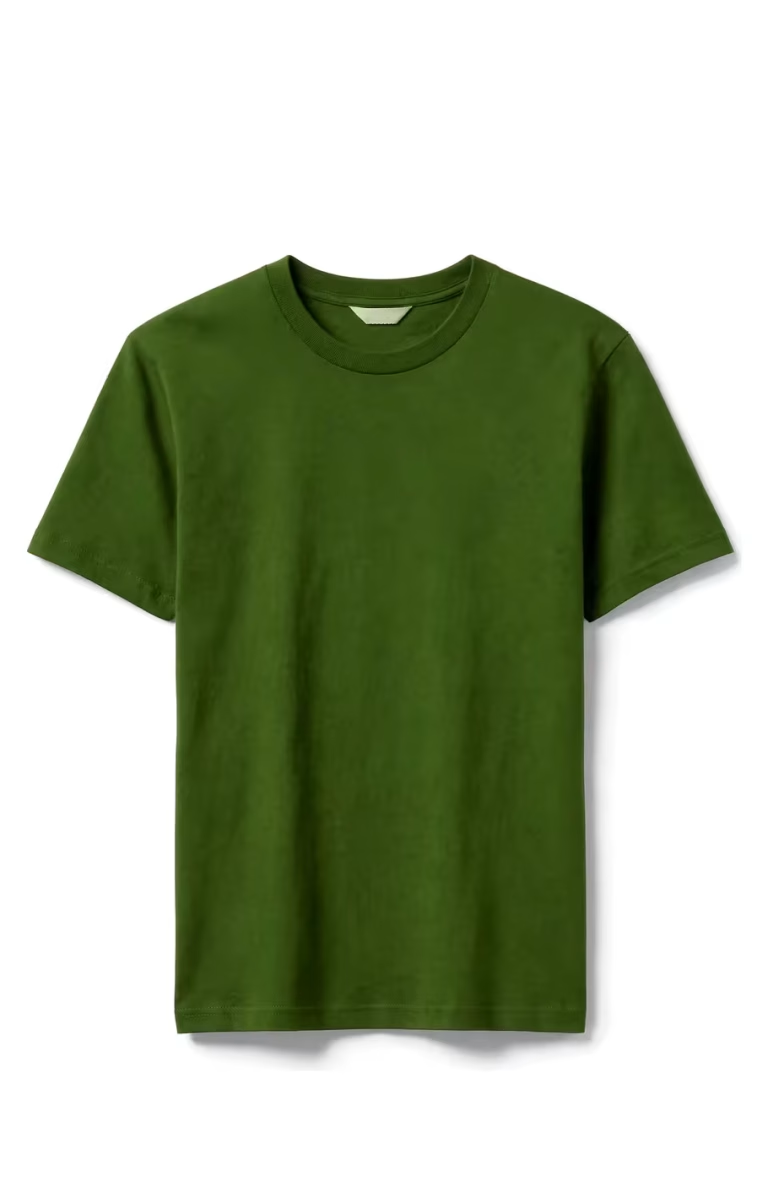
- Olive green tee as the proof garment.
- Your label inside every shirt.
- Samples approved on the real jersey first.
- No invented figures anywhere.
Seven Steps from Brief to Packed T-Shirts
Every programme moves through the same seven steps, from the first brief to packed cartons. The steps keep the garment, and therefore the quote, steady across thousands of shirts.
Step 1: The Brief Fixes the Specification
First, the brief names the body, cloth, colours and trims in the range. A price a manufacturer quotes from a vague brief can only be a guess. In addition, the brief fixes sizes, labels and packing early. A complete brief earns a complete quote.
Step 2: Single Jersey Is Knitted to Weight
Second, the cotton jersey is knitted and dyed to the approved weight. Cloth is the largest single part of most tee quotes. However, weight alone does not set the figure, because width and yield matter too. The sample therefore proves the cloth before any bulk figure is final.
Step 3: Panels Are Cut to the Pattern
Next, panels are cut to the buyer pattern with markers planned for yield. How much cloth each shirt consumes shapes the price a factory can honestly offer. In addition, each bundle is ticketed by size and colour. Ticketed bundles keep sizes from drifting between cutting and sewing.
Step 4: The Sample Is Approved on Real Jersey
Then the sample is sewn and measured against the brief. Buyers check fit, cloth hand and trim quality on the garment itself. If anything changes, the quote changes with it, openly. Finally, the approved sample becomes the reference for the bulk run.
Step 5: Bulk Cutting Follows the File
Bulk cutting follows the approved file exactly. The same marker, cloth plan and size ratios apply throughout. Moreover, cut panels rest before sewing so the jersey relaxes. Relaxed panels keep the finished measurements honest after washing.
Step 6: Sewing Holds the Specification
Sewing follows the specification line by line, from collar rib to hem. Stitch density and seam allowances are set in the file. In addition, garments are measured flat on the table during the run. A price a manufacturer defends is a price built on garments that pass those checks.
Step 7: Packing Follows the Buyer Split
Finally, finished shirts are pressed, folded and packed by colour, size and channel. Packing choices are part of the quote, agreed before bulk begins. Therefore, no packing surprise appears at the end. The carton list repeats the programme file line by line.
The Olive Green Tee in Our Pictures
The pictures on this page show one garment honestly: a men's crew neck t-shirt in olive green cotton single jersey. The front view shows the ribbed crew collar and a plain, unprinted body. The back view shows a plain back panel. In addition, the close-up shows the fine knit grain of the jersey itself. Finally, the label picture shows a YOUR BRAND woven label inside the ribbed collar.
- Olive green single jersey, shown as photographed.
- Ribbed crew collar, plain body.
- Plain back panel, no print.
- Your label carried inside the collar.
Cloth: The First Line of Every Price
Ask any honest maker where a tee quote begins and the answer is cloth. The fibre, the yarn and the knitted weight set the base of the price a manufacturer can offer. Heavier cloth costs more to knit and more to ship. However, chasing the lightest cloth is its own risk, because thin jersey twists and fades early. Buyers therefore choose cloth with the garment's working life in mind. The right weight, proven on a sample, is the cheapest decision in the long run.
- Fibre and yarn set the base figure.
- Weight affects making and freight alike.
- Thin cloth carries its own risks.
- Samples prove cloth before bulk.
T-Shirt Supplier in Bangladesh for German Retailers
German retailers compare quotes line by line, and they reward makers who show their working. We supply those ranges from the same file as the sample. First, the quote separates cloth, making, trims and packing. Then each line can be discussed on its own facts. In addition, the price a supplier quotes a German buyer must survive an audit of the garment itself. Our samples and files are built to survive exactly that.
- Quote lines separated and discussable.
- Samples that match the written quote.
- Files open to buyer review.
- Reorders repeat the agreed structure.
Weight, Width and Cutting Yield
Two shirts in the same cloth can still carry different figures. The marker decides how much cloth each garment consumes, and consumption drives the price a factory quotes. Wide cloth and tight markers waste less per shirt. However, squeezing a marker too hard distorts grain and fit. We therefore plan markers for yield and honesty together. Buyers see the consumption logic inside their programme file.
- Marker yield shapes cloth consumption.
- Grain honesty limits marker squeezing.
- Consumption logic recorded in the file.
- Fit protected at the cutting table.
T-Shirt Exporter in Bangladesh for French Chains
French chains usually compare landed cost, not only the factory gate figure. Freight, packing density and carton size therefore join the quote conversation early. The price an exporter confirms in writing should state clearly what it includes. Our quotes name the garment, the packing and the delivery terms as separate lines. Moreover, documents are prepared from the same file, so the landed figure and the paperwork agree.
- Landed cost discussed from the start.
- Delivery terms stated in writing.
- Packing density planned for freight.
- Documents matched to the quote.
Trims, Labels and Packing Choices
Small choices move a quote more than buyers expect. A woven label, a printed label and a heat transfer each carry their own cost shape. Polybags, folding styles and carton splits do the same. First, we price the trim set the buyer actually chose, never a richer one. Then alternatives are shown as separate options, openly. A price a wholesale buyer can adjust line by line is a price that survives negotiation without games.
- Trim sets priced as chosen.
- Alternatives shown as open options.
- Packing styles agreed before bulk.
- No richer specification smuggled in.
Printing and Embroidery Choices
The pictured tee is plain, and many programmes stay plain. When buyers add print or embroidery, the method changes the figure. Screen print, chest embroidery and all-over work each price differently. In addition, placement size and colour count belong in the brief from the start. We quote print work from the buyer artwork, on the real garment, at sampling. Therefore, the printed sample and the written quote always describe the same shirt.
- Plain bodies quoted without print costs.
- Print methods priced from real artwork.
- Placement and colours fixed early.
- Printed samples approved before bulk.
Testing, Compliance and Open Paperwork
Testing is a small line in a quote and a large protection behind it. We test cloth for shrinkage, colour fastness and seam strength against the buyer specification. In addition, our factory information is listed openly with the Bangladesh Garment Manufacturers and Exporters Association for buyers who verify makers before ordering. Test reports sit inside the programme file. Moreover, a price an OEM buyer pays should always include this paperwork discipline.
- Shrinkage and fastness tested per lot.
- Seam strength checked on garments.
- Maker credentials open to verification.
- Reports filed inside the programme.
What a Programme File Contains
Every order runs on one programme file, and the file is the memory of the range. It holds the pattern, the measurements and the approved sample notes. It also holds the quote itself, line by line, beside the specification it prices. In addition, it records cloth lots, label artwork and packing splits. When a buyer returns after a year, the file rebuilds both the garment and its price structure exactly.
- Pattern and measurement tables.
- Quote lines beside the specification.
- Cloth and label records.
- Packing and document wording.
Reorders Hold the Agreed Structure
A fair quote should not dissolve at reorder. The programme file keeps the structure, so a repeat order starts from the agreed lines. First, the buyer confirms colours, sizes and dates. Then any changed input, such as a new cloth lot, is discussed openly before sewing. Moreover, the price a manufacturer holds steady in structure earns more trust than a low first figure that wanders later.
- Reorders start from agreed lines.
- Changed inputs discussed openly.
- Structure held between seasons.
- No new sampling for repeat bodies.
Freight Terms Change the Landed Figure
The same shirt can land at different totals under different terms. Sea freight rewards dense, well-planned cartons. Air freight rewards light cloth and early booking. We therefore quote garment and freight as separate conversations. Buyers choose the term that fits their selling calendar. Finally, the chosen term is written into the file, so the landed figure a buyer planned is the figure the buyer pays.
- Garment and freight quoted separately.
- Carton density planned for sea freight.
- Terms chosen by selling calendar.
- Agreed terms written into the file.
Colour Stories and Seasonal Quotes
Colour count quietly shapes a quote. Each additional shade needs its own dye lot and its own cutting bundle. Core colours repeated across seasons carry the calmest figures. In addition, the olive green in our pictures shows how one deep core shade anchors a range. Buyers who plan colour stories early give the dye house a fair schedule. Fair schedules, in turn, keep the price a supplier quotes free of rush costs.
- Every shade carries a dye lot.
- Core colours repeat calmly.
- Early colour plans avoid rush costs.
- Shades checked on finished garments.
Care, Washing and Honest Labels
A tee is washed often, so care labels must tell the truth. We print washing guidance that matches the actual cloth and dye. First, shrinkage results from testing set the wording. Then fibre content is stated exactly as knitted. Moreover, honest labels protect the buyer's brand at the returns desk. The small cost of correct labels is the cheapest line in any quote.
- Care wording set from test results.
- Fibre content stated exactly.
- Labels printed for each market.
- Washing guidance matched to the cloth.
How Run Length Shapes a Quote
The price a manufacturer quotes for a long production run spreads the fixed work of sampling and markers across every shirt. Short runs carry the same fixed work on fewer garments, so the price a factory quotes honestly rises per piece. Prices that wholesale buyers compare across countries rarely include the same specification. In addition, the price an exporter confirms for a first order carries first-time file work. Repeat runs drop that work, and the price a supplier quotes can calm down.
- Fixed work spread across the run.
- Short runs cost more per piece, openly.
- Prices for OEM repeats held in the file.
- Price a manufacturer defends line by line.
Reading Two Quotes Side by Side
Two quotes rarely describe the same shirt, so compare the specifications before the figures. A low price from a supplier who knits lighter cloth is not the same garment at a better figure. Ask what the price a manufacturer quotes includes: cloth, trims, labels, packing and terms. Moreover, the price a factory refuses to itemise is a price built to move later. Prices that OEM buyers accept in writing, line by line, survive reorders without argument. A fair price an exporter confirms against a sample protects both sides at bulk.
- Specifications compared before figures.
- Inclusions named in writing.
- Itemised quotes only, on our side.
- Samples matched against the quote.
Questions Buyers Ask Us About Price
Why do you not publish a standard price list?
Because every garment here is made to the buyer's own specification. Cloth, weight, trims and packing change the figure each time. A published list would invent numbers for garments that do not exist yet. Instead, we quote from your brief, line by line.
What should our brief include for a firm quote?
Send the body, cloth weight, colours, size range, label choice and packing style. Add target dates and delivery terms if you have them. In addition, a reference garment or tech pack speeds the sampling. The firmer the brief, the firmer the quote.
Can a quote change after sampling?
Only when the specification changes, and always openly. If the sample leads you to a heavier cloth or a richer trim, the affected line is requoted before bulk. Nothing changes silently after approval. The file records every agreed change.
Do repeat orders keep the same structure?
Yes, the programme file holds the quote structure between seasons. Changed inputs are discussed before sewing, never after. Therefore, reorders begin from trust rather than from a new negotiation. Buyers approve quantities and dates.
How are sizes and colours reflected in a quote?
Each colour carries its own dye lot, and each size its own marker consumption. Wide size ranges and many shades therefore shape the figure. We show that shaping openly in the quote lines. Buyers can then balance range width against budget with real facts.
Looking for a T-Shirt Manufacturer Bangladesh Price?
If a quote with its working shown sounds right for your range, we should talk. Send your bodies, cloth weights and target dates through our contact page, and we will reply with a sampling plan and a line-by-line quote. Meanwhile, the FAQ page answers common questions on sampling, labels and freight. Overall, the price a manufacturer earns trust with is the price that can be taken apart. Prices that wholesale buyers compare fairly are built the same way as ours, from the cloth outward.
- Quotes taken apart line by line.
- Samples approved on real jersey first.
- Your label inside every shirt.
- No invented figures, ever.