
Small Run Clothing Manufacturing
Small Quantity Clothing Manufacturer Bangladesh
Looking for a Small Quantity Clothing Manufacturer Bangladesh programme that treats a test run like a core range? We knit, cut and sew clothing to order at our facilities in Bangladesh, and small runs receive the same sampling and file discipline as large ones. Startups, capsule labels and growing brands in the USA, UK, Germany, Canada and Australia approve a sample on the real cloth before cutting begins. Moreover, every programme is planned backwards from your selling season. Your label sits inside every garment, and no other name appears on it.
- Small runs planned with full file discipline.
- Test ranges proven on samples first.
- Mixed colours and sizes within one run.
- Your woven label inside every garment, with no other name shown.
- Samples approved on the actual cloth before bulk cutting begins.
- Production planned at our Bangladesh facilities around your season.
- Packed by colour, size and store for fast warehouse intake.
Simply The Best
PORTFOLIOS












Product Details
Small Quantity Clothing Manufacturer Bangladesh
Small Runs, Full Discipline
Buyers who search for Small Quantity Clothing Manufacturer Bangladesh are usually startups, growing brands and capsule labels testing a range. We knit, cut and sew clothing to order at our facilities in Bangladesh, and small runs receive the same file discipline as large ones. First, honesty about scale: a small run is planned differently, not carelessly. Then the sampling proves the range before anyone commits to depth. Moreover, every programme is planned backwards from your selling season.
- Small runs planned with full file discipline.
- Test ranges proven on samples first.
- Mixed colours and sizes in one run.
- Your woven label inside every garment, with no other name shown.
- Samples approved on the actual cloth before bulk cutting begins.
- Cartons packed by colour, size and store.
Seven Steps from Brief to Packed Small Runs
Every programme moves through the same seven steps, from the first brief to packed cartons. The steps protect small runs most, because a small range has no spare units to hide mistakes in.
Step 1: The Brief Fixes a Tight Range
First, the brief names a tight range: few bodies, few colours, clear sizes. Capsule discipline keeps a small run affordable. In addition, the brief fixes which styles must prove themselves first. A clothing manufacturer who edits a brief kindly saves the buyer money.
Step 2: Cloth Is Planned Across Styles
Second, cloth is planned across styles so one lot serves several bodies. Shared cloth lowers the entry point for the whole capsule. However, shared cloth still needs shade discipline per body. The lot plan therefore sits in the file before dyeing starts.
Step 3: Samples Carry the Whole Argument
Next, samples carry the whole argument of the range. Each style is sewn, washed and measured before any bulk decision. In addition, buyers receive the sample on the real cloth, not a substitute. A clothing supplier who samples honestly earns the bulk order fairly.
Step 4: Approval Locks the Small Run
Then the approved samples lock the run. Patterns, shades and labels are frozen in the file. If a measurement drifts, the pattern is corrected before cutting. Finally, the approved set becomes the reference for every unit sewn.
Step 5: Cutting Respects Small Markers
Cutting a small run well is a skill of its own. Markers are planned tightly so cloth waste stays low. Moreover, each bundle is ticketed by size and colour. A clothing factory that tickets small bundles can trace any garment back to its cloth lot.
Step 6: Sewing Runs Style by Style
Sewing runs style by style, with the approved sample at the line head. Operators check the first units of each style against that sample. In addition, finished garments are measured flat on the table. Flat measuring catches drift before packing does.
Step 7: Packing Splits for Small Stores
Finally, packing splits cartons by colour, size and store from the buyer's own list. Small stores receive ready mixed cartons. Also, each carton carries its contents on its face. A clothing wholesale programme that packs this way saves a second handling at destination.
The Dark Olive Tee in Our Pictures
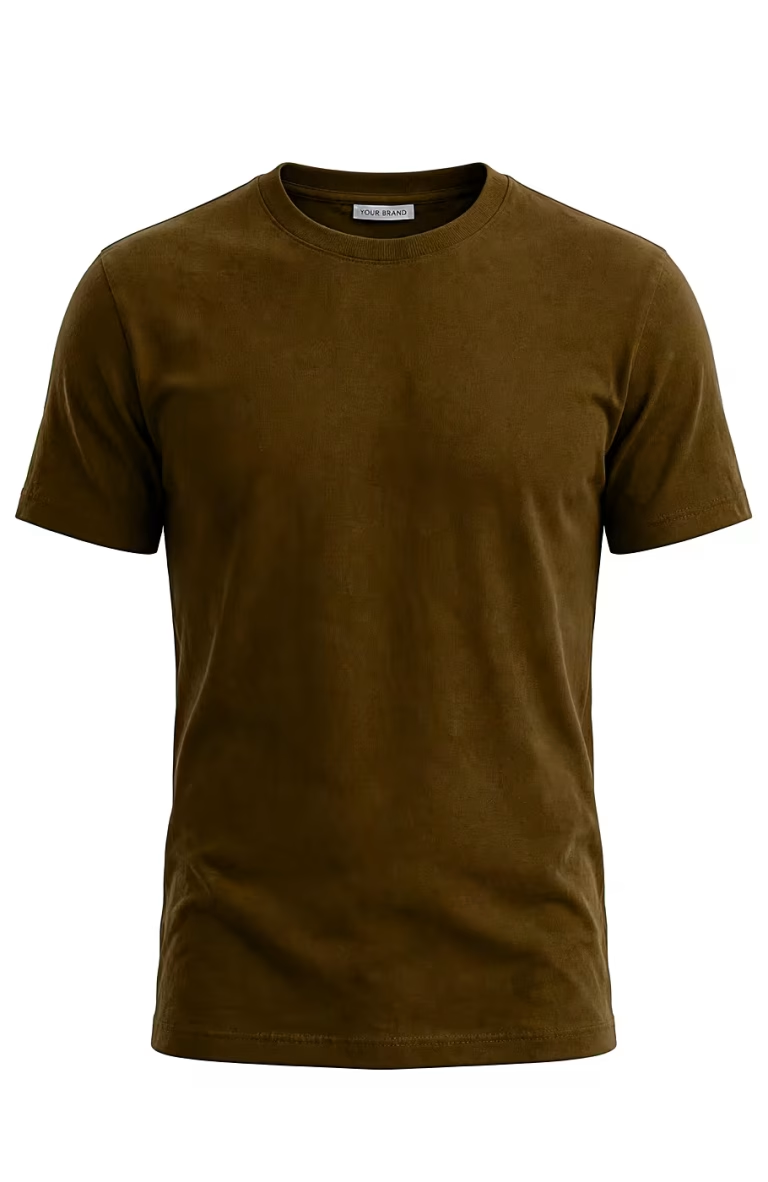
The pictures show a standard crew tee honestly, in dark olive cotton single jersey with a ribbed collar. One body stands for the capsule idea: a simple, provable garment. The back view shows a plain back panel. In addition, one frame shows the jersey in soft folds up close, and one shows the woven label against the rib. Your capsule uses your colours and label on the same body files.
- Dark olive cotton single jersey.
- Ribbed crew collar, plain back panel.
- Jersey folds shown in a close frame.
- YOUR BRAND woven label at the neck.
- One provable body, many capsules.
How a Clothing Manufacturer Plans a Test Range
A test range answers one question: will this sell? The run is therefore sized to the test, not to a factory habit. First, the buyer names the styles that carry the test. Then colours are limited to the strongest stories. A clothing exporter who plans tests this way protects young brands from dead stock. The file then scales what worked, and only what worked.
- Runs sized to the test.
- Colours limited to strong stories.
- Dead stock avoided by design.
- Winners scaled from the same file.
Clothing Manufacturer in Bangladesh for Swedish Brands
Swedish brands often begin with quiet capsules in honest cloth. They value fibre clarity and restrained colour. In addition, they expect paperwork that matches the goods exactly. A clothing supplier serving Sweden keeps fibre content and care data precise. Our files hold those details from the first sample, so scaling later changes nothing on paper.
- Fibre clarity from the first sample.
- Restrained colours, matched carefully.
- Paperwork matched to the goods.
- Scaling without paper changes.
Capsule Ranges and Colour Discipline
Small ranges live or die on colour discipline. Few shades, matched exactly, beat many shades matched loosely. First, the capsule card is approved as a set under daylight. Then every dye lot is matched back to that set. A clothing manufacturer who treats five shades like fifty ships capsules that photograph as one family.
- Few shades, matched exactly.
- Cards approved as a set.
- Lots matched back to the card.
- Ranges that photograph as one family.
Clothing Manufacturer in Bangladesh for Danish Distributors
Danish distributors feed many small retailers from one programme. Their cartons therefore mix styles, colours and sizes by store. In addition, replenishment must be quick when a style moves. A clothing wholesale file that holds store splits makes replenishment a packing task, not a planning task. The distributor sends quantities; the file does the rest.
- Mixed cartons by store.
- Store splits held in the file.
- Replenishment as a packing task.
- Quantities sent, file does the rest.
Sampling Rounds Without Waste
Sampling is where small brands spend their courage. Rounds are therefore kept short and written. First, one sample proves fit and cloth. Then one revision round corrects what the buyer marked. Endless rounds burn the season and the budget. A clothing OEM desk that writes approvals down protects both sides from drift.
- One sample to prove the range.
- One written revision round.
- Approvals recorded, not remembered.
- Seasons protected from drift.
Growing from Test Run to Core Range
The point of a test run is a core range. When a style sells, the file already holds its pattern, shade and yield. Scaling then means deeper runs on proven ground. However, scaling also tempts shortcuts, and shortcuts break what sold. A clothing factory that scales by the file keeps the winning garment identical at ten times the depth.
- Winners scaled from proof.
- Patterns and shades already held.
- No shortcuts at scale.
- The winning garment kept identical.
Clothing OEM Ranges Under Your Own Label
Your label sits inside every garment, and no other name appears on the cloth. The woven label is woven to your artwork, with size tabs where the range needs them. In addition, care labels carry the fibre content your market requires. Small brands live on their label more than anyone. Our programme treats that label as the centre of the file.
- Woven labels made to your artwork.
- Size tabs where ranges need them.
- Care labels matched to your market.
- Your label at the file's centre.
Testing, Compliance and Open Paperwork
Small runs face the same tests as large ones. Cloth is tested for shade fastness, shrinkage and pilling against the buyer's standard. In addition, working standards are maintained under schemes such as Sedex. Reports are shared openly with buyers. A young brand's first audit should be a formality, not a fright.
- Shade fastness tested per dye lot.
- Shrinkage measured on garments.
- Reports shared on request.
- Standards held from the first run.
What a Programme File Contains
The file is the memory of the range. It holds the patterns, the cloth specification and the approved sample record. It also holds store splits, label artwork and the shade archive. Clothing manufacturers who keep such files let small brands reorder in days. Therefore, growth starts from proof, not from a new negotiation.
- Patterns and cloth specification.
- Approved sample record with dates.
- Store splits and label artwork.
- Shade archive with dye recipes.
Reorders and Season Planning
Small brands reorder in pulses, around drops and seasons. The calendar is therefore fixed early, even for test ranges. First, the drop dates are named with the buyer. Then sampling and sewing are booked backwards from them. A clothing supplier who plans pulses avoids rush charges and missed drops. The file holds every date in one place.
- Drop dates named early.
- Sewing booked backwards from drops.
- Rush charges avoided by planning.
- Every date held in one file.
Colours That Carry a Capsule
Capsule colours must work together on one rail. The dark olive in our pictures pairs with stone, black and cream. Each shade is approved beside its neighbours, not alone. In addition, one deep shade anchors the set. A clothing exporter who approves sets, not singles, ships capsules that stores can display without editing.
- Shades approved as neighbours.
- One deep shade anchors the set.
- Sets that display without editing.
- Drift corrected at dyeing.
Care, Washing and Honest Labels
Care labels must match what the cloth can honestly take. The dark olive jersey is tested through repeated home washing before approval. Therefore, its label can promise ordinary machine washing with confidence. Fibre content is stated exactly, and washing symbols match the market. Honest care text protects young brands, whose returns hurt most.
- Cloth tested through washing.
- Care text written from results.
- Fibre content stated exactly.
- Symbols matched to the market.
Mixed Runs: Several Styles, One Cutting Plan
Small buyers rarely run one style alone. A capsule may hold tees, tanks and a polo in the same shade family. Mixed runs work when the cutting plan treats them as one family. First, shared cloth lots are mapped across the styles. Then markers are planned style by style inside that map. A clothing manufacturer who plans mixed runs this way keeps entry costs low without mixing up shades.
- Styles mapped across shared lots.
- Markers planned inside one map.
- Shades consistent across styles.
- Bundles ticketed by style and size.
Mixed runs also help stores. One delivery can dress a whole rail: tees beside tanks in matched colours. A clothing wholesale programme that packs mixed styles by store gives small retailers a ready display. The store list sits in the file, so the second delivery packs itself.
What Small Buyers Should Ask Before Sampling
Good questions save small brands real money. Ask which cloth lots can be shared across styles. Ask how the shade archive is kept. Ask what a reorder needs besides quantities and dates. A clothing supplier who answers plainly is planning to stay. A clothing exporter who dodges those questions is planning to improvise.
- Shared lot options named early.
- Shade archive explained openly.
- Reorder needs listed in writing.
- Plain answers before sampling.
Finally, ask to see the file structure itself. Patterns, approvals, splits and dates should already have a home. Clothing OEM programmes for growing brands live inside that structure for years. The brands that ask early rarely rebuild later.
Honest Limits: What Small Runs Cannot Do
Small runs have honest limits, and buyers deserve to hear them plainly. A small run cannot spread setup as thinly as a deep one. It cannot hold every shade a large range can. It also cannot promise the fastest vessel in a peak week. A clothing manufacturer who names those limits early lets the buyer plan around them. None of them touches quality: the sewing, testing and labelling stay at full standard.
- Limits named before sampling.
- Quality never traded for scale.
- Planning built around the limits.
- Standards held at every size.
Within those limits, small runs move fast. Decisions sit with one buyer, approvals return quickly and cutting follows within days. A clothing supplier who respects that speed gives young brands their one real advantage. The file keeps the speed safe, because nothing depends on memory. A clothing factory that writes everything down can move quickly without ever guessing.
Questions Small Run Buyers Ask Us
Can a first range really start small?
Yes. A first range starts with a tight capsule and a full sampling round. The run is sized to your test, with colours and sizes split as you direct. What matters is discipline, not depth. The file then scales whatever sells.
Is the pictured tee the exact garment we would receive?
The pictures show a standard crew body honestly, in dark olive single jersey. Your range uses your colours, sizes and label on the same body file. Moreover, your sample is approved before bulk, so nothing rests on a photograph.
Can several styles share one cloth lot?
Yes, and capsules often should. Tees, tanks and polos can share a jersey lot where the weights allow. The lot plan sits in the file before dyeing. Shades then match across the whole capsule.
What happens when a style sells out early?
The file already holds the pattern, shade and specification. Therefore, a fresh run can start from proof without new sampling. Buyers approve only quantities and dates. The winning garment repeats exactly.
How are sizes graded across a small range?
Chest, body length and sleeve are graded together from the buyer size curve. Measurements are taken on finished garments, not only on the pattern. If a size drifts, the pattern is corrected before cutting. Finally, the grading notes sit inside the file.
Looking for a Small Quantity Clothing Manufacturer Bangladesh?
If a small run with full discipline sounds right for your brand, we should talk. Send your styles, colours and target dates through our contact page, and we will reply with a sampling plan. Meanwhile, the FAQ page answers common questions on sampling, labels and freight. Overall, a clothing manufacturer who treats a test run like a core range earns the core range. Clothing wholesale buyers who start small on a held file rarely start anywhere else again.
- Small runs, full discipline.
- Samples approved on real cloth first.
- Your label inside every garment.
- Records open at every step.