
Clothing Manufacturing in Bangladesh
Siatex a Bangladesh Clothing Manufacturer
Looking for a Siatex a Bangladesh Clothing Manufacturer that can carry a whole range on one brief? We knit, weave, cut and sew clothing to order at our facilities in Bangladesh, from core tees to fleece and shirts. Buyers in the USA, UK, Germany, Canada and Australia approve a sample on the real cloth before bulk cutting begins. Moreover, every programme is planned backwards from your selling season. Your label sits inside every garment, and no other name appears on the cloth.
- Made to order across tees, fleece and shirts, with nothing held as ready stock.
- One programme file holding patterns, cloth and trims.
- Size curves graded once and locked for reorders.
- Your woven label inside every garment, with no other name shown.
- Samples approved on the actual cloth before bulk cutting begins.
- Testing and audit paperwork open to every buyer.
- Production planned at our Bangladesh facilities around your season.
Simply The Best
PORTFOLIOS












Product Details
SiATEX - A Bangladesh Clothing Manufacturer
One Brief, a Whole Clothing Programme
Most buyers arrive with one garment in mind, then grow the range season by season. Buyers who brief Siatex a Bangladesh Clothing Manufacturer start with a single file that can carry tees, fleece, shirts and trousers together. First, we fix the bodies and the size curves. Then every later decision hangs on that one standard. Moreover, the file stays open, so new styles join the programme without fresh sampling rounds.
- One brief covering several garment families at once.
- Size curves graded once and held across seasons.
- Your labels and trims planned inside the same file.
- Samples approved on real cloth before bulk cutting begins.
- New styles added without reopening the whole programme.
Seven Steps from Brief to Packed Cartons
Every programme moves through the same seven steps, whether it holds one tee or twelve clothing styles. The steps keep a clothing factory honest, because each stage leaves a record the buyer can check.
Step 1: The Brief Fixes Bodies and Colours
First, the brief names every body, colour and size ratio in the range. Buyers usually plan core styles beside seasonal pieces. In addition, the brief fixes label artwork and trim choices early. Clear briefs prevent slow sampling rounds later.
Step 2: Cloth Is Knitted or Woven to Weight
Second, the cloth is produced to the approved weight and handle. Cotton jersey, brushed fleece and poplin all run under one programme file. However, each cloth keeps its own test record. Buyers see the results before cutting starts.
Step 3: Patterns Are Graded Across the Curve
Next, patterns are graded across the full size curve from one approved block. Grading follows the buyer measurement chart, not a house guess. Consequently, a medium approved in spring still fits the same in autumn. The graded file then stays locked.
Step 4: The Sample Is Approved on Real Cloth
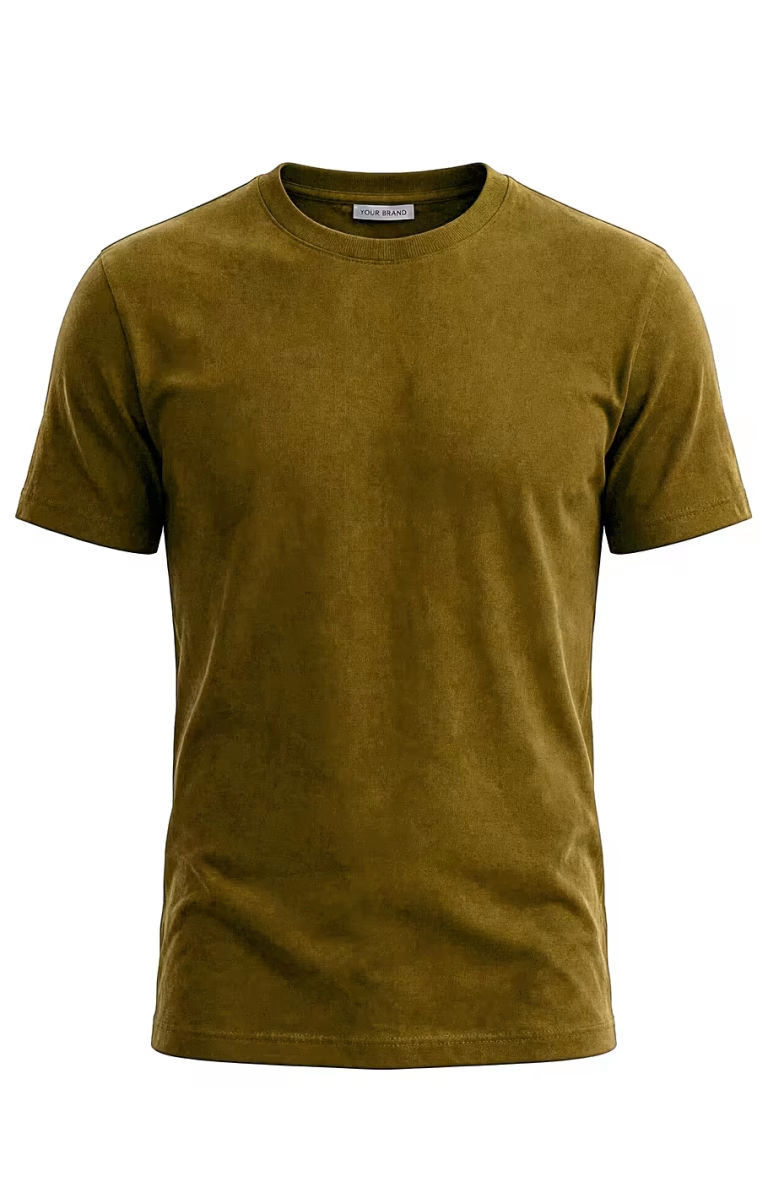
Then the sample is sewn from the actual production cloth. Buyers check fit, colour and stitch quality on the real garment. For example, the mustard tee in our pictures began exactly this way. Only approved samples move forward.
Step 5: Bulk Cutting Follows the Locked File
Later, bulk cutting follows the locked pattern file lay by lay. Markers are planned to hold the size ratios the brief demands. Meanwhile, cut panels are bundled by size and colour. Nothing leaves the cutting table unrecorded.
Step 6: Sewing Holds the Approved Standard
During sewing, line checks compare garments against the approved sample. Collar shape, seam strength and hem finish are checked batch by batch. If a line drifts, sewing stops until the standard returns. Thus, the last carton matches the first.
Step 7: Packing Follows the Buyer Split
Finally, packing follows the buyer split by colour, size and store group. Cartons are labelled for fast warehouse intake at the other end. In short, the programme closes exactly as the brief opened. Records stay available for the reorder.
The Mustard Yellow Tee in Our Pictures
The gallery shows the kind of core garment most programmes start with. It is a men crew neck t-shirt in mustard yellow cotton single jersey, shown from the front and the back. In addition, one picture shows the jersey itself in close-up, soft folds and all. The last picture shows a YOUR BRAND woven label on the same cloth. Most clothing supplier programmes begin with one proven body like this.
- Mustard yellow crew neck tee with a ribbed collar.
- Plain back panel ready for prints or plain wear.
- Single jersey with a soft, natural fold.
- YOUR BRAND label woven for the buyer name.
- Straight hem finished flat and even.
Clothing Manufacturer in Bangladesh for Canadian Brands
Canadian brands often build wide ranges on small teams, so one brief has to cover many styles. We plan the full clothing range under one file, from core tees to seasonal fleece. Moreover, size curves follow North American grading habits that Canadian buyers expect. Samples travel early, so approval lands well before the selling season. Overall, the brand team briefs once and then only approves.
- Wide ranges planned under one programme file.
- Grading matched to North American size habits.
- Early samples for calm approval rounds.
- One contact for every garment family.
Cotton Jersey, Fleece and Poplin Under One Roof
A clothing programme only works when the cloth library behind it is deep. We run cotton single jersey for tees, brushed fleece for hoodies and sweatshirts, and poplin for shirts. However, each cloth is tested for shrinkage, colour fastness and handle before approval. Buyers choose weights per style, while the file keeps every choice recorded. For instance, a tee at one weight and a hoodie at another still ship under one programme.
- Single jersey knitted for tees and tanks.
- Brushed fleece for hoodies and sweatshirts.
- Poplin woven for shirts and uniforms.
- Every cloth tested before buyer approval.
- Weights recorded style by style.
Clothing Supplier in Bangladesh for Spanish Retailers
Spanish retailers plan around strong seasonal drops, so timing matters as much as cloth. We build the clothing range backwards from the drop date, with cutting and sewing booked early. In addition, store splits are packed at our end, which saves warehouse days in Spain. Retail buyers also get colour stories that repeat across tees, fleece and shirts. Consequently, the rail looks planned, not pieced together.
- Production planned backwards from drop dates.
- Store splits packed before shipping.
- Colour stories repeated across garment families.
- Reorders matched to the first drop.
Patterns, Grading and Honest Size Curves
Fit is where clothing programmes earn repeat orders. We grade from the buyer chart and check every size on real bodies and forms. Meanwhile, the approved block stays locked, so a reorder cannot quietly change shape. Buyers who work with a clothing exporter learn quickly that stable grading protects their returns rate. Therefore, we treat the pattern file as the heart of the programme.
- Grading taken from the buyer chart.
- Every size checked before bulk sewing.
- Approved blocks locked against drift.
- Fit notes recorded inside the programme file.
Clothing Exporter in Bangladesh for Gulf Importers
Importers in the Gulf buy across categories, often for several retail formats at once. We consolidate tees, fleece and shirts into one clothing shipment with clear carton marking. Moreover, paperwork is prepared in the format Gulf importers request, with packing lists matched to cartons. Heat friendly cloth weights are chosen for the region. In short, one order behaves like one order, not five.
- Several categories consolidated per shipment.
- Carton marking matched to packing lists.
- Cloth weights chosen for warm climates.
- Paperwork prepared in the requested format.
How Clothing Programmes Repeat Each Season
A good programme should make the second season easier than the first. The locked file carries patterns, cloth choices, trims and packing rules forward. Then buyers only approve what is new, such as colours or one added style. Most clothing wholesale buyers tell us the reorder is where the real saving sits. Finally, the season starts from proof, not from hope.
- Patterns and cloth choices carried forward.
- Only new colours and styles need approval.
- Trims and labels repeated exactly.
- Season two starts from the proven file.
A Clothing Factory in Bangladesh That Buyers Can Audit
Trust grows when a buyer can check the work. Our facilities welcome audit visits and open paperwork on testing, wages and safety. For example, buyers can trace a carton back to its cutting lay and sewing line. A clothing factory that shows its records has little to hide. Overall, openness is part of the programme, not an extra.
- Audit visits welcomed at our facilities.
- Test records open to buyers.
- Cartons traceable to cutting lays.
- Safety and wage paperwork available.
Testing, Compliance and Open Paperwork
Every cloth lot is tested before it enters a programme. Shrinkage, colour fastness and seam strength are recorded and shared with the buyer. In addition, our compliance work follows the standards gathered by the BGMEA, the national garment association. Buyers working with a clothing manufacturer need paperwork that survives their own audits. Thus, every test result stays inside the programme file.
- Shrinkage and colour fastness tested per lot.
- Seam strength checked on sewn garments.
- Results shared before bulk cutting.
- Records kept inside the programme file.
Freight, Lead Times and the Selling Season
Lead times are planned backwards from the selling season, never guessed forwards. Cutting, sewing and packing dates are fixed once the sample is approved. Meanwhile, freight choices balance speed against cost for each market. If a delay risk appears, buyers hear about it early with options attached. In short, the calendar belongs to the buyer, and we work to it.
- Dates fixed once samples are approved.
- Sea and air freight weighed per order.
- Risks flagged early with options.
- Programmes planned around selling seasons.
What a Clothing Programme File Contains
The programme file is the single source of truth for the range. It holds patterns, size curves, cloth specifications, trim lists and label artwork. Moreover, it holds the test records and the packing rules for every style. A clothing supplier who keeps one file per buyer avoids the mixed instructions that cause errors. Consequently, anyone on our team can answer a buyer question from the file.
- Patterns and graded size curves.
- Cloth weights, colours and test results.
- Trim lists and label artwork.
- Packing rules for every style.
- Approval history with dates.
Care Labels and Washing Truths
Care labels must tell the truth about the cloth inside the garment. We print washing guidance that matches the tested behaviour of each fabric. For instance, a fleece that shrinks slightly carries honest guidance, not a hopeful one. Buyers also choose label language per market. Finally, the YOUR BRAND label and the care label are planned together, so the inside of the garment looks finished.
- Washing guidance matched to test results.
- Label language chosen per market.
- Fibre content stated exactly.
- Brand and care labels planned together.
Clothing Wholesaler in Bangladesh for Netherlands Chains
Chains in the Netherlands buy steady core ranges with sharp delivery windows. We hold the clothing programme on a rolling plan, so core tees, fleece and shirts repeat without fresh sampling. In addition, size curves follow the grading Dutch chains already sell, which keeps returns low. A clothing wholesale programme like this lives or dies on repeat accuracy. Consequently, every repeat is checked against the first approved garment, not against memory.
- Core ranges repeated on a rolling plan.
- Grading matched to the sizes already selling.
- Repeats checked against the approved garment.
- Delivery windows planned per drop.
- One file for every category the chain buys.
Sampling Rounds Without the Drama
Sampling decides whether a programme starts calmly or in a rush. We sew samples from the real production cloth, never from a stand-in roll. Moreover, each sample travels with its measurements written beside it, so the buyer checks numbers, not impressions. Buyers who have dealt with a clothing supplier before know how much time that saves. Then approval becomes a short step, and bulk cutting can start on the planned date.
- Samples sewn from production cloth only.
- Measurements supplied with every sample.
- Fit comments answered inside the file.
- Second rounds kept small and fast.
- Approval dates planned with the buyer.
Sampling That Protects the Cloth Budget
Good sampling also protects the cloth budget. A clothing exporter programme that samples carelessly wastes rolls on styles that never ship. Instead, we sample the styles the buyer has truly chosen, in the colours that will sell. For example, the mustard tee was sampled once, approved once, and then cut in bulk. Finally, the approved sample stays with us as the sewing standard for every later batch.
- Only chosen styles are sampled.
- Colours sampled are colours that will sell.
- Approved samples kept as sewing standards.
- Cloth waste tracked inside the file.
Private Label Ranges and Your Name Inside
Private label buyers care about the inside of the garment as much as the outside. We finish private label clothing manufacturer orders with woven labels, printed care cards and branded packing where the buyer wants it. Moreover, a clothing factory finish means the inside seams look as clean as the outside ones. Buyers building a clothing wholesale label range can hold tees, fleece and shirts under one branded file. The same file also serves clothing exporter orders leaving for several markets at once. Finally, the buyer name is the only name anywhere on the garment.
- Woven labels sewn for the buyer brand.
- Care cards printed in the market language.
- Clothing supplier checks run on inside seams.
- Clothing manufacturer records kept for every batch.
- Branded packing available where wanted.
Questions Clothing Buyers Ask Us
Can one brief really cover tees, fleece and shirts?
Yes, because the file holds one section per garment family. Each style keeps its own pattern, cloth and tests. However, labels, trims and packing rules stay shared. Buyers therefore manage one programme instead of three.
Can we start with a single style?
Yes, and most buyers do exactly that. The pictured mustard tee is a typical starting point. Later, fleece and shirts join the same file. The programme grows without new sampling rounds for the proven styles.
Can the garments carry our own label?
Yes, every garment carries the buyer label, as the YOUR BRAND picture shows. We weave or print labels to the buyer artwork. In addition, care labels follow in the market language. No other name appears on the garment.
How do you keep fit stable across seasons?
The approved pattern block stays locked inside the programme file. Reorders are cut from the same block and graded the same way. If a buyer wants a fit change, we sample it first. Nothing changes silently.
What happens when a colour sells out early?
The file already holds the cloth specification and the dye standard. Therefore, a top-up order can start from proof rather than from scratch. Buyers approve only the quantity and the dates. The colour itself repeats exactly.
Looking for a Siatex a Bangladesh Clothing Manufacturer?
If your range needs one brief, one file and one accountable maker, we should talk. Send your styles, size curves and target dates through our contact page, and we will reply with a sampling plan. Meanwhile, the FAQ page answers the common questions on sampling, labels and freight. Overall, a clothing manufacturer should make buying simpler, and that is how we run every programme.
- One brief for the whole clothing range.
- Samples approved on real cloth first.
- Your label inside every garment.
- Records open at every step.