
Woven Shirt Manufacturing
Shirt Manufacturing in Bangladesh
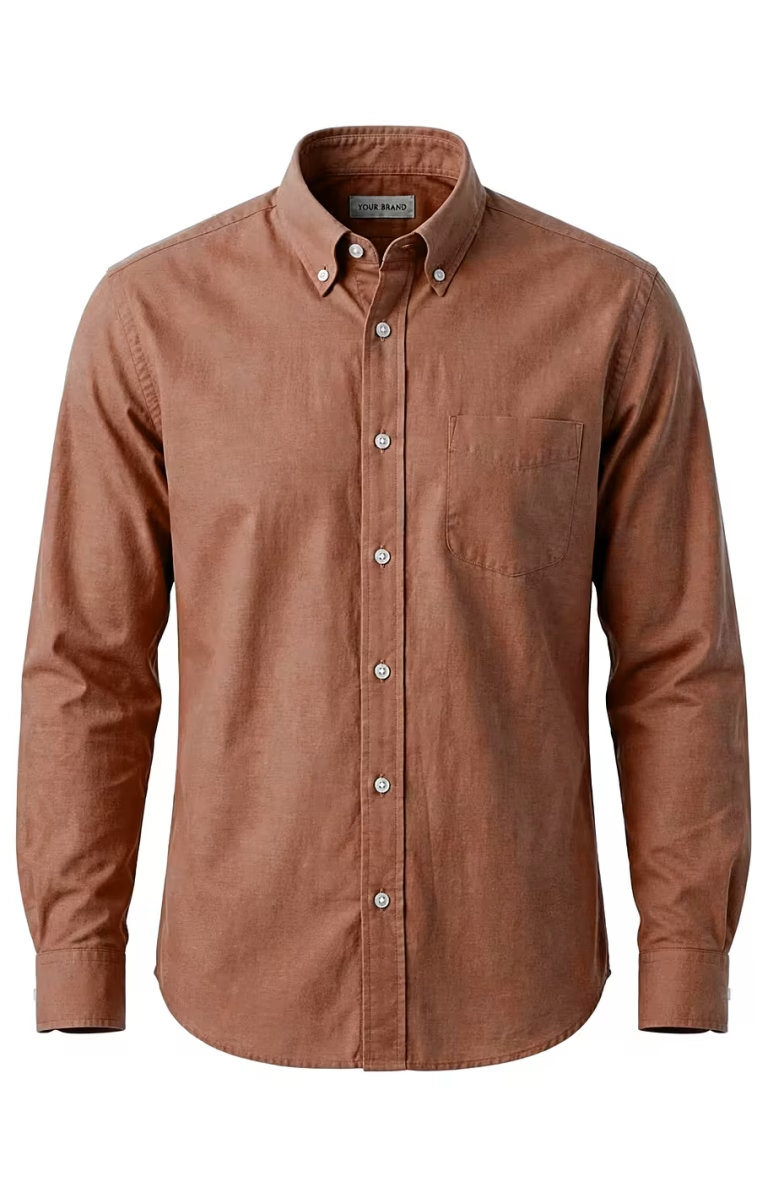
Looking for a Shirt Manufacturing in Bangladesh programme where every stage sits under one roof? We weave, cut and sew woven shirts to order at our facilities in Bangladesh, in rust brown oxford with a button down collar and a chest pocket. Retailers, corporate buyers and private labels approve a sample on the real oxford before bulk cutting begins. Moreover, every stage is recorded in one programme file. Your label sits inside every shirt, and no other name appears on the garment.
- Our facilities are in Bangladesh, stated plainly from the first line.
- Rust brown oxford shirts on one programme file.
- Button down collars and chest pockets on every shirt.
- Your woven label inside every shirt, with no other name shown.
- Samples approved on the actual oxford before bulk cutting begins.
- Every making stage recorded at our Bangladesh facilities.
- Packed by colour, size and store for fast warehouse intake.
Simply The Best
PORTFOLIOS












Product Details
Shirt Manufacturing in Bangladesh
How a Woven Shirt Is Manufactured, Step by Step
Buyers who search for Shirt Manufacturing in Bangladesh usually want to know how a woven shirt is really made before they place a programme. We weave, cut and sew woven shirts to order at our facilities in Bangladesh. The rust brown shirt in our pictures is an oxford button down with a chest pocket and white buttons. Moreover, every stage of its making is recorded in one programme file. Your label sits inside every shirt, and no other name appears on the garment. This page explains the manufacturing route honestly, from cloth to carton.
- Rust brown oxford shirt as the proof garment.
- Button down collar and chest pocket.
- Every stage recorded in one file.
- Your label inside every shirt.
- Samples approved on the real oxford first.
- Cartons packed by colour, size and store.
Seven Steps from Brief to Packed Shirts
Every programme moves through the same seven steps, from the first brief to packed cartons. The steps keep collars, pockets and colours steady across hundreds of shirts, batch after batch. Shirt manufacturing for wholesale programmes follows this order without shortcuts.
Step 1: The Brief Fixes Fits and Colours
First, the brief names every fit, collar style and colourway in the range. Retail ranges often plan one core colour beside seasonal shades. In addition, the brief fixes label artwork and packing splits early. Clear briefs prevent slow sampling rounds later.
Step 2: The Oxford Is Woven to Weight
Second, the oxford cloth is woven to the agreed weight with its basket weave checked on the loom state. A shirt cloth must press cleanly and hold its collar shape. However, heavier cloth is not always better, so the handle is judged by hand. The weight and the weave are therefore proven on cloth, never on paper alone.
Step 3: Panels Are Cut to the Pattern
Next, panels are cut to the buyer pattern with pocket positions marked on every front. Cutting follows the file, not the cutter's habit. In addition, each bundle is ticketed by size and colour. Ticketed bundles let any shirt be traced back to its cloth lot.
Step 4: The Sample Is Approved on Real Cloth
Then the sample is sewn, washed and measured against the brief. Buyers check collar roll, pocket placement and body length on the garment itself. If a measurement drifts, the pattern is corrected before bulk. Finally, the approved sample becomes the reference for every later batch. Manufacturing with factory discipline starts at this sample, not at bulk.
Step 5: Bulk Cutting Follows the File
Bulk cutting follows the approved file exactly. The same marker, the same cloth lot plan and the same size ratios apply. Moreover, cut panels rest before sewing so the weave settles. Settled panels keep the finished length honest after washing.
Step 6: Sewing Holds Collar Points Even
Sewing sets the button down collar, the chest pocket and the cuffs in sequence. Collar points are matched left to right and buttoned down before pressing. For example, each front is checked against the sample under daylight before the pocket is closed. Small checks early prevent large claims later.
Step 7: Packing Splits by Store and Channel
Finally, finished shirts are checked, pressed and packed by colour, size and store split. Cartons carry clear size ratios on every face. In addition, a packing list mirrors the brief line by line. Your warehouse team can therefore book goods in without recounting. Manufacturing to exporter deadlines ends with cartons that arrive ready for intake.
The Rust Brown Shirt in Our Pictures
The pictures show one garment from four sides, exactly as it leaves our lines. The front carries a button down collar, a full placket with white buttons and a single chest pocket. The back shows a yoke seam, a centre box pleat and a locker loop. In addition, the fabric frame shows the fine oxford basket weave up close. The label frame shows a YOUR BRAND woven label, size M, stitched inside the back yoke. This is the garment our manufacturing route produces, shown without dressing. It comes from manufacturing with factory checks at every stage.
- Front: button down collar and chest pocket.
- Back: yoke, centre box pleat, locker loop.
- Cloth: rust brown cotton oxford weave.
- Label: YOUR BRAND woven label, size M.
- Finish: curved hem and white buttons.
How a Shirt Manufacturer in Bangladesh Runs Your File
A good shirt manufacturer works from one programme file, not from memory. The file holds the pattern, the collar specification, the cloth lot and the packing plan. Moreover, every later order reads from the same file. When a buyer changes a fit or a colour, the file changes first and the line follows. Manufacturing for OEM buyers depends on that file discipline most of all.
- One programme file for pattern and collar.
- Changes written into the file before cutting.
- Approved sample kept beside the line.
- Measurements checked at three stages.
- Reports shared in plain language.
Shirt Supplier in Bangladesh for Netherlands Boutiques
Dutch boutiques favour honest cloth and a collar that survives a full working week. As a shirt supplier to those boutiques, we hold the same cloth lots across a programme. In addition, size curves are set for European fit expectations. The result is a shirt supplier relationship that survives staff changes on either side. Core colourways stay on the file season after season. Boutique orders run as manufacturing for wholesale intake beside the retail ranges.
- Cloth lots held across the programme.
- Size curves set per market.
- Quiet colourways checked under store light.
- Reorder windows planned around seasons.
- One contact for sampling and bulk.
Oxford Cloth, Weight and the Finishing Route
A woven shirt stands on its weave and its finishing. We therefore test each cloth for shrinkage, crease recovery and colour fastness before it enters a programme. For example, a cloth that presses well but shines at the collar points fails the range. Buyers choose the final weight after handling and washing real samples, never from a swatch card alone. Manufacturing with factory testing keeps the passed standard with the file.
- Crease recovery tested wash by wash.
- Shrinkage held inside tight tolerances.
- Colour fastness checked on every lot.
- Collar roll judged on the garment.
- Final weight chosen from real samples.
Shirt Exporter in Bangladesh for France Companies
French companies read stitch quality at a glance, and rightly so. As a shirt exporter serving those companies, we prepare export documents alongside the sewing plan, not after it. In addition, inspection standards are agreed in the file before bulk begins. A shirt exporter who plans documents early keeps goods moving without drama. Manufacturing to exporter review standards keeps inspection packs ready before the vessel sails.
- Export papers prepared with the sewing plan.
- Stitch standards agreed in writing.
- Fibre content stated exactly on labels.
- Delivery windows agreed in writing.
- Delays reported before they bite.
Collars, Pockets, Cuffs and Pressing
A woven shirt stands or falls on small points. Collar buttons must sit level, the pocket must sit square and the final press must leave the front clean. Moreover, our sewers set the pocket from a marked template, never by eye. The daylight check belongs to manufacturing for exporter programmes as much as the sewing does. Our finishers check each shirt against the approved sample under plain daylight. A shirt that fails the check returns to the line, never to the carton.
- Collar points level and buttoned.
- Pockets set from a template.
- Cuff buttons matched to the placket.
- Pressing checked front and back.
- Daylight check before any folding.
Shirt OEM Ranges Under Your Own Label
OEM ranges carry your label, your ticket and your packaging, with nothing of ours visible. A shirt OEM programme starts from your artwork files and your size chart. In addition, we keep your blocks separate from every other buyer's blocks. Your customers see your brand story only. That separation is written into the programme file from day one. Manufacturing for OEM ranges keeps your labels only, checked twice.
- Your woven label inside every shirt.
- Your tickets and packaging throughout.
- Blocks stored separately per buyer.
- No house branding anywhere.
- Artwork handled as your property.
Testing, Compliance and Open Paperwork
Retail and corporate ranges carry real compliance duties. Our shirt programmes are documented openly, and buyers can review the GOTS route when a range needs certified organic fibre records. Moreover, test reports travel with the programme file. If a buyer needs a fresh test, we arrange it before bulk cutting begins. Fresh tests join manufacturing for OEM records before bulk begins.
- Cloth tests filed with the programme.
- Certified record routes on request.
- Reports shared before bulk begins.
- Audit visits welcomed by appointment.
- Findings answered in plain writing.
What a Programme File Contains
The programme file is the single source of truth for your range. It lists the pattern version, collar specification, cloth lot and the packing matrix. In addition, it records every approved change with a date. When your team asks a question months later, the answer sits in the file. Nothing depends on one person's memory. Manufacturing with factory records means the file copy sits beside the sewing line.
- Pattern version and size chart.
- Collar and pocket specifications.
- Cloth lot and colour references.
- Packing matrix by store or channel.
- Dated record of every change.
Reorders and Season Planning
Woven shirts live on reorders, because retail rails and office teams refresh every season. We therefore plan reorder windows when the first order is placed. Moreover, holding the same cloth lot plan keeps colours steady between drops. If a cloth must change lot, a strike off is approved first. Your second order then matches your first on the rail. Manufacturing for wholesale reorders copies the first lot settings exactly.
- Reorder windows set at first order.
- Same cloth plan across drops.
- Strike offs approved before lot changes.
- Size ratios reviewed each season.
- Core colours never dropped silently.
Colours That Hold Across Lots
Colour drift ruins a shirt range faster than almost anything. We check every colourway against the approved standard under daylight and under store light. For example, rust brown reads warmer under shop lighting, so both checks matter. A shirt wholesale range built on one colour story cannot afford mixed shades in one carton. Every lot is therefore passed or held before cutting. Every strike off is approved before weaving starts. Strike offs pass through manufacturing for supplier approval before weaving.
- Daylight and store light checks.
- One shade standard per colourway.
- Mixed shade cartons never shipped.
- Lot records kept with the file.
- Buyer informed before any change.
Care, Washing and Honest Labels
Care labels must tell the truth about the cloth in the shirt. Our labels state the real fibre content and the wash route the cloth was tested under. In addition, size labels follow the buyer's market rules. A shirt supplier who labels honestly saves retailers from returns and complaints. We treat the label as part of the garment, not as an afterthought. Wash trials run inside manufacturing with factory wash records.
- True fibre content on every label.
- Wash route matched to test results.
- Market size rules followed exactly.
- Label artwork approved by the buyer.
- No claim the cloth cannot support.
Freight Routes from Bangladesh
Finished cartons leave Bangladesh by sea or by air, depending on the season plan. Sea freight suits planned retail ranges, while air freight rescues late uniform deadlines. Moreover, we consolidate cartons so freight cost per shirt stays sensible for wholesale orders. Your forwarder receives documents before the vessel sails. Late paperwork is treated as a production fault here. Manufacturing to wholesale delivery windows ends with documents sent before sailing.
- Sea and air routes planned early.
- Cartons consolidated by destination.
- Documents sent before sailing.
- Forwarder contacts kept current.
- Arrival windows confirmed in writing.
Why Shirt Making Depth Sits in Bangladesh
Bangladesh sews woven shirts at a depth few countries match. Long running shirt factories train operators on collars, pockets and fine stitching for years. That depth shows where the collar meets the placket. In addition, weaving mills serving shirt exporters keep oxford programmes running all year. Buyers gain a supply base that treats a woven shirt as a craft, not a commodity. That depth keeps manufacturing to exporter standards steady across seasons.
- Deep woven shirt sewing experience.
- Operators trained on collar work.
- Oxford programmes running all year.
- Trim supply held close to the lines.
- Skills passed across generations.
What Manufacturing Means on This Page
Manufacturing on this page means the whole shirt is woven, cut, sewn and finished at our facilities in Bangladesh. This is shirt manufacturing for wholesale programmes, not the resale of imported finished shirts. It is manufacturing with factory shade records kept for every cloth lot. It is manufacturing to exporter deadlines agreed in the programme file. Nothing about the making is hidden, shortened or dressed up. A shirt made this way carries its making country honestly, from the first sample to the final carton.
Samples for a new range are produced by manufacturing for supplier approval before any bulk is cut. Production lots run as manufacturing with factory measurement checks at three stages. Reorders continue as manufacturing for exporters who hold the same programme file. Presentation sets come from manufacturing for OEM buyers who need labelled samples. Every carton closes after manufacturing for wholesale intake checks, packed by store and size.
- Woven, cut and sewn in Bangladesh.
- Manufacturing for wholesale programmes.
- Manufacturing with factory records.
- No imported finished shirts used.
- Making stated plainly on the page.
Reading Shirt Manufacturing Offers with Care
Not every low offer is a low cost. A shirt quote that hides a thin cloth or a weak collar will show the gap within one season. Buyers should therefore compare offers stage by stage. For example, ask which stages happen under one roof and which records prove it. Our quotes name cloth, construction, trims and packing separately, so comparisons stay honest. Sample sets come from manufacturing for wholesale buyers to handle before committing.
- Compare oxford weight first.
- Ask which stages sit under one roof.
- Check collar and pocket construction.
- Confirm packing and checking scope.
- Price the whole garment, not the headline.
Questions Shirt Buyers Ask Us
Is the pictured shirt the exact garment we would receive?
The pictured shirt is the proof garment for this programme body. Your production follows your own pattern, colours and labels. In addition, a pre production sample in your specification is approved before bulk. The pictures show construction quality honestly, not a promise of someone else's design.
Which stages of making happen at your facilities?
Cutting, sewing, finishing, checking and packing all happen at our facilities in Bangladesh, and the oxford cloth is woven to our order. The whole route is manufacturing with factory records from cloth to carton. The whole route is recorded in one programme file. Moreover, buyers can review the file records for their own range. Nothing in the route is hidden from the buyer.
Can the button down collar be changed to a spread collar?
Yes, collar style is set in the programme file from your brief. The pictured shirt carries a button down collar because this programme specifies it. Moreover, a sample in your chosen collar is approved before bulk begins. Your specification is the only specification on the garment.
How are colours kept steady across reorders?
Each colourway holds one approved shade standard in the programme file. New lots are checked against it under two light sources. If a lot drifts, it is held and the buyer hears first. Reorder lots return to manufacturing to exporter deadlines held in the file. Nothing is cut from an unapproved lot.
Can one order serve several stores or offices?
Yes, packing splits are built into the programme file. Cartons are packed by store, office or region with matching lists. In addition, mixed colour cartons are available where a buyer prefers them. Your warehouse simply books each carton to its destination.
Looking for a Shirt Manufacturing in Bangladesh?
Send us your pattern, your colourways and your size chart, and we will answer with a sampled plan. You can reach our team through the contact page, and common questions are covered on the FAQ page. Moreover, every enquiry is answered by the people who run the programme files. Your first sample will show exactly how your shirts would be made.