
Regular Fit Shirt Manufacturing
Regular Fit Shirt Manufacturer in Bangladesh
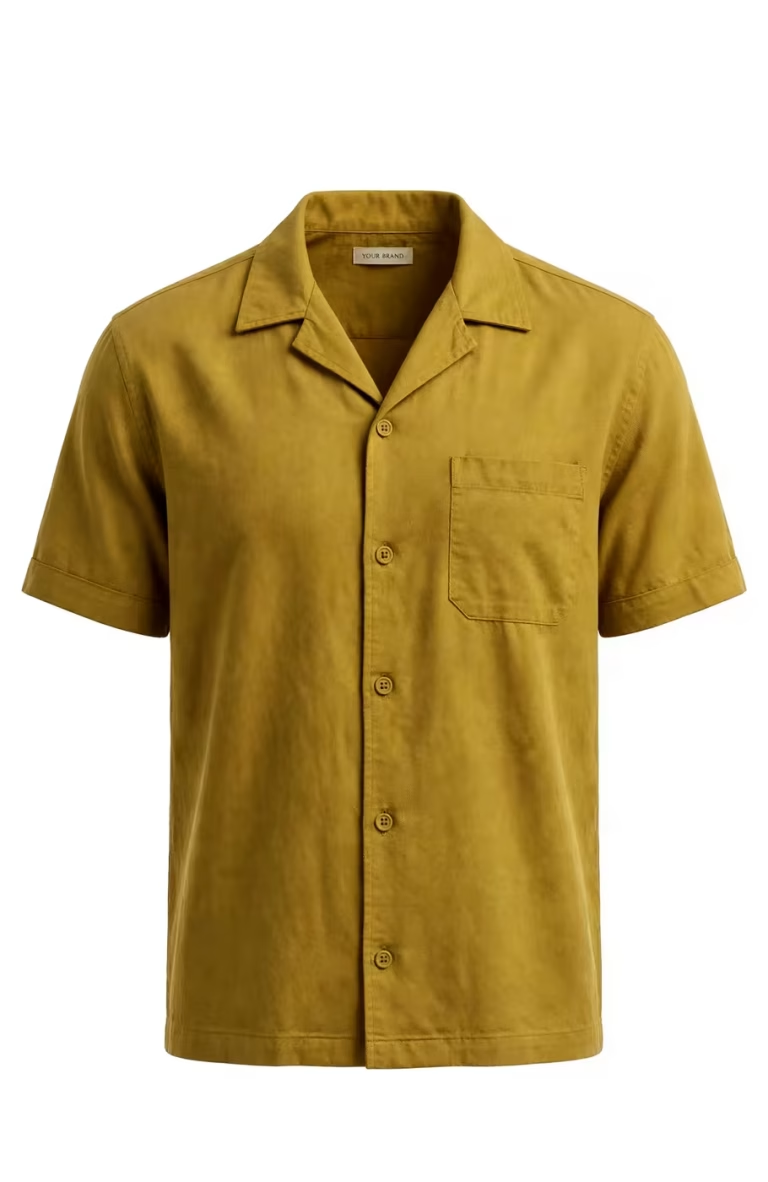
Looking for a Regular Fit Shirt Manufacturer in Bangladesh programme that holds its fit across every size? We weave, cut and sew regular fit shirts to order at our facilities in Bangladesh, and the proof garment is a mustard gold short sleeve camp collar shirt in cotton twill. Buyers approve the fit sample on the real cloth before bulk cutting begins. Moreover, every programme is planned backwards from your selling season. Your label sits inside every shirt, and no other name appears anywhere.
- Our facilities are in Bangladesh, stated plainly from the first line.
- Mustard gold camp collar shirts as the proof garment.
- Regular fit blocks graded across every size.
- Your woven label inside every shirt, with no other name shown.
- Samples approved on the actual twill before bulk cutting begins.
- Production planned at our Bangladesh facilities around your season.
- Packed by colour, size and store for fast warehouse intake.
Simply The Best
PORTFOLIOS












Product Details
Regular Fit Shirt Manufacturer in Bangladesh
Regular Fit Shirts Sewn in Bangladesh for Wholesale Ranges
Wholesale buyers who search for a Regular Fit Shirt Manufacturer in Bangladesh programme usually want one thing above all: a fit that stays identical from the first sample to the last reorder. We weave, cut and sew regular fit shirts to order at our facilities in Bangladesh. The proof garment is a mustard gold short sleeve camp collar shirt in cotton twill. Moreover, every programme is planned backwards from your selling season. Your label sits inside every shirt, and no other name appears anywhere.
- Mustard gold camp collar shirts as the proof garment.
- Regular fit blocks graded across every size.
- Also, button fronts and chest pockets on every shirt.
- Your label inside every shirt.
- Next, samples approved on the real twill first.
- Cartons packed by colour, size and store.
Seven Steps from Brief to Packed Regular Fit Shirts
Every programme moves through the same seven steps, from the first brief to packed cartons. The steps keep fit, cloth and packing steady across thousands of shirts. Each step is recorded in the programme file, from yarn to carton.
Step 1: The Brief Fixes the Fit Block
First, the brief fixes the fit block, collar style and size range. A regular fit block carries comfortable chest ease without excess cloth. In addition, the brief fixes pocket shapes and button styles early. Clear briefs prevent slow sampling rounds later.
Step 2: The Twill Is Woven to Weight
Second, the cotton twill is woven to the agreed weight for casual shirts. Cloth that twists or shrinks unevenly fails the range at once. The mustard gold shade is matched against your approved lab dip. Only then does the cloth move to cutting.
Step 3: Panels Are Cut to the Pattern
Next, panels are cut to the approved regular fit pattern. Collar and cuff shapes follow the file exactly. Fronts and backs are cut in matched bundles by size. Cut panels are checked against the pattern before sewing.
Step 4: The Fit Sample Is Approved on Real Cloth
Then, one shirt in each key size is sewn as the fit sample set. Your team checks chest ease, shoulder line and hem length on real bodies. Changes are written into the file at this stage. Bulk cutting never starts before this approval.
Step 5: Bulk Sewing Follows the File
After approval, bulk sewing follows the sample stitch by stitch. Collars, plackets and pockets move through shared checkpoints. Measurements are sampled from the line every hour. Any drift from the block stops the line.
Step 6: Finishing Adds Labels and Buttons
Later, finishing adds your woven label and your chosen buttons. Spare buttons are sewn into the side seam or packed as agreed. Pressing gives every shirt a clean retail finish. Finished shirts are inspected piece by piece.
Step 7: Packing Splits by Colour and Size
Finally, packing splits the order by colour, size and store. Size curves follow your range plan for each destination. Cartons are marked so warehouse teams can shelve at once. The file closes with a full packing list.
The Mustard Gold Camp Collar Shirt in Our Pictures
The pictured shirt shows the regular fit block clearly. It is a short sleeve camp collar style with a full button front and one chest pocket. The body falls straight, with easy room through the chest and waist. The back carries a plain yoke seam and no pleats. The shirt is completely plain, with no print or embroidery anywhere.
- Short sleeve camp collar with open neckline.
- Full button front with matching buttons.
- One chest pocket on the front.
- Straight regular fit body.
- Completely plain, ready for your label.
What Regular Fit Means on Our Blocks
Regular fit sits between slim and relaxed on our grading system. The chest carries measured ease, so the shirt moves with the wearer. The waist stays close to straight rather than tapered hard. Shirt manufacturer blocks differ between factories, so we always sample on your measurements. Your approved block then becomes the standard for every reorder.
- Measured ease through the chest.
- Nearly straight body below the chest.
- Standard shoulder and sleeve lengths.
- Your measurements become the block.
Grading That Holds the Fit Across Sizes
Grading grows the block size by size without changing its character. Chest, shoulder and length steps follow one agreed grade rule. A size small and a size extra large read as the same shirt. Shirt wholesale buyers test this by measuring samples across the curve. Our line checks repeat those measurements during bulk sewing.
- Overall, one grade rule across the curve.
- Chest and length steps kept even.
- Also, samples measured across all sizes.
- Line checks during bulk sewing.
Regular Fit Shirt Manufacturer in Bangladesh for Canada Retailers
Canadian retailers buy regular fit shirts as year round casual staples. Their ranges mix short sleeve summer styles with long sleeve layers. We sew both from the same fit file in Bangladesh. Colourways stay separate by store group inside the packing plan. Moreover, reorders follow the same block season after season.
- Meanwhile, short and long sleeve styles together.
- One fit file for the whole range.
- Store groups packed separately.
- Finally, reorders matched to the first block.
Regular Fit Shirt Supplier in Bangladesh for Spain Boutiques
Spanish boutiques buy smaller runs with sharper colour stories. Their regular fit shirts often carry resort collars and lighter cloth weights. We supply those runs from the same Bangladesh facilities, with boutique level finishing. In addition, each colourway is sampled on the real twill first. Small runs still receive the full programme file.
- Smaller runs with full file discipline.
- Resort collars and lighter weights.
- Colourways sampled on real cloth.
- Boutique level pressing and packing.
Collars, Cuffs and Buttons Built to Spec
Collar shape defines how a casual shirt reads on the rail. Camp, spread and button down collars are all cut from your pattern. Cuff widths and button sizes follow your specification sheet. Shirt factory checks measure collar points and placket widths on samples. Nothing is substituted from stock trim without your written approval.
- Camp, spread and button down collars.
- Cuffs and buttons to your sheet.
- Indeed, collar points measured on samples.
- No trim substituted without approval.
Colour That Holds Across Lots
Colour drift ruins a casual range faster than almost anything. Lab dips are approved before bulk dyeing begins. Each new cloth lot is checked against the approved shade band. Shirt exporter files keep the shade record with the packing plan. Your stores therefore receive the same mustard gold in every delivery.
- Lab dips approved before dyeing.
- Shade bands agreed at sampling.
- New lots checked against the standard.
- Colour records kept with the file.
One Fit File for Whole Casual Ranges
One fit file can carry a whole casual shirt range. Short sleeve and long sleeve styles share the same body block. Buyers change collars, pockets and cloth weights per style. The fit stays constant, so customers learn their size once. Meanwhile, your range still reads fresh each season.
- Shared body block across styles.
- Collars and pockets varied per style.
- Cloth weights set per season.
- Thus, customers keep one known size.
Your Label, Your Trim, Your Packaging
Your woven label sits inside every shirt, with your size tabs beside it. Buttons, hang tags and packaging follow your brand sheet. Shirt OEM programmes often add printed size stickers and store ready packing. We follow the sheet exactly, carton by carton. Nothing carries our name at any point.
- Woven labels and size tabs fitted.
- Buttons and tags from your sheet.
- Also, store ready packing on request.
- No other name on any garment.
Testing, Compliance and Open Paperwork
Every programme carries open paperwork from the first sample. Cloth composition, shrinkage results and inspection reports sit inside the file. Our cotton programmes can follow recognised organic and fibre standards where your range requires them, and the details are set out by GOTS. Shirt wholesale audits can verify each claim against documents.
- Composition and shrinkage results on file.
- Inspection reports for every shipment.
- Buyer audits welcomed at our facilities.
- Documents matched to each delivery.
What a Programme File Contains
The programme file is the single record of your shirt range. It holds the fit block, patterns, cloth specs and trim sheets. Size curves and colour standards sit in the same file. Shirt supplier audits read this file before they visit a line. Keeping it complete keeps every reorder simple.
- Fit block and full patterns.
- Cloth and trim specifications.
- Size curves and colour standards.
- Packing plans by store group.
Reorders and Range Planning
Casual shirt ranges live on steady reorders. Reorders run from the same fit file, so new shirts match the first delivery. Cloth lots are checked against the approved shade before cutting. Shirt manufacturer planning then reserves line time around your season. Your best sellers therefore stay in stock without fit surprises.
- Reorders sewn from the original block.
- Shade checks on every new lot.
- Line time planned around seasons.
- Overall, best sellers kept in stock.
How Wholesale Buyers Test a Fit File
Shirt wholesale buyers test fit files with tape measures before they test prices. They measure the sample chest, shoulder and length against the spec sheet. A shirt factory that states its block plainly moves faster through approval. In addition, shirt exporter samples are washed and measured again after washing. Finally, a shirt OEM buyer checks the label, buttons and packing inside the file. A file that survives that reading usually wins the reorder as well.
- Samples measured against the sheet.
- Washed samples measured again.
- Labels and trim checked in the file.
Sleeve Lengths, Hem Shapes and Side Vents
The regular fit block adapts cleanly to range variations. Moreover, sleeve length is the variation buyers use most: short sleeves for summer, long sleeves for cooler ranges. Hem shapes also change the read of the shirt, from straight hems to curved shirt tails. A shirt manufacturer who holds the block steady can vary these details safely. Side vents, chest pockets and collar shapes then follow your design sheet. Therefore, one block can carry a full season of styles.
- Short and long sleeves on one block.
- Straight or curved hem shapes.
- Side vents set by your design.
- Details varied without fit drift.
How the Block Handles Extended Sizes
Extended sizes test whether a grade rule truly works. In addition, larger sizes need the same collar proportions and pocket placement as the core curve. Our grading keeps pocket position relative to the chest seam at every size. A shirt supplier who grades carelessly ends up with pockets drifting towards the armhole. We measure extended size samples with the same care as size medium. Consequently, bigger customers receive the same shirt, not a distorted one. Shirt wholesale ranges depend on that consistency.
- Pocket placement held at every size.
- Collar proportions kept across the curve.
- Extended samples measured like core sizes.
- One shirt character at every size.
Care and Wash Behaviour of Cotton Twill Shirts
Cotton twill earns its place in casual ranges through honest wash behaviour. Moreover, a well woven twill softens gently without losing its shape. Buyers should still wash the approval sample before bulk, and measure it again afterwards. Indeed, shrinkage figures belong in the programme file, not in a sales promise. A shirt manufacturer who washes samples first protects your size curve. In addition, twill hides light creasing better than smoother cloth, which suits travel and resort ranges. Therefore, care labels can promise simple machine washing with confidence. Finally, the mustard gold shade is checked again after washing, because some dyes move in the first wash.
- Washed samples measured before bulk.
- Shrinkage figures filed per cloth lot.
- Also, shades rechecked after washing.
- Simple care labels for end customers.
Packed for Rails: Folding and Bagging Choices
How a shirt is packed decides how it looks on the rail. Moreover, regular fit casual shirts are often sold folded, so fold lines matter. We fold to your format, with boards where your stores expect them. In addition, each shirt is bagged with its size visible for fast shelving. Therefore, warehouse teams move cartons straight to the shop floor. The packing standard is photographed into the programme file at sampling.
- Folding matched to your format.
- Size visible on every bag.
- Also, packing photographed into the file.
Questions Wholesale Shirt Buyers Ask Us
Is the pictured shirt the exact style we would receive?
The pictured shirt shows the standard construction: a regular fit camp collar shirt in cotton twill with a chest pocket. Your order follows your own specification for collar, cloth and colour. Fit samples are approved on the real cloth before bulk begins. Therefore, the shirts you receive match your approved sample.
How is regular fit different from slim fit on your blocks?
Regular fit carries more chest ease and a straighter body than slim fit. The waist is not pulled in, and the shoulder line stays standard. Both blocks are graded from your own measurements at sampling. Your approved block then governs every size in the range.
Can the same block run in long sleeves?
Yes. The body block stays the same, and the sleeve pattern changes. Cuffs, plackets and sleeve lengths follow your specification. Many buyers run short sleeves for summer and long sleeves for winter. Both styles then share one fit file.
Can you fit our own woven labels and buttons?
Yes, labels, size tabs and buttons all follow your brand sheet. Label placement is fixed in the programme file and checked on samples. Spare buttons are packed as your sheet directs. Nothing is fitted from our own stock designs.
How do reorders keep the same fit?
Reorders are cut from the original block stored in your programme file. Line checks measure production shirts against the approved sample every hour. Cloth lots are shade checked before cutting. Your customers therefore find the same fit in every delivery.
Looking for a Regular Fit Shirt Manufacturer in Bangladesh?
Send us your measurements, collar style and size range through our contact page. We will answer with a fit sample plan, a dated programme file and honest origin details. Common questions are covered on our FAQ page. Shirt OEM programmes start with one approved fit sample. From there, the file carries every reorder for your range.