
Private Label Manufacturing
Private Label Clothing Manufacturers in Bangladesh
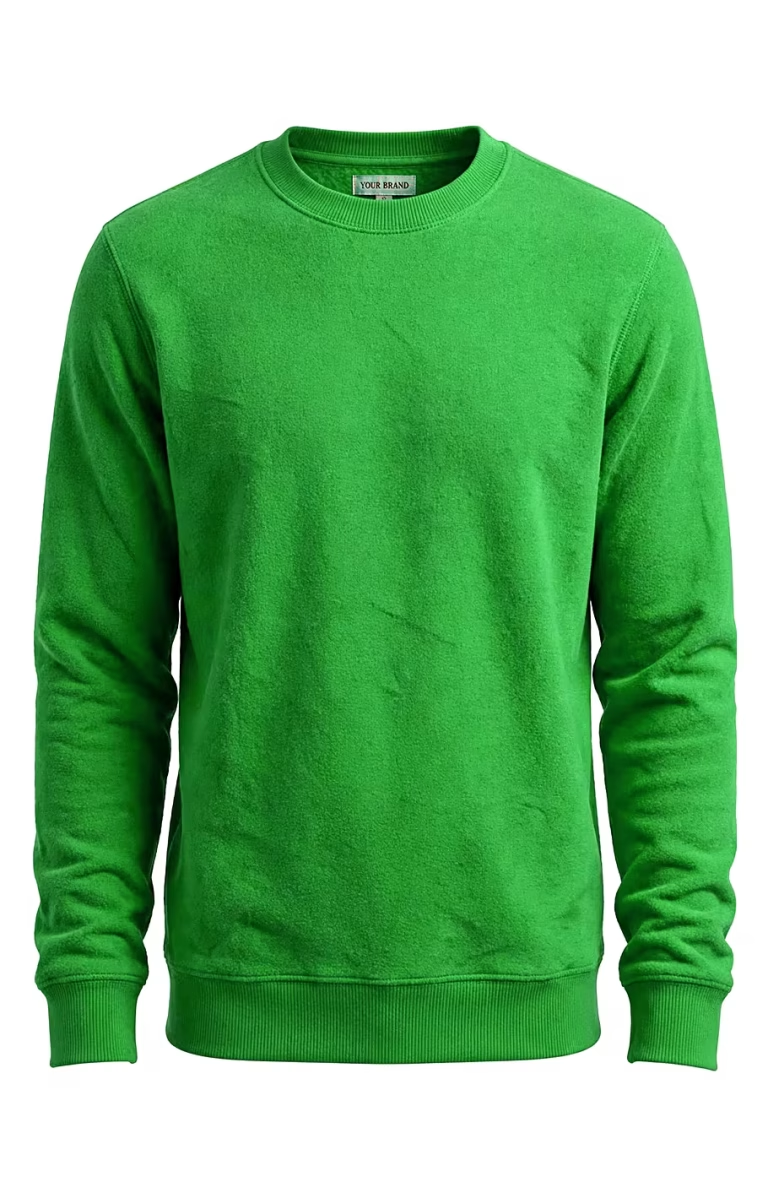
Looking for a Private Label Clothing Manufacturers in Bangladesh programme built around your label system? We knit, weave, cut and sew clothing to order at our facilities in Bangladesh, from jersey basics to brushed fleece styles like the bright green crew sweatshirt in our pictures. Brands and retailers approve samples on the real cloth before bulk cutting begins. Moreover, every range is planned backwards from your selling season. Your woven label sits inside every garment, and no other name appears anywhere.
- Our facilities are in Bangladesh, stated plainly from the first line.
- Full clothing ranges on one programme file per label.
- Bright green brushed fleece sweatshirts as the proof garment.
- Your woven label inside every garment, with no other name shown.
- Samples approved on the actual cloth before bulk cutting begins.
- Production planned at our Bangladesh facilities around your season.
- Packed by colour, size and store for fast warehouse intake.
Simply The Best
PORTFOLIOS












Product Details
Private Label Clothing Manufacturers in Bangladesh
Clothing Made Under Your Name, Not Ours
Brands that search for a Private Label Clothing Manufacturers in Bangladesh programme usually want one thing above all: garments that carry their label and nothing else. We knit, weave, cut and sew clothing to order at our facilities in Bangladesh. The bright green sweatshirt in our pictures is a crew neck style in brushed fleece with ribbed trims. Moreover, every programme is planned backwards from your selling season. Your woven label sits inside every garment, and no other name appears anywhere. Each range is built on one programme file, from first sample to final carton.
- Bright green crew sweatshirt as the proof garment.
- Brushed fleece with ribbed collar and cuffs.
- One file for every style in the range.
- Your label inside every garment.
- Samples approved on the real cloth first.
- Cartons packed by colour, size and store.
Seven Steps from Brief to Packed Clothing
Every programme moves through the same seven steps, from the first brief to packed cartons. The steps keep fits, colours and labels steady across hundreds of garments, range after range. Each step is recorded in the programme file, from yarn to carton.
Step 1: The Brief Fixes the Range Plan
First, the brief names every style, fabric and colourway in the range. Private label ranges often plan one hero style beside core basics. In addition, the brief fixes label artwork and packing splits early. Clear briefs prevent slow sampling rounds later.
Step 2: Each Cloth Is Made to Weight
Second, each cloth is knitted or woven to the agreed weight and checked for a clean face. A fabric that twists or pills early fails the range at once. However, every weight is proven on the sample, never assumed from the yarn name. The hand feel and the weight are therefore set together in the file.
Step 3: Panels Are Cut to the Pattern
Next, panels are cut to the buyer pattern with trims marked as matched sets. Cutting follows the file, not the cutter's habit. In addition, each bundle is ticketed by size and colour. Ticketed bundles let any garment be traced back to its cloth lot.
Step 4: The Sample Is Approved on Real Cloth
Then the sample is sewn, washed and measured against the brief. Buyers check fit, drape and finish on the garment itself. If a measurement drifts, the pattern is corrected before bulk. Finally, the approved sample becomes the reference for every later batch. A second sample stays with the clothing supplier team for audit visits.
Step 5: Bulk Cutting Follows the File
Bulk cutting follows the approved file exactly. The same marker, the same cloth lot plan and the same size ratios apply. Moreover, cut panels rest before sewing so the cloth relaxes. Relaxed panels keep the finished length honest after washing.
Step 6: Sewing and Labelling Run Together
Sewing closes each garment in sequence, and your labels are set while the garment is still on the line. Neck labels, size labels and care labels all follow your artwork file. For example, each label position is checked against the sample before the hem is closed. Small checks early prevent large claims later.
Step 7: Packing Splits by Store and Channel
Finally, finished garments are checked, folded and packed by colour, size and store split. Cartons carry clear size ratios on every face. In addition, a packing list mirrors the brief line by line. Your warehouse team can therefore book goods in without recounting. The final cartons leave grouped by channel, ready for intake.
The Bright Green Sweatshirt in Our Pictures
The pictures show one garment from four sides, exactly as it leaves our lines. The front carries a ribbed crew neck, long set in sleeves and a completely plain body. The back is one plain panel above a ribbed hem band. In addition, the fabric frame shows the bright green brushed fleece and its soft looped inside up close. The label frame shows a YOUR BRAND woven label stitched at the neck, against the fleece reverse. Every clothing manufacturer on the programme works to this same proof standard.
- Front: crew neck, plain body, ribbed trims.
- Back: plain panel, ribbed hem band.
- Cloth: bright green brushed fleece.
- Label: YOUR BRAND woven neck label.
- Finish: ribbed cuffs, straight body.
How Clothing Manufacturers in Bangladesh Run a Label Programme
Careful clothing manufacturers work from one programme file per range, not from memory. The file holds the patterns, the cloth weights, the label artwork and the packing plan. Moreover, every later order reads from the same file. When a buyer changes a colour or adds a style, the file changes first and the line follows. This clothing manufacturer discipline keeps the tenth order identical to the first.
- One programme file for the whole range.
- Changes written into the file before cutting.
- Approved samples kept beside the line.
- Measurements checked at three stages.
- Reports shared in plain language.
Private Label Clothing Supplier in Bangladesh for France Labels
French labels favour clean basics with quiet branding and honest cloth. As a clothing supplier to those labels, we hold the same yarn lots across a programme. In addition, size curves are set for European fit expectations. The result is a clothing supplier relationship that survives staff changes on either side. Seasonal sets are planned around the drops each label agrees.
- Yarn lots held across the programme.
- Size curves set per market.
- Colourways checked under store light.
- Reorder windows planned around seasons.
- One contact for sampling and bulk.
One Label System Across Every Style
A private label range fails when each style carries a different label story. We therefore set one label system for the whole range: same woven neck label, same size format, same care wording. Moreover, the system is fixed in the programme file before the first sample. Buyers approve one label set and see it on every garment. A clothing exporter who treats labels as an afterthought creates shelf confusion no price can repair.
- One woven label across all styles.
- Size formats matched range wide.
- Care wording approved once.
- Label positions fixed in the file.
- Swing tickets in one house style.
Fabrics Buyers Choose for Label Ranges
Label ranges usually mix jersey, fleece and woven cloth across one season. Each cloth is specified by weight, fibre and finish in the programme file. In addition, every cloth is sampled in the buyer's colours before bulk. Buyers can therefore build a tee, a sweatshirt and a shirt that sit together on one rail. A clothing factory that samples this way keeps the range coherent from the first fitting.
- Jersey, fleece and wovens on one file.
- Weights and fibres stated exactly.
- Colours sampled before bulk.
- Finishes proven on real cloth.
- Range coherence checked at fitting.
Clothing Exporter in Bangladesh for Denmark Brands
Danish brands often run small, frequent drops with tight colour stories. As a clothing exporter serving those brands, we pack by drop and by store group. In addition, cartons are labelled in the format each warehouse expects. The result is a clothing exporter routine that keeps small drops profitable. Reorders slot into the same file without new sampling rounds.
- Drops packed by store group.
- Carton labels in warehouse formats.
- Colour stories held across drops.
- Reorders read from the same file.
- One contact for every drop.
Your Label, Your Tickets, Your Packaging
Private label means the buyer brand is the only brand. Your woven label sits at the neck, and your size and care labels follow your artwork. Moreover, swing tickets and polybags carry your name where your programme asks for them. Nothing of ours appears on the garment or the packaging. A clothing wholesale programme only works when the label owner stays invisible, and our lines are set up that way.
- Woven neck labels from your artwork.
- Size and care labels in your format.
- Swing tickets printed with your name.
- Polybags plain or printed as briefed.
- No maker name anywhere on the garment.
Testing, Compliance and Open Paperwork
Buyers need paperwork that matches the garment. Our compliance file holds fibre declarations, wash test results and dye lot records for every programme. In addition, production can be documented against recognised frameworks such as amfori where a buyer range requires it. Test reports are shared before bulk, not after questions arrive. A clothing wholesale buyer should never have to chase a certificate.
- Fibre declarations held per programme.
- Wash tests run on production cloth.
- Dye lot records kept with the file.
- Reports shared before bulk cutting.
- Standards specified at brief stage.
What a Programme File Contains
The programme file is the single source of truth for your range. It holds the patterns, the size curves, the colour standards and the packing plan. Moreover, it records every approved change with a date. Anyone on the line can open the file and see the current specification. This is how a clothing OEM programme stays steady when people change. The file travels with the order from sampling to final carton.
- Patterns and size curves in one place.
- Colour standards with approved swatches.
- Packing plan written line by line.
- Changes dated and signed off.
- Open to the buyer at any stage.
Reorders and Season Planning
Core basics sell all year, and reorders land while the first drop is still in stores. We plan reorder windows at the brief stage, with yarn held for the colours most likely to repeat. In addition, the same cloth lots are reserved where the season allows. A reorder then reads like a continuation, not a new negotiation. Clothing manufacturers who plan this way protect your best sellers from shade drift.
- Reorder windows set at brief stage.
- Yarn held for repeat colours.
- Same lots reserved where possible.
- Shade standards checked on every lot.
- Lead times confirmed in writing.
Colours That Hold Across Lots
Bright green is easy to dye once and hard to repeat exactly. Each colourway therefore holds one approved shade standard in the programme file. New lots are checked against it under two light sources. If a lot drifts, it is held and the buyer hears first. Nothing is cut from an unapproved lot. This discipline matters most on strong shades, where the eye catches small differences quickly.
- One shade standard per colourway.
- Lots checked under two lights.
- Drifting lots held, never hidden.
- Buyer informed before any decision.
- Standards renewed each season.
Care, Washing and Honest Labels
Care labels must tell the truth about the cloth. Our labels state the real fibre mix and the wash route the sample survived. Moreover, care wording follows the rules of the market where the clothing will sell. Buyers approve the label text with the sample, not after packing. Honest labels protect your returns rate and your reviews. A clothing supplier who hides the fibre mix creates problems no price can fix.
- Fibre mix stated exactly.
- Wash route proven on samples.
- Market wording checked per destination.
- Label text approved with the sample.
- No claim the cloth cannot support.
Freight Routes from Bangladesh
Finished cartons leave Bangladesh by sea or air, depending on the season pressure in your plan. Sea freight suits the main seasonal drop, while air freight covers late reorders. In addition, cartons are grouped so your warehouse can split them by store on arrival. Every route is confirmed against your delivery window before cutting starts. The programme file records the route beside the packing plan.
- Sea freight for main drops.
- Air freight for late reorders.
- Cartons grouped for store splits.
- Windows confirmed before cutting.
- Route recorded in the file.
Why Clothing Depth Sits in Bangladesh
Bangladesh knits, weaves and sews clothing at a depth few countries match. Yarn, mills, dye houses and sewing lines sit close together, so a colour can move from brief to sample quickly. Moreover, the workforce knows both fine jersey and structured wovens. That depth is why so many labels place their core ranges here. A private label clothing factory base in this cluster inherits skills built over decades of exports.
- Mills and dyeing close together.
- Knit and woven skills in depth.
- Fast brief to sample movement.
- Colour stories handled at scale.
- Export routines proven over decades.
Clothing Factory Checks Before Any Carton Closes
Before any carton closes, the clothing factory runs a final check against the programme file. Necks are measured, labels are checked and hems are pulled by hand. Moreover, one garment from every size is measured in full. A clothing manufacturer who checks this way finds faults while they are still cheap to fix. The check sheet is signed and filed with the packing list.
- Full measurement on one garment per size.
- Label and trim checks recorded.
- Hems pulled by hand, not glanced at.
- Check sheet filed with the packing list.
- Faults fixed before cartons close.
Reading Private Label Offers with Care
Not every low offer is a low cost. A quote that hides a light cloth or a cheap label set will show the gap within one season. Buyers should therefore compare offers part by part. For example, ask which cloth weights are quoted and whether labels are woven or printed. Our quotes name cloth, construction, labels and packing separately, so comparisons stay honest. Sample sets are prepared for buyers to handle before committing.
- Compare cloth weights first.
- Ask whether labels are woven.
- Check label positions and formats.
- Confirm packing and checking scope.
- Price the whole garment, not the headline.
Questions Private Label Buyers Ask Us
Is the pictured sweatshirt the exact garment we would receive?
The pictured sweatshirt is one proof garment from a label programme. Your production follows your own patterns, colours and labels across your whole range. In addition, pre production samples in your specification are approved before bulk. The pictures show construction and label quality honestly, not a promise of someone else's design.
Is the pictured sweatshirt printed or branded?
No, the pictured sweatshirt is shown completely plain, with a blank front and a plain back. Print and embroidery run only from your own artwork file, when your programme asks for them. Moreover, a decorated sample is approved before bulk begins. Your branding is the only branding on the garment.
Can one programme cover several garment types?
Yes, a range file can hold tees, fleece, shirts and trousers under one label system. Each style keeps its own pattern and cloth specification inside the same file. In addition, samples for every style are approved before bulk begins. Your label story stays identical across the rail.
How are colours kept steady across reorders?
Each colourway holds one approved shade standard in the programme file. New lots are checked against it under two light sources. If a lot drifts, it is held and the buyer hears first. Nothing is cut from an unapproved lot.
Can one order serve several stores or channels?
Yes, packing splits are built into the programme file. Cartons are packed by store, channel or region with matching lists. In addition, mixed colour cartons are available where a buyer prefers them. Your warehouse simply books each carton to its destination.
Looking for a Private Label Clothing Manufacturers in Bangladesh?
Send us your range plan, your colourways and your size charts, and we will answer with a sampled plan. You can reach our team through the contact page, and common questions are covered on the FAQ page. Moreover, every enquiry is answered by the people who run the programme files. Your first samples will show exactly how your clothing would be made.