
Tennis Polo Manufacturing
Mens Polyester Tennis Polo Shirt Bangladesh Made
Looking for a Mens Polyester Tennis Polo Shirt Bangladesh Made programme built for the court? We knit, cut and sew polyester tennis polos to order at our facilities in Bangladesh, in grass green performance cloth with a knitted collar and a three button placket. Clubs, academies and sports brands approve a sample on the real cloth before bulk cutting begins. Moreover, every programme is planned backwards from your season. Your label sits inside every shirt, and no other name appears on the garment.
- Made for wholesale club orders in your colours, with nothing held as ready stock.
- Fast drying polyester court cloth, proven on a sample.
- Knitted collar and three button placket on every shirt.
- Your woven label inside every shirt, with no other name shown.
- Samples approved on the actual cloth before bulk cutting begins.
- Production planned at our Bangladesh facilities around your season.
- Packed by colour, size and club for fast warehouse intake.
Simply The Best
PORTFOLIOS











Product Details
Mens Polyester Tennis Polo Shirt Bangladesh Made
A Court Polo Built for Your Club Colours
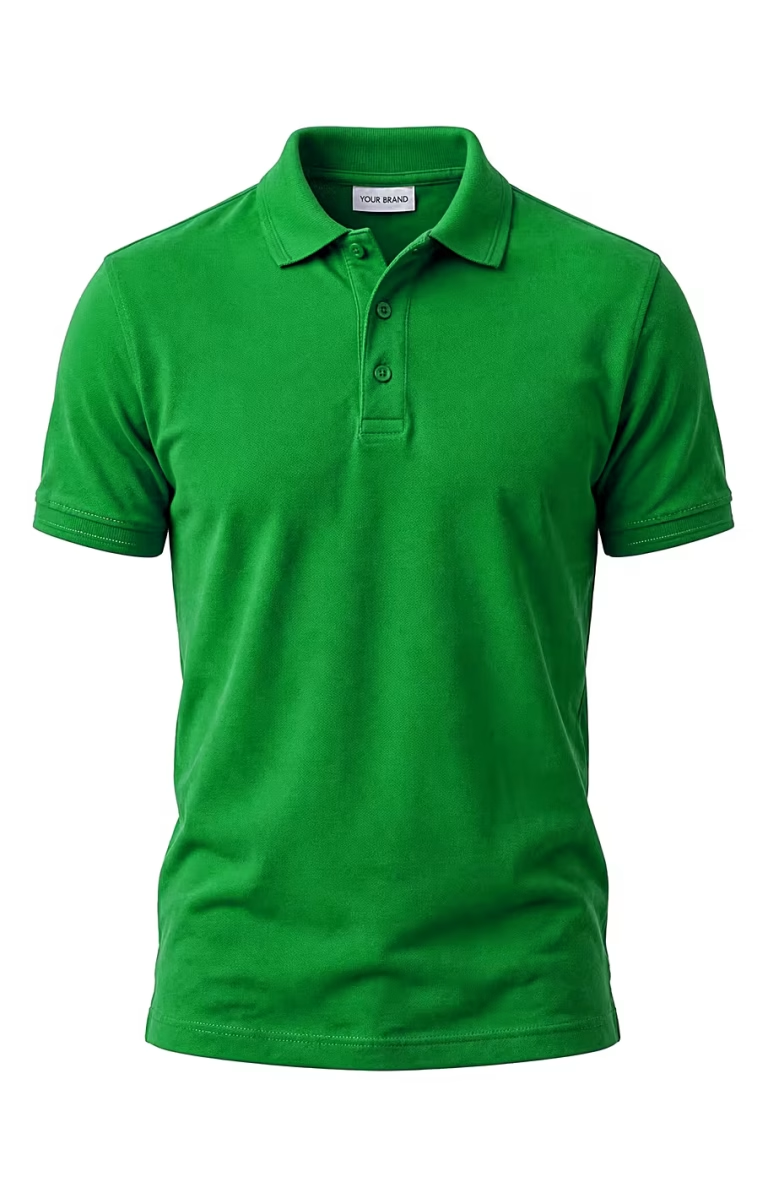
Buyers who search for a Mens Polyester Tennis Polo Shirt Bangladesh Made programme usually kit out clubs, academies or sports retail ranges. We knit, cut and sew polyester tennis polos to order at our facilities in Bangladesh. The grass green polo in our pictures shows the standard body: knitted collar, three button placket and a clean, plain chest. Moreover, every programme is planned backwards from your season. Your label sits inside every shirt, and crests are placed only from your own artwork file. Each polo is made for factory consistency across the whole size run.
- Grass green polyester polo as the proof garment.
- Made to order in your club colours.
- Knitted collar and three button placket.
- Your label inside every shirt.
- Samples approved on the real cloth first.
- Cartons packed by colour, size and club.
Seven Steps from Brief to Packed Polos
Every programme moves through the same seven steps, from the first brief to packed cartons. The steps keep collars, cloth and colours steady across hundreds of club shirts, batch after batch.
Step 1: The Brief Fixes Colours and Crests
First, the brief names every club colour, size run and crest position in the range. Academies often plan team sets beside retail sets. In addition, the brief fixes label artwork and packing splits early. Clear briefs prevent slow sampling rounds later.
Step 2: The Polyester Cloth Is Knitted to Weight
Second, the polyester court cloth is knitted to the approved weight. Players feel cloth weight within one rally, so the choice matters. However, heavier cloth is not always cooler cloth. The weight and the drying speed are therefore proven on the sample, never on paper alone. The cloth itself is made for factory production runs, not bought in as leftover yardage.
Step 3: Panels Are Cut to the Pattern
Next, panels are cut to the buyer pattern with collar and placket pieces marked true. Cutting follows the file, not the cutter's habit. In addition, each bundle is ticketed by size and colour. Ticketed bundles let any shirt be traced back to its cloth lot.
Step 4: The Sample Is Approved on Real Cloth
Then the sample is sewn and measured against the brief. Buyers check collar shape, placket buttons and body length on the garment itself. If a measurement drifts, the pattern is corrected before bulk. Finally, the approved sample becomes the reference for every later batch.
Step 5: Bulk Cutting Follows the File
Bulk cutting follows the approved file exactly. The same marker, the same cloth lot plan and the same size ratios apply. Moreover, cut panels rest before sewing so the knit relaxes. Relaxed panels keep the finished length honest after washing.
Step 6: Sewing Holds Collars and Plackets True
Sewing sets the knitted collar, the three button placket and the side seams in sequence. A tennis collar must sit flat through a whole match, so operators check every neck. In addition, finished shirts pass a needle check before pressing. Pressing then sets the final shape without shine.
Step 7: Packing Splits by Club and Team
Finally, packing splits cartons by colour, size, club and team. One order often serves several academies at once. Each carton carries a packing list that matches its contents exactly. Club managers then hand out sets without sorting. Every set is made for wholesale distribution, club by club.
The Grass Green Polo in Our Pictures
Our pictures show one grass green polyester polo, front and back. The front carries a knitted collar, a three button placket and a plain chest with no crest. The back is plain as well, so club crests and player names sit exactly where your file places them. In addition, the fabric close-up shows the fine breathable knit of the court cloth. The label close-up shows a YOUR BRAND woven label inside the collar. The polo is made on factory knitwear lines in Bangladesh, and it is photographed exactly as it leaves them.
- Grass green polyester court cloth body.
- Knitted collar with three button placket.
- Plain chest and back, ready for your crest.
- YOUR BRAND woven label inside the collar.
- Bangladesh made wholesale programmes start from this plain body.
How a Tennis Polo Manufacturer in Bangladesh Runs Your File
A club programme is a file discipline before it is a sewing discipline. Your colours, crest positions and size runs sit inside the programme file. Your label artwork sits there too, approved once and reused. When the next season arrives, the same file produces the same polo. The shirt therefore matches across squads and seasons, not just across one order. That record is what separates a club programme from a one-off kit order. Every shirt in the range is made under one factory roof, from knitting to packing.
- Colours and crest positions held in the file.
- Size runs recorded per club.
- Label artwork approved once, reused always.
- Seasons matched from the same record.
Tennis Polo Supplier in Bangladesh for UK Clubs
British clubs often begin with one team set, then extend the same polo across the whole academy. We run that growth on the same file discipline as the first order. First, the sample proves cloth and collar. Then the first bulk order proves packing and paperwork. Meanwhile, shade records are held from day one. New squads then receive shirts that match the originals exactly.
- Team sets extended across academies.
- Shade records held for every reorder.
- British size charts followed exactly.
- Cartons packed by squad and size.
- Bangladesh made exporter paperwork prepared in the file.
Cloth That Dries Fast and Holds Its Colour
Court cloth works harder than retail cloth. It is sweated in, washed often and dried fast between matches. We therefore test drying speed and colour fastness on the real knit before bulk. For example, the grass green cloth in our pictures is checked under strong light, because court colours fade visibly. In addition, the collar rib is tested for recovery after stretching. If a cloth fails those checks, it never reaches the cutting table.
- Drying speed tested on the real knit.
- Colour fastness checked under strong light.
- Collar recovery tested after stretching.
- Failed cloth never reaches cutting.
Polo Shirt Exporter in Bangladesh for USA Retailers
American sports retailers test paperwork as hard as they test cloth. Fibre labels, care wording and carton data must match the goods exactly. We prepare those documents inside the programme file, before cutting starts. Moreover, the file holds the label text the buyer approves for each market. Nothing is rewritten at the packing table. The result is a shipment that clears intake checks without relabelling work.
- Market correct labels approved in the file.
- Carton data matched to the packing list.
- Fibre content stated exactly as knitted.
- Intake checks passed without relabelling.
Crests, Names and Your Own Artwork
The pictured polo is plain, and that plainness is the point. Club crests, sponsor marks and player names are placed only from your own artwork file. Positions are measured per size and recorded in the programme file. We never invent a crest and never borrow one from another club. Buyers comparing polo programmes should ask every maker the same question: whose artwork sits on the sample? On our programmes, the answer is always yours. These polos are made for manufacturers of team kits as much as for the clubs themselves.
- Crests placed only from your artwork.
- Positions measured per body size.
- No borrowed or invented badges.
- Plain proof garment shown honestly.
Tennis Polo OEM Ranges Under Your Own Label
An OEM court range lives or dies on its label discipline. Your woven label sits inside every collar, and your care label carries your wording. We hold approved label stock against your file, so reorders never wait on trims. In addition, hang tags and polybag prints follow your artwork exactly. From the first sample, the range is made with OEM discipline throughout. Your players and customers therefore see your brand, and only your brand. Nothing of ours appears anywhere on the garment.
- Your woven label inside every collar.
- Label stock held against your file.
- Hang tags printed from your artwork.
- No other name anywhere on the garment.
Testing, Compliance and Open Paperwork
Compliance paperwork should be boring, complete and available. Our programmes align with the responsible business approach published by amfori, and test reports are shared openly. Colour fastness, shrinkage and seam strength are tested per programme. If a test fails, the lot is corrected before packing, not argued about after delivery. Samples are made for supplier audits as readily as for buyers themselves. Buyers comparing polo makers will recognise the same discipline they expect anywhere. We simply refuse to treat it as optional.
- Colour fastness tested per programme.
- Shrinkage measured on washed samples.
- Test reports shared without being chased.
- Failed lots corrected before packing.
What a Programme File Contains
Every programme runs from one file, and the file is the contract in practice. It holds the pattern, the cloth specification and the approved sample record. It also holds crest positions, label artwork, packing splits and shade standards. When a club changes a colour, the file records the new shade with its date. Overall, the file is why next season's polo matches this season's exactly.
- Pattern and cloth specification.
- Approved sample and shade records.
- Crest positions per body size.
- Reorder history with dates and lots.
Reorders and Season Planning
Club reorders arrive on a calendar, and the file makes them routine. A held file turns a reorder into a scheduling task, not a new development. We plan capacity around your season, backwards from your first fixture date. Meanwhile, cloth lots are booked against the approved shade. Urgent reorders are made to exporter deadlines when tournament dates move. If a squad grows, the same file scales without new sampling. Steady records are what make a court programme an asset instead of a scramble.
- Capacity planned backwards from fixture dates.
- Cloth booked against approved shades.
- Growth handled on the same file.
- No new sampling for straight reorders.
Colours That Hold Across Lots
Colour drift ruins team kits quietly. A green that shifts between lots breaks the line-up photograph and the pro shop display alike. Our dyeing lines match each lot back to the archived shade standard. In addition, a cut panel from every lot is checked under strong light. Each lot is made with factory shade records open to the buyer. If the lot drifts, it is corrected at dyeing. The grass green in our pictures is one such archived shade, held for reorders.
- Shade standards archived per colour.
- Lots checked under strong light.
- Drift corrected at the dyeing stage.
- Photograph safe colours for club ranges.
Care, Washing and Honest Labels
Care labels must tell the truth about the cloth inside the shirt. Our labels state the real fibre content and the washing route the cloth was tested under. Buyers comparing polo exporter offers know how often that wording is copied loosely. We write it from the test report instead. Your players then wash the shirt the way the label says, and the shirt survives a season of it. Honest labels quietly protect your returns rate.
- Fibre content stated from the real cloth.
- Wash wording taken from test reports.
- Market correct label languages prepared.
- Returns protected by accurate care advice.
Freight Routes from Bangladesh
Freight planning starts when the programme starts, not when cartons close. Sea freight from Chattogram serves most volume programmes. Air freight covers tournament dates and late approvals. We quote both routes against your delivery window. Moreover, carton dimensions are fixed early, so freight quotes rest on real data. The whole shipment is made for wholesale intake: scanned, split and labelled before loading. Club kits also travel better when cartons split by squad, which our packing lists already do.
- Sea and air routes quoted openly.
- Carton dimensions fixed before quoting.
- Sailing schedules shared with the buyer.
- Delivery windows planned backwards.
Why Court Cloth Depth Sits in Bangladesh
Bangladesh built its industry on knitwear, and performance knit capacity grew beside the jersey lines. That pairing matters: the people who knit the court cloth understand the polo it becomes. Collar ribbing, placket work and breathable knits are everyday skills here. The grass green polo in our pictures shows the result: a flat collar, a clean placket and an honest knit. Sampling is fast for the same reason. The knowledge sits on the line, not in a manual.
- Performance knit skills on every line.
- Collar and placket work done as standard.
- Fast sampling from line knowledge.
- Court cloth treated as a specialism.
What Bangladesh Made Means on This Page
The words Bangladesh made carry a simple promise here: the polo is knitted, cut and sewn in Bangladesh, on one programme file. These shirts are made for wholesale club buyers who need the same green in March and September. They are also made for exporters who resell into several markets from one stock. Above all, they are made on factory lines that run knitwear every day, not as a side order.
- Club colours made by factory lines that run knitwear daily.
- Team sets made for wholesale buyers and academies.
- Retail ranges made for exporters serving several markets.
- Custom sizes made to a manufacturer's pattern when clubs need them.
- Every polo made with OEM label discipline throughout.
- Spare sets made for suppliers who kit out schools and colleges.
- Tournament sets made for wholesale reorders at short notice.
- Junior sizes made for manufacturer programmes that serve academies.
- Warm-up polos made for OEM ranges under your own label.
- Presentation sets made for exporters who dress officials and staff.
- League kits made by manufacturer lines, checked shirt by shirt.
Reading Polo Offers with Care
A low unit price can hide slow cloth, loose collars and late freight. Buyers should therefore compare offers on a washed sample, not a photograph. Ask every maker for the cloth weight and the drying test result in writing. Ask also whether the sample was made by manufacturers or simply bought in for the photograph. Then wash the sample, stretch the collar and check the recovery. We welcome that test, because our grass green polo survives it. Finally, check who answers your emails: a named desk beats a generic inbox on every programme.
- Compare washed samples, not photographs.
- Demand cloth weights in writing.
- Stretch collars and check recovery.
- Choose a named desk over a generic inbox.
Questions Club Buyers Ask Us
Is the pictured polo the exact garment we would receive?
The pictures show the standard tennis body honestly, in grass green polyester. Your range uses your colours, sizes, crest and label on the same body file. Moreover, your sample is approved before bulk, so nothing rests on a photograph. The body itself is made for factory production, season after season.
Can you add our club crest and player names?
Yes, from your own artwork file. Crest positions and name sizes are measured per body size and recorded in the programme file. We never invent a crest or borrow one from another club. A struck sample then proves the placement before bulk begins.
Does the cloth really dry fast enough for tournaments?
The court cloth is a breathable polyester knit chosen for quick drying. Its drying speed is tested on the real cloth during sampling, and the result is shared in writing. If your tournament schedule demands a lighter cloth, the options are sampled side by side. The choice is then yours, based on evidence.
How are club colours kept steady across seasons?
The approved shade and its dye recipe sit in the file archive. Every new lot is matched back to that archive before cutting. If a lot drifts, it is corrected at dyeing, not at delivery. Finally, the archive travels with every reorder.
Can one order serve several clubs or academies?
Yes. One programme file can carry several club colourways, each with its own crest positions and packing split. Cartons are packed by club and squad, so distribution stays simple. Each club still receives shirts made for wholesale consistency across the whole order.
Looking for a Mens Polyester Tennis Polo Shirt Bangladesh Made?
If a court programme in your own colours sounds right for your club or range, we should talk. Send your colours, crest artwork and target dates through our contact page, and we will reply with a sampling plan. Meanwhile, the FAQ page answers common questions on sampling, labels and freight. Overall, a held programme file keeps your colours, crests and labels steady season after season. Every polo is made for OEM buyers who need their own label to be the only name on court.
- Made to order in your club colours.
- Samples approved on real cloth first.
- Your label inside every shirt.
- Records open at every step.