
Leading Shirt Manufacturing
Leading Shirt Manufacturer in Bangladesh
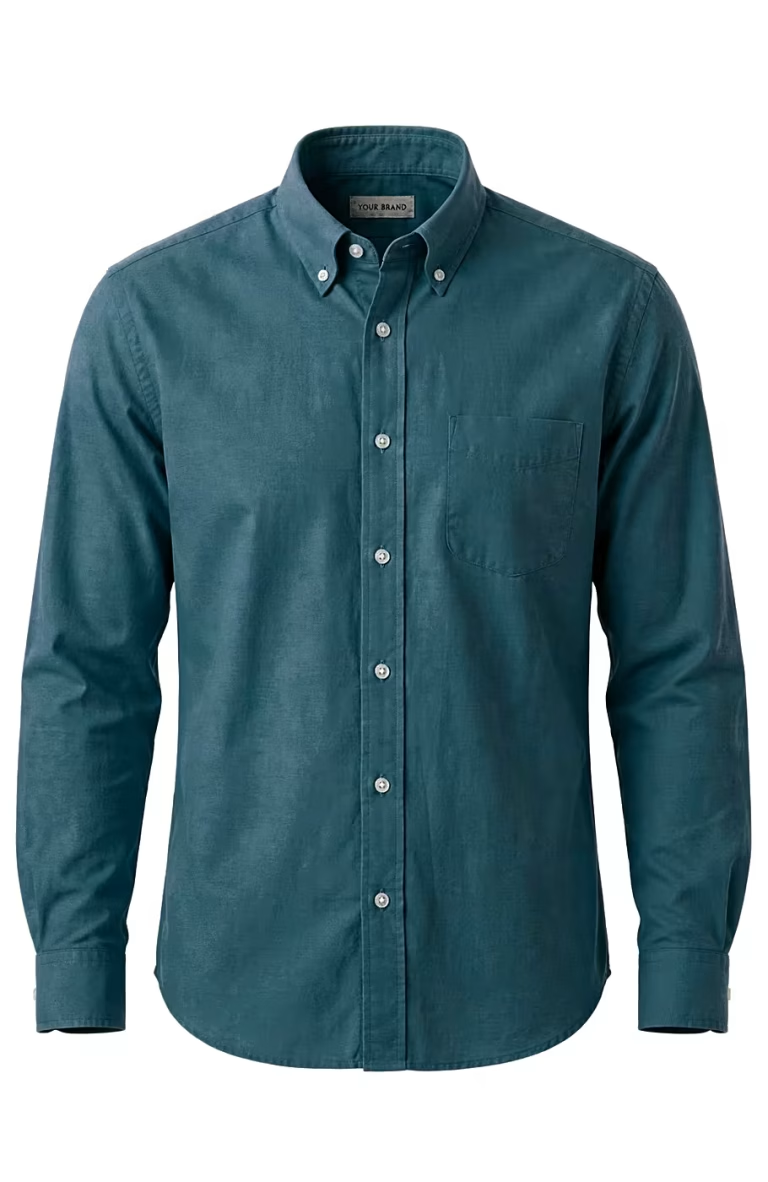
Looking for a Leading Shirt Manufacturer in Bangladesh programme judged on detail rather than slogans? We weave, cut and sew shirts to order at our facilities in Bangladesh, and the proof garment is a deep teal long sleeve button down shirt in cotton oxford. Every stitch count, measurement and inspection result is recorded in the programme file. Moreover, every programme is planned backwards from your selling season. Your label sits inside every shirt, and no other name appears anywhere.
- Our facilities are in Bangladesh, stated plainly from the first line.
- Deep teal button down shirts as the proof garment.
- Stitch counts recorded in the programme file.
- Your woven label inside every shirt, with no other name shown.
- Samples approved on the actual oxford cloth before bulk cutting begins.
- Production planned at our Bangladesh facilities around your season.
- Packed by colour, size and store for fast warehouse intake.
Simply The Best
PORTFOLIOS












Product Details
Leading Shirt Manufacturer in Bangladesh
Shirt Making in Bangladesh Judged on Detail
Buyers who search for a Leading Shirt Manufacturer in Bangladesh programme rarely want a slogan; they want records they can check. We weave, cut and sew shirts to order at our facilities in Bangladesh. The proof garment is a deep teal long sleeve button down shirt in cotton oxford. Moreover, every programme is planned backwards from your selling season. Your label sits inside every shirt, and no other name appears anywhere.
- Deep teal button down shirts as the proof garment.
- Also, stitch counts are recorded in the file.
- Next, measurements are checked on the line hourly.
- Your label inside every shirt.
- Samples approved on the real oxford cloth first.
- Cartons packed by colour, size and store.
Seven Steps from Brief to Packed Oxford Shirts
Every programme moves through the same seven steps, from the first brief to packed cartons. The steps keep stitch quality, fit and packing steady across thousands of shirts. Each step is recorded in the programme file, from yarn to carton.
Step 1: The Brief Fixes Every Measurement
First, the brief fixes collar style, fit block and every key measurement. Tolerances are written beside each measurement, not left to habit. In addition, the brief fixes stitch counts and button styles early. Clear briefs prevent slow sampling rounds later.
Step 2: The Oxford Cloth Is Woven to Weight
Second, the cotton oxford is woven to the agreed weight and handle. The basket weave should feel even, with no thin or thick bars. The deep teal shade is matched against your approved lab dip. Only then does the cloth move to cutting.
Step 3: Panels Are Cut to the Pattern
Next, panels are cut to the approved pattern with sharp, checked blades. Dull blades drag oxford yarns and spoil clean edges. Fronts and backs are cut in matched bundles by size. Cut panels are measured against the pattern before sewing.
Step 4: The Sample Is Measured, Not Just Viewed
Then, the sample shirt is measured point by point against the brief. Collar, chest, sleeve and length figures are recorded in the file. Your team receives the measurement sheet with the sample. Bulk cutting never starts before this approval.
Step 5: Bulk Sewing Holds the Stitch Count
After approval, bulk sewing holds the agreed stitch count on every seam. Operators work to the sample, and line checks sample shirts every hour. Seam allowances and stitch density are checked, not assumed. Any drift beyond tolerance stops the line.
Step 6: Finishing Adds Labels and Buttons
Later, finishing adds your woven label and your chosen buttons. Button attachment is pull tested on samples from every batch. Pressing gives the oxford a clean, soft retail finish. Finished shirts are inspected piece by piece.
Step 7: Packing Splits by Colour and Size
Finally, packing splits the order by colour, size and store. A final measurement audit samples cartons before sealing. Cartons are marked so warehouse teams can shelve at once. The file closes with a full packing list.
The Deep Teal Oxford Shirt in Our Pictures
The pictured shirt shows a classic button down construction. It carries a button down collar, a full button front and one chest pocket. The long sleeves end in button cuffs with gauntlet buttons. The back carries a yoke, a centre box pleat and a locker loop. The shirt is completely plain, with no embroidery or print anywhere.
- Button down collar with a button front.
- One chest pocket on the front.
- Long sleeves with button cuffs.
- Back yoke, box pleat and locker loop.
- Completely plain, ready for your label.
Stitch Density and Seam Discipline
Stitch density decides how long a shirt survives its wearer. Too few stitches per centimetre and seams grin open under strain. Our files fix stitch counts for collars, plackets, armholes and hems separately. Shirt factory checks count stitches on samples taken from the line. The counts are recorded, so buyers can verify them at any visit.
- Stitch counts fixed per seam type.
- Line samples counted and recorded.
- Indeed, seam allowances are held to the file.
- Records open to buyer audits.
Measurement Tolerances Buyers Can Verify
Every key measurement carries a written tolerance in the programme file. Chest, shoulder, sleeve and length are checked against those tolerances. Shirt wholesale buyers can re measure any carton sample and compare figures. Results are logged by batch, size and colourway. A programme that logs its numbers has nowhere to hide.
- First, tolerances are written beside measurements.
- Hourly line checks during sewing.
- Carton samples open to re measuring.
- Results logged by batch and size.
Shirt Manufacturer in Bangladesh for Portugal Brands
Portuguese brands buy oxford shirts as long life wardrobe staples. Their buyers value stitch discipline and honest cloth weights. We sew their programmes in Bangladesh under the same recorded checks. Colourways stay separate by brand inside the packing plan. Moreover, reorders follow the original measurement file season after season.
- Recorded checks on every batch.
- Meanwhile, brand colourways are packed separately.
- Measurement files kept per brand.
- Reorders matched to the first file.
Shirt Exporter in Bangladesh for Sweden Distributors
Swedish distributors move shirts across many retail accounts with tight delivery windows. Their programmes need packing that splits cleanly by account. We export those programmes from the same Bangladesh facilities, with account level cartons. In addition, each colourway is sampled on the real oxford cloth first. Distributors receive inspection reports with every shipment.
- Also, account level packing serves distributors.
- Inspection reports with shipments.
- Colourways sampled on real cloth.
- Delivery windows planned per account.
Collars, Cuffs and Buttons Built to Spec
Collar construction separates careful shirt making from careless work. Our collars are cut, fused and turned to your pattern, with even points. Cuff widths and button sizes follow your specification sheet. Shirt factory samples prove collar symmetry before bulk begins. Nothing is substituted from stock trim without your written approval.
- Overall, collar points are checked for symmetry.
- Cuffs and buttons to your sheet.
- Fusing matched to the oxford weight.
- No trim substituted without approval.
Colour That Holds Across Lots
Deep colours expose dyeing drift faster than pale ones. Lab dips are approved before bulk dyeing begins. Each new cloth lot is checked against the approved shade band. Shirt exporter files keep the shade record with the packing plan. Your stores therefore receive the same deep teal in every delivery.
- Lab dips approved before dyeing.
- Next, shade bands are agreed at sampling.
- New lots checked against the standard.
- Colour records kept with the file.
Your Label, Your Trim, Your Packaging
Your woven label sits inside every shirt, with your size tabs beside it. Buttons, hang tags and packaging follow your brand sheet. Shirt OEM programmes often add store ready folding and size stickers. We follow the sheet exactly, carton by carton. Nothing carries our name at any point.
- Woven labels and size tabs fitted.
- Buttons and tags from your sheet.
- Also, store ready folding is available on request.
- No other name on any garment.
Testing, Compliance and Open Paperwork
Every programme carries open paperwork from the first sample. Cloth composition, shrinkage results and inspection reports sit inside the file. Our production follows recognised social compliance frameworks for export programmes, and the approach is described by amfori. Shirt wholesale audits can verify each claim against documents.
- Composition and shrinkage results on file.
- Inspection reports for every shipment.
- Buyer audits welcomed at our facilities.
- Documents matched to each delivery.
What a Programme File Contains
The programme file is the single record of your shirt range. It holds patterns, measurement sheets, stitch counts and trim sheets. Size curves and colour standards sit in the same file. Shirt supplier audits read this file before they visit a line. Keeping it complete keeps every reorder simple.
- Patterns and measurement sheets.
- Stitch counts and trim sheets.
- Size curves and colour standards.
- Packing plans by store group.
Reorders and Range Planning
Oxford shirt ranges live on steady reorders of proven styles. Reorders run from the same measurement file, so new shirts match the first delivery. Cloth lots are checked against the approved shade before cutting. Shirt manufacturer planning then reserves line time around your season. Your best sellers therefore stay in stock without measurement surprises.
- Reorders sewn from the original file.
- Shade checks on every new lot.
- Line time planned around seasons.
- Finally, best sellers are kept in stock.
How Detail Buyers Test a Shirt File
Shirt wholesale buyers test detail files with a stitch counter before they test prices. They count stitches on the sample collar, then measure the chest against the sheet. A shirt factory that records its numbers plainly moves faster through approval. In addition, shirt exporter samples are washed and measured again after washing. Finally, a shirt OEM buyer checks the label, buttons and packing inside the file. A file that survives that reading usually wins the reorder as well.
- Stitches counted on the sample.
- Measurements compared with the sheet.
- Washed samples measured again.
Button Attachment and Spare Button Standards
Loose buttons are the smallest fault and the most annoying one. Moreover, button attachment can be tested objectively with a simple pull check. Our finishing teams pull test buttons on samples from every batch. A shirt manufacturer who records pull results can prove attachment quality. Spare buttons are then packed exactly as your brand sheet directs. Therefore, a lost button never becomes a returned shirt. The standard sits in the programme file, beside the stitch counts.
- Pull tests on every batch sample.
- Results recorded in the file.
- Spare buttons packed to your sheet.
- Attachment standard set at sampling.
Pressing, Folding and Presentation Standards
Presentation decides how a shirt sells in its first ten seconds. In addition, oxford cloth shows pressing faults more honestly than smoother cloth. Our pressing stations work to sample photographs, collar by collar. Folding follows your retail format, with boards and clips where specified. A shirt exporter who controls presentation protects your shelf impact. Consequently, cartons open into rails and shelves without rework. Shirt wholesale buyers check this on the first carton, every time.
- Pressing matched to sample photographs.
- Folding to your retail format.
- Boards and clips where specified.
- Cartons ready for direct shelving.
Oxford Cloth Weights for Different Ranges
Oxford cloth is not one cloth; it is a family of weights. However, the weave character stays recognisable across the family. Lighter oxfords suit summer shirts and softer collars. Heavier oxfords suit winter ranges and sharper button downs. A shirt supplier should state the weight in the file and weave to it. We record yarn counts beside the weight for every lot. Buyers can therefore compare ranges honestly, season to season.
- Weights stated in the programme file.
- Yarn counts recorded per lot.
- Light and heavy options available.
- Handle checked against the sample.
Interlinings and Collar Construction Records
A collar keeps its shape because of what sits inside it. Moreover, interlining weight decides whether a button down collar rolls softly or stands stiff. Our files record the interlining used in every collar, cuff and placket. Indeed, swapping interlining silently is a classic way to cheapen a shirt. A shirt manufacturer who logs interlining lots can prove nothing was swapped. In addition, collar construction samples are kept with the approved shirt for comparison. Therefore, buyers can cut open a production collar and compare it honestly. Finally, the same records cover cuff and placket interlinings across the range.
- Interlining weights recorded per style.
- Construction samples kept for comparison.
- Also, lot changes reported to buyers.
- Collar roll checked on samples.
Sample Retention and the Golden Sample Rule
Every programme keeps one approved shirt untouched: the golden sample. Moreover, that shirt is never sold, worn or lent to the line as a casual reference. It stays sealed with its measurement sheet, stitch counts and interlining records. Production samples are compared against it at every audit. A shirt manufacturer who protects the golden sample protects your standard. Therefore, disputes about quality end with a measurement, not an argument. The golden sample returns to the file when the programme closes.
- Golden sample sealed with its records.
- Production compared against it.
- Also, audits measured against the sample.
Questions Detail Focused Shirt Buyers Ask Us
What does the word leading mean on this page?
It is part of the search phrase buyers type, so it appears in our title and headings. We make no ranking claim for ourselves anywhere on this page. Instead, the page shows the records a careful buyer can test: stitch counts, tolerances and inspection reports. Judge every factory, including us, by that evidence.
Is the pictured shirt the exact style we would receive?
The pictured shirt shows the standard construction: a long sleeve button down shirt in cotton oxford with a chest pocket and a pleated back. Your order follows your own specification for collar, cloth and colour. Samples are measured and approved before bulk begins. Therefore, the shirts you receive match your approved sample.
Which stitch counts do you work to?
Stitch counts are fixed in your programme file at sampling, seam by seam. Collar, placket, armhole and hem counts are recorded separately. Line samples are counted against those figures every hour. The records stay open for your audit at any time.
Can you fit our own woven labels and buttons?
Yes, labels, size tabs and buttons all follow your brand sheet. Label placement is fixed in the programme file and checked on samples. Spare buttons are packed as your sheet directs. Nothing is fitted from our own stock designs.
How do reorders keep the same measurements?
Reorders are cut from the patterns and measurement sheets stored in your file. Line checks measure production shirts against the approved sample every hour. Cloth lots are shade checked before cutting. Your customers therefore find the same fit in every delivery.
Looking for a Leading Shirt Manufacturer in Bangladesh?
Send us your measurements, collar style and size range through our contact page. We will answer with a sample plan, a dated programme file and honest origin details. Common questions are covered on our FAQ page. Shirt OEM programmes start with one approved sample shirt. From there, the file carries every reorder for your range. Moreover, every record created along the way stays open to your team for the life of the programme.