
Shirt Manufacturing Facilities
Largest Shirt Manufacturing Facilities in Bangladesh
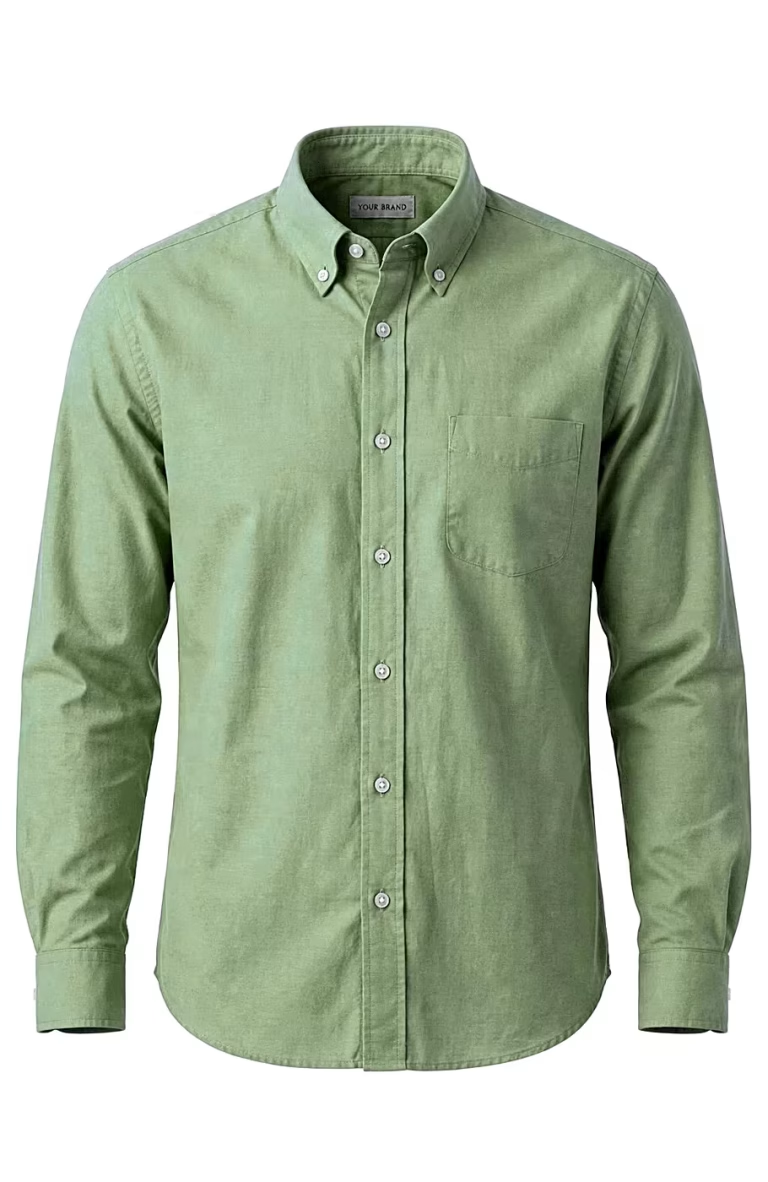
Looking for a Largest Shirt Manufacturing Facilities in Bangladesh programme that explains its scale honestly? We weave, cut and sew shirts to order across our facilities in Bangladesh, and the proof garment is a sage green long sleeve button down shirt in cotton oxford. Several production lines run in parallel, so bulk programmes keep their dates. Moreover, every programme is planned backwards from your selling season. Your label sits inside every shirt, and no other name appears anywhere.
- Our facilities are in Bangladesh, stated plainly from the first line.
- Sage green button down shirts as the proof garment.
- Parallel lines keep bulk programmes on date.
- Your woven label inside every shirt, with no other name shown.
- Samples approved on the actual oxford cloth before bulk cutting begins.
- Facilities wholesale programmes run through the year.
- Packed by colour, size and store for fast warehouse intake.
Simply The Best
PORTFOLIOS












Product Details
Largest Shirt Manufacturing Facilities in Bangladesh
Bulk Shirt Programmes Run Across Our Bangladesh Facilities
Buyers who search for the Largest Shirt Manufacturing Facilities in Bangladesh usually run bulk programmes that cannot afford a missed date. We weave, cut and sew shirts to order across our facilities in Bangladesh. The proof garment is a sage green long sleeve button down shirt in cotton oxford. Moreover, every programme is planned backwards from your selling season. Your label sits inside every shirt, and no other name appears anywhere.
- Sage green button down shirts as the proof garment.
- Also, parallel lines keep bulk programmes on date.
- Next, cutting, sewing and finishing sit under one file.
- Your label inside every shirt.
- Samples approved on the real oxford cloth first.
- Cartons packed by colour, size and store.
Seven Steps from Brief to Packed Bulk Shirts
Every programme moves through the same seven steps, from the first brief to packed cartons. At bulk scale the steps matter more, not less, because small drifts multiply across thousands of shirts. Each step is recorded in the programme file, from yarn to carton.
Step 1: The Brief Fixes Volumes and Dates
First, the brief fixes styles, volumes, size curves and delivery dates. Bulk briefs also fix how styles split across production lines. In addition, the brief fixes packing splits by market early. Clear briefs prevent slow sampling rounds later.
Step 2: The Oxford Cloth Is Woven to Weight
Second, the cotton oxford is woven to the agreed weight for the whole programme. Large runs need cloth lots planned in sequence, shade by shade. The sage green shade is matched against your approved lab dip. Only then does the cloth move to cutting.
Step 3: Cutting Runs Across Parallel Tables
Next, cutting runs across parallel tables to hold the programme dates. Each table works from the same approved patterns and markers. Fronts and backs are cut in matched bundles by size. Cut panels are measured against the pattern before sewing.
Step 4: The Sample Is Approved on Real Cloth
Then, one shirt in each style is sewn as the approval sample. Your team checks fit, shade and construction on the real oxford. Changes are written into the file at this stage. Bulk cutting never starts before this approval.
Step 5: Bulk Sewing Runs on Parallel Lines
After approval, bulk sewing runs on parallel lines with shared checkpoints. Every line works to the same approved sample and measurement file. Line checks sample shirts every hour on each line. Any drift beyond tolerance stops that line.
Step 6: Finishing Adds Labels and Buttons
Later, finishing adds your woven label and your chosen buttons. Finishing lines mirror the sewing split, style by style. Pressing gives every shirt a clean retail finish. Finished shirts are inspected piece by piece.
Step 7: Packing Splits by Market and Store
Finally, packing splits the order by market, colour, size and store. Bulk cartons are marked for direct warehouse intake in each market. The packing list reconciles against the brief line by line. The file closes only when every carton is accounted for.
The Sage Green Oxford Shirt in Our Pictures
The pictured shirt shows a classic button down construction. It carries a button down collar, a full button front and one chest pocket. The long sleeves end in button cuffs with gauntlet buttons. The back carries a yoke, a centre box pleat and a locker loop. The shirt is completely plain, with no embroidery or print anywhere.
- Button down collar with a button front.
- One chest pocket on the front.
- Long sleeves with button cuffs.
- Back yoke, box pleat and locker loop.
- Completely plain, ready for your label.
What Scale Actually Means on a Shirt Programme
Scale is not a ranking; it is a way of working. It means cutting, sewing and finishing lines that run in parallel under one programme file. It means several styles moving at once without mixing their standards. Buyers touring our facilities: wholesale programmes on one floor, export orders on another. We make no claim to any title; the lines and the records speak for themselves.
- Parallel lines under one programme file.
- Meanwhile, several styles run without mix ups.
- Shared checkpoints across every line.
- Records open at any buyer visit.
How Our Facilities Wholesale Programmes Are Planned
Planning starts with the delivery date and works backwards. Loom time, cutting tables and sewing lines are booked as one chain. Buyers reviewing our facilities: wholesale volumes are split across lines so one delay cannot stop a programme. Our facilities: OEM orders receive their own line plan and their own checkpoints. In addition, our facilities: exporter paperwork is prepared while sewing runs, not after it. The result is a programme that lands as one complete delivery.
- First, dates are planned backwards from delivery.
- Volumes split across parallel lines.
- Line plans written per programme.
- Paperwork prepared during sewing.
Shirt Manufacturer in Bangladesh for Japan Importers
Japanese importers buy shirts with exacting measurement and presentation standards. Their programmes reward the discipline that parallel lines bring. We sew their programmes in Bangladesh under one measurement file across every line. Colourways stay separate by importer inside the packing plan. Moreover, reorders follow the same file season after season.
- Indeed, one measurement file runs across lines.
- Presentation checked at finishing.
- Importer colourways packed separately.
- Reorders matched to the first file.
Shirt Wholesaler in Bangladesh for South Korea Distributors
South Korean distributors move shirts across many retail accounts at speed. Their programmes need mixed styles and sizes packed by account. We run those programmes across our facilities: supplier files hold each account split. In addition, each colourway is sampled on the real oxford cloth first. Distributors receive inspection reports with every shipment.
- Also, account level packing serves distributors.
- Mixed styles on parallel lines.
- Colourways sampled on real cloth.
- Inspection reports with shipments.
Cutting, Sewing and Finishing Under One Programme
Bulk quality fails when departments work from different instructions. Our cutting, sewing and finishing teams all work from the same programme file. The file holds patterns, measurements, stitch counts and packing plans. Teams visiting our facilities: factory checks compare each department against that one file. One file means one standard, whichever line sews your shirts.
- Overall, one file serves every department.
- Patterns and measurements shared.
- Department checks against the file.
- One standard across all lines.
Quality Control Across Parallel Lines
Parallel lines need parallel quality control, or standards drift apart. Each line carries its own checkers, working to the same sample. Measurement audits sample shirts from every line, every day. Programmes run through our facilities: manufacturer records log those audits by line and batch. Buyers can read the logs before they read our prices.
- Next, checkers are assigned to every line.
- Also, daily measurement audits run per line.
- Audit logs kept by batch.
- Logs open to buyer review.
Your Label, Your Trim, Your Packaging
Your woven label sits inside every shirt, with your size tabs beside it. Buttons, hang tags and packaging follow your brand sheet. Programmes packed at our facilities: OEM buyers often add store ready folding and size stickers. We follow the sheet exactly, carton by carton. Nothing carries our name at any point.
- Woven labels and size tabs fitted.
- Buttons and tags from your sheet.
- Finally, store ready folding is available on request.
- No other name on any garment.
Testing, Compliance and Open Paperwork
Every programme carries open paperwork from the first sample. Cloth composition, shrinkage results and inspection reports sit inside the file. Our production follows recognised social compliance and worker welfare standards for export programmes, with worker voice systems described by Sedex. Audits of our facilities: supplier assessments are welcomed and scheduled openly.
- Composition and shrinkage results on file.
- Inspection reports for every shipment.
- Buyer audits welcomed and scheduled.
- Documents matched to each delivery.
What a Programme File Contains
The programme file is the single record of your shirt range. It holds patterns, measurement sheets, line plans and trim sheets. Size curves and colour standards sit in the same file. Reviews of our facilities: supplier audits start with this file before any line walk. Keeping it complete keeps every reorder simple.
- Patterns and measurement sheets.
- Line plans and trim sheets.
- Size curves and colour standards.
- Packing plans by market.
Reorders and Seasonal Peaks
Bulk ranges peak hard before selling seasons. Reorders run from the same file, so peak volumes keep the same standards. Cloth lots are checked against the approved shade before cutting. Planning across our facilities: exporter schedules reserve loom and line time ahead of peaks. Your best sellers therefore stay in stock when demand jumps.
- Reorders sewn from the original file.
- Shade checks on every new lot.
- Capacity reserved ahead of peaks.
- Best sellers kept in stock.
How Bulk Buyers Test a Facilities File
Experienced buyers test our facilities: wholesale files first, walking lines second. They read the line plans, then the measurement logs for each line. A tour of our facilities: factory records show audit results by batch, not by brochure. In addition, buyers check our facilities: exporter documents against the packing plan for a live order. Finally, they sample our facilities: OEM checkpoints by measuring shirts straight off a running line. A file that survives that reading usually wins the reorder as well.
- First, line plans are read before line walks.
- Measurement logs checked per line.
- Shirts measured off running lines.
How Buyers Audit Our Facilities: Supplier Files First
Serious audits begin at the desk, not at the sewing line. Moreover, the files tell buyers how the floors are really run. Auditors open our facilities: supplier files hold cloth records, line plans and inspection logs. They then sample our facilities: OEM orders and trace one order from brief to carton. In addition, they check our facilities: exporter documents against a live packing list. Therefore, the line walk that follows only confirms what the paper already proved. A buyer who audits this way leaves with evidence, not impressions.
- Files audited before line walks.
- One order traced end to end.
- Documents checked against packing.
- Evidence recorded by the buyer.
Inside Our Facilities: Factory Floors at Work
On the floors, scale looks like order rather than noise. Cutting tables run in rows, each with its own bundle tickets. Sewing lines sit beside their finishing stations, so shirts travel short distances. Visitors to our facilities: factory floors are laid out so a style never crosses another style. Supervisors walk our facilities: manufacturer checklists in hand, sampling shirts at set hours. Consequently, a fault found on one line is checked on every line the same day. That habit is what bulk buyers are really purchasing.
- Cutting tables with bundle tickets.
- Lines beside their finishing stations.
- Styles kept apart across the floor.
- Faults checked across all lines daily.
How Peak Season Capacity Is Protected
Peak season exposes weak planning faster than any audit. Moreover, capacity that exists only on paper disappears when every buyer orders at once. We protect peak programmes by reserving loom and line time months ahead. Planners inside our facilities: wholesale peaks are mapped against confirmed programmes, not hopes. In addition, cloth for peak orders is woven early and held shade checked. Therefore, a late surge in one market does not steal cloth from another. Finally, buyers holding our facilities: exporter schedules can watch their reserved capacity in the programme file itself.
- Line time reserved months ahead.
- Peak cloth woven early and checked.
- Reserved capacity visible in the file.
- Also, surge rules agreed in advance.
One Delivery, Many Markets: Consolidation
Bulk programmes often serve several markets from one production run. Moreover, consolidation only works when packing separates markets from the first carton. Our packing teams split by market inside the sewing programme, not at the warehouse door. Buyers consolidating through our facilities: wholesale cartons leave marked for each destination market. In addition, documents are prepared per market while the goods are still being finished. Therefore, one vessel can carry a programme that lands in three countries correctly. The packing list reconciles every carton against the brief before dispatch.
- Markets split from the first carton.
- Documents prepared per market.
- Also, cartons reconciled before dispatch.
Questions Bulk Shirt Buyers Ask Us
Are you really the largest facilities in Bangladesh?
We make no such claim about ourselves. The phrase is the search term buyers use, so it appears in our title and headings. What we can show you is verifiable: parallel lines, programme records and audit logs. Judge our facilities: manufacturer depth is proven by output and paperwork, not by adjectives.
Is the pictured shirt the exact style we would receive?
The pictured shirt shows the standard construction: a long sleeve button down shirt in cotton oxford with a chest pocket and a pleated back. Your order follows your own specification for collar, cloth and colour. Samples are approved on the real cloth before bulk begins. Therefore, the shirts you receive match your approved sample.
Can several styles run at the same time?
Yes. Parallel lines let several styles move together under one programme file. Each style keeps its own sample, measurements and checkpoints. Packing then separates styles by market and store. Buyers receive one complete, reconciled delivery.
Can you fit our own woven labels and buttons?
Yes, labels, size tabs and buttons all follow your brand sheet. Label placement is fixed in the programme file and checked on samples. Spare buttons are packed as your sheet directs. Nothing is fitted from our own stock designs.
How do you hold standards during seasonal peaks?
Peak volumes are planned into the line schedule months ahead. Every line works to the same file and the same hourly checks, peak or not. Cloth lots are shade checked before cutting. Standards therefore hold when volumes jump.
Looking for a Largest Shirt Manufacturing Facilities in Bangladesh?
Send us your styles, volumes and delivery dates through our contact page. We will answer with a sample plan, a dated programme file and honest origin details. Common questions are covered on our FAQ page. Programmes at our facilities: OEM orders start with one approved sample shirt. From there, the file carries every reorder for your range. Moreover, the same file discipline holds whether your programme fills one line or every line we run.