
T-Shirt Making Guide
How Are High Quality T-Shirts Made
How are high quality t-shirts made is a question with a practical answer: good yarn, honest fabric, careful sewing and checking at every stage. A shirt becomes high quality step by step, never by accident. Our facilities in Bangladesh run those steps for brands in the United States, the United Kingdom, Germany, Canada and Australia.
- The full process, yarn to packed carton.
- Nine steps, each one checked as it runs.
- Combed cotton and controlled dyeing.
- Your fit block, your label, your standard.
- Samples sewn before any bulk production.
- Shrinkage and colour tested on every lot.
- Finished shirts audited before cartons seal.
Simply The Best
PORTFOLIOS










Product Details
How Are High Quality T-Shirts Made
How Are High Quality T-Shirts Made?
A high quality t-shirt is made in stages, and every stage can protect or destroy the final garment. It starts with yarn selection, because no sewing line can rescue poor cloth. Then knitting, dyeing, cutting, sewing and finishing each add their part, and checking runs beside all of them. Most shirts are made by manufacturers working to a price; the best ones are made to a specification. This page walks through the process our own lines follow, step by step.
- Quality is decided stage by stage, not at the end.
- Yarn and fabric carry most of the final result.
- Checking runs beside production, never after it alone.
- A specification governs every stage of the work.
- Nine steps separate a good shirt from a poor one.
- Each step below is one our own lines perform.
From Yarn to Packed Carton in 9 Steps
Nine steps turn cotton yarn into a finished t-shirt, and a shirt is only as strong as its weakest step. The steps are sequenced so that faults are caught where they are cheapest to fix: in the yarn store, not in the customer's wash. First, the yarn is chosen and tested. Then the cloth is knitted, dyed and rested before cutting. Finally, sewing, finishing and auditing complete the garment. Most volume shirts are made in factories that rush at least one of these steps.
- Step 1: Yarn: combed cotton selected and tested.
- Step 2: Knitting: jersey knitted to the ordered weight.
- Step 3: Dyeing: shade matched and fixed in the cloth.
- Step 4: Finishing: cloth washed, softened and rested.
- Step 5: Cutting: panels cut to the pattern precisely.
- Step 6: Sewing: seams joined at set stitch density.
- Step 7: Decoration: print or embroidery applied cleanly.
- Step 8: Checking: garments measured and inspected.
- Step 9: Packing: folded, labelled and cartoned to order.
It Starts with the Yarn
Yarn decides how a shirt feels on the first wear and how it looks after the twentieth wash. Long staple combed cotton spins smoother, pills less and holds dye more evenly than short staple carded yarn. Ring spun yarn adds softness, while compact spinning reduces hairiness and keeps the surface clean. Our fabric teams buy yarn against a written specification, then test each delivery before knitting starts. A shirt made in a factory that skips yarn testing is a gamble, whatever the sewing quality.
- Combed cotton for smoothness and longer life.
- Ring spun yarn for a softer hand feel.
- Compact yarn for a cleaner fabric surface.
- Yarn deliveries tested before knitting begins.
- Written yarn specifications behind every order.
- Blends chosen for purpose, never for habit.
Knitting and Dyeing the Cloth
Knitting sets the weight and the stretch of the jersey, and small errors here become size faults later. The machines run to a target weight in grams per square metre, and the cloth is checked off the machine, not after dyeing. Dyeing then fixes the shade inside the fibre, and the lot is compared against your approved band under standard light. Next, the cloth is washed and rested so shrinkage happens in the factory, not in your customer's machine. Shirts made by our manufacturers follow this order without exception.
- Weight checked as the cloth leaves the machine.
- Shade bands approved under standard light.
- Pre-shrunk cloth, rested before cutting starts.
- Colour fastness tested on every dyed lot.
- Faulty cloth rejected before it costs more.
- Tees made by our suppliers carry one cloth standard.
- One cloth standard from sample to bulk.
T-Shirt Factory in Bangladesh
Inside a well run t-shirt factory in Bangladesh, cutting is treated as a precision stage, not a rough one. Patterns are graded from your base size, markers are nested to save cloth without squeezing panels, and every lay is checked before the knife moves. Cut panels are bundled by size and shade, so a sleeve from one dye lot never meets a body from another. That discipline sounds simple, and it is exactly where hurried factories lose their sizes. Our cutting rooms work to your sealed pattern only.
- Patterns graded from your approved base size.
- Markers nested for cloth saving and accuracy.
- Panels bundled by size and dye lot.
- Lays checked before cutting begins.
- Sealed patterns only on the cutting table.
- Spare panels cut for every bulk order.
Sewing: Where the Shirt Takes Shape
Sewing joins the panels at a set stitch density, with seam types chosen for each join. Shoulder seams are taped so they cannot stretch out of shape, side seams are aligned so the shirt cannot twist, and hems are stitched with even tension. Operators work balanced lines, so nobody rushes the collar or the sleeves to catch up. Supervisors pull garments from the line and measure them while sewing continues. A shirt made by a factory with balanced lines simply fits better.
- Stitch density set for each fabric weight.
- Shoulder tape keeps the neckline stable.
- Side seams aligned against body twist.
- Balanced lines protect collar and sleeves.
- Inline measurement while sewing continues.
- Needle checks scheduled through every shift.
- Collars made by manufacturers on balanced lines stay flat.
Custom T-Shirt Manufacturing in Bangladesh
Custom t-shirt manufacturing in Bangladesh adds your identity to the same disciplined base. Your label is woven and sewn at the neck, your print or embroidery is applied by decoration partners inside the same schedule, and your packing specification governs the finishing table. The garment underneath stays the standard make described on this page. Also, artwork is approved as a strike off or stitched sample before bulk decoration begins. That way, a custom shirt is a quality shirt first and a branded shirt second.
- Your woven label sewn at the neck.
- Print and embroidery inside the same schedule.
- Strike offs approved before bulk decoration.
- Your packing specification at the finishing table.
- Custom identity on a standard quality base.
- Artwork files stored for exact repeat orders.
- Labels made for exporters are woven to order.
T-Shirt Manufacturer in Bangladesh for American Brands
American brands order tees in long size runs, and long runs punish small errors. As a t-shirt manufacturer in Bangladesh for American brands, we grade carefully across the full range and measure every size, not only the middle one. American buyers also test wash behaviour hard, so our pre-shrunk cloth and aligned seams carry the programme. In addition, cartons are packed to each distribution centre's own rules. The result is a shirt that survives American laundry habits and American returns desks.
- Every size measured, not only the middle.
- Wash behaviour tested to American habits.
- Pre-shrunk cloth across the full size run.
- Cartons packed to distribution centre rules.
- Consistent shades across very large orders.
Finishing, Checking and Packing
The last stages decide how the shirt arrives. Loose threads are trimmed, garments are pressed, and each piece is inspected under good light for stains, holes and shade variation. Then the final audit measures a sample from every batch against your sealed specification. Only passed batches move to folding, tagging and polybagging. Our finishing follows the hygiene and safety expectations behind OEKO-TEX certified supply chains where your range specifies them. A shirt made for wholesale programmes passes the same audit as a retail shirt.
- Trimming, pressing and light inspection per piece.
- Final audit measured against your specification.
- Failed batches corrected before cartons close.
- Folding, tagging and polybagging to your rules.
- Size stickers and barcodes applied in finishing.
- Audit reports available to your office.
- Cartons made by factory finishers are weighed and counted.
T-Shirt Supplier in Bangladesh for Spanish Retailers
Spanish retailers sell tees hard through the summer, and summer punishes light fabric and weak dye. As a t-shirt supplier in Bangladesh for Spanish retailers, we weight summer jerseys honestly and test colour fastness against strong sun and frequent washing. Bright seasonal colours are dyed in small controlled lots, so the shade on the rail matches the shade in the catalogue. Meanwhile, repeat core colours stay locked to the band approved in the first season. Your customers notice that consistency, even if they never name it.
- Summer weights chosen for real heat.
- Fastness tested for sun and frequent washing.
- Bright colours dyed in controlled small lots.
- Core shades locked across repeat seasons.
- Catalogue shades matched on the rail.
Made by Manufacturers, Checked Like Retail
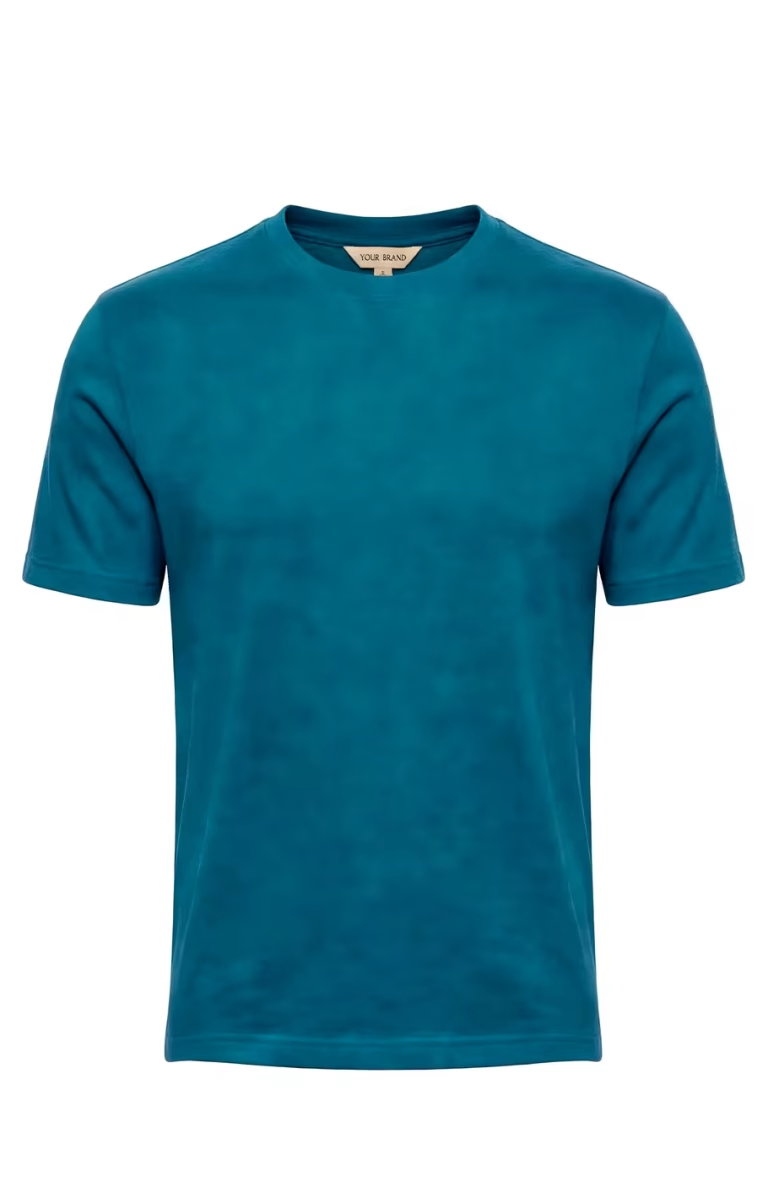
Every shirt in our programme is made by manufacturers inside one audited network, and that structure is deliberate. When knitting, dyeing and sewing sit inside one system, a fault found at any stage can be traced to its source the same day. Garments made in factories that buy cloth on the open market carry no such traceability. Our buyers therefore see one standard from yarn to carton, because the same network answers for every step. The shirt in this page's pictures was made by our factory teams to that standard.
- Made by a factory team that signs its audits.
- Made for wholesale and retail programmes alike.
- Made in factories beside the dye houses.
- Traceable from yarn lot to finished carton.
- One network answering for every stage.
- Standards published to buyers, not hidden.
- Samples made by the factory precede every bulk run.
Why Most Shirts Fail Early
Most early failures trace back to a skipped step. Unrested cloth shrinks after purchase, unbalanced lines twist the body, and untested dye fades at the first wash. None of these faults needs better machinery; each one needs the step done in order. When a buyer asks why one shirt costs slightly more than another, the answer usually sits in this list. Our lines publish their step order to buyers, because a shirt made by manufacturers who hide their process is a shirt to avoid.
- Shrinkage means the cloth was never rested.
- Twist means the seams were never aligned.
- Fading means the dye was never tested.
- Pilling means the yarn was never specified.
- Every fault maps to one skipped step.
- Ask any maker to show its step order.
Where We Ship T-Shirts from Bangladesh
The making standard travels with the garment, and our export desks pack and label to each market's own rules. The markets below are the ones we serve most often, with the buying pattern we see in each one.
- Sea and air freight options on every order.
- Carton labelling matched to each market's rules.
- Repeat programmes running season after season.
United States
American buyers order tees in large size runs for chain and online retail. Wash behaviour and size consistency lead their quality checks on arrival.
United Kingdom
UK boutiques and high street suppliers take smaller, design led runs. Prints, garment dye and careful finishing feature strongly in British orders.
Germany
German importers ask for strict fabric testing and plain, durable basics. Test reports are kept with each bulk lot for their quality files.
France
French buyers favour boutique colour stories and softer fashion fabrics. Slub jersey and melange shades appear often in French programmes.
Canada
Canadian wholesalers combine tees with heavier layers for the cooler season. Bilingual labels and size conversions are prepared as standard.
Australia
Australian brands plan on the southern calendar, with summer weights shipped six months ahead. Climate split orders are made in factories beside our own lines.
United Arab Emirates
UAE traders source mixed tee ranges through Dubai for re-export across the region. Mixed assortments and fast air freight suit that trade.
Netherlands
Dutch importers run private label tee programmes with their own labels and polybags. Rotterdam sailings anchor their delivery plans each season.
Spain
Spanish wholesale buyers take printed tees and bright seasonal colours for family clothing stores. Programmes refresh with each fashion season.
Beyond these, we also supply buyers in Italy, Poland, Japan and South Korea, and new markets join whenever a buyer brings a programme to us.
Questions Buyers Ask About How Shirts Are Made
Short answers to the making questions we hear most. Longer answers live on our FAQ page, and our team answers anything else in writing.
- Step by step process shared with buyers.
- Samples sewn before any bulk production.
- Your own label and packaging on every garment.
What single step matters most for quality?
Fabric preparation, because every later stage inherits its faults. Rested, tested, pre-shrunk cloth makes accurate cutting and stable sewing possible. If we had to protect one step under pressure, that is the step we would protect.
Do you make shirts for buyers in the United States?
Yes, American programmes are a core part of our production. The full size run is measured size by size, and wash testing follows American laundry habits. Cartons are packed to each distribution centre's rules before they leave.
Can one order mix plain and printed shirts?
Yes. Plain and decorated shirts share the same base production, and decoration is applied inside the same schedule. Each style reaches its own workable quantity, and our desk plans the mix with you before sampling starts.
How long does the making process take?
Sampling comes first, then bulk production follows the calendar agreed in your quotation. Cloth preparation, sewing and finishing run in sequence, and your office receives stage updates while the order is on the line.
Are promotional shirts made differently?
The base process is identical; only the specification changes. A promotional shirt made for wholesale buyers uses an honest lighter fabric and simpler finishing, while a retail shirt carries heavier cloth and extra checks. Both pass through the same nine steps in the same order.
Are your shirts made in factories you audit?
Yes. Every line in our network works under documented quality systems and buyer audits, and garments are checked against your sealed sample before packing. The audit report for your batch can be shared with your office on request.
So, How Are High Quality T-Shirts Made for Your Label?
They are made step by step, with nothing skipped: specified yarn, tested cloth, precise cutting, balanced sewing and an audit before packing. Our network follows the industry standards promoted by the BGMEA, and your sealed sample governs every stage. See our premium t-shirt range for the finished standard, or send your specification and we will sew the sample that proves the process.
- Start from your specification or reference garment.
- Nine steps, documented and open to buyers.
- One team accountable from yarn to shipment.
- Samples approved before any bulk commitment.
- Garments made by manufacturers under one roof.