
Restaurant and Hotel Uniforms
Hospitality Uniforms Suppliers in Dubai
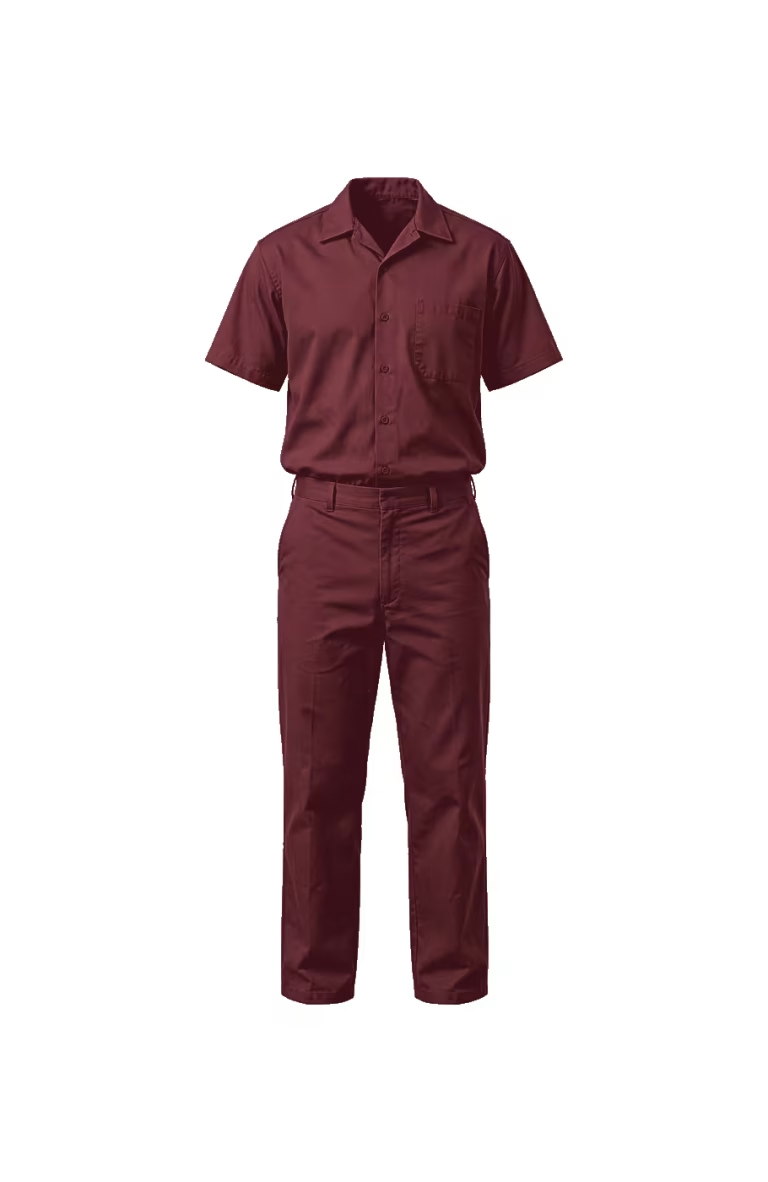
Looking for a Hospitality Uniforms Suppliers in Dubai programme that states its origin plainly? We cut and sew hospitality uniforms to order at our facilities in Bangladesh, and nothing is made in Dubai. The pictured set is a burgundy short sleeve shirt with matching trousers in cotton twill. Moreover, every programme is planned backwards from your opening or refurbishment date. Your label sits inside every garment, and no other name appears anywhere.
- Our facilities are in Bangladesh, stated plainly from the first line.
- Burgundy shirt and trouser sets as the proof garment.
- Production sits in Bangladesh, never in Dubai.
- Your woven label inside every garment, with no other name shown.
- Samples approved on the actual twill before bulk cutting begins.
- Production planned at our Bangladesh facilities around your dates.
- Packed by department, size and property for fast issue.
Simply The Best
PORTFOLIOS












Product Details
Hospitality Uniforms Suppliers in Dubai
Hotel Uniforms for Dubai, Sewn in Bangladesh
Buyers who search for a Hospitality Uniforms Suppliers in Dubai programme deserve a plain answer about origin. We cut and sew hospitality uniforms to order at our facilities in Bangladesh, and nothing is made in Dubai. The proof garment is a burgundy short sleeve shirt with matching trousers in cotton twill. Moreover, every programme is planned backwards from your opening or refurbishment date. Your label sits inside every garment, and no other name appears anywhere.
- Burgundy shirt and trouser sets as the proof garment.
- Also, production sits in Bangladesh, stated plainly.
- Next, samples are approved on the real twill first.
- Your label inside every garment.
- Cartons packed by department, size and property.
Seven Steps from Brief to Packed Uniforms
Every programme moves through the same seven steps, from the first brief to packed cartons. Hospitality buyers test these steps hardest, because a whole property changes uniform on one date. Each step is recorded in the programme file, from cloth to carton.
Step 1: The Brief Fixes Departments and Dates
First, the brief fixes departments, styles, size curves and delivery dates. Uniform programmes also fix which roles wear which colours at this stage. In addition, the brief records your artwork for labels and embroidery. Clear briefs prevent slow sampling rounds later.
Step 2: The Twill Is Matched to Weight and Shade
Second, the cotton twill is matched to the agreed weight and shade. The burgundy shade is checked against your approved lab dip. Cloth lots are inspected for shade and hand feel before cutting. Only then does the cloth move to the cutting tables.
Step 3: The Sample Is Approved on Real Twill
Next, one set in each style is sewn as the approval sample. Your team checks fit, shade and construction on the real twill. Changes are written into the file at this stage. Bulk cutting never starts before this approval.
Step 4: Cutting Follows the Approved Pattern
Then, cutting follows the approved pattern and marker plan. Shirts, trousers and panels are cut in matched bundles by size. Cut panels are measured against the pattern before sewing. Bundle tickets keep every size and department separate.
Step 5: Bulk Sewing Runs with Line Checks
After approval, bulk sewing runs with checks at every operation. Supervisors inspect seams, collars, pockets and waistbands as the line moves. Faults are corrected on the same bundle, not at the end. Department bundles stay separate throughout.
Step 6: Finishing Adds Labels and Embroidery
Next, finishing adds your labels and any embroidery your file carries. The pictured set carries no embroidery at all, and logos are added only from your artwork. Pressing follows the standard for each department. Folding then matches your issue room presentation.
Step 7: Packing Splits by Department and Property
Finally, packing splits cartons by department, size and property. Carton lists are shared before the goods leave our floor. Shipping documents follow on the same file. Your team can issue uniforms by department on arrival.
The Burgundy Uniform Set in Our Pictures
The pictured set is a burgundy short sleeve uniform shirt with matching trousers in cotton twill. The shirt carries a soft collar, a full button front and one chest pocket. The trousers are flat fronted with belt loops and a straight leg. Moreover, the back of the shirt is plain, and the trousers carry two back welt pockets. No logo or embroidery appears anywhere on the set.
- Burgundy cotton twill shirt and trousers.
- Button front shirt with a chest pocket.
- Also, flat front trousers with belt loops.
- Two back welt pockets on the trousers.
- No logo or embroidery anywhere.
Why Dubai Hospitality Groups Source from Bangladesh
Dubai wholesale buyers in hospitality run uniforms as a property wide system. They need one look across front desk, housekeeping, concierge and banqueting teams. Bangladesh offers deep woven capacity with disciplined shade control. Moreover, Dubai OEM programmes benefit from patterns graded once and held across staff changes. Groups keep the look, replace the wearers, and reorder with confidence.
- One look across every department.
- Also, patterns held across staff changes.
- Deep woven and twill capacity.
- Reorders without new sampling.
- One file for every property.
Hospitality Uniforms Manufacturer in Bangladesh for Saudi Arabia Hotels
Saudi Arabia hotels often open uniforms across several properties in one season. They send tech packs per department, and our team answers with graded patterns for each role. Delivery plans are built backwards from the opening date. Moreover, carton data matches the format their receiving teams already use. The same file discipline serves every market we ship to.
- Tech packs answered per department.
- Also, patterns graded for every role.
- Carton data in the property format.
- Reorders repeat the approved file exactly.
The Twill Behind the Uniform
Cotton twill weaves a fine diagonal line into a hard wearing cloth. The weave resists creasing better than plain weaves at the same weight. The burgundy shade is dyed to your approved lab dip before cutting. Moreover, each cloth lot is checked for shade under the same light. A lot that drifts is held back, never sewn quietly. Shrinkage is tested before the marker is planned, so shirts and trousers keep their fit after laundering. Buyers receive the cloth standard with the sample, and bulk cloth is matched against that same standard every time.
- Fine diagonal weave with a firm hand.
- Also, shade matched to your lab dip.
- Shrinkage tested before cutting begins.
- Cloth lots checked under standard light.
One Look Across Every Department
A property reads as one team when every department shares a cloth story. Front desk shirts, housekeeping sets and banqueting waistcoats can share the burgundy twill family. Role differences then come from cut and trim, not from clashing fabrics. Moreover, one cloth family simplifies spares and replacements. Your issue room holds fewer cloth types and more useful sizes.
- Shared cloth family across roles.
- Also, differences carried by cut and trim.
- Simpler spares for the issue room.
- Consistent colour in every photograph.
- New joiners dressed from the same file.
Uniform Exporter in Bangladesh for Oman Resorts
Oman resorts often combine guest facing and back of house uniforms in one shipment. Our exporter desk plans mixed cartons by department, size and property. Opening seasons are worked backwards from the vessel date. Moreover, every carton list is shared before loading. Resorts can then issue uniforms by department on arrival.
- Mixed departments planned in one shipment.
- Also, carton lists shared before loading.
- Season dates worked backwards from sailing.
- Repeat shades held to the same standard.
Sizing Whole Teams: Measurement and Grading
Uniforms fail when sizing is guessed. We grade from staff size data and your own charts, role by role. Tall, regular and petite lengths are planned where your file asks for them. Moreover, sample sets are tried by your team before bulk cutting. Spare ratios per size are then agreed in writing, so replacements never wait for a new pattern.
- Grading from your charts, role by role.
- Also, sample sets tried before bulk.
- Length options planned per role.
- Spare ratios agreed in writing.
Your Label and Property Branding
Your woven label sits inside every garment, as the label picture shows. The pictured set carries no embroidery, and we state that plainly. Production embroidery is added only from your own artwork, placed where your file sets it. Moreover, swing tags, stickers and polybags follow your property file. No house name appears on any garment or carton.
- Woven labels inside every garment.
- Also, embroidery only from your artwork.
- Placement set by your brand file.
- Swing tags printed from your artwork.
- Polybags and stickers follow your file.
Testing, Compliance and Open Paperwork
Uniform programmes carry colourfastness, shrinkage and seam strength testing on the actual cloth. Test reports join the programme file before bulk cutting. Our compliance paperwork is open to buyers at any stage. Moreover, our audits follow recognised industry schemes. You can read about the Sedex approach at Sedex and compare it with our file.
- Colourfastness tests on real cloth.
- Also, reports filed before bulk cutting.
- Audit paperwork open on request.
- No claim is made without a document.
What a Hospitality Programme File Contains
Buyers often ask what the programme file actually holds. It holds the brief, the department tech packs and every graded pattern version. It also holds Dubai supplier notes from each line check and shade approval. Test reports and packing lists sit in the same place. Finally, the file closes with the carton list and the Dubai exporter documents for the shipment.
- Briefs and tech packs in one place.
- Also, pattern versions dated and numbered.
- Shade standards with photographs.
- Test reports and packing lists together.
- Carton lists and shipping documents last.
Colourfastness for Daily Laundering
Uniforms are washed more often than almost any other garment. The burgundy twill is tested for colourfastness under repeated washing before bulk. Shades that bleed or fade early are rejected at the cloth stage. Moreover, replacement sets are dyed to the retained standard, not to a fresh guess. A shirt issued next year then matches the set issued this year.
- Wash fastness tested before bulk.
- Also, weak shades rejected early.
- Replacements matched to the standard.
- Sets stay matched across years.
How Dubai Buyers Compare Uniform Offers
Careful buyers compare offers on evidence, not on promises. Dubai factory comparisons usually start with the cloth standard and the testing scope. Buyers then read Dubai supplier files for sampling discipline and reorder history. Moreover, they check how a factory answers a problem batch. A factory that documents its faults is safer than one that hides them.
- Cloth standards compared first.
- Also, test scope named in writing.
- Reorder history asked for directly.
- Problem batches answered in documents.
- Evidence favoured over promises.
Reorders, Openings and Refurbishment Peaks
Reorders repeat the approved patterns, cloth and packing without new sampling. Most Dubai wholesale enquiries we receive are reorders for staff growth and replacements. The file already holds every approval, so the second run starts faster. Moreover, opening and refurbishment peaks are planned against your dates early. Capacity is then held for the properties that already wear the uniform.
- Reorders repeat the approved file exactly.
- Also, no new sampling on proven styles.
- Peak capacity planned against your dates.
- Cloth standards held across every run.
What Dubai OEM Buyers Ask Before Sampling
Serious buyers ask structured questions before the first sample. Dubai OEM buyers usually start with cloth weight and laundering performance. They then ask for Dubai manufacturer references from comparable uniform programmes. Moreover, they read Dubai supplier sampling records to see how rounds are handled. Dubai wholesale buyers also ask who answers when a shade drifts. Clear answers at this stage predict a calm bulk run.
- Cloth weight and laundering first.
- Also, references from comparable programmes.
- Sampling records read in full.
- Named answers for shade problems.
- Questions answered in writing.
Reading a Dubai Uniform File Before You Commit
A programme file tells you more than a sales call ever will. Dubai exporter documents show whether a factory handles paperwork cleanly. Buyers read Dubai factory answers to earlier problems with care. Moreover, they compare Dubai supplier files across two or three factories before choosing. The file with dates, photos and test reports usually wins. That is the file we work to build for every property.
- Paperwork quality read closely.
- Also, past problem answers reviewed.
- Files compared across factories.
- Dates and photos on every claim.
- Test reports filed before bulk.
Replacement Cycles on Dubai Programmes
Uniforms wear out on a cycle, and good programmes plan for it. Dubai wholesale replacements usually follow staff turnover rather than calendar dates. Our team holds Dubai supplier spares by size for active properties. Moreover, Dubai OEM replacement sets are cut from the same patterns and cloth standards. Dubai manufacturer records then show every replacement batch beside the original run.
- Replacements follow staff turnover.
- Also, spares held by size.
- Same patterns for every replacement.
- Records kept beside the original run.
- No shade drift between batches.
- Dubai exporter lists confirm every batch.
Issue Rooms and First Deliveries
The first delivery sets the tone for the whole contract. Dubai wholesale issue packs are split by wearer size before they leave our floor. Our team prepares Dubai supplier delivery notes that match your issue room order. Moreover, Dubai OEM property packs group each department separately inside the shipment. Your team can then issue uniforms on the day the cartons arrive.
- Packs split by wearer size.
- Also, delivery notes matched to your order.
- Departments grouped inside the shipment.
- Issue possible on arrival day.
- Dubai manufacturer size sets checked twice.
Questions Hospitality Buyers Ask Us
Do you manufacture in Dubai?
No, and we state that plainly from the first line. Every uniform is cut and sewn at our facilities in Bangladesh. Dubai is the market we serve and ship to. Nothing is made in or shipped from Dubai.
Is the pictured set the exact uniform we would receive?
The pictured set shows the construction and cloth honestly. Your sets follow your own tech pack, colours and branding file. The burgundy set carries no embroidery, and yours would carry only your artwork. Samples prove your exact version before bulk.
Can one programme dress every department?
Yes, and one file is exactly how we run it. Department styles share a cloth family and one approval calendar. Cartons still split by department, size and property. Your issue room then works from one delivery.
How do you size a whole team?
We grade from your size charts and staff size data, role by role. Sample sets are tried by your team before bulk cutting. Spare ratios per size are agreed in writing. Replacements then follow the same patterns without delay.
How do shipments reach Dubai?
Shipments load at Chattogram in Bangladesh and travel by sea towards the Gulf, usually through Jebel Ali. Carton lists and documents are shared before loading. Your freight agent receives the same file. Delivery planning starts from your opening date.
Looking for a Hospitality Uniforms Suppliers in Dubai?
Tell us your departments, properties and opening dates, and we will answer with cloth options and a sampling plan. You can reach the team through our contact page or read common answers on the FAQ page first. Every enquiry is answered with a dated next step. We look forward to proving the file on your first property.