
Check Shirt Manufacturing
Disguise Casual Check Shirt Manufacturers in Bangladesh
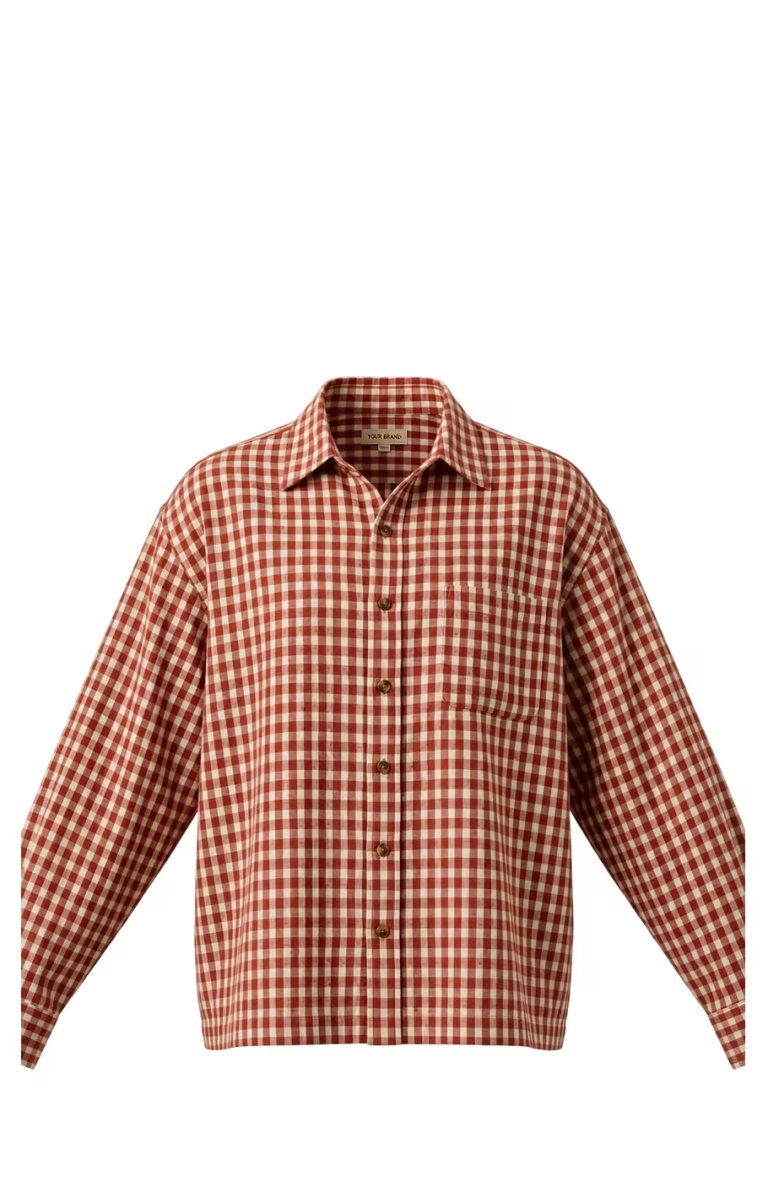
Looking for a Disguise Casual Check Shirt Manufacturers in Bangladesh programme where the check is proven on cloth? We weave and sew check shirts to order at our facilities in Bangladesh, and the proof garment is a rust red and cream check shirt. The pictured shirt carries a woven check, never a print. Moreover, every programme is planned backwards from your selling season. Your label sits inside every shirt, and no other name appears anywhere.
- Our facilities are in Bangladesh, stated plainly from the first line.
- Rust red and cream check shirts as the proof garment.
- The pictured check is woven, not printed.
- Your woven label inside every shirt, with no other name shown.
- Samples approved on the actual check cloth before bulk cutting begins.
- Check shirts for wholesale programmes matched at pocket and placket.
- Packed by colour, size and store for fast warehouse intake.
Simply The Best
PORTFOLIOS












Product Details
Disguise Casual Check Shirt Manufacturers in Bangladesh
Rust Red Check Shirts, Woven and Sewn in Bangladesh
Buyers who search for a Disguise Casual Check Shirt Manufacturers in Bangladesh programme usually want a casual check that stays identical from the first shirt to the last. We weave and sew check shirts to order at our facilities in Bangladesh, and the proof garment is a rust red and cream check shirt. The check is woven into the cloth, never printed on it. Moreover, every programme is planned backwards from your selling season. Your label sits inside every shirt, and no other name appears anywhere.
- Rust red and cream check shirts as the proof garment.
- Also, the check is yarn-dyed and woven, not printed.
- Next, samples are approved on the real cloth first.
- Your label inside every shirt.
- Cartons packed by colour, size and store.
Seven Steps from Brief to Packed Check Shirts
Every programme moves through the same seven steps, from the first brief to packed cartons. Check shirts test these steps hardest, because the pattern must match at the pocket, the placket and the yoke on every single garment. Each step is recorded in the programme file, from yarn to carton.
Step 1: The Brief Fixes the Check, Colour and Fit
First, the brief fixes the check scale, the colour story, size curves and delivery dates. The brief also records which seams must match the check. In addition, it records your label and packaging artwork. Clear briefs prevent slow sampling rounds later.
Step 2: The Yarns Are Dyed and Matched
Second, warp and weft yarns are dyed to the agreed shades. Because the check is yarn-dyed, both colours are fixed before weaving starts. Yarn lots are inspected cone by cone. Only then does the cloth move to the loom plan.
Step 3: The Woven Check Sample Is Approved
Next, a woven cloth sample is checked for approval. Check scale, line spacing and shade are set on this sample. The sample is woven for shirts wholesale approval, on cloth your team can wash and measure. Your team checks the pattern in hand, not on a screen. Changes are written into the file at this stage.
Step 4: The Shirt Sample Is Approved Complete
Then, one shirt in each colour is sewn complete with collar, placket and pocket. Your team checks the check matching at the pocket and placket on the finished garment. Bulk cutting never starts before this approval. The approved shirt becomes the retained standard for the run.
Step 5: Cutting Follows the Check Lines
After approval, cutting follows the approved pattern with the check lines as guides. Pocket and placket pieces are cut to match the body lines. Panels are measured against the pattern before sewing. Bundle tickets keep every size and colour separate.
Step 6: Sewing Runs with Pattern Checks
Next, sewing runs with checks at every operation. Supervisors inspect collar shape, placket alignment, pocket matching and cuff buttons as the line moves. Faults are corrected on the same bundle, not at the end. Size bundles stay separate throughout.
Step 7: Packing Splits by Colour and Store
Finally, packing splits cartons by colour, size and store. Carton lists are shared before the goods leave our floor. Shipping documents follow on the same file. Your team can book shirts into the warehouse on arrival.
The Check Shirt in Our Pictures
The pictured shirt is a rust red and cream casual check shirt, shown from the front, the back, the cloth and the label. The front carries a spread collar, a full button placket and one chest pocket. The back shows a yoke with a centre pleat. The check itself is woven from dyed yarns, so it runs through the cloth on both faces. No print, embroidery or badge appears anywhere on the garment.
- Front view: rust red check shirt with chest pocket.
- Back view: yoke with a centre pleat.
- Also, the fabric picture shows the woven check close up.
- Next, the label picture shows the woven YOUR BRAND label.
- Indeed, the pattern is in the cloth, not on it.
A Woven Check, Matched at Pocket and Placket
The cream lines cross the rust red ground in even squares, as the fabric picture shows. On the garment, the pocket is cut so its lines continue the body lines. The placket stripes run straight down the front. These matching points are set in the brief and checked on the sample. Shirts exporter programmes are judged on exactly this discipline.
Check Shirt Exporter in Bangladesh for Germany Retailers
German retailers buy casual check shirts across a long season, so their files stress pattern stability. Their shirts exporter orders run through the same seven steps, with the check scale locked at the cloth sample. The rust red story in our pictures is one colourway; your own checks follow the same file. Every claim in the file is a measurement your team can check.
- Check scale locked at the woven sample.
- Also, colours matched roll to roll.
- Shirt factory checks recorded bundle by bundle.
- Cartons labelled for German warehouse intake.
- Delivery windows fixed in the brief.
The Yarn-Dyed Check Behind the Rust Red
A yarn-dyed check behaves differently from a printed one, and buyers feel the difference after washing. First, the pattern cannot crack or fade off the surface, because the colour sits inside the yarn. Second, both faces of the cloth carry the same check. Finally, the lines stay sharp at seams and edges. We record the dye lots and the loom settings on the cloth sample before cutting begins. Shirts wholesale programmes reorder on this consistency.
- Dye lots recorded for both yarn colours.
- Also, check scale measured on the woven sample.
- Next, shrinkage results filed with the cloth sample.
- Roll ends and roll starts compared side by side.
- Only approved rolls move to cutting.
Your Label Inside Every Shirt
Every shirt carries your woven label inside the back neck, as the label picture shows. The pictured label reads YOUR BRAND because it marks the position of your own label. A cream neck tape finishes the inside collar line. No other name appears on the garment, the polybag or the carton face. Care and size information follow your market wording.
- Woven neck labels woven to your artwork.
- Also, size tabs matched to your size curve.
- Care wording set for your selling market.
- Hangtags and polybags carry your name only.
- Carton faces printed with your references.
Check Shirt Supplier in Bangladesh for Portugal Companies
Portuguese companies reorder check shirts through spring and autumn, so their files stress repeat speed. A shirts supplier programme keeps the approved pattern, the dye lot record and the check standard on one file. Therefore, a September reorder sews from the same evidence as the March order. The shirt on the rail in Lisbon matches the shirt your team approved in Dhaka. Nothing is re-decided between seasons.
- Repeat orders sewn from the retained sample.
- Also, check standards kept from the first run.
- Shirt manufacturer files updated after every shipment.
- Size curves adjusted only on your instruction.
- Seasonal ratios planned before the season opens.
Testing, Compliance and Open Paperwork
Test reports and compliance documents sit inside the programme file, open to your team at any stage. Buyers can check our knit and woven trade standing through the BKMEA, the Bangladesh Knitwear Manufacturers and Exporters Association. Where your market asks for fabric testing, the brief names the standard and the laboratory documents are filed with the cloth sample. Reports are arranged against the documents you nominate. Nothing is claimed beyond the paperwork on file.
- Test reports filed with each cloth lot.
- Also, audit documents available on request.
- Shirts exporter paperwork checked before loading.
- Certificates matched to the buying company name.
- Open file access for your compliance team.
What a Check Shirt Programme File Contains
A programme file holds the brief, the woven cloth record, the approved shirt and the packing plan in one place. It also holds the size curve, the check standard and the test reports for the run. Shirt factory programmes fail when these papers scatter across inboxes. So we keep one file per programme, and your team reads the same file as our desk. Every change is dated and written into it.
- The brief with check scale, colours and dates.
- Also, the approved cloth and garment samples.
- Next, the size curve and check standard.
- Test reports and audit documents.
- Finally, the packing plan and carton lists.
Checks on Every Shirt Before Cartons Close
Before cartons close, every shirt passes a final check against the retained sample. Checkers compare shade, measurements, collar shape and check matching under daylight lamps. Faulty pieces are pulled and recorded, never packed quietly. The carton list then matches the checked count exactly. Shirts wholesale buyers receive the same list before the vessel sails. Overall, the file proves what the cartons contain.
- Shade compared against the retained standard.
- Also, measurements taken on a sampling grid.
- Check matching inspected at pocket and placket.
- Buttons and buttonholes tested by hand.
- Counts reconciled before cartons are sealed.
Reorders and Repeat Check Stories
Check shirts are a repeat business, so the file is built for the second order as much as the first. The pattern, dye record and check standard stay live between seasons. When your shirts supplier reorder lands, sampling is short because the evidence already exists. New checks join the file through one woven sample and one sewn sample each. The core checks never change unless you change them.
- Core checks held to the first standard.
- Also, new checks approved on cloth first.
- Shirt OEM colour stories added size by size.
- Reorder lead times planned from the file.
- Seasonal ratios reviewed with your team.
Freight and Delivery Planning
Shipments load at Chattogram in Bangladesh and travel by sea to your port of entry. Carton lists and shipping documents are shared before loading, so your warehouse team works from the same file. Delivery planning starts from your selling season, not from our production calendar. Shirts exporter orders usually sail on fixed weekly cut-offs. Your team receives the vessel details as soon as the booking confirms.
- Delivery windows fixed in the brief.
- Also, production planned backwards from sailing.
- Cartons split by store on arrival.
- Documents checked before loading.
- Delivery dates confirmed in writing.
How Buyers Read a Check Shirt File Before Committing
Experienced shirts wholesale buyers read the file before they read the price. First, they check the woven sample against the quoted check scale. Second, they compare the retained shirt with the pictures in this page, pocket line by pocket line. Finally, they confirm that the dye lots cover the full order quantity. Shirt supplier files that answer all three points quickly earn the order. Our desk keeps those answers on page one of every file.
- Woven samples matched to quoted check scales.
- Also, retained samples available for re-checking.
- Shirt factory dye records shown per colour.
- Carton plans drawn before sampling closes.
- Delivery dates written, never assumed.
Grading a Casual Check Across Sizes
A check shirt must keep its proportions as sizes rise, or the pattern looks wrong on larger frames. Our grading keeps the collar, pocket and placket in the same relation to the check on every size. The check scale itself never changes with size, because the cloth is woven once for the whole run. Shirts exporter grading is proven on two sewn sizes before the full curve is cut. Therefore, the largest size carries the same balanced look as the sample size.
- Grading proven on two sewn sizes first.
- Also, pocket placement scaled with the body.
- Check scale constant across the size curve.
- Collar sizes graded with the neck opening.
- Full curves cut only after grading approval.
Questions Buyers Ask Us
Is the check printed on the cloth?
No. The check is woven from yarns dyed before weaving, so the pattern runs through both faces of the cloth. It cannot crack, peel or wash off the surface. The fabric picture shows the woven lines close up. Your own check design is set at the dyeing and loom stage.
Does the check match across the pocket?
Yes, where the brief asks for matching, the pocket and placket are cut to continue the body lines. The pictured shirt shows the pocket lines running in step with the front. Matching points are listed in the brief before sampling. The approved sample then governs every bundle in bulk.
Which sizes can we order?
Your brief sets the size curve, and the file holds it for every repeat. The pictured shirt is a regular casual fit with long sleeves. Your own fit block can replace it at the brief stage. Each size is graded from your measurements and proven on sewn samples.
Where are the shirts made?
Every shirt is woven and sewn by our own team in Bangladesh, from yarn dyeing to final packing. Nothing is made elsewhere and relabelled. The programme file records each stage, from dye lots to carton lists. Buyers can read the file at any stage.
Can the shirts carry our own label?
Yes. Every shirt carries your woven label inside the back neck, as the label picture shows. The pictured YOUR BRAND label marks the position of your own label. No other name appears on the garment or the packaging. Your artwork governs the label, the hangtag and the polybag.
Can the check scale change for our range?
Yes. The pictured check is one scale from the programme, and your brief can set larger or smaller squares. Because the check is yarn-dyed, a new scale starts at the dyeing and loom plan, not at the sewing line. Shirts OEM programmes prove each new scale on a woven sample and one sewn shirt first.
Looking for a Disguise Casual Check Shirt Manufacturers in Bangladesh?
Send us your check design, size curves and target cloth, and we will answer with woven samples and a sampling plan. You can reach the team through our contact page or read common answers on the FAQ page first. Every enquiry is answered with a dated next step. We look forward to proving the file on your first check story.