
Ladies Denim Tops
Custom Made Ladies Denim Tops Manufacturer in Bangladesh
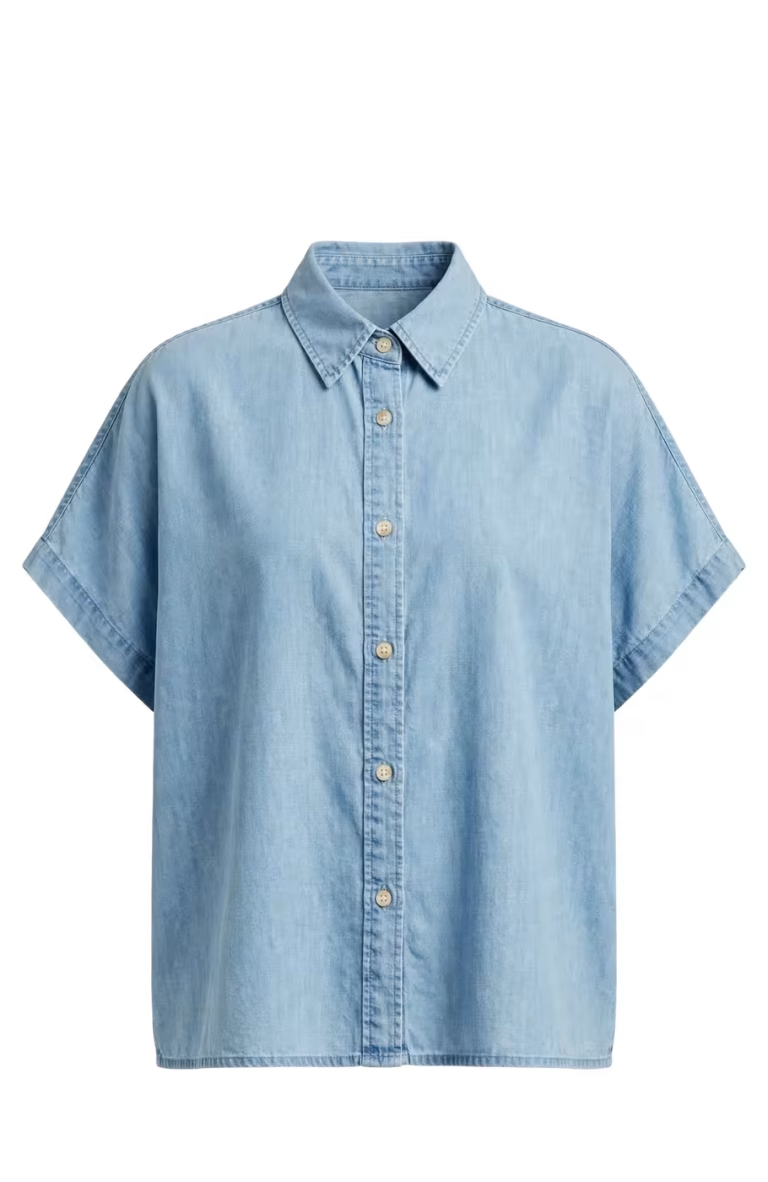
Looking for a Custom Made Ladies Denim Tops Manufacturer in Bangladesh programme where the chambray is proven on cloth? We cut and sew ladies denim tops to order at our facilities in Bangladesh, and the proof garment is a light blue chambray shirt top. The pictured top is completely plain, front and back. Moreover, every programme is planned backwards from your selling season. Your label sits inside every top, and no other name appears anywhere.
- Our facilities are in Bangladesh, stated plainly from the first line.
- Light blue chambray shirt tops as the proof garment.
- The pictured top is shown completely plain.
- Your woven label inside every top, with no other name shown.
- Samples approved on the actual chambray before bulk cutting begins.
- Ladies tops for wholesale programmes graded from your fit block.
- Packed by colour, size and store for fast warehouse intake.
Simply The Best
PORTFOLIOS












Product Details
Custom Made Ladies Denim Tops Manufacturer in Bangladesh
Light Blue Chambray Shirt Tops, Cut and Sewn in Bangladesh
Buyers who search for a Custom Made Ladies Denim Tops Manufacturer in Bangladesh programme usually want light denim tops that repeat season after season without drifting. We cut and sew ladies denim tops to order at our facilities in Bangladesh, and the proof garment is a light blue chambray shirt top with short sleeves. The pictured top is completely plain, with no print or embroidery anywhere. Moreover, every programme is planned backwards from your selling season. Your label sits inside every top, and no other name appears anywhere.
- Light blue chambray shirt tops as the proof garment.
- Also, the sleeves are wide and short, as pictured.
- Next, samples are approved on the real chambray first.
- Your label inside every top.
- Cartons packed by colour, size and store.
Seven Steps from Brief to Packed Denim Tops
Every programme moves through the same seven steps, from the first brief to packed cartons. Denim tops manufacturer programmes test these steps hardest, because chambray shade and placket stitching must stay consistent together. Each step is recorded in the programme file, from cloth lot to carton.
Step 1: The Brief Fixes Cloth, Fit and Buttons
First, the brief fixes the chambray weight, the fit block, size curves and button style. The brief also records the sleeve length and the hem shape. In addition, it records your label and packaging artwork. Clear briefs prevent slow sampling rounds later.
Step 2: The Chambray Is Matched to Weight and Shade
Second, the chambray is matched to the agreed weight and light blue shade. The cloth is checked for weave evenness before cutting. Cloth lots are inspected roll by roll. Only then does the chambray move to the cutting plan.
Step 3: The Cloth Sample Is Approved
Next, a cloth sample is checked for approval. Weight, hand feel and shade are set on this sample. The sample is prepared for tops wholesale approval, on chambray your team can wash and measure. Your team checks the cloth in hand, not on a screen. Changes are written into the file at this stage.
Step 4: The Top Sample Is Approved Complete
Then, one top in each colour is sewn complete with collar, placket and sleeves. Your team checks fit, collar shape and button spacing on the finished garment. Bulk cutting never starts before this approval. The approved top becomes the retained standard for the run.
Step 5: Cutting Follows the Approved Pattern
After approval, cutting follows the approved pattern and marker plan. Yoke pieces are cut as matched pairs from the same cloth lot. Panels are measured against the pattern before sewing. Bundle tickets keep every size and colour separate.
Step 6: Sewing Runs with Placket Checks
Next, sewing runs with checks at every operation. Supervisors inspect collar points, placket stitching, yoke seams and sleeve hems as the line moves. Faults are corrected on the same bundle, not at the end. Size bundles stay separate throughout.
Step 7: Packing Splits by Colour and Store
Finally, packing splits cartons by colour, size and store. Carton lists are shared before the goods leave our floor. Shipping documents follow on the same file. Your team can book tops into the warehouse on arrival.
The Chambray Top in Our Pictures
The pictured top is a light blue chambray shirt top, shown from the front, the back, the cloth and the label. The front carries a point collar and a full button placket with light buttons. The sleeves are wide and short, with stitched cuffs. The back shows a straight yoke seam across the shoulders. No chest pocket, print or embroidery appears anywhere on the garment.
- Front view: point collar, button placket, short sleeves.
- Back view: plain back with a shoulder yoke seam.
- Also, the fabric picture shows the light chambray weave.
- Next, the label picture shows the woven YOUR BRAND label.
- Indeed, nothing on the garment carries another name.
A Point Collar, a Full Placket and Wide Short Sleeves
The collar sits flat with sharp points, and the placket buttons run straight down the centre front. The wide short sleeves give the top its relaxed, boxy line. The hem is straight and level all round. These shape points are set in the brief and proven on the sample. Ladies tops exporter programmes are judged on exactly this finish.
Ladies Denim Tops Supplier in Bangladesh for Canada Brands
Canadian brands buy light denim tops for a short, bright season, so their files stress shade accuracy. Their tops supplier orders run through the same seven steps, with the light blue standard locked at the cloth sample. The chambray story in our pictures is one colourway; your own colours follow the same file. Every claim in the file is a measurement your team can check.
- Shade locked at the approved cloth sample.
- Also, cloth lots matched roll to roll.
- Tops factory checks recorded bundle by bundle.
- Cartons labelled for Canadian warehouse intake.
- Delivery windows fixed in the brief.
The Chambray Behind the Light Blue
Chambray is a light plain-weave denim, and its quality shows in three places. First, the surface stays even, with the white weft threads giving the cloth its soft light tone. Second, the shade stays level from the first bundle to the last. Finally, the cloth drapes softly, so the boxy shape falls as your team approved it. We record all three on the cloth sample before cutting begins. Denim tops wholesale programmes reorder on this consistency.
- Chambray weight agreed as a measurement, not a guess.
- Also, shade checked under daylight lamps.
- Next, shrinkage results filed with the cloth sample.
- Roll ends and roll starts compared side by side.
- Only approved rolls move to cutting.
Your Label Inside Every Top
Every top carries your woven label inside the back neck, as the label picture shows. The pictured label reads YOUR BRAND because it marks the position of your own label. No other name appears on the garment, the polybag or the carton face. Care and size information follow your market wording. Tops OEM ranges often add a small side-seam label, which your brief can set.
- Woven neck labels woven to your artwork.
- Also, size tabs matched to your size curve.
- Care wording set for your selling market.
- Hangtags and polybags carry your name only.
- Carton faces printed with your references.
Ladies Denim Tops Exporter in Bangladesh for Belgium Retailers
Belgian retailers reorder light denim through spring and summer, so their files stress repeat speed. A tops exporter programme keeps the approved pattern, the cloth lot record and the shade standard on one file. Therefore, a June reorder sews from the same evidence as the March order. The top on the rail in Antwerp matches the top your team approved in Dhaka. Nothing is re-decided between seasons.
- Repeat orders sewn from the retained sample.
- Also, shade standards kept from the first run.
- Tops manufacturer files updated after every shipment.
- Size curves adjusted only on your instruction.
- Seasonal ratios planned before the season opens.
Testing, Compliance and Open Paperwork
Test reports and compliance documents sit inside the programme file, open to your team at any stage. Buyers can review our ethical-trade membership through Sedex, the supplier ethical data exchange. Where your market asks for fabric testing, the brief names the standard and the laboratory documents are filed with the cloth sample. Reports are arranged against the documents you nominate. Nothing is claimed beyond the paperwork on file.
- Test reports filed with each cloth lot.
- Also, audit documents available on request.
- Tops supplier paperwork checked before loading.
- Certificates matched to the buying company name.
- Open file access for your compliance team.
What a Denim Tops Programme File Contains
A programme file holds the brief, the cloth sample record, the approved top and the packing plan in one place. It also holds the size curve, the button list and the test reports for the run. Tops factory programmes fail when these papers scatter across inboxes. So we keep one file per programme, and your team reads the same file as our desk. Every change is dated and written into it.
- The brief with cloth, colours and dates.
- Also, the approved cloth and garment samples.
- Next, the size curve and button list.
- Test reports and audit documents.
- Finally, the packing plan and carton lists.
Checks on Every Top Before Cartons Close
Before cartons close, every top passes a final check against the retained sample. Checkers compare shade, measurements, collar shape and placket stitching under daylight lamps. Faulty pieces are pulled and recorded, never packed quietly. The carton list then matches the checked count exactly. Tops wholesale buyers receive the same list before the vessel sails. Overall, the file proves what the cartons contain.
- Shade compared against the retained standard.
- Also, measurements taken on a sampling grid.
- Collar points and buttons tested by hand.
- Placket stitching inspected inside and out.
- Counts reconciled before cartons are sealed.
Reorders and Repeat Colour Stories
Light denim tops are a repeat business, so the file is built for the second order as much as the first. The pattern, cloth record and shade standard stay live between seasons. When your tops supplier reorder lands, sampling is short because the evidence already exists. New colours join the file through one cloth sample and one sewn sample each. The core colours never change unless you change them.
- Core colours held to the first standard.
- Also, new colours approved on cloth first.
- Tops OEM colour stories added size by size.
- Reorder lead times planned from the file.
- Seasonal ratios reviewed with your team.
Freight and Delivery Planning
Shipments load at Chattogram in Bangladesh and travel by sea to your port of entry. Carton lists and shipping documents are shared before loading, so your warehouse team works from the same file. Delivery planning starts from your selling season, not from our production calendar. Tops exporter orders usually sail on fixed weekly cut-offs. Your team receives the vessel details as soon as the booking confirms.
- Delivery windows fixed in the brief.
- Also, production planned backwards from sailing.
- Cartons split by store on arrival.
- Documents checked before loading.
- Delivery dates confirmed in writing.
How Buyers Read a Tops File Before Committing
Experienced tops wholesale buyers read the file before they read the price. First, they check the cloth sample against the quoted chambray weight. Second, they compare the retained top with the pictures in this page, from collar point to hem. Finally, they confirm that the size curve matches their ladies grading. Tops supplier files that answer all three points quickly earn the order. Our desk keeps those answers on page one of every file.
- Cloth records matched to quoted weights.
- Also, retained samples available for re-checking.
- Tops factory button records shown per colour.
- Carton plans drawn before sampling closes.
- Delivery dates written, never assumed.
Colour Stories Beyond the Light Blue
The light blue in our pictures is one chambray story, and the same construction runs in deeper indigo shades and in washed-down mid blues. Each new shade starts with a cloth sample, because chambray tone shifts with the weft balance. Tops exporter colours are then held to their own shade standard for the whole run. A colour story can also mix the shirt top with matching bottoms from your range plan. The file keeps every shade separate and dated.
- New shades approved on cloth first.
- Also, weft balance checked per shade.
- Shade standards kept from the first run.
- Colour stories added one sample at a time.
- Seasonal shades planned before cutting.
Inside the Fit: Rise, Yoke and Drape
The pictured top sits loose through the body, with the yoke seam giving the back its clean fall. Rise and shoulder slope are set in the fit block, so the collar sits flat without pulling. Your team checks these points on the sewn sample, worn and washed. Small fit changes are written into the pattern before bulk, never improvised on the line. This discipline keeps the tenth carton as true as the first.
- Shoulder slope checked on the sample.
- Also, collar flatness tested after washing.
- Hem swing measured on the retained top.
Questions Buyers Ask Us
Is there a print on the pictured top?
No, and we state that plainly. The pictured top is completely plain, front and back, so buyers judge the chambray and the stitching without artwork in the way. Production prints only your own artwork, placed exactly where your brief sets it. Samples prove your design before bulk cutting begins.
What sleeves does the pictured top have?
The pictured top has wide, short sleeves with stitched cuffs, as the front picture shows. Your brief can set a longer sleeve or a sleeveless cut instead. Each sleeve style is proven on a sewn sample first. The collar, placket and yoke construction stay the same across sleeve options.
How are ladies sizes graded?
Your brief sets the size curve and the grading steps between sizes. The file holds both for every repeat. The pictured top is a relaxed, boxy fit. Closer fits follow the same seven steps, graded from your own fit block and proven on sewn samples.
Where are the tops made?
Every top is cut and sewn by our own team in Bangladesh, from cloth inspection to final packing. Nothing is made elsewhere and relabelled. The programme file records each stage, from cloth lots to carton lists. Buyers can read the file at any stage.
Can the tops carry our own label?
Yes. Every top carries your woven label inside the back neck, as the label picture shows. The pictured YOUR BRAND label marks the position of your own label. No other name appears on the garment or the packaging. Your artwork governs the label, the hangtag and the polybag.
Can the top be made in darker denim shades?
Yes. The pictured top is a light blue chambray, and the same pattern runs in mid blue and deep indigo shades. Each shade is approved on cloth and on a sewn sample first. Tops OEM colour stories then follow the same seven steps, with a separate shade standard per colour.
Looking for a Custom Made Ladies Denim Tops Manufacturer in Bangladesh?
Send us your colours, size curves and target cloth, and we will answer with sewn samples and a sampling plan. You can reach the team through our contact page or read common answers on the FAQ page first. Every enquiry is answered with a dated next step. We look forward to proving the file on your first colour story.