
OEM Clothing Manufacturing
Clothing OEM Manufacturers in Bangladesh
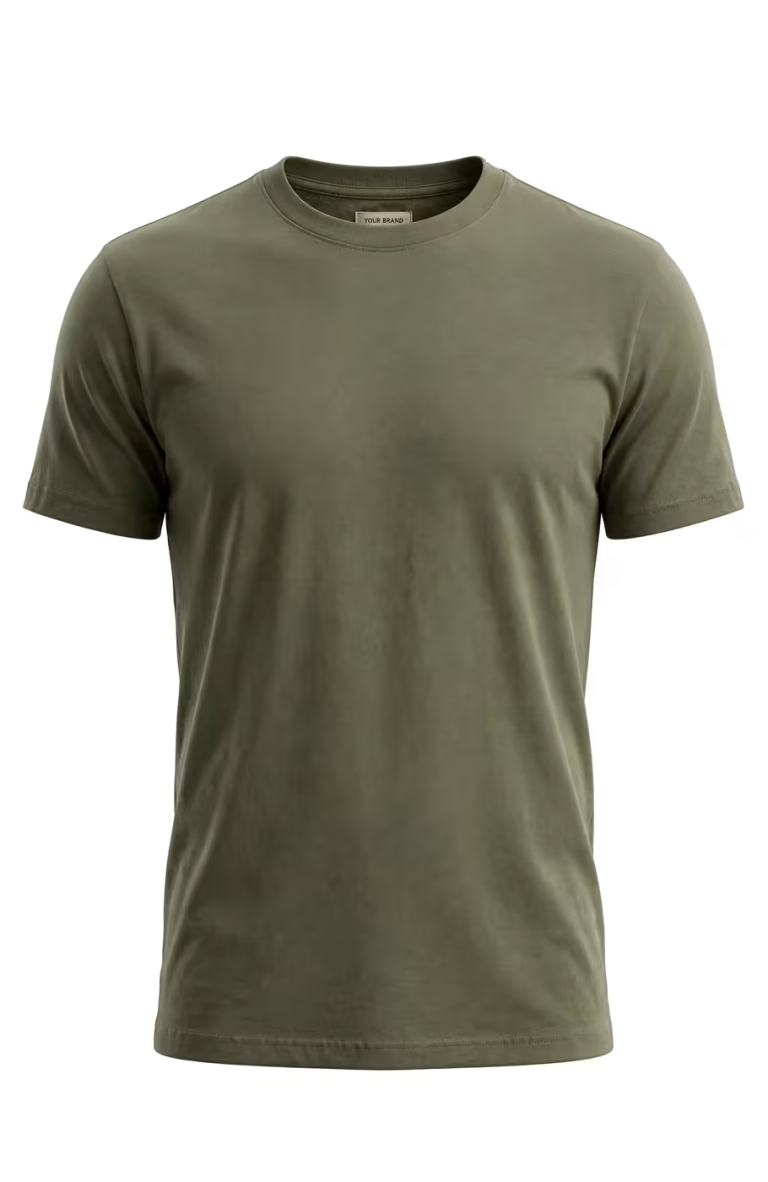
Looking for a Clothing OEM Manufacturers in Bangladesh programme built entirely on your own specification? We sew clothing to order at our facilities in Bangladesh, and the proof garment is an olive crew tee. The pictured tee is completely plain. Moreover, every style is sampled against your spec before bulk. Clothing OEM files keep your label, your chart and your wording, and nothing else is added.
- Our facilities are in Bangladesh, stated plainly from the first line.
- Olive crew tee as the proof garment.
- The pictured tee is shown plain and unprinted.
- Your woven label inside every neck, with no other name shown.
- Spec samples approved before bulk cutting begins.
- Clothing for wholesale programmes carries your label only.
- Packed by size and colour for fast warehouse intake.
Simply The Best
PORTFOLIOS












Product Details
Clothing OEM Manufacturers in Bangladesh
An Olive Crew Tee, Built to a Buyer's Own Spec
Our proof garment for this page is a men's crew-neck T-shirt in olive single jersey. The neck is ribbed, the body is clean, and the finish is deliberately simple. Every Clothing OEM Manufacturers in Bangladesh programme starts from a garment described this exactly. The pictured tee is completely plain, with no print, logo or embroidery anywhere. So the tee you see is a blank canvas, ready to be built to your own specification.
- Olive crew-neck tee as the proof garment.
- Ribbed neck, clean body.
- Completely plain, ready for your spec.
- Built under your label only.
- Your woven label inside the neck.
- OEM programmes across garment types.
Seven Steps From Your Spec to Packed Cartons
Every OEM order follows the same seven steps, from your specification to packed cartons. First, your spec is turned into a written production file. Then each stage is checked against that file. As a result, the garment that ships is the garment you specified.
Step 1: Turn Your Spec Into a File
Your brief fixes the garment type, the cloth and the measurements. Also, the brief records your label artwork and your care wording. So the whole run reads from one page. A clothing OEM file written this clearly prevents drift later.
- Garment and cloth recorded.
- Measurements fixed in writing.
- Label artwork noted on the file.
Step 2: Approve the Spec Sample
The sample is sewn complete, exactly as your spec describes. In addition, every measurement is checked against your chart. Then your approval is held as the production standard. Samples clothing manufacturers sew are compared line by line with the spec before approval.
- Complete sample sewn for approval.
- Measurements checked to the chart.
- Your approval held as the standard.
Step 3: Grade the Size Set
Sizes are graded from your own chart, point by point. Meanwhile, the grading rules are written on the file. So a small and an extra large read as the same garment. A graded clothing factory file keeps your fit consistent at every size.
- Sizes graded from your chart.
- Grading rules written down.
- Size set fixed at confirmation.
Step 4: Confirm the Order in Writing
The order is confirmed with cloth, sizes, labels and packing on one file. Also, the production slot is booked against your selling season. As a result, delivery lands before your launch date. Written files keep clothing for wholesale buyers identical across every drop.
- Order terms written on one file.
- Production slot booked in writing.
- Launch window fixed at confirmation.
Step 5: Cut and Sew to Spec
Panels are cut to your patterns, size by size. In addition, in-line checks watch the seams against the spec sheet. Then faulty panels are rejected at the table, not at the carton. Careful sewing keeps clothing for exporter ranges at one standard across colours.
- Panels cut to your patterns.
- Seams checked in line.
- Faulty panels rejected early.
Step 6: Pass the Finishing Gates
Finished garments pass measurement, stitching and shade gates. However, a garment that fails a gate is held and reworked, never packed quietly. So only garments that match your file reach the carton stage. Gate records for clothing on supplier files stay available for your audits.
- Measurement and stitching gates.
- Shade gates on every colour.
- Gate results recorded on your file.
Step 7: Pack Under Your Label and Dispatch
Garments are folded, labelled and packed exactly as your file states. Finally, dispatch follows the routing on your file, by sea from Chattogram. Packed clothing from OEM programmes carries your labels and your barcodes only.
- Packed under your label only.
- Ratios packed as planned.
- Packing lists matched to cartons.
The Olive Tee in Our Pictures
A Clean Crew Neck, Front View
The front view shows the olive tee with its ribbed crew neck and short sleeves. Also, the body falls straight with a clean hem. The tee is completely plain, as the pictures show.
- Ribbed crew neck.
- Short sleeves, clean hem.
- No print, logo or embroidery.
A Plain Back Panel
The back view shows a plain back panel with the ribbed neck from behind. Moreover, the shade reads evenly across the back. The tee reads as one garment from both sides.
- Plain back panel.
- Even olive shade.
- Clean finish all round.
Olive Jersey and Your Label, Shown Close
The close views show the jersey itself and the label inside the neck. First, the fabric view shows the fine olive single jersey knit. Then the label view shows our cream woven label at the back neck. Your own label replaces it on your runs.
- Fine single jersey, shown close.
- YOUR BRAND woven label inside the neck.
- Cream label at the back neck.
Clothing Manufacturer in Bangladesh for UK Brands
British brands build OEM ranges as planned collections, not loose garments. First, each style is specified on its own file with its own chart. Also, every style repeats the same standard from the same file. As a result, a brand's whole collection carries one quality level. Brands hold clothing with manufacturers on files that never change mid-season.
- Every style on its own file.
- Same standard across styles.
- Your labels inside every neck.
- Collection files kept open.
- Season repeats on one file.
Clothing Supplier in Bangladesh for Germany Companies
German companies take OEM clothing with exacting document standards. In addition, their files carry German care wording where the range asks for it. So our programme plans styles and sizes around company drops. Companies receive clothing from supplier programmes that matches the approved spec sample exactly.
- German care wording where asked.
- Sizes graded from your chart.
- Matched shades in every carton.
- Style files held per range.
- Reorders cleared on the same file.
Documents Behind an OEM Range
OEM ranges stand on their documents as much as their cloth. First, care and fibre wording is set exactly as you approve it. Also, buyers nominate the test documents their market requires, through bodies such as amfori, and those documents are arranged per buyer file. In addition, size and barcode data are checked against your range file before packing. We claim no certification that your file does not hold.
- Care wording set as approved.
- Documents arranged per buyer file.
- Barcode data checked before packing.
- No certification claimed loosely.
- Range data held on one file.
Clothing Exporter in Bangladesh for Netherlands Importers
Dutch importers take OEM clothing with exacting pack standards. Moreover, their cartons carry size ratios planned per channel. Then repeats run against the same open file through the season. Importers hold clothing for exporter programmes on files that record styles and sizes together.
- Size ratios per channel.
- Styles and sizes recorded together.
- Season repeats on one standard.
- Your barcodes applied before sealing.
- Cartons marked for your warehouse.
Quality Gates From Cloth to Carton
Quality on an OEM garment is a chain of gates, not a final glance. The cloth is checked on arrival, and panels are checked at cutting. In addition, sewing is checked in line through every shift. Then finished garments pass measurement, stitching and shade gates before packing. However, any garment that fails a gate is held and reworked. So the standard is a record, not a promise.
- Cloth checked on arrival.
- In-line sewing checks daily.
- Measurement gates on finished garments.
- Shade gates on every colour.
- Held garments reworked and rechecked.
- Gate records kept on your file.
Your Label, Your Spec, Nothing Else
An OEM programme carries one name only, and that name is yours. First, your woven label sits inside every neck. Also, your care wording, your tags and your barcodes are set exactly as your file states. As a result, nothing on the garment points anywhere else. A private clothing wholesale file keeps your brand alone on every piece.
- Your label inside every neck.
- Your wording on every care label.
- Your barcodes applied before sealing.
- No other name anywhere.
- Label stock held for repeats.
One File Across Many Garment Types
An OEM buyer rarely orders one garment type alone. So tees, polos, fleece and bottoms can share one programme file. In addition, each type keeps its own spec sheet inside that file. Then the whole order sews to one standard and ships together. Buyers extend clothing with factory control across every type they add.
- Many types, one programme file.
- Own spec sheet per type.
- One standard across the order.
- Combined packing lists.
- Cartons marked for your warehouse.
Questions OEM Buyers Ask
OEM programmes raise the same questions each season. So we answer the common ones here, in the open.
- Every answer refers to your own file.
- Claims stay tied to the pictures.
What exactly is the pictured garment?
The pictured garment is a men's crew-neck T-shirt in olive single jersey. The neck is ribbed and the body is completely plain. It is shown as a blank OEM sample. Your run adds your own label, wording and artwork.
Which garment types can one programme cover?
Most knit and woven staples. Tees, polos, tanks, fleece, shirts and bottoms each carry their own spec sheet. Also, each type is sampled and approved separately before bulk. The programme file holds them together under one standard.
What documents cover OEM clothing?
Documents follow your market and your specification. Buyers nominate the test documents their range needs, and those documents are arranged against your file. In addition, care and fibre wording is set exactly as you approve it. We claim no certification that your file does not hold.
Can we bring our own patterns and grading?
Yes. Your patterns and your grading rules sit on your file and are followed exactly. Also, a sewn sample proves the pattern before any bulk is cut. Pattern files stay yours and are never used for another buyer.
How fast can a winning style repeat?
Repeats run from the open file, with cloth, sizes and labels already recorded. First, the slot is booked against your remaining season. Then the repeat sews to the same approved standard. So a winning clothing for wholesale ranges returns while the season still runs.
How do shipments leave Bangladesh?
Bulk garments leave by sea from Chattogram on the routing your file confirms. Air freight stays available for urgent top-ups. Finally, your file stays open after dispatch, ready for the repeat order.
Repeats While the Season Runs
OEM winners need fast repeats, and fast repeats need an open file. First, your spec sheets, size curves and label stock reopen exactly as recorded. Also, the approved spec sample is still held on our side. As a result, a mid-season repeat matches the stock already on your shelves. Brands reorder clothing from manufacturer files without rebuilding the range each time.
- Same specs, sizes and labels.
- Spec sample held between orders.
- Only changed lines are recosted.
- In-season windows booked early.
- Gate records carried forward.
Wash and Wear Checks Before Bulk
Garments are washed constantly, so the spec sample proves the wash first. First, the sample is washed and remeasured against your size chart. Also, the neck rib is checked after washing, because its shape must survive the wash. In addition, the shade is compared with the unwashed standard. So the garment your stores sell matches the garment we approved. Every clothing on supplier files is wash-tested at sample stage.
- Sample washed as a whole garment.
- Neck rib checked after washing.
- Shade compared after the wash.
- Shrinkage measured per size.
- Wash results recorded on your file.
- Failed cloth never reaches cutting.
Second Drops and Range Extensions
Strong OEM ranges rarely end with the first drop. First, a winning style earns a second colour story in the same season. Also, a new garment type can join the programme without a new file. In addition, size ratios are rebalanced from your first drop's sales pattern. So extensions extend the standard, not the paperwork. A proven clothing for wholesale extensions returns on the same open file.
- Second stories join the same file.
- New types join the same programme.
- Same standard across every drop.
- Extensions booked on early slots.
- Gate records carried forward.
- Range data held in one place.
From First Sample to a Full House Range
Most OEM buyers start with one garment and grow. First, a single tee proves the file, the gates and the label work. Also, the same file then carries the next style without new paperwork. In addition, each new style is sampled against the same standard as the first. So a house range of eight styles still sews to one quality level. Ranges grown through clothing OEM programmes keep one record from the first sample onward. Buyers extend clothing with supplier control over every style they add, and the file grows with the range.
- One garment proves the file.
- New styles join the same file.
- Same standard on every style.
- One record from the first sample.
- Ranges grow without new paperwork.
Season Close and File Handover
A well-run programme ends as cleanly as it opens. First, unsold styles are reviewed against your next season's plan. Also, the programme file is closed with its gate records and packing lists intact. In addition, your labels and barcode data stay on file for the next order. So the next season starts from a proven base, not from memory. Buyers close a clothing wholesale season with every record still readable. Then the range team plans the next season from evidence, not guesswork.
- Styles reviewed at season close.
- Gate records archived with the file.
- Label data held for next season.
- Lessons recorded for the next range.
- Files reopened without rebuilding.
- Next season planned from proven data.
- One standard across seasons.
Looking for a Clothing OEM Manufacturers in Bangladesh?
Tell us your garment types, your size charts and your label artwork, and we will open a file for your OEM programme. As a Clothing OEM Manufacturers in Bangladesh desk, our facilities sew to your approved spec, with your own labels on every garment. Talk to our team through the contact page or read the buyer questions first. Then your first spec sample will prove the programme before any bulk is cut.
- Start with a spec sample on your file.
- Bring a tech pack or a target garment.
- Ask for the garment type options.
- Every garment checked against spec.