
Heavyweight Blank Tees
Best Heavyweight Blank T-Shirts
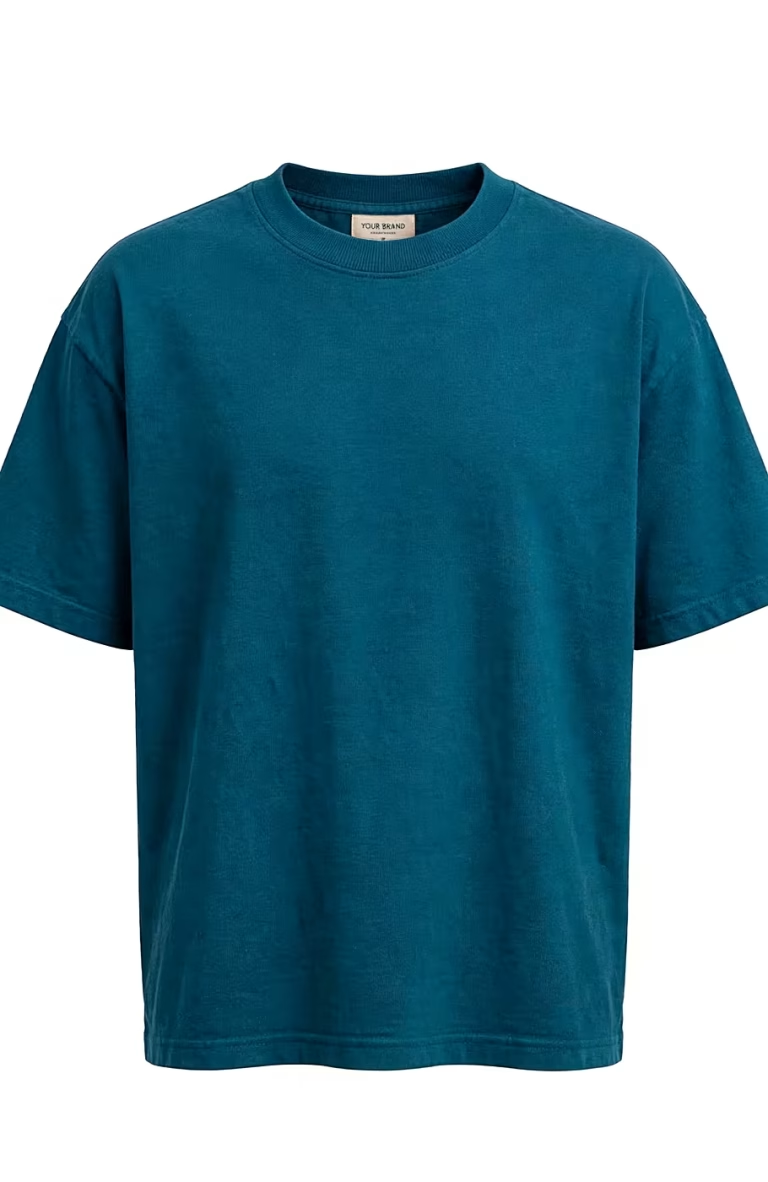
The best heavyweight blank t-shirts carry real cloth: dense cotton jersey that drapes with structure, holds a boxy shape and shrugs off washing. Our facilities in Bangladesh sew heavyweight blanks under your own label for brands, retailers and wholesalers in the United States, the United Kingdom, Germany, Canada and Australia. Weights, fits and collar builds are agreed in writing before the first sample is cut.
- Heavyweight jersey from 220 to 260 GSM.
- Boxy and relaxed fits with dropped shoulders.
- Thick collar rib that keeps its shape.
- Your neck label, care label and hang tags.
- Garment dye and vintage wash options.
- Samples weighed and washed before approval.
- Cartons packed for your warehouse or stores.
Simply The Best
PORTFOLIOS










Product Details
Best Heavyweight Blank T-Shirts
Best Heavyweight Blank T-Shirts
Heavyweight blanks are a different species from the standard promotional tee. The best heavyweight blank t-shirts start at 220 grams per square metre, hang with real structure and feel substantial the moment a customer lifts one. Streetwear labels, workwear brands and premium basics ranges all build on that weight. Therefore, this page treats heavyweight as a specification: cloth density, fit architecture and collar strength. Our programme then produces your heavyweight blanks against that specification, under your label.
- Heavyweight means 220 GSM and above.
- Also, dense cloth gives a dry, structured drape.
- Boxy fits built for modern streetwear.
- Meanwhile, collars match the weight of the body.
- Your label fitted from the first sample.
- One t-shirt manufacturer contact throughout.
Heavyweight T-Shirt Manufacturer in Bangladesh
As a heavyweight t-shirt manufacturer in Bangladesh, we knit dense cotton jersey, cut boxy patterns and sew structured blanks inside our partner facilities and manufacturing network. Also, heavyweight cloth behaves differently on the line, so our sewing teams adjust machines and handling for the thicker fabric. Your approved weight, fit block and shade stay on file afterwards. Consequently, a repeat order restarts at the same substantial standard your customers already know. Nothing about the heavy build is improvised.
- Dense jersey knitted inside one network.
- Also, lines are set up for thicker fabric.
- Boxy blocks cut from dedicated patterns.
- Shade cards and trim cards stored for repeats.
- Private label neck labels woven to your artwork.
- Written answers on price, timing and capacity.
From Heavy Cloth to Carton in 7 Steps
A clear route keeps a heavyweight programme on schedule. First, we agree the fabric weight and the fit architecture in writing. Second, the heavy jersey is knitted and checked for weight and surface. Next, samples are cut, sewn and weighed against the specification. Then wash tests confirm shrinkage and hand feel after laundry. After approval, bulk sewing follows the signed standard with in-line checks. Finally, our t-shirt factory team audits the finished garments and packs your cartons.
- Step 1: weight and fit agreed in writing.
- Step 2: heavy jersey knitted and checked.
- Step 3: samples cut, sewn and weighed.
- Step 4: wash tests for shrinkage and feel.
- Step 5: bulk sewing with in-line checks.
- Step 6: finished garment audit by size.
- Step 7: packing, carton audit and shipment.
Heavyweight T-Shirt Supplier in Bangladesh for Canadian Stores
Canadian stores sell heavyweight tees across three seasons, because the weight suits cool evenings and layered outfits. As a heavyweight t-shirt supplier in Bangladesh for Canadian stores, we plan your weights and shades around that long selling window. In addition, our supplier team keeps your approved size ratios and colour cards on record. That way, a mid-season reorder needs no new approval round. Your folding and bagging notes stay stored with your account as well.
- Weights planned for a long selling season.
- In addition, colour cards are stored for repeats.
- Size ratios planned per store group.
- Folded, bagged and barcoded for distribution.
- Consolidated cartons for mixed weight orders.
- Ask any t-shirt supplier for weighed samples first.
Weight Classes: What the GSM Really Changes
Grams per square metre sound technical, yet customers feel the difference instantly. At 220 GSM a tee gains body and opacity, so it never looks thin against the light. At 240 to 260 GSM the garment holds a boxy outline almost like light sweatshirting. Heavier cloth also resists the twist and stretch that age lighter tees. However, weight alone is not quality, because loose knitting can fake thickness. Our shirt factory checks density and recovery, not just the scale reading. Hold two weights side by side in your hands and the right choice for your range usually becomes obvious within seconds.
- 220 GSM: structured, opaque, versatile.
- 240 GSM: firm drape for boxy streetwear.
- 260 GSM: maximum body and durability.
- Density checked alongside the scale weight.
- Recovery tested after stretching and washing.
- Swatches sent before sampling begins.
Boxy Fits, Dropped Shoulders and Modern Cuts
Heavyweight cloth deserves a modern silhouette. Boxy bodies with dropped shoulders use the fabric's structure instead of fighting it. A slightly cropped length suits layered outfits, while a regular length serves workwear and uniforms. Our pattern team grades these shapes carefully, because extra width changes how the shoulder sits. Also, the sleeve on a heavyweight style runs wider and a touch longer. These proportions are sampled and measured before any bulk cutting starts.
- Boxy bodies graded for dropped shoulders.
- Cropped and regular lengths available.
- Wider sleeves matched to the heavy cloth.
- Side seamed bodies for a clean outline.
- Fits sampled and measured before cutting.
- Grading reviewed with your t-shirt supplier.
T-Shirt Factory in Bangladesh
Every heavyweight blank in this programme passes through knitting, dyeing, cutting, sewing and finishing inside Bangladesh. A t-shirt factory in Bangladesh keeps the heavy fabric lots and the sewing close together, so a density fault is caught before cutting. Moreover, our factory teams work to buyer compliance standards audited through bodies such as BGMEA. You receive one production calendar and one accountable contact throughout. Short internal distances protect your standard and your delivery date alike.
- Fabric and sewing inside one national network.
- In-line checks at cutting, sewing and finishing.
- Needle and metal detection before packing.
- Carton audits before any shipment leaves.
- One contact answers for the whole order.
- Our shirt factory weighs finished garments daily.
Heavyweight Blank Exporter in Bangladesh for Japanese Brands
Japanese brands specify heavyweight basics with unusual precision, and we welcome that discipline. As a heavyweight blank exporter in Bangladesh for Japanese brands, we document weight, measurements and wash results inside your order file. Also, our exporter desk prepares your documents for smooth entry through Japanese ports. Compact folding and precise carton counts suit smaller storage spaces. Your approved standard then stays on file, so repeat orders match the first delivery exactly.
- Precise documentation with every order.
- Compact folding for tight storage.
- Exact carton counts confirmed before sailing.
- Export documents prepared by our own desk.
- Repeat standards stored for exact matches.
Collars, Hems and Construction at Weight
A heavy body under a weak collar looks unfinished within a month. Our heavyweight styles carry a thicker rib collar, often with a higher neckline that suits the boxy shape. Twin needle stitching runs wider to match the fabric's presence. Shoulder tape and reinforced seams hold the extra weight without sagging. Meanwhile, a plain t-shirt wholesale buyer should check these points on any sample, because photographs hide them completely. Construction is where heavyweight quality is truly decided.
- Thick rib collars with strong recovery.
- Higher necklines for boxy silhouettes.
- Wide twin needle stitching on hems.
- Reinforced shoulders for the extra weight.
- Side seamed bodies as standard.
- See the range on our premium t-shirt page.
Garment Dye and Vintage Washes
Heavyweight cloth takes garment dye beautifully, because the dense surface drinks colour evenly. Washed and faded finishes give streetwear ranges their worn character without thinning the fabric. Pigment dyes and enzyme washes are both available on these weights. In addition, organic cotton heavyweight options can be certified by GOTS where your range requires it. Every wash recipe is sampled and approved on real garments before bulk production begins.
- Garment dye for deep, even colour.
- Also, enzyme and pigment washes are available.
- Faded vintage finishes on heavy cloth.
- Wash recipes approved on real garments.
- Shrinkage settled before size approval.
Durability: Built for Work and Repeated Wear
Heavyweight blanks earn their price across years, not weeks. The dense knit resists abrasion at the shoulders, elbows and hem where garments usually thin first. Colours hold longer because more dyed fibre sits in every square metre. Work crews and outdoor brands choose these weights for exactly that lifespan. Finally, our t-shirt OEM programme stores your pattern and wash recipe under your account, so the durable standard repeats without drift.
- Abrasion resistance at high wear points.
- Colour depth that survives repeated washing.
- Shape held through years of wear.
- Patterns stored under your account only.
- Deviations reported before shipment, always.
- Also, heavier cloth hides wear marks longer.
- Overall, the garment ages with real grace.
Packing Heavyweight Cartons
Heavy garments change the packing maths, because cartons reach weight limits before they reach volume limits. Our packing team calculates carton counts against carrier weight bands, so you never pay for air or overweight surprises. Also, every carton carries a clear size, colour and weight breakdown on its label. Folding follows your channel standard, from retail-ready folds to compact workwear packing. That final discipline keeps freight costs honest on a heavy programme.
- Carton counts set against weight bands.
- Clear labels with size and weight data.
- Retail folds or compact packing on request.
- Barcodes applied per your intake standard.
- Final audit before cartons close.
Heavyweight Programmes for Workwear Buyers
Workwear buyers choose heavyweight blanks for a practical reason: the garments work as hard as the crews wearing them. A dense tee survives site laundry, repeated washing and daily abrasion without turning thin. Also, the structured body looks tidy under hi-vis layers and overalls. Our t-shirt manufacturer team plans those programmes around your replacement cycle. In addition, a standing t-shirt wholesale arrangement keeps the same weight and shade flowing as crews change. Therefore, your shirt supplier relationship becomes part of your uniform system, not a yearly scramble.
- Also, one style covers the whole crew.
- Replacement cycles planned with your buyer.
- Meanwhile, core shades stay permanently stocked.
- Identical weights across every delivery.
- Finally, cartons arrive labelled by size.
- Overall, fewer garments fail in service.
Markets We Ship To
Heavyweight blank programmes leave Bangladesh for streetwear labels, workwear suppliers and premium basics brands on four continents. Each market asks for slightly different paperwork, labelling and fits. Your shirt supplier prepares those details before the cartons close, so your goods clear and shelve without drama. The notes below summarise how the main markets differ, and your account manager confirms the details for your destination before production begins.
- One export desk for documents and bookings.
- Market specific labelling checked before packing.
- Cartons marked for your warehouse or stores.
United States
United States streetwear and workwear buyers lead demand for heavyweight blanks. We prepare fibre and care labelling to federal rules and pack cartons within your carrier weight bands.
United Kingdom
United Kingdom labels build premium basics around heavyweight cores. We hold your weight specification and shade cards on file, so repeat orders match the original garments.
Germany
German buyers test paperwork as carefully as garments. Our team supplies fibre declarations and fabric test reports with the order file, and packing follows your booking rules.
France
French retailers favour structured silhouettes and clean finishing. We weight French orders towards boxy fits and check collars and hems piece by piece before folding.
Canada
Canadian programmes run heavyweight styles across three seasons. We plan weights on one calendar, with bilingual care labels available on request.
Australia
Australian seasons run opposite to Europe, so sampling starts earlier in our year. We grade to Australian size charts and pack for Sydney, Melbourne and Brisbane distribution.
United Arab Emirates
Buyers in the United Arab Emirates often serve premium retail and re-export trade across the Gulf. We pack neutral cartons with documents prepared for onward movement through Dubai.
Netherlands
Dutch importers value tight delivery windows into Rotterdam. Our exporter desk books against your arrival week and confirms carton weights before the vessel sails.
Spain
Spanish orders favour heavyweight styles for autumn and winter ranges. We schedule dyeing early for deep shades and test colourfastness on the heavy cloth.
Sampling: Weigh It, Wash It, Wear It
A heavyweight sample should be tested like workwear. Weigh it against the stated GSM, wash it hard, then check the collar and the outline in a mirror. We encourage exactly that treatment of our samples. Also, our sampling team works from your tech pack or from a heavyweight garment your customers already love. If a weight or wash cannot be matched honestly, we say so before you spend anything. Finally, keep the tested sample as your standing reference.
- Samples made at your stated weight.
- Reference garments matched or honestly declined.
- Wash and wear tests welcomed on samples.
- Comments turned around with revised samples.
- No bulk pressure after sampling, ever.
- Sampling handled by the t-shirt factory team itself.
Frequently Asked Questions
What GSM counts as a heavyweight blank t-shirt?
Most buyers draw the line at 220 GSM, with serious streetwear styles running 240 to 260 GSM. The cloth should also knit densely, because loose heavy fabric feels spongy rather than strong. Our swatches show each weight honestly.
How do buyers in the United States use heavyweight blanks?
United States buyers place them in streetwear, skate and workwear ranges, plus premium basics lines. The weight photographs well and survives hard wear. Our order file documents the weight and wash results behind every lot.
Can a French label order boxy heavyweight blanks under its own brand?
Yes. French labels often begin with one boxy fit in three core shades. Order quantities stay flexible while you test the range, so please consult our team about your first programme.
Does heavyweight fabric shrink more than standard jersey?
Heavyweight cotton shrinks similarly when it is properly pre-shrunk and wash tested. The denser knit actually holds its measurements well afterwards. Any t-shirt manufacturer should share the shrinkage figures before sampling.
Looking for Best Heavyweight Blank T-Shirts?
Then test our deep teal heavyweight blank the hard way. Weigh it, wash it and check whether the boxy outline survives your laundry. If the garment passes, your label owns a basics piece customers keep for years. Also, ask our t-shirt exporter team for the weight ladder across the range, because a good heavyweight programme often pairs a 220 GSM core style with a 260 GSM statement style under one label. Read the frequently asked questions or contact our team to start a heavyweight sampling programme under your brand.
- Samples available at your stated weight.
- Weight and wash results shared per lot.
- Your label programme set up during sampling.
- Honest written answers before any commitment.
- A t-shirt exporter desk for documents and bookings.
- Real weight, real structure and no shortcuts.
- Standards held steady from order to order.
- Weight you can feel in the hand.