
Custom Knit Garments
Bangladesh Custom Made Knit Garments Factory
Looking for a Bangladesh Custom Made Knit Garments Factory? Our facilities knit and sew plain single jersey garments to your fabric file for USA, UK, Germany, Canada and Australia brands, with your label inside every neck.
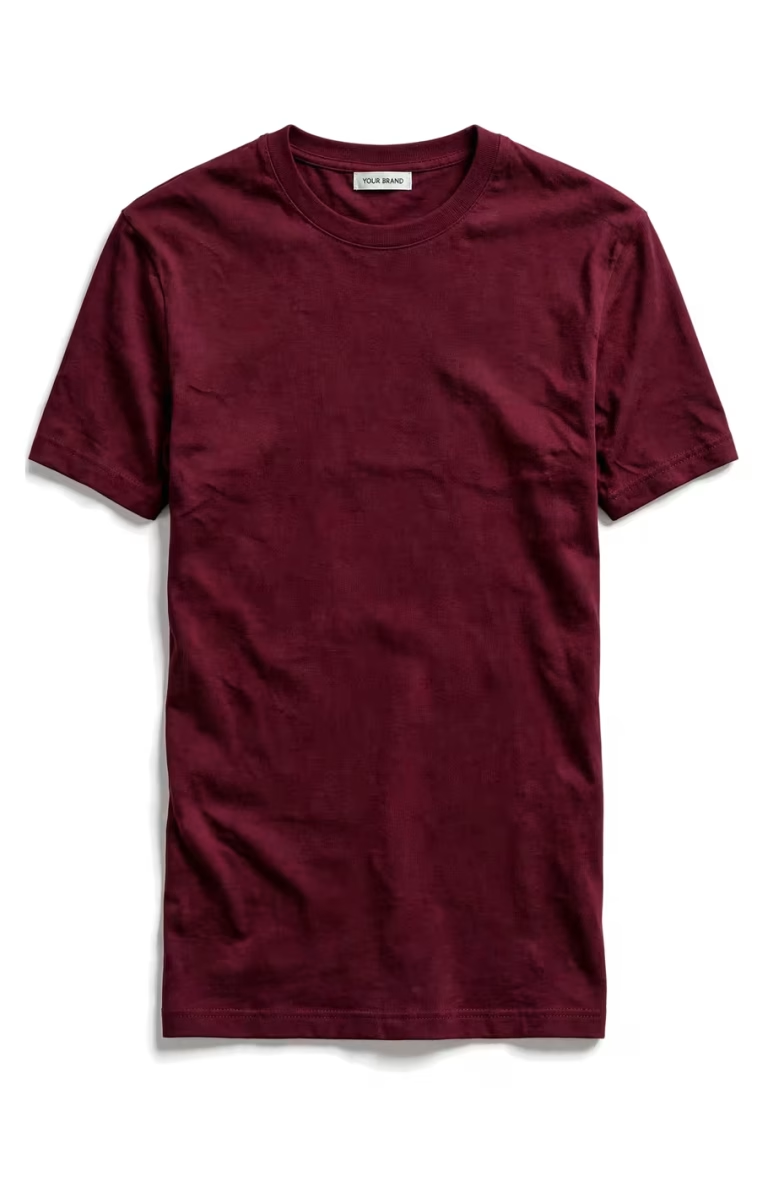
- Plain burgundy tee as the proof garment.
- Single jersey with a ribbed neck band.
- Front, back, cloth and label all pictured.
- Your brand label inside every neck.
- Seven recorded steps from fabric file to packed cartons.
- Measurement, stitching and shade gates on every batch.
- Sea freight from Chattogram on your routing.
Simply The Best
PORTFOLIOS












Product Details
Bangladesh Custom Made Knit Garments Factory
A Plain Burgundy Tee as the Proof Garment
Our proof garment for this page is a plain burgundy crew-neck tee in single jersey. A ribbed neck band sits above a completely plain body. Short sleeves and a straight hem finish the block. Every Bangladesh Custom Made Knit Garments Factory programme on this page holds its knit construction, weight and shade to one written file. The gallery shows the front, the back, the jersey close up and the label close up. A YOUR BRAND label sits inside the neck. The tee is sampled complete before any bulk cutting begins.
- Burgundy crew-neck tee as the proof garment.
- Single jersey, ribbed neck band.
- Body completely plain, front and back.
- Your brand label inside every neck.
- Samples approved complete before bulk cutting begins.
Seven Steps From Fabric File to Packed Cartons
Every knit order follows the same seven steps, from fabric file to packed cartons. First, the knit construction, weight and sizes are written on the file. Then each stage is checked against that file. As a result, the tenth garment from our factory matches the first. Buyers who hold garments on OEM files can reorder without resampling.
Step 1: Send the Fabric and Size File
Your file records the knit construction, the fabric weight and your size curve. Also, it names the neck build and the shade standard. So the whole garment reads from one shared page. Files sent for knit garments to manufacturer benches are answered with a costed file, not a guess.
- Knit construction and weight recorded.
- Neck build named on the file.
- Label wording noted.
Step 2: Sew and Approve the Sample Garment
The sample garment is sewn complete in the actual jersey, neck fitted. In addition, the sample is photographed flat and measured against your chart. Then your approval is held as the range standard. Samples approved for garments on supplier programmes are couriered to your desk for the final hand check.
- Complete garment sewn for approval.
- Shade checked against the standard.
- Your approval held as the standard.
Step 3: Grade the Size Set
Sizes are graded from your own chart, size by size. Meanwhile, chest, length and sleeve are graded together, so the cut stays balanced. So every size reads as the same garment. A graded set for knit garments for wholesale buyers keeps the neck line true at every size.
- Sizes graded from your chart.
- Chest and sleeve graded together.
- Size set written on the file.
Step 4: Confirm the Order in Writing
The order is confirmed with fabric, shade, sizes and packing on one file. Also, the production slot is booked against your selling season. As a result, delivery lands before your range launch. Confirmations for garments on exporter programmes fix the routing at the same time.
- Order terms written on one file.
- Production slot booked in writing.
- Launch window fixed at confirmation.
Step 5: Cut and Sew the Run
Panels are cut to the approved patterns, piece by piece. In addition, in-line checks watch the neck join, the sleeve setting and the hem line. Then faulty panels are rejected at the table, not at the carton. Production runs for garments from our factory keep the shade even on every body.
- Panels cut to approved patterns.
- Neck join checked in line.
- Faulty panels rejected early.
Step 6: Pass the Finishing Gates
Finished garments pass measurement, stitching and shade gates. However, a garment that fails a gate is held and reworked, never packed quietly. So only garments that match your file reach the carton stage. Gate records for garments on OEM files stay open for your audits.
- Measurement and stitching gates.
- Shade checked per piece.
- Gate results recorded on your file.
Step 7: Pack and Dispatch
Garments are packed folded by colourway and size, exactly as your file asks. Finally, dispatch follows the routing on your file, by sea from Chattogram. Packing lists for knit garments for wholesale cartons are matched to the cartons before sealing.
- Garments packed by colourway and size.
- Packing lists matched to cartons.
- Dispatch booked on your routing.
The Tee in Our Pictures
The Front in Burgundy, Stated Plainly
The front view shows the burgundy tee with its ribbed crew neck and short sleeves. Also, the body is completely plain, with no print, no chest mark and no pocket. The hem runs straight and level. Front views of knit garments with supplier checks let your team judge the block before sampling.
- Burgundy front shown in full.
- Ribbed crew neck.
- Body completely plain.
The Back, Plain Throughout
The back view shows a plain back panel on the same straight block. Moreover, no label shows on the back surface, and no seam crosses the panel. The sleeves and hem match the front view. Also, the jersey reads even across the panel.
- Plain back panel.
- No surface label or mark.
- Sleeves and hem matched.
The Jersey and the Label, Close Up
One close view shows the single jersey itself, with its fine knit rows open to the eye. First, the rows read even across every fold. Then the label view shows the YOUR BRAND woven label inside the neck, under the ribbed band. A plain woven tab sits beside the label, and no size letter is legible on it. Your own name and size markings replace the sample wording on your runs.
- Single jersey shown close.
- Your brand label inside the neck.
- Plain tab beside the label.
Knit Garments Manufacturer in Bangladesh for Germany Importers
German importers build knit ranges around a fixed fabric story. First, one approved fabric file carries every style in the story. Also, every stage is reported against the shared file. As a result, an importer's first and fifth orders open with matching garments. Importers that order knit garments for wholesale programmes hold fabric and size records between seasons.
- Ranges built on one fabric file.
- Same standard at every size.
- Your label inside every neck.
- Fabric files kept open.
- Season repeats on one file.
The Knit Construction and Weight Held on One File
On a knit garment, the fabric is the garment, so it is recorded like a measurement. First, the knit construction, the weight and the finish are written on the file before knitting. Also, the shade standard and the neck build are recorded beside them. In addition, a sewn sample is washed and measured against the chart before bulk, so the run is proven, not assumed. So the tee in the pictures reads as one planned specification. Fabric records for garments on manufacturer programmes are checked again at the finishing gates.
- Construction written before knitting.
- Weight and finish recorded.
- Sample washed and measured.
- Shade standard held per file.
- Records open at every stage.
Knit Garments Supplier in Bangladesh for Netherlands Wholesalers
Dutch wholesalers order knit garments for basics programmes and resale lines. In addition, their files carry the size ratios each channel needs. So our programme plans colourways and sizes around delivery dates. Wholesalers receive sets where every garment from supplier benches matches the approved fabric sample exactly.
- Size ratios per channel.
- Sizes graded from your chart.
- Matched shades in every carton.
- Colourways held per range.
- Reorders cleared on the same file.
Documents and Standards on Buyer Files
Knit ranges stand on their documents as much as their cloth. First, care and fibre wording is set exactly as you approve it. Also, buyers who work to recognised knitwear trade standards nominate that requirement on their file, through bodies such as BKMEA, and production is then recorded against that file. In addition, size and barcode data are checked against your range file before packing. We claim no certification that your file does not hold.
- Care wording set as approved.
- Fibre choices recorded per file.
- Barcode data checked before packing.
- No certification claimed loosely.
- Range data held on one file.
Quality Gates From Yarn to Carton
Quality on a knit garment is a chain of gates, not a final glance. The yarn is checked on arrival, and the knitted panels are checked beside it. In addition, sewing is checked in line through every shift. Then finished garments pass measurement, stitching and shade gates before packing. However, any garment that fails a gate is held and reworked. So the standard is a record, not a promise. Gate summaries for finished garments for exporter audits close the chain.
- Yarn checked on arrival.
- Panels checked before cutting.
- Measurement gates on finished garments.
- Shade gates on every batch.
- Held garments reworked and rechecked.
- Gate records kept on your file.
Knit Garments Exporter in Bangladesh for Canada Retailers
Canadian retailers take knit ranges with exacting pack standards. Moreover, their cartons carry size ratios planned per channel. Then repeats run against the same open file through the season. Retailers who reorder garments on exporter programmes see the same fabric records at every repeat.
- Size ratios per channel.
- Fabrics and sizes recorded together.
- Season repeats on one standard.
- Your barcodes applied before sealing.
- Cartons marked for your warehouse.
Fabric and Size Records Between Orders
A fabric file earns its keep between orders. First, the approved fabric sample is photographed and stored with the file. Also, the graded size set is stored beside it, size by size. In addition, any change you approve is written into the same file, dated. So the next order starts from evidence, not from memory. Records kept for garments on OEM programmes make the tenth order as clear as the first. Overall, the file reads as one continuous record, from the first sample to the final sealed carton.
- Fabric samples stored per colourway.
- Size sets stored per range.
- Changes dated on the file.
- Approvals held between seasons.
- Files reopened without rebuilding.
Questions Knit Garment Buyers Ask
Buyers who order custom knit garments ask the same questions each season. So we answer the common ones here, in the open.
- Every answer refers to your own file.
- Claims stay tied to the pictures.
What exactly is the pictured garment?
The pictured garment is a plain burgundy crew-neck tee in single jersey, with a ribbed neck band, short sleeves and a straight hem. The gallery shows the front, the back, the jersey close up and the label close up.
Which knit constructions can a programme use?
Your file names the construction for each style, from single jersey to pique, fleece and rib. Each construction is knitted and sampled before bulk. Also, the weight and finish are recorded per style on the same file. So every garment on supplier programmes is built from a written knit spec, not a guess.
Can the fabric weight carry our specification?
Yes, from your own fabric file. Knit construction, weight, finish and shade standard are recorded before knitting. Also, the sample is washed and measured for your approval. So bulk garments from our factory carry the same fabric as the sample you signed.
Can the same block run in our colours?
Yes, from your own colour file. Each new colourway is dyed and sampled before bulk. Also, the block, neck and size set stay identical across colourways. So your core garment reads the same in every colour story.
How do shipments leave Bangladesh?
Bulk garments leave by sea from Chattogram on the routing your file confirms. Air freight stays available for urgent top-ups. Finally, your file stays open after dispatch, ready for the repeat order. Tracking references are shared for every carton of garments on supplier shipments as soon as the vessel sails.
How are the garments packed?
Garments are packed folded, by colourway and size, exactly as your file asks. Also, mixed colourway cartons are recorded per carton, so a mixed carton holds the planned shades. Packing lists are matched to the cartons before sealing. Also, carton marks carry the colourway name exactly as your file writes it.
Replenishment While the Season Runs
Core knit lines sell steadily, so replenishment matters more than launches. First, your fabric, colourways and size curve reopen exactly as recorded. Also, the approved fabric sample is still held on our side. As a result, a mid-season repeat matches the stock already on your shelves. Retailers who reorder garments from manufacturer files skip rebuilding the range each time. Then the repeat is booked into the earliest open production slot.
- Same fabric, sizes and colours.
- Fabric sample held between orders.
- Only changed lines are recosted.
- In-season windows booked early.
- Gate records carried forward.
Second Drops and Range Extensions
Knit ranges rarely end with the first drop. First, a winning colourway earns a second story in the same season. Also, a second knit style can join the range on the same fabric file. In addition, size ratios are rebalanced from your first drop's sales pattern. So extensions extend the standard, not the paperwork. Proven garments for wholesale extensions return on the same open file. Indeed, each extension is sampled on the same fabric file before it joins the live range.
- Second stories join the same file.
- Ratios rebalanced from real sales.
- Same standard across every drop.
- Extensions booked on early slots.
- Gate records carried forward.
- Range data held in one place.
Season Close and File Handover
A well-run range ends as cleanly as it opens. First, unsold sizes are reviewed against your next season's plan. Also, the range file is closed with its gate records and packing lists intact. In addition, your fabric specification and barcode data stay on file for the next order. So the next season starts from a proven base, not from memory. Buyers close a season with every knit garment on supplier records still readable. Then the range team plans the next season from evidence, not guesswork. Also, the next season's knit order starts from the archived fabric file, not from a new sample round.
- Sizes reviewed at season close.
- Gate records archived with the file.
- Fabric specification held for next season.
- Lessons recorded for the next range.
- Files reopened without rebuilding.
- Next season planned from proven data.
- One standard across seasons.
Looking for a Bangladesh Custom Made Knit Garments Factory?
Tell us your knit construction, your colours and your size curve, and we will open a fabric file for your programme. As a Bangladesh Custom Made Knit Garments Factory desk, our facilities knit and sew custom garments to your approved sample, with your own label inside every neck. Talk to our team through the contact page or read the buyer questions first. Then your first sample will prove the fabric before any bulk is cut.
- Start with a sample on your spec.
- Bring a range plan or a target garment.
- Ask for the cloth options.
- Every garment checked as one piece.