
Garments Manufacturing Guide
5 Top Garments Manufacturers in Bangladesh
Looking for a 5 Top Garments Manufacturers in Bangladesh? Our facilities run five garment lines from one programme desk for USA, UK, Germany, Canada and Australia brands, with your label inside every neck.
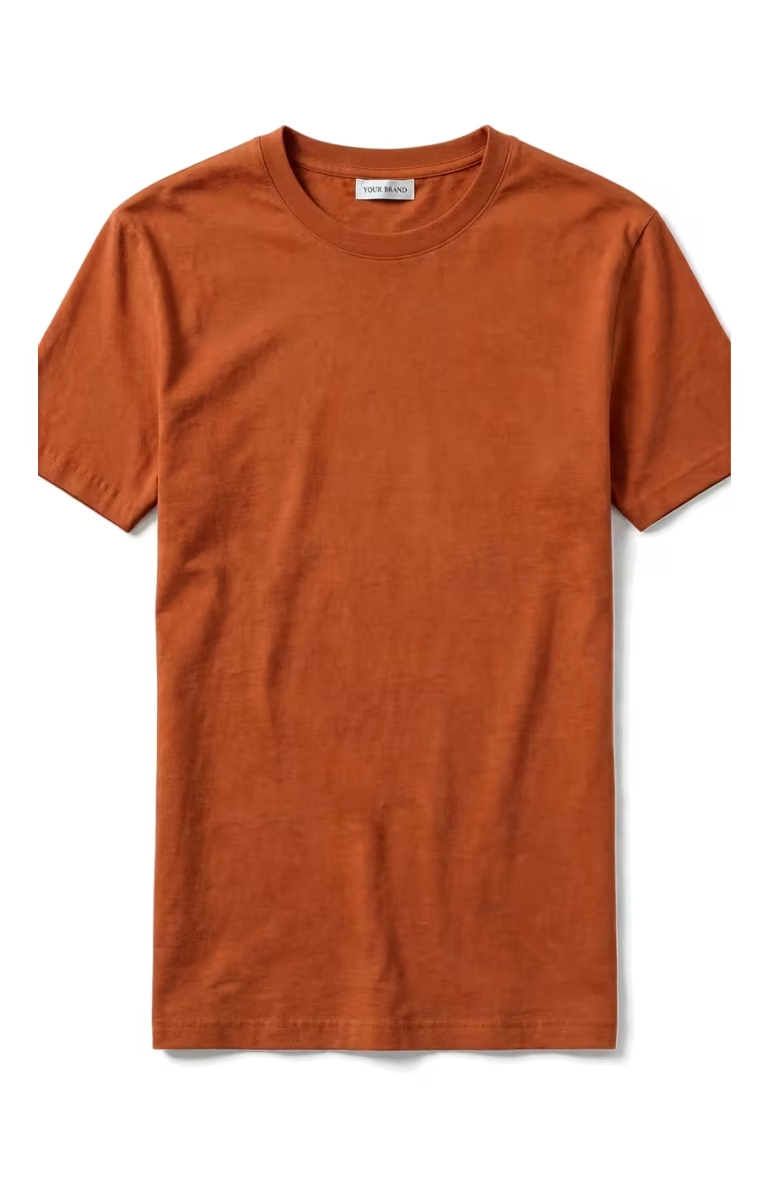
- Plain rust tee as the proof garment.
- Single jersey with a ribbed neck band.
- Five garment lines on one programme desk.
- Your brand label inside every neck.
- Seven recorded steps from line file to packed cartons.
- Measurement, stitching and shade gates on every batch.
- Sea freight from Chattogram on your routing.
Simply The Best
PORTFOLIOS












Product Details
5 Top Garments Manufacturers in Bangladesh
A Plain Rust Tee as the Proof Garment
Our proof garment for this page is a plain rust crew-neck tee in knitted single jersey. It carries short sleeves, a ribbed neck band and a straight hem, and the body is completely plain. Every 5 Top Garments Manufacturers in Bangladesh programme on this page runs five garment lines from one desk, each on its own file. The gallery shows the tee from the front, the back, the jersey close up and the label close up. A YOUR BRAND label sits inside the tee neck. The pictured tee proves the first line only. Every garment from our factory is checked against its own line file before packing.
- Rust tee as the proof garment.
- Single jersey with a ribbed neck band.
- Five garment lines on one programme desk.
- Your brand label inside the tee neck.
- Samples approved complete before bulk cutting begins.
Seven Steps From Line File to Packed Cartons
Every garment order follows the same seven steps, from line file to packed cartons. First, the line, the cloth and the sizes are written on the file. Then each stage is checked against that file. As a result, the tenth garment from our factory matches the first on every line. Buyers who hold garments on OEM files can reorder without resampling.
Step 1: Send the Line and Size File
Your file names the line, the cloth build and your size chart. Also, it names the shade standard and the label wording. So the whole order reads from one shared page. Files sent for a garment to manufacturer benches are answered with a costed file, not a guess.
- Line and cloth recorded.
- Shade standard named on the file.
- Label wording noted.
Step 2: Sew and Approve the Sample
The sample is sewn complete in the actual cloth, finished as the bulk will be. In addition, the sample is photographed flat and measured against your chart. Then your approval is held as the line standard. Samples approved for garments on supplier programmes are couriered to your desk for the final hand check.
- Complete sample sewn for approval.
- Sample measured flat.
- Your approval held as the standard.
Step 3: Grade the Size Run
Sizes are graded from your own chart, size by size. Meanwhile, chest, length and sleeve are graded together, so the garment stays balanced. So every size reads as the same garment. A graded garment for wholesale buyers keeps its proportions at the smallest and largest sizes.
- Sizes graded from your chart.
- Proportions held at every size.
- Size set written on the file.
Step 4: Confirm the Order in Writing
The order is confirmed with cloth, shades, sizes and packing on one file. Also, the production slot is booked against your selling season. As a result, delivery lands before your range launch. Confirmations for garments on exporter programmes fix the routing at the same time.
- Order terms written on one file.
- Production slot booked in writing.
- Launch window fixed at confirmation.
Step 5: Cut and Sew the Run
Panels are cut to the approved patterns, piece by piece. In addition, in-line checks watch the joins, the hems and the neck setting. Then faulty panels are rejected at the table, not at the carton. Production runs of every garment from our factory keep the shade standard even across the run.
- Panels cut to approved patterns.
- Joins and hems checked in line.
- Faulty panels rejected early.
Step 6: Pass the Finishing Gates
Finished garments pass measurement, stitching and shade gates. However, a garment that fails a gate is held and reworked, never packed quietly. So only garments that match your file reach the carton stage. Gate records for garments on OEM files stay open for your audits.
- Measurement and stitching gates.
- Every garment checked per run.
- Gate results recorded on your file.
Step 7: Pack and Dispatch
Garments are packed folded, by size and shade, exactly as your file asks. Finally, dispatch follows the routing on your file, by sea from Chattogram. Packing lists for garment wholesale cartons are matched to the cartons before sealing.
- Garments packed by size and shade.
- Packing lists matched to cartons.
- Dispatch booked on your routing.
Five Garment Lines on One Programme Desk
Five lines cover the programmes buyers ask this desk for most. First, each line runs on its own file, with its own sample approval and its own gates. Also, the five lines share one standard for records, packing and dispatch. Only the first line is pictured on this page, in the rust tee above. The other four lines run from buyer files and are sampled before any bulk begins. Buyers can open one line or all five, and every garment from our factory is recorded the same way.
Line One: Single Jersey Tees
The tee line is the pictured line. The rust tee in the gallery shows its build: single jersey, a ribbed crew neck, short sleeves and a straight hem. In addition, the tee back carries one horizontal yoke seam across the shoulders. Your tee file names the jersey build, the shade and the size run. Tees on this line are cut and sewn as one garment from our factory benches, checked against the approved sample.
- Pictured line on this page.
- Ribbed crew neck and straight hem.
- Yoke seam across the back.
Line Two: Polo Shirts
The polo line runs knitted collar shirts from your own file. Your file names the collar build, the placket and the cuff finish before sampling. Also, a sewn sample is approved before any bulk cutting begins. This line is not pictured on this page. Polo programmes are recorded as one garment from our factory file, with the same gates as the pictured line.
- Run from your own file.
- Sample approved before bulk.
- Not pictured on this page.
Line Three: Hoodies and Sweatshirts
The fleece line runs hoodies and sweatshirts from your own file. Your file names the fleece build, the hood or crew neck and the cuff and hem finish. In addition, the sample is measured flat against your chart before approval. This line is not pictured on this page. Fleece styles are held as one garment from our factory records, checked at the same finishing gates.
- Run from your own file.
- Hood and cuff builds named.
- Not pictured on this page.
Line Four: Shorts and Bottoms
The bottoms line runs shorts and trousers from your own file. Your file names the waistband build, the pocket build and the leg finish before sampling. Also, waist and length are graded from your chart, size by size. This line is not pictured on this page. Bottoms are packed as one garment from our factory cartons, by size and shade.
- Run from your own file.
- Waistband and pockets named.
- Not pictured on this page.
Line Five: Baby and Kids Sets
The sets line runs two-piece baby and kids sets from your own file. Your chart names every size, and sizing follows that chart only, with no standard of ours added. Also, both pieces of a set are sampled together before bulk. This line is not pictured on this page. Sets are recorded as one garment from our factory file, packed as matched pairs.
- Run from your own file.
- Sizing from your chart only.
- Not pictured on this page.
The Tee in Our Pictures
The Front of the Tee, Stated Plainly
The front view shows the rust tee laid flat, completely plain. Also, there is no print, no motif and no chest mark anywhere on the body. The neck is ribbed, the sleeves are short and the hem is straight. Front views of a garment from our factory let your team judge the build before sampling.
- Rust tee pictured from the front.
- Body completely plain.
- Ribbed neck and straight hem shown.
The Back of the Tee
The back view shows the tee plain from behind, with one horizontal yoke seam across the shoulders. Moreover, no label shows on the back surface. Also, the hems and sleeve finishes match the front view.
- Plain back panel.
- One yoke seam across the shoulders.
- Hems matched to the front.
The Jersey and the Label, Close Up
One close view shows the rust single jersey itself, with its fine knit rows open to the eye. First, the rows read even across every fold. Then the label view shows the YOUR BRAND woven label inside the tee neck, under the ribbed band. A plain woven tab sits folded beside the label, and no size letter is legible on it. Your own name and size markings replace the sample wording on your runs, set exactly as your chart writes them.
- Single jersey shown close.
- Your brand label inside the neck.
- Plain tab beside the label.
Garments Manufacturer in Bangladesh for Germany Importers
German importers build garment ranges across several lines at once. First, one programme desk holds every line file in the range, line by line. Also, every stage is reported against the shared records. As a result, an importer's first and fifth orders open with matching garments on every line. Importers who take each garment from our factory hold line and size records between seasons.
- Ranges built across five lines.
- Same standard at every line.
- Your label inside every neck.
- Line files kept open.
- Season repeats on one desk.
One Desk, One Standard Across Five Lines
A range spread over five lines fails when each line keeps its own habits. First, this desk holds one record standard for sampling, gates and packing on every line. Also, a change you approve on one line is written into that line's file, dated. In addition, the pictured tee shows the standard applied, not just described. So a buyer reads one programme, not five separate arrangements. Line records for garments on manufacturer programmes are checked again at the finishing gates.
- One record standard per desk.
- Changes dated on the line file.
- Sample approval on every line.
- Gates shared across lines.
- Records open at every stage.
Garments Supplier in Bangladesh for Canada Brands
Canadian brands order garments for basics programmes and resale lines. In addition, their files carry the size ratios each channel needs. So our programme plans colourways and sizes around delivery dates. Brands receive cartons where every garment from our factory matches the approved sample on its line.
- Size ratios per channel.
- Sizes graded from your chart.
- Every line sampled first.
- Colourways held per range.
- Reorders cleared on the same file.
Documents and Standards on Buyer Files
Garment ranges stand on their documents as much as their cloth. First, care and fibre wording is set exactly as you approve it. Also, buyers who work inside the Bangladesh industry framework record their requirements on their file, through bodies such as BGMEA, and production is then recorded against that file. In addition, size and barcode data are checked against your range file before packing. We claim no certification that your file does not hold.
- Care wording set as approved.
- Fibre choices recorded per file.
- Barcode data checked before packing.
- No certification claimed loosely.
- Range data held on one file.
Quality Gates From Jersey to Carton
Quality on a garment programme is a chain of gates, not a final glance. The cloth is checked on arrival, and the trims are checked beside it. In addition, sewing is checked in line through every shift. Then finished garments pass measurement, stitching and shade gates before packing. However, any garment that fails a gate is held and reworked. So the standard is a record, not a promise. Gate summaries for each finished garment for exporter audits close the chain.
- Cloth checked on arrival.
- Trims checked before cutting.
- Measurement gates on finished garments.
- Shade gates on every batch.
- Held garments reworked and rechecked.
- Gate records kept on your file.
Garments Exporter in Bangladesh for Australia Retailers
Australian retailers take garment ranges with exacting pack standards. Moreover, their cartons carry size ratios planned per channel. Then repeats run against the same open files through the season. Retailers who reorder each garment from our factory see the same line records at every repeat.
- Size ratios per channel.
- Lines and sizes recorded together.
- Season repeats on one standard.
- Your barcodes applied before sealing.
- Cartons marked for your warehouse.
Line Records Between Orders
A line file earns its keep between orders. First, the approved sample is photographed and stored with the file. Also, the graded size set is stored beside it, size by size. In addition, any change you approve is written into the same file, dated. So the next order starts from evidence, not from memory. Records kept for garments on OEM programmes make the tenth order as clear as the first.
- Samples stored per line.
- Size sets stored per range.
- Changes dated on the file.
- Approvals held between seasons.
- Files reopened without rebuilding.
Questions Garment Buyers Ask
Buyers who order garment programmes ask the same questions each season. So we answer the common ones here, in the open.
- Every answer refers to your own file.
- Claims stay tied to the pictures.
What exactly is the pictured garment?
The pictured garment is a plain rust short-sleeve crew-neck tee in single jersey, with a ribbed neck band and a straight hem. The gallery shows the tee from the front and the back, the jersey close up and the label close up.
Are all five lines pictured on this page?
No. Only the first line, single jersey tees, is pictured here. The polo, fleece, bottoms and sets lines run from buyer files, and each is sampled and approved before any bulk begins. So no line is sold from a picture it does not have.
How is sizing set on a garment programme?
Sizing follows your own size chart only. Your chart names every size and its measurements, and each size is graded and sampled from that chart. We add no sizing standard of our own. So the sizes in your cartons read exactly as your chart writes them.
Can the lines run in our colours?
Yes, from your own colour file. Each new shade is dyed and sampled before bulk. Also, the build, grading and size set stay identical across shades. So your core garment reads the same in every colour story.
Is the pictured tee printed or patterned?
No. The pictured tee is completely plain, front and back, as the gallery shows. Print programmes run from your own artwork file, and a printed sample is approved before any bulk printing begins.
How do shipments leave Bangladesh?
Bulk garments leave by sea from Chattogram on the routing your file confirms. Air freight stays available for urgent top-ups. Finally, your file stays open after dispatch, ready for the repeat order. Tracking references are shared for every garment wholesale carton as soon as the vessel sails.
Replenishment While the Season Runs
Core garment lines sell steadily, so replenishment matters more than launches. First, your lines, colourways and size curve reopen exactly as recorded. Also, the approved samples are still held on our side. As a result, a mid-season repeat matches the stock already on your shelves. Retailers who reorder each garment from our factory skip rebuilding the range each time. Then the repeat is booked into the earliest open production slot.
- Same lines, sizes and colours.
- Samples held between orders.
- Only changed lines are recosted.
- In-season windows booked early.
- Gate records carried forward.
Second Drops and Range Extensions
Garment ranges rarely end with the first drop. First, a winning line earns a second story in the same season. Also, a new line can join the range on the same desk standard. In addition, size ratios are rebalanced from your first drop's sales pattern. So extensions extend the standard, not the paperwork. Proven garments for wholesale extensions return on the same open files.
- Second stories join the same file.
- Ratios rebalanced from real sales.
- Same standard across every drop.
- Extensions booked on early slots.
- Gate records carried forward.
- Range data held in one place.
Season Close and File Handover
A well-run range ends as cleanly as it opens. First, unsold sizes are reviewed against your next season's plan. Also, the range file is closed with its gate records and packing lists intact. In addition, your line specifications and barcode data stay on file for the next order. So the next season starts from a proven base, not from memory. Buyers close a season with every garment from our factory still readable on the line records. Then the range team plans the next season from evidence, not guesswork. Also, the next season's line order starts from the archived files, not from a new sample round.
- Sizes reviewed at season close.
- Gate records archived with the file.
- Line specification held for next season.
- Lessons recorded for the next range.
- Files reopened without rebuilding.
- Next season planned from proven data.
- One standard across seasons.
Looking for a 5 Top Garments Manufacturers in Bangladesh?
Tell us your lines, your shades and your size chart, and we will open a line file for your programme. As a 5 Top Garments Manufacturers in Bangladesh desk, our facilities cut and sew garments to your approved samples, with your own label inside every neck. Talk to our team through the contact page or read the buyer questions first. Then your first sample will prove the line before any bulk is cut.
- Start with a sample on your spec.
- Bring a range plan or a target garment.
- Ask for the cloth options.
- Every garment checked as one piece.