
Our Services
Benefits of Working With a Custom Clothing Manufacturer in Bangladesh
Looking for the Benefits of Working With a Custom Clothing Manufacturer in Bangladesh? A custom manufacturer turns your designs into garments that fit your brand exactly. Nothing comes from a catalogue with your logo stretched over it. Instead, every style is made to your pattern, your fabric and your fit block. Our partner facilities in Bangladesh sew each order, while our own team manages patterns, fabrics, approvals and documents around them. Moreover, costs stay honest, because spinning, weaving, dyeing and sewing sit inside one textile ecosystem. Buyers in the USA, UK, Germany, Canada and Australia build whole ranges this way. Small first orders and full seasonal programmes follow the same structure. Send us your designs, and we will reply with itemised costs and a clear sample plan.
- Made to your pattern, not a catalogue style
- Production costs a small label can carry
- Fabric and trims chosen by you
- Your fit block protected and reused
- Scale up what sells, drop what does not
- Private label finishing inside every order
- One manufacturer across your whole range
Simply The Best
PORTFOLIOS












Product Details
Custom Clothing Manufacturer in Bangladesh - The Benefits
Benefits of Working With a Custom Clothing Manufacturer in Bangladesh: Your Product, Not Everyone's Product
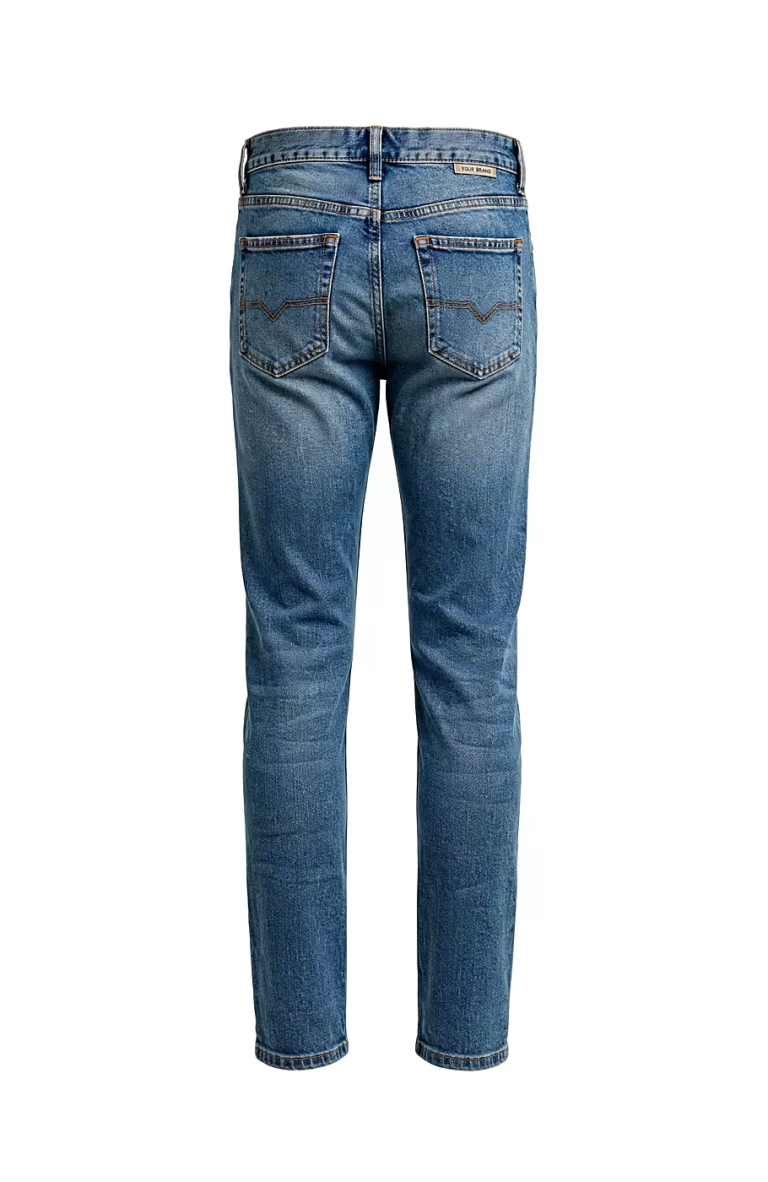
The first benefit is the obvious one: the garment is yours. Fit, fabric, colour, construction and finishing follow your specification exactly. So what reaches your customer is clearly different from the hundred near-identical styles hanging beside it. That distinctiveness is a commercial asset. Indeed, it is why a customer reorders from you instead of hunting the same shirt cheaper elsewhere. With jeans, moreover, the difference is concrete. Your rise, your leg shape, your wash and your pocket stitch define the product. Our denim jeans are built exactly this way, from the buyer's pattern outward. Nothing begins as a house style with the label swapped.
- Your fit block shapes every size, so the largest size is the same garment as the sample.
- Your fabric and colour choices stay exclusive to your range, never shared with another buyer.
- Your wash and finish standards are recorded once, then held across every reorder.
- Your clothing manufacturer keeps your patterns protected between seasons, ready for the next order.
- Your label and packing complete the garment, so the product feels unmistakably yours.
A Clothing Factory in Bangladesh Keeps Custom Costs Honest
Custom used to mean expensive, because it meant small runs in high-cost countries. Bangladesh changed that maths. Spinning, weaving, dyeing and sewing sit inside one industrial ecosystem here, much of it organised through the BGMEA. Consequently, made-to-order production runs at costs a growing label can carry. You pay for fabric, making and finishing, itemised line by line in the quote. In addition, you stop paying for what stock buying forces on you. No unwanted colours arrive inside a pre-packed range. No dead sizes eat your margin quietly. In short, a custom clothing factory in Bangladesh removes the waste that stock buying hides.
- Fabric, making and finishing are quoted separately, so every cost can be questioned.
- Local spinning and dyeing shorten the supply chain, and shorter chains cost less.
- Sizes and colours follow your market, so nothing is made that cannot sell.
- Sample costs are stated before development begins, never buried inside the bulk price.
- Your clothing factory quotes in writing, so comparisons between suppliers stay honest.
How Your Order Runs: 6 Steps From Pattern to Packing
Every order follows the same six steps, whether it is a first sample run or a full seasonal programme. First, the specification is agreed in writing. Then each stage is checked against it before the next stage begins. This structure protects smaller buyers most, because nothing depends on memory or goodwill. The steps below show exactly where your order stands at any moment. Moreover, one team answers for all six stages, so questions never travel between suppliers.
- Step 1, designs and patterns first: send tech packs, samples or sketches, and patterns are made or adapted to your fit block before any fabric is committed.
- Step 2, fabric and trims to your spec: cloth is sourced or developed for weight, composition and wash behaviour, and swatches and lab dips come to you for approval.
- Step 3, a true pre-production sample: the sample is sewn in your fabric, wash and trims, exactly as bulk will run, and you approve fit and finish in writing.
- Step 4, grading and a size set: your approved fit is graded across the size range, and a full size set is checked against the pattern before cutting.
- Step 5, bulk production with checks: cutting and sewing follow the approved sample, while measurements, stitching and wash are checked on the line against the retained standard.
- Step 6, your label and your packing: garments leave with your labels, tags and packing fitted, and our team handles the export documents for you.
Custom Clothing Exporter in Bangladesh for Canada Brands
Canadian labels compete with US giants by being more specific, not bigger. Custom fits and fabrics aimed precisely at their own customer win that fight. A clothing exporter in Bangladesh gives a Canadian brand exactly that weapon: garments designed for its market, at volumes a growing label can carry. Furthermore, development follows your calendar, so cold-season ranges are ready when your customers want them. Patterns stay on file here. A winning style therefore returns next season without new development cost.
- Fits are graded for North American sizing, then proven on a full size set.
- Cold-season fabrics and weights are developed to your specification, never substituted quietly.
- Reorders run from retained patterns, so delivery becomes faster every season.
- Your clothing exporter prepares documents early, so customs clearance stays smooth.
- Packing follows your warehouse or 3PL intake rules exactly, carton by carton.
Quality Is a System, Not a Final Inspection
Custom work fails when quality is treated as a final check. A wrongly cut garment cannot be inspected into a right one. Our checks therefore start at the fabric itself. Weight, composition and wash behaviour are verified against your specification before cutting, and certified fabrics such as OEKO-TEX standards can be specified where your market requires them. Meanwhile, line checks compare measurements and construction with the approved sample, while corrections are still cheap. Finally, the packed goods are checked again before the cartons close. A reliable clothing supplier treats your retained sample as the contract, never a house standard.
- Fabric is tested before cutting, so faults never reach the sewing line.
- Inline checks catch measurement drift while the order can still be corrected.
- The retained sample travels with the order as the single reference standard.
- A clothing supplier who hides problems creates returns; ours reports them early instead.
- Final checks cover packing and labelling, because presentation is part of quality.
A Partnership That Compounds With Every Reorder
The quiet benefit arrives on the second and fifth order. Your patterns, wash standards, size ratios and fabric sources stay on file here. Consequently, reorders start from proven ground. New styles also develop faster, because the fit language is already shared between us. You can scale up the styles that sell and drop the ones that do not. In addition, you can test a new category, such as our trousers or fleecewear, using the same files and standards. A stock supplier gives you this season's catalogue. A clothing manufacturer gives you a production base that learns your brand.
- Patterns and wash standards are archived carefully, so nothing is redeveloped twice.
- Size ratios from real sales feed the next order, reducing dead stock steadily.
- New categories start from your existing fit block, not from zero.
- Your clothing exporter handles documents early, so repeat orders clear customs without drama.
- Honest reporting flags problems while they are still small and fixable.
Custom Clothing Supplier in Bangladesh for Spain Retailers
Spanish buyers develop summer ranges with distinctive washes and colours. Stock ranges rarely offer either. A clothing supplier in Bangladesh builds the range around your colour story instead. Lightweight fabrics are sourced or developed against your hand-feel target. Moreover, proven styles reorder quickly, because every standard is already documented here. Retail finishing is included inside the order, so garments arrive ready for the rail.
- Summer weights and breathable weaves are developed against your target hand-feel.
- Colour stories run across categories, so the whole range hangs together in store.
- Retail finishing, folding and tagging are completed before shipping, not after arrival.
- Fast reorders protect your best sellers during the season itself.
- Your clothing supplier confirms each reorder against the retained sample first.
Serious Treatment at Sensible Volumes
Buyers often assume custom manufacturing is reserved for large programmes. In practice, the specification matters more than the size of the first order. A focused style in a stock fabric can start modestly and then grow. The patterns and standards built for it carry forward either way. What we ask is a clear specification and an honest conversation about where the style is heading. The factory side is then set up to grow with it. A clothing factory network that knows your files treats a small first order as the start of a programme, not as a favour.
- A proven style in a stock fabric starts lower than a brand-new development.
- Mixed styles can share one programme when fabrics and standards align.
- Growth is planned openly, so capacity questions are answered early and honestly.
- A clothing supplier in Bangladesh can group small styles into one workable programme.
- No figure is printed here, because garment, fabric and colour count decide it.
Custom Clothing Manufacturing in Bangladesh for Germany Importers
German buyers document everything: patterns, tolerances and wash standards. Custom work suits that discipline well. The specification becomes the contract, and the sample proves it before bulk exists. A clothing manufacturer in Bangladesh working to German documentation keeps tolerances written, measured and reported. Furthermore, every deviation is raised before cutting, not discovered after shipping. That written culture is exactly what this part of our buyer base values most.
- Tolerances are agreed in writing, then measured against the retained sample.
- Wash standards are fixed at sample stage and kept as the reference.
- Progress reports follow the order, so nothing needs chasing by email.
- Documents are prepared early, keeping customs and warehouse intake simple.
- Your clothing manufacturer's reports arrive on the agreed dates, every time.
Markets We Deliver To
One custom programme serves buyers across nine core markets, and each market uses it differently. The notes below summarise what buyers in each market usually ask a clothing manufacturer first. The pattern is the same everywhere, however: your specification leads, and the production follows it.
- Signature fits held across seasons, so returning customers find their garment again.
- Regional tastes in cut, colour and weight built into the range from the start.
- Southern-season development for Australian programmes, timed to your calendar.
- Documentation and packing matched to each market's intake rules.
United States
US labels use custom manufacturing to escape the blank-and-print ceiling. Garments are designed for their own customer, then delivered to their warehouse or 3PL, packed to intake rules.
United Kingdom
UK brands build signature fits with a clothing manufacturer they can brief directly. They hold those fits across seasons, so a returning customer finds the same garment they loved, not a similar one.
Germany
German buyers document patterns, tolerances and wash standards in full. Custom work suits that discipline, because the specification is the contract, proven on the sample before bulk.
France
French labels lean on custom development for silhouette and colour stories that stock ranges cannot offer. Retail finishing is included inside the order, ready for the boutique rail.
Canada
Canadian labels compete by being more specific, not bigger. Custom fits and fabrics are aimed precisely at their own customer, at volumes a growing label can carry.
Australia
Australian buyers develop against the southern seasons with us. They test styles one season and scale the winners the next, with patterns already on file here.
United Arab Emirates
UAE buyers commission custom ranges for regional tastes: cuts, colours and weights the global catalogues ignore. The ranges are then re-exported across the Gulf from that base.
Netherlands
Dutch buyers ask how custom claims are proven. The answer is the sample: judge the garment, the wash and the fit before any bulk commitment exists.
Spain
Spanish buyers develop summer ranges with distinctive washes and colours. Proven styles then reorder fast, because every standard is already documented here.
How Much Do You Need to Order?
Custom work is more flexible than buyers expect. It depends on the garment, the fabric and the wash or colour count, so one printed figure would mislead more than it helps. A proven style in a stock fabric starts far lower than a new development. Tell us what you are designing through the contact page, and we will give you the real figure for your style.
- Garment type and construction set the base flexibility of any order.
- Stock fabrics start lower than fabrics developed only for your range.
- Fewer washes and colours keep a first order simpler and cheaper.
- Your clothing manufacturer confirms the figure per style, in writing, before commitment.
Questions Buyers Ask Us
Buyers usually ask the same first questions before they commit a design. The answers below cover the ones we hear most often. More answers sit on the FAQ page. Specific questions about your own range are answered by our team directly.
- Your patterns and standards are never shown to another buyer, ever.
- Development can start from a sample, a tech pack or clear photographs.
- Sample dates are commitments, quoted per style with the fabric stated.
- Your clothing factory keeps the patterns ready for the next season.
I run a label in the USA. Do my patterns stay mine?
Yes. Your patterns and standards are held by your clothing manufacturer for your orders only. They are never shown to or sewn for another buyer, and they stay on file for your reorders.
Can you develop a style from a photo?
Yes, development can start from photographs or sketches. However, a sample garment gives the truest fit and the fastest development, so we recommend sending one whenever you can.
We are a small brand in Canada. How long does development take?
Sampling is quoted per style, with the fabric stated clearly. The sample date is a commitment, not an estimate. The same timetable discipline applies to small Canadian brands and to large programmes alike.
What if a style fails at retail?
The patterns stay on file. You can restyle the fabric or wash next season without paying for development twice. The fit block also carries into the replacement style.
Looking for the Benefits of Working With a Custom Clothing Manufacturer in Bangladesh?
If your range has outgrown stock buying, the next step is a conversation, not a commitment. Send us one style you want to own outright. We will cost it honestly, sample it to your standard and show you the difference in the garment itself. The Benefits of Working With a Custom Clothing Manufacturer in Bangladesh begin with that first sample: your product, your standards and your label. Talk to us through the contact page today.
- Send a tech pack, a sample or even a clear photograph to start.
- Receive itemised costs before any development money is spent.
- Approve a true pre-production sample before bulk production begins.
- Keep every standard on file, so season two starts ahead of season one.