
Baby Dress Wholesale
Baby Dress Wholesale Market in Dhaka
The baby dress wholesale market in Dhaka is where thousands of small traders buy children's dresses every week, from market rows to factory gates. This guide maps those buying routes honestly, then shows the factory direct route we run for importers in the USA, UK, Germany, Canada and Australia who want tested fabrics, checked seams and their own labels on every dress.
- Dhaka market routes mapped area by area
- Factory direct supply as the importer alternative
- Soft cotton fabrics tested for baby skin
- Safe fastenings checked piece by piece
- Age sizing from newborn to toddler ranges
- Your labels and gift packaging fitted in house
- Export cartons prepared for retail delivery
Simply The Best
PORTFOLIOS












Product Details
Baby Dress Wholesale Market in Dhaka
Baby Dress Wholesale Market in Dhaka
Dhaka has supplied children's clothing traders for decades, and baby dresses sit at the centre of that trade. Market rows sell ready stock in mixed bundles, while factories around the city sew to order. Also, buyers starting in Dhaka, with wholesale rows on every side, often struggle to compare quality between stalls. So this guide explains both routes plainly. Then it shows how importers buy from a Dhaka factory instead, with standards written down before production starts.
- Market areas and what each one sells
- The difference between stock buying and factory orders
- Five quality checks before any purchase
- Factory direct route for importers explained
What Dhaka's Markets Offer Baby Dress Buyers
Each market area has its own character, stock depth and price level. Traders learn these areas over years, but a new buyer can read the map in one visit. Also, market stock changes daily, so the dress you approve on Monday may differ by Friday. Therefore serious importers treat the markets as research, then place production where standards stay fixed. The areas below are the names buyers hear first when they land in Dhaka.
- Ready stock sold in mixed size bundles
- Prices and quality vary stall by stall
- Stock changes daily with no reorder guarantee
- Best used as market research by importers
New Market: Everyday and Party Dresses
New Market is the name most visitors hear first. Its rows carry everyday cotton dresses beside frilled party styles for Eid and birthday seasons. Traders buy mixed bundles here and sort sizes later. Quality ranges widely between stalls, so piece by piece checking is normal practice for careful buyers.
Gawsia Market: Budget Wholesale Rows
Gawsia sits near New Market and runs on volume. Prices are keen, bundles are large and the pace is fast. Budget dresses for local resale move through these rows in thousands. Importers visit to learn the floor price of the trade, then compare it honestly against factory order costs.
Elephant Road: Children's Retail Cluster
Elephant Road leans retail, with children's shops selling finished dresses to families. Wholesale buyers study these shops to see what Dhaka parents actually choose. Colours, prints and price points here teach more than any catalogue. Many exporters walk this road before finalising a season's range.
Mirpur: Mixed Garment Rows
Mirpur mixes small workshops with trading rows, so stock and light production sit side by side. Some traders here take small making orders alongside ready bundles. Standards vary by workshop, which suits local flexibility. For export programmes, the variation is exactly what written specifications are designed to remove.
Bashundhara City: The Retail End
Bashundhara City shows the polished end of the trade, where branded local labels sell at retail. Importers use it to judge finishing expectations in the Bangladesh market itself. Hanging, tagging and packaging standards here mirror what Western buyers ask for. It is a useful final stop before costing a factory order.
Baby Dress Manufacturer in Bangladesh for Canada Importers
Canadian importers buy baby dresses under strict labelling and safety expectations. As a baby dress manufacturer in Bangladesh for Canada importers, we produce to written standards inside our partner facilities in Dhaka. Therefore bilingual labels, fibre content and age sizing are prepared at sampling, not improvised at packing. Working with Dhaka manufacturers through one accountable team also means the same dress standard holds across every reorder, which market stock can never promise.
- Bilingual labels prepared at sampling
- Age sizing checked against your chart
- Same standard held across reorders
- One team accountable for the programme
5 Quality Checks Before You Buy
Whether you buy from a market row or a factory, five checks protect your customers and your reviews. Babies cannot report a scratchy seam or a loose button, so adults must check harder. Also, these checks cost minutes at buying time and save returns for a whole season. So run them on every style, not only the first one. Buyers sourcing baby dresses in Dhaka for wholesale buyers use this same list at our sample table.
- Fabric safety and fibre honesty
- Seam strength and soft inside finishes
- Fastenings that cannot pull loose
- Age sizing matched to your chart
- Colourfastness against home washing
1. Fabric Safety and Fibre Content
First, confirm the fibre content matches the claim. Cotton poplin and soft jerseys suit baby skin, and the composition should be written, not spoken. Also, ask for the fabric test report where one exists. Honest sellers answer quickly, while vague answers are themselves a warning sign worth heeding.
2. Seam Strength and Soft Finishes
Next, turn the dress inside out. Seams should sit flat, with no loose threads against the skin. Armholes and necklines deserve a gentle pull test at the sample table. In addition, scratchy overlock edges fail this check, however pretty the outside looks.
3. Buttons, Snaps and Bows
Then test every fastening. Buttons and snaps must resist a firm pull, because babies chew what they can reach. Bows and appliques should be sewn, not glued. So a loose trim at sampling means the whole batch deserves a second look before money moves.
4. Age Sizing and Labels
Sizing honesty protects your reviews. A 12 month dress should match your market's chart, with the age label sewn where parents expect it. Also, fibre and care labels must match your country's rules. Checking one dress per size at approval catches most labelling errors early.
5. Colourfastness and Print Safety
Finally, rub the print with a damp white cloth. Colour should stay on the dress, not on the cloth. Prints for babywear should also be the soft hand type, without a plastic feel. This quick test predicts how the dress survives its first home washes.
Styles Buyers Source Most
Some styles sell in every season and every market. Smocked bodices, soft prints and simple A line shapes lead the trade year after year. Also, buyers refresh these proven shapes with new colours rather than new patterns. So the range stays familiar to parents while the rail still looks fresh. Below are the two style families our importers reorder most, followed by the details that make them repeat so reliably.
- Proven shapes refreshed by colour and print
- Comfort details parents notice at home
- Styles that photograph honestly for online sales
Smocked Dresses for Occasions
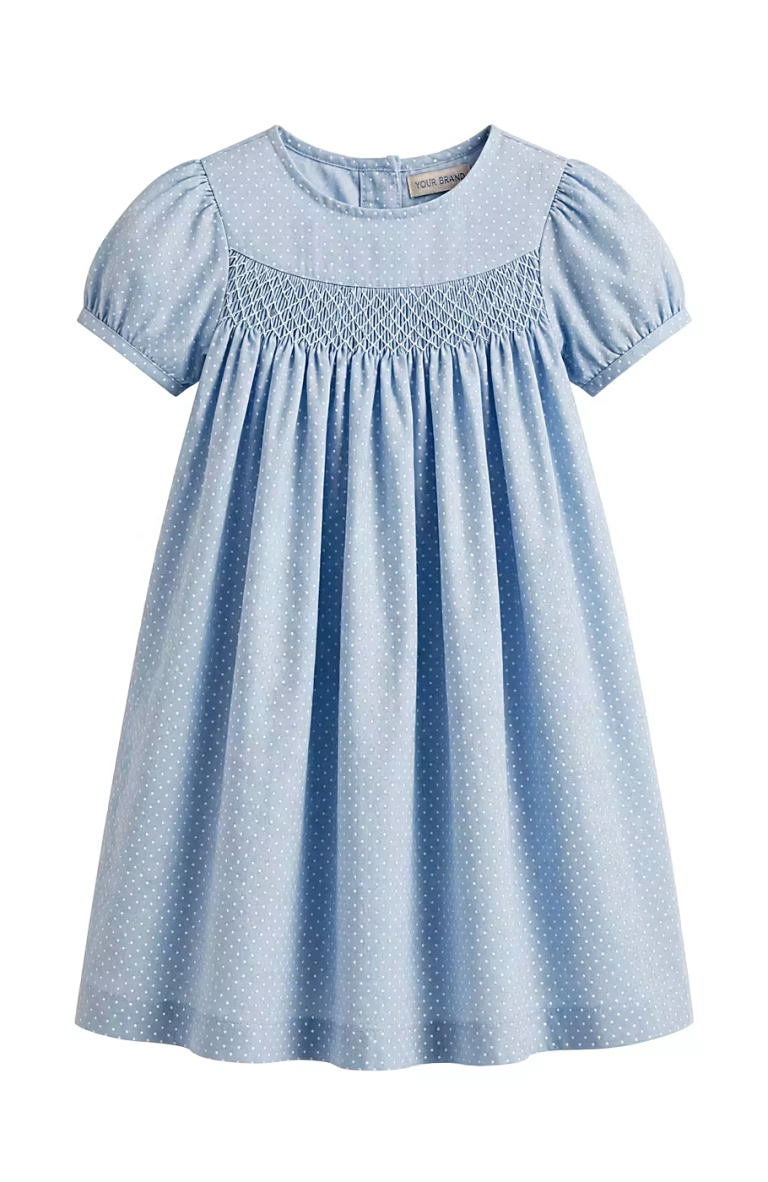
Hand guided smocking gives a baby dress its occasion value. The stretch in the smocked panel also forgives small sizing differences, which parents appreciate. Buyers order these for holidays, photographs and family events. Our makers keep the smocking tension even across the full chest panel, so the dress hangs the way the sample promised.
- Even smocking tension across the panel
- Soft lining behind the smocked bodice
- Matching bloomers offered for young ages
Printed Dresses for Everyday Wear
Everyday printed dresses carry the volume of the trade. Polka dots, small florals and gentle checks repeat across seasons with new colour stories. Also, soft hand prints keep the fabric kind to skin after many washes. Buyers hold these prints on file, so a winning design returns quickly when a retailer asks for more.
- Soft hand prints that survive washing
- Colour stories refreshed each season
- Winning prints stored for fast repeats
Party Dresses and Gift Sets
Party dresses and boxed gift sets carry the highest margins in the baby trade. Tulle overlays, satin sashes and matching headbands turn a simple dress into a present. Also, gift ready packing is prepared inside the programme, so retailers receive stock that goes straight to the shelf. Buyers plan these styles early, because occasion seasons reward the ranges that arrive first and photograph best.
- Sashes and overlays fitted at sampling
- Gift ready packing inside the programme
- Occasion seasons planned well ahead
From Market Styles to a Factory Range
Many importers start exactly where this guide starts, walking the market rows with a notebook. The smart ones photograph what sells, note the prices, then bring those styles to a sample table. First, the style is rebuilt to a written specification. Then the fabric, trims and sizing are fixed on a sealed sample. Also, the costing now includes checking and labelling, which market prices quietly leave out. So the range that reaches your shelves is the researched style, made repeatable at last, with every detail written down for the next order and the one after that.
- Market research turned into written specifications
- Sealed samples before any bulk commitment
- Checking and labelling included in costing
- Styles repeatable across the whole season
- Research notes kept with your range file
Certified Fabrics for Baby Skin
Baby clothing sits against skin all day, so fabric certification carries real weight with parents. We offer fabrics certified to OEKO-TEX standards, verified through the issuer's own records before a programme is costed. Therefore the claim on your label matches the certificate in the file. In addition, our own checks cover seam softness and fastenings on every batch. This is the standard a Dhaka factory direct programme should meet, and it is the one we hold.
- Certified fabric options for baby ranges
- Certificates verified before costing
- Seam and fastening checks per batch
- Records kept with your order file
Age Ranges and Sizing Buyers Ask For
Baby dress programmes usually run from newborn sizes to toddler ages, with the strongest demand in the middle ages. Buyers send their own size chart, and our pattern makers grade the dress across it. Also, growth room is planned honestly, since parents judge value by how long a dress fits. So chest, length and armhole measurements are checked at every age step during sampling. Then the approved measurements are printed into the order file, ready for bulk checking and for your own warehouse team on arrival day.
- Newborn to toddler age coverage
- Grading against your own size chart
- Measurements checked at every age step
- Approved sizes recorded for reorders
- Size labels matched to each market's rules
- Spare buttons and care labels included per carton
Where Our Baby Dresses Ship
Most export programmes sail to North America and Europe, with Gulf and Australian buyers in the same windows. We plan production around your selling season first, then fit other destinations into the same plan.
- Consolidated sea freight for volume programmes
- Air freight for seasonal launch orders
- Export documents prepared with your forwarder
United States
The United States takes the largest share of baby dress exports. Buyers there order smocked and printed styles in wide age ranges for boutique and chain programmes.
United Kingdom
UK buyers favour soft cotton dresses with careful finishing. We prepare UK labelling and carton standards inside the same production run as the styles.
Germany
German programmes ask for documented fabric testing and precise age sizing. Our test reports and measurement records cover both as standard practice.
France
French boutiques order smaller runs of occasion baby dresses, with fine details and gift ready packing prepared inside the programme.
Canada
Canada receives consolidated shipments with bilingual labels and its own size conversions, planned alongside the US calendar by the same team.
Australia
Australian buyers run opposite seasons, so their baby ranges are scheduled in our northern off peak windows without slowing their launches.
United Arab Emirates
Dubai anchors our Gulf trade in babywear, with retailers reordering proven styles for the UAE market through the year.
Netherlands
Dutch importers build baby ranges on Bangladesh production, with Rotterdam deliveries consolidated with other EU stock.
Spain
Spanish buyers order bright printed dresses at pace for the summer season. Our sampling room keeps their new styles moving quickly to sealed samples.
How Much Do You Need to Order?
Order quantities depend on the dress styles, the fabrics and the age range, because mill and workshop minimums set the real floor. Rather than print a figure that may not fit your programme, we cost each range on its own mix. Send your styles and target ages, and we will confirm the most workable quantity for each one. Mixed styles in shared fabrics usually make a baby dress programme workable sooner.
- Quantities set per style, fabric and age range
- Mixed styles can share one production programme
- Repeat orders run from stored patterns
- Talk to our team for a programme specific answer
Questions Importers Ask Us
These are the questions importers raise most often when they compare the market route with factory supply. If your question is not here, our team answers enquiries directly with programme specific detail. Most buyers ask about safety testing, age sizing and reorder consistency before anything else. You can also walk the market areas above and tell us which styles you want costed properly.
- Safety, sizing and consistency covered below
- Private label trims fitted from the first sample
- Repeat orders kept on stored patterns
Can buyers in Germany order certified baby fabrics?
Yes. German buyers regularly choose certified cotton qualities for baby ranges, with the certificate verified and filed before costing. The test paperwork then travels with the order file, ready for your own compliance checks on arrival.
Do Dubai retailers buy through the Dhaka markets or direct?
Both routes exist, but retailers who need identical repeats usually move to factory supply. Market stock cannot promise the same dress twice, while a stored pattern and a sealed sample can. Dubai buyers also value the gift ready packing we prepare in house.
How does factory supply compare on price with market stock?
Market stock can look cheaper per piece, until sorting, rejects and inconsistent sizes are counted. Factory orders price the finished, checked and labelled dress. Most importers find the honest comparison favours the factory once returns are included.
Can we put our own brand label on the dresses?
Yes. Your woven label, size labels and hang tags are fitted from the first sample, and your packaging specification is followed at packing. The dresses arrive ready for your shelves under your own name.
Your Baby Dress Factory in Dhaka
If the market rows taught you what sells, the next step is supply you can repeat. Working with a Dhaka supplier team that keeps your patterns, fabrics and samples on file turns a good find into a steady range. See our girls dresses range, read the buyer questions, or send us your styles and we will cost them honestly.
- Start from market styles you already know sell
- Samples approved before any bulk commitment
- One team accountable from sample to shipment